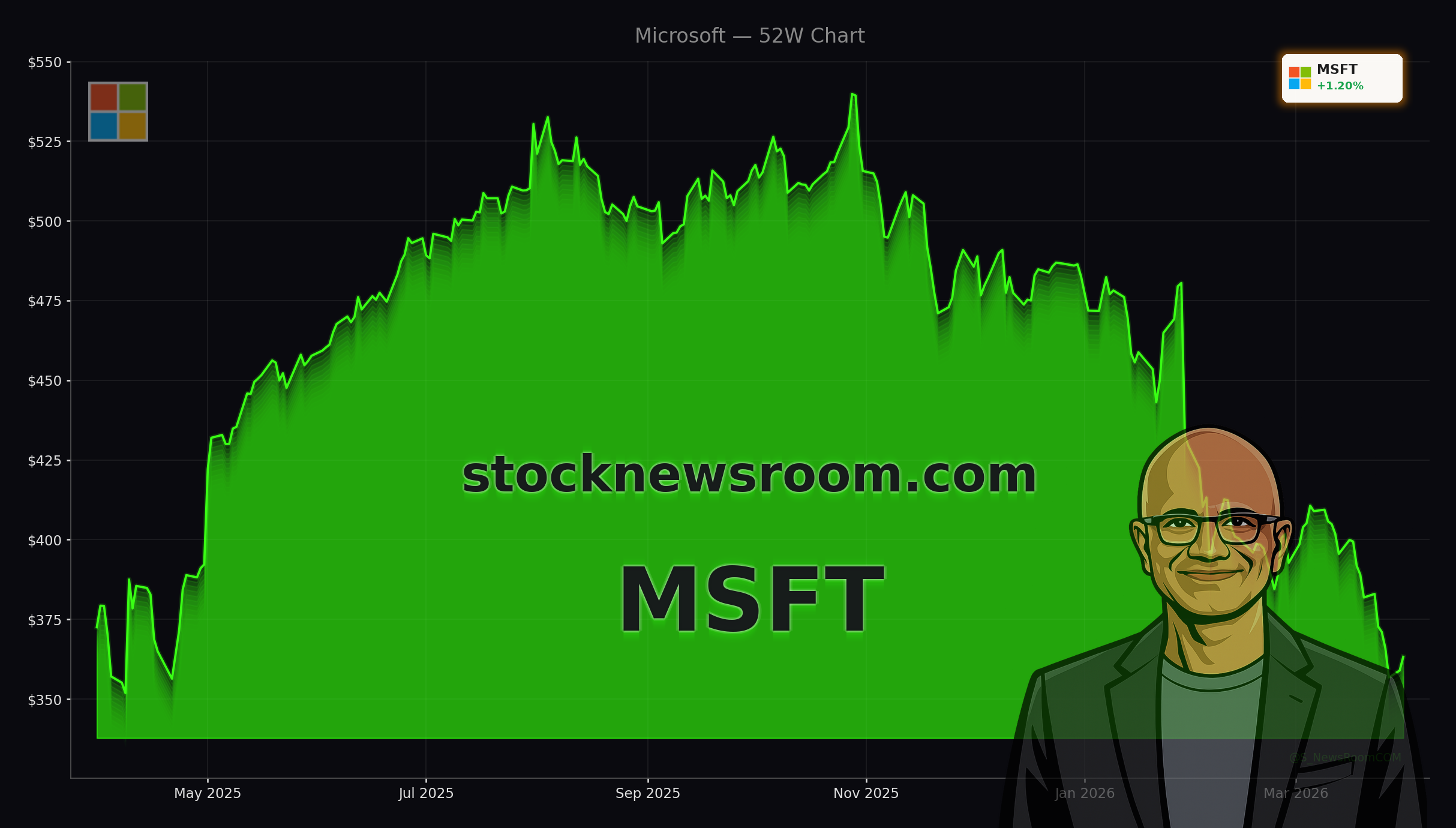

Can a $1 billion Microsoft AI Investment in Thailand reshape the global cloud race while regulators circle and investors question the capex surge?

Why does this Microsoft AI Investment in Thailand matter?
The new commitment will channel more than $1 billion into building out data centers, cloud regions and cybersecurity capabilities in Thailand through 2028. Vice chair and president Brad Smith announced the plan after meeting Thailand’s Prime Minister Anutin Charnvirakul, framing it as part of a broader effort to close the gap in AI adoption between advanced and emerging economies.
Strategically, this Microsoft AI Investment extends Azure’s footprint into a fast‑growing Southeast Asian market, bolstering the company’s ability to serve regional enterprises and governments that increasingly demand local data residency and sovereign cloud options. For investors on Wall Street, it reinforces the message that the current AI capex wave – estimated at about $100 billion in fiscal 2026 alone – is meant to underpin a multi‑year revenue backlog rather than a one‑off spending spike.
Microsoft said the Thai program will also fund talent development, from basic AI literacy to advanced cloud engineering skills. The company has already helped more than 2 million people in Thailand gain AI competencies in the past two years and now aims to upskill another 150,000 workers in cooperation with the country’s labor ministry.
How does Microsoft compare to other AI leaders?
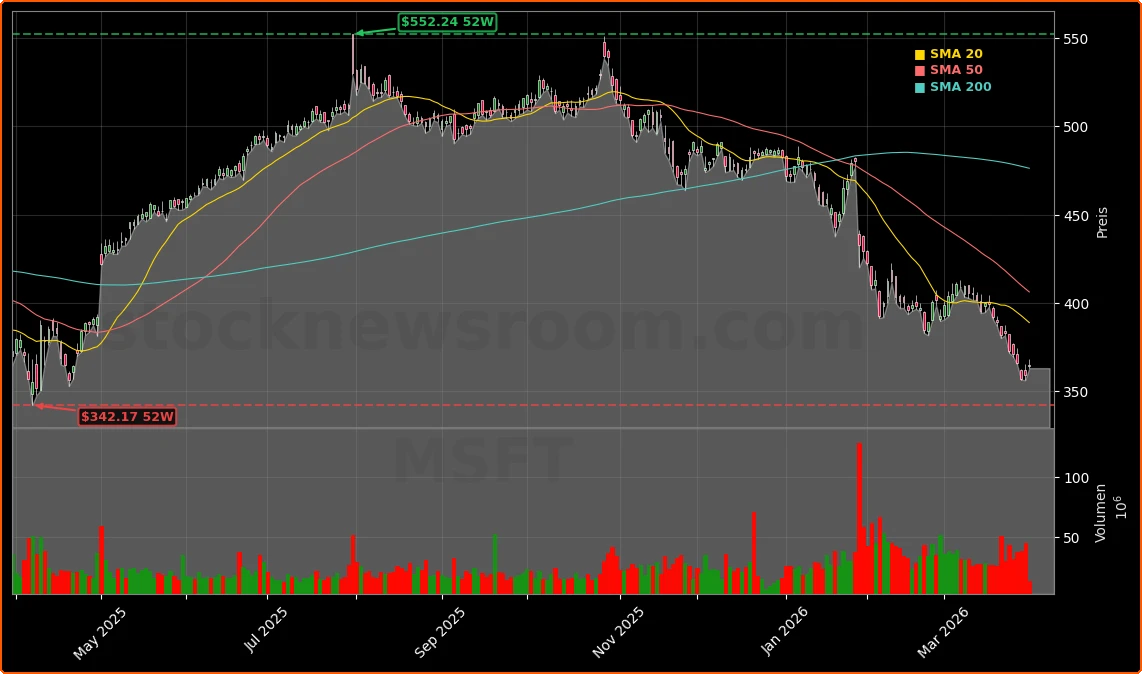
Even after a 30% drawdown from its peak, Microsoft remains one of the central infrastructure players in the global AI race, alongside NVIDIA and cloud rivals like Amazon and Google. Azure’s revenue rose roughly 38–39% year over year in the latest reported quarter, with AI workloads contributing more than a third of that growth. That puts Microsoft’s cloud growth comfortably ahead of broader software peers and cements its role as the core platform for many generative AI applications, including OpenAI’s models.
At the same time, investors have become more critical of the capital intensity required to support that growth. Microsoft spent $49 billion on capex in the first half of fiscal 2026 and is tracking toward about $100 billion for the full year, largely to expand AI‑optimized data centers. Concerns around margin pressure, dependence on OpenAI for roughly 45% of its $625 billion remaining performance obligations, and regulatory scrutiny of its bundling practices have all fed into the recent multiple compression.
Despite that, several large institutions, including Vanguard and BlackRock, have modestly increased their positions, treating the decline as a buying opportunity. Analyst houses such as Zacks Investment Research highlight Dynamics 365 and the broader cloud stack as underappreciated AI growth drivers, while some strategists at Morgan Stanley argue that the current derating has gone far enough given Microsoft’s 17% revenue growth and strong free‑cash‑flow profile.
Is regulatory pressure a risk for Microsoft AI Investment?
Regulation is emerging as a second front that could shape the return profile of any major Microsoft AI Investment. In the UK, the Competition and Markets Authority is preparing a fresh probe into Microsoft’s cloud licensing and software ecosystem, considering whether it should be designated as having “strategic market status.” Such a label could lead to tighter rules around how Office, Azure and other products are bundled, with knock‑on effects for AI‑related upsell packages.
For U.S. investors, this adds to existing antitrust and AI‑safety debates in Washington and Brussels. Microsoft’s push toward a multi‑model AI strategy – using both OpenAI and Anthropic models inside Microsoft 365, for example – is partly a response to those concerns, reducing perceived dependence on a single partner while keeping Azure at the center of inference workloads.
Still, the Thai initiative shows that regulators are not just a headwind; they are also partners. Microsoft is working with Bangkok on frameworks for data protection, cybersecurity and responsible AI, including tools that map national laws to OECD standards. That kind of co‑design could help de‑risk future deployments and create a template for AI rollouts in other emerging markets.
How does Thailand fit into Microsoft’s global AI strategy?
The Thailand program bundles infrastructure, regulation and skills development into a single package, signaling how Microsoft wants to structure AI rollouts globally. New data‑center regions will be built in partnership with local heavyweights such as Gulf Development, Advanced Info Service and CP Group to ensure reliable power, connectivity and long‑term operational support.
On the product side, Microsoft continues to embed AI across its stack – from Azure AI services to Dynamics 365 and Microsoft 365 Copilot. A new multimodal research and validation setup inside Microsoft 365, where an OpenAI model conducts initial research and an Anthropic model checks and structures the output, illustrates how the company is trying to harden AI workflows for enterprise use. That approach is central to upcoming offerings like the M365 E7 bundle and Agent 365, which could significantly increase per‑user monetization while driving even more compute demand into Azure.
For portfolio managers comparing options across big tech, this integrated model looks different from Apple’s more device‑centric AI strategy or Tesla’s focus on autonomy. It more closely resembles the platform‑and‑infrastructure playbook of NVIDIA, with Microsoft building a software and cloud layer on top of massive data‑center investment. If successful, the Thai expansion could become one node in a broader AI fabric spanning North America, Europe and Asia.
Related Coverage
Investors who want a deeper dive into the capex side of the story can look at Microsoft AI Investment Record CapEx Shock Explained, which breaks down how the company’s record spending is reshaping margins, backlog and long‑term earnings power. For a sector‑level view of the AI infrastructure supply chain, Marvell Technology NVIDIA partnership: +7.7% stock surge after $2B bet shows how chip and networking vendors are positioning to benefit from hyperscaler build‑outs, including Microsoft’s aggressive data‑center roadmap.
“Thailand is already moving in the right direction, and we are committed to helping the cloud and AI advance this country’s entire economy and all of its people.”— Brad Smith, Vice Chair and President, Microsoft
In sum, the new Microsoft AI Investment in Thailand underlines that management is staying on offense: expanding Azure’s global reach, deepening government ties and seeding future demand through workforce training. For long‑term investors, the combination of a cheaper valuation, strong cloud growth and continued international expansion keeps Microsoft squarely in the conversation as a core AI holding. The next few quarters of earnings and regulatory developments will show whether Wall Street starts to reward this strategy again as geopolitical and market fears ease.