
Are massive Microsoft AI Investments building an unbeatable moat or setting up investors for a painful cash-flow surprise?
Are Microsoft AI Investments stretching cash flow?
Microsoft Corporation has joined fellow hyperscalers in launching a record infrastructure spending cycle centered on generative AI. The company has disclosed roughly $155 billion in future data‑center lease obligations, a figure that has jumped by nearly $50 billion in recent quarters as Microsoft races with Meta to secure scarce server‑farm capacity. In the quarter ended in December, Microsoft added more than 1 gigawatt of power capacity – roughly equivalent to a nuclear reactor – underscoring the physical scale behind the AI story.
These Microsoft AI Investments feed growing investor concerns about “cash‑flow cannibalization,” the risk that capital expenditures for GPUs, custom AI chips and new cloud campuses temporarily swamp free cash flow. Yet Microsoft still benefits from some of the highest software margins in the S&P 500, and its balance sheet remains cash‑rich. For long‑term investors, the key question is not whether the company can fund the build‑out, but how quickly AI demand will monetize the new capacity.
How central is OpenAI to Microsoft’s AI strategy?
Microsoft owns about 27% of OpenAI and has embedded the startup’s models deeply into Azure and its software franchises. Azure customers can access OpenAI services as part of Microsoft’s cloud platform, while the Copilot assistant – powered by OpenAI and in‑house models – is being rolled out across Windows, Microsoft 365, GitHub and the Dynamics business suite. This tight integration turns OpenAI from a standalone bet into a force multiplier for Microsoft’s entire ecosystem.
U.S. government agencies are also leaning on this stack. OpenAI’s models are already integrated into classified and unclassified environments via major cloud providers, and Microsoft is positioned as a key partner when defense and intelligence customers standardize on next‑generation AI tools. With multiple large labs competing to serve public‑sector workloads, Microsoft’s combination of OpenAI access, Azure security and compliance tooling is a strategic asset that reinforces the case for sustained Microsoft AI Investments.
What new AI products are hitting the market?
Beyond infrastructure, Microsoft is moving quickly to ship revenue‑generating AI experiences. A new Copilot Health initiative aims to pull together personal health records, lab results and fitness data into a single AI‑driven interface. Through a partnership with HealthEx, individuals can verify their identity and securely link health information from multiple providers, giving Copilot the context needed to generate personalized guidance while preserving user control over data access.
In parallel, Microsoft’s Productivity and Experiences division is pushing deeper Copilot integration into Office apps, Teams collaboration and Windows itself. This unit, long a profit engine for the company, is undergoing leadership change as longtime executive Rajesh Jha prepares to retire after more than 35 years. His exit marks another shift in Microsoft’s senior ranks at a time when execution on AI roadmaps is critical, but the strategy – a broad Copilot layer on top of cloud and desktop – remains intact.
How does Microsoft stack up against other AI leaders?
Within the so‑called “Magnificent 7,” Microsoft, Apple and NVIDIA dominate many technology ETFs, in some cases representing close to a third of fund value. While NVIDIA captures headlines with explosive GPU sales, Microsoft offers a more balanced AI profile: cloud infrastructure via Azure, horizontal software distribution, gaming, and cybersecurity. That combination has led some portfolio managers to describe Microsoft as one of the safest AI exposures for long‑term investors, even if the stock has lagged some higher‑beta names over the past year.
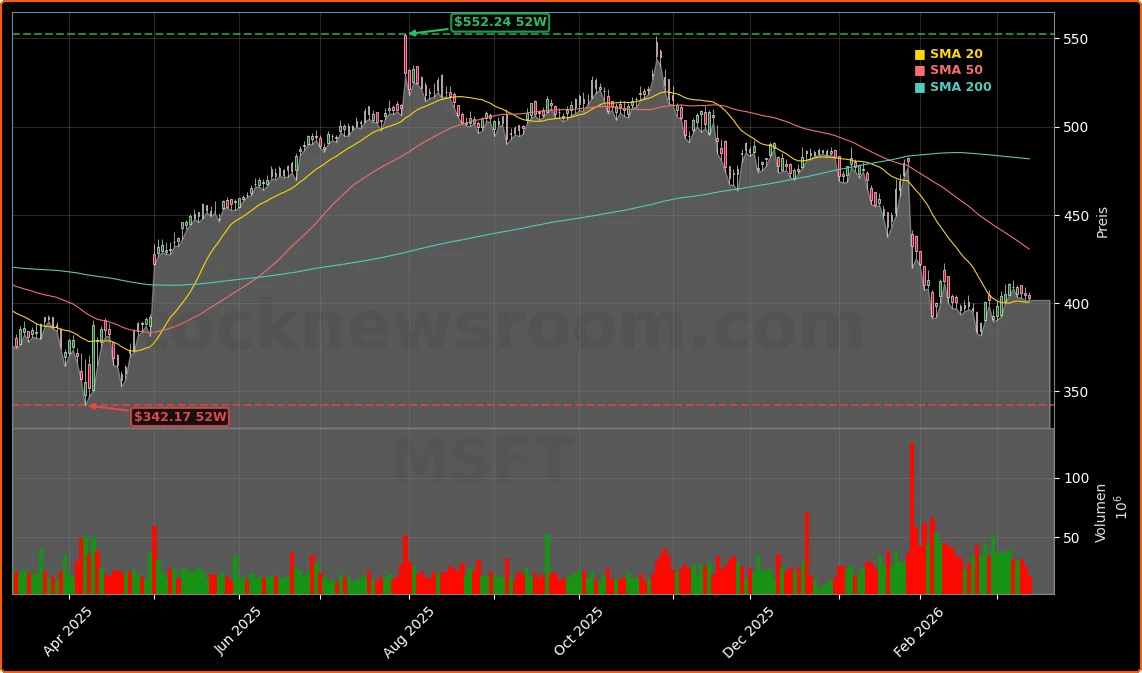
At around $403 per share, Microsoft trades near 21 times next year’s expected earnings, a discount to some high‑growth AI peers despite consensus revenue and EPS compound annual growth estimates in the mid‑teens through fiscal 2028. Analyst coverage remains broadly positive; firms such as Zacks highlight that Wall Street’s average rating on Microsoft is firmly in the “Buy” camp. While day‑to‑day trading is increasingly influenced by options “whale” activity identified in the IT sector, the fundamental thesis continues to center on whether Microsoft AI Investments can sustain double‑digit growth at a multi‑trillion‑dollar market cap.
What risks and opportunities do investors face now?
The near‑term risk is that capex outpaces AI revenue for several quarters, pressuring free cash flow and feeding volatility if macro conditions tighten or credit markets wobble. Leadership turnover, including Jha’s retirement, adds another layer of execution risk as Microsoft drives Copilot and Windows roadmaps forward. Competition is intensifying as IBM, Oracle and cloud rivals push their own AI governance and infrastructure solutions, aiming to win regulated industries where trust and compliance are non‑negotiable.
Microsoft looks like a classic case of short‑term cash‑flow anxiety masking a long‑duration AI earnings story.
— Independent equity strategist on Wall Street
Conclusion
On the opportunity side, Microsoft sits at the crossroads of multiple secular trends: cloud migration, generative AI, cybersecurity, and digital health. Its leasing commitments and new data‑center builds position Azure as a core utility for AI workloads, while OpenAI integration and Copilot subscriptions offer high‑margin monetization on top of that base. For diversified U.S. and global portfolios, the stock remains a cornerstone AI holding alongside NVIDIA and Tesla, but with a more defensive earnings profile than many pure‑play chip or software names.
Further Reading
- Microsoft Corporation (MSFT) on Yahoo Finance (Yahoo Finance)
- Here’s Why Microsoft Is Still the Safest AI Stock You Can Own in 2026 (The Motley Fool)
- Microsoft’s New AI Health Tool Can Read Your Medical Records and Give Advice (The Wall Street Journal)
- Wall Street Analysts See Microsoft (MSFT) as a Buy: Should You Invest? (Zacks Investment Research)