Are massive Microsoft AI Investments laying the groundwork for future dominance or just fueling a painful stock slump today?

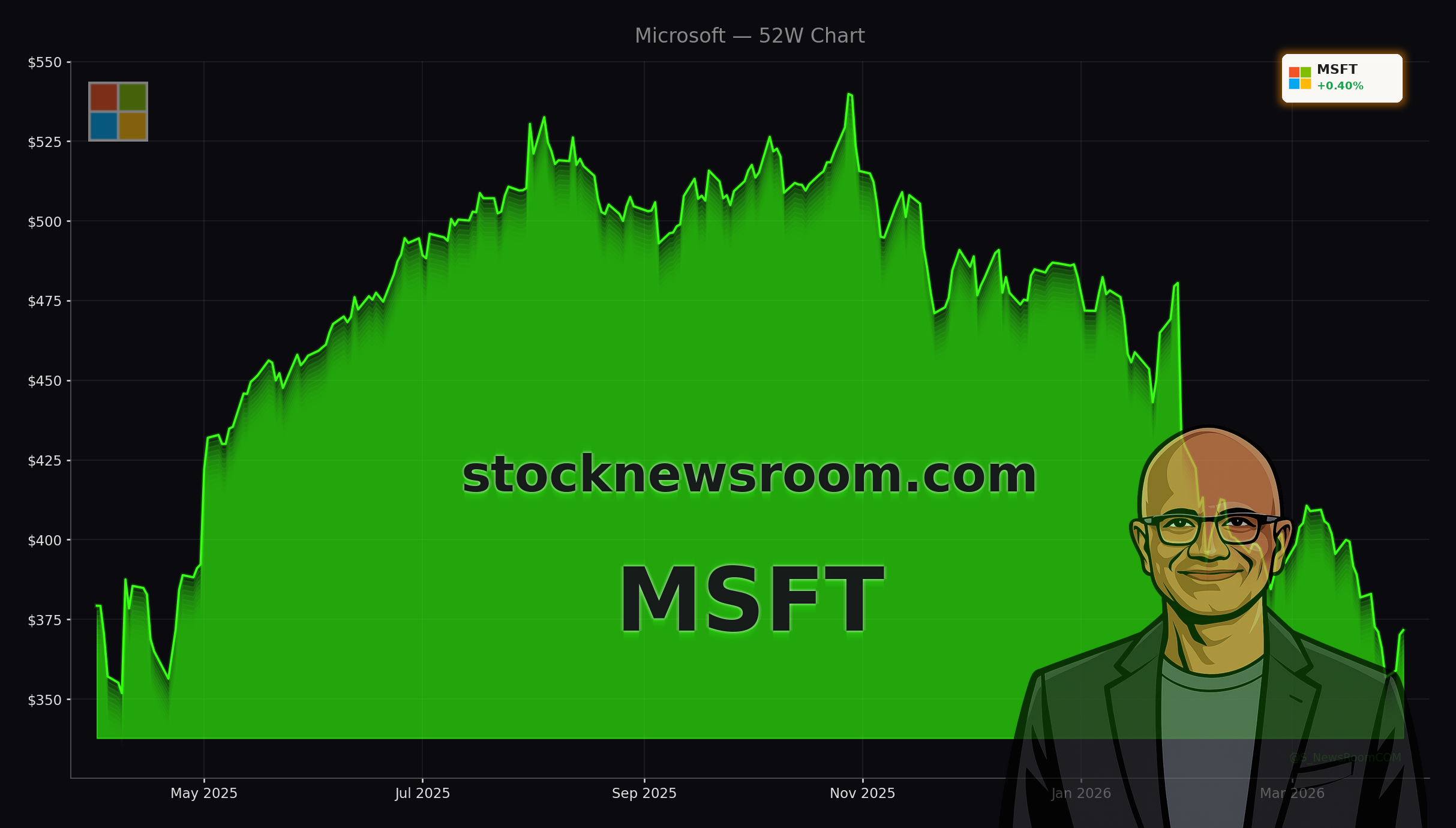
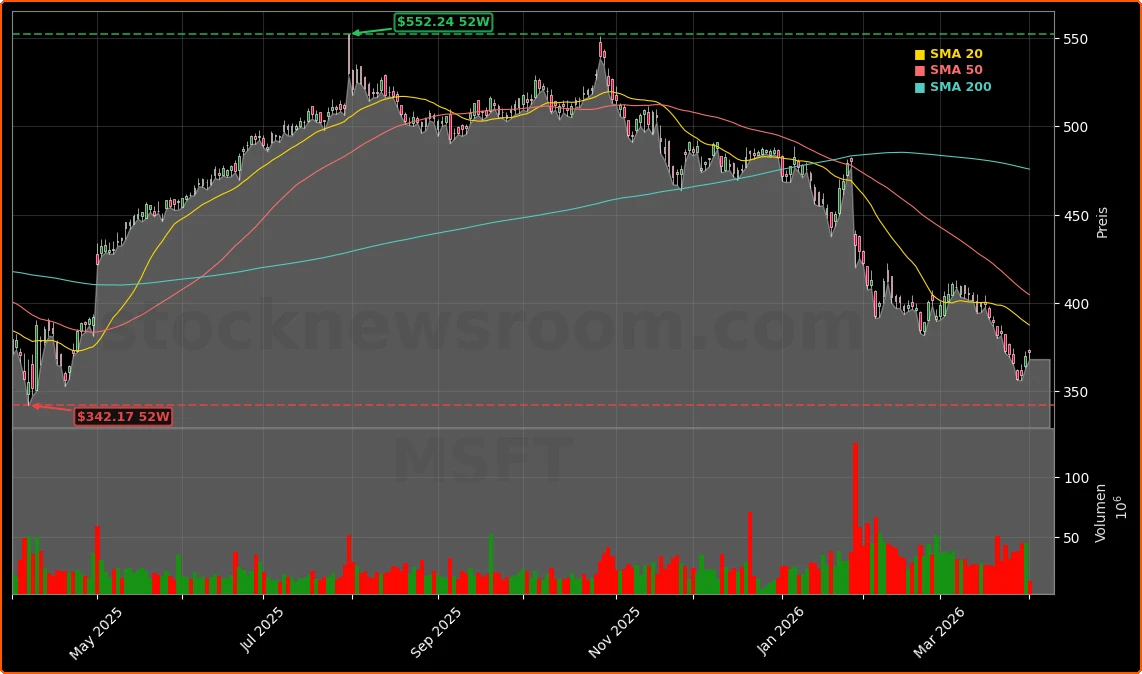
Microsoft KI-Investitionen und Kursrutsch have become shorthand for a broader rotation out of mega‑cap tech. After a three‑year run of double‑digit gains, Microsoft’s first quarter of 2026 ended with a roughly 24% slide, its worst quarterly performance since 2008, driven less by slowing demand than by sticker shock over a $140‑plus billion AI infrastructure budget.
Why are Microsoft and peers selling off?
Microsoft’s retreat comes as the so‑called Magnificent Seven unwind part of their multi‑year outperformance. Year to date, Microsoft is among the weakest of the group, with declines that outpace Apple, Tesla and NVIDIA. The move reflects a broader “Great Rotation” in which investors have shifted from long‑duration growth stories into more cyclical, cash‑heavy sectors like energy and industrials.
Yet under the surface, Microsoft’s operating metrics remain robust. Fiscal Q2 2026 revenue climbed about 17% year over year to more than $81 billion, with cloud revenue surpassing $50 billion for the first time and Azure growing around 39%. Commercial remaining performance obligations doubled to roughly $625 billion, showing enterprises are locking in long‑term cloud and AI contracts even as the stock price stumbles.
That disconnect — strong fundamentals vs. sharp multiple compression — is why several institutions argue that the pullback is more about sentiment on Microsoft AI Investments than deteriorating business momentum.
How big are Microsoft AI Investments now?
Management has effectively signaled an AI arms race. Microsoft plans to boost capital expenditures to roughly $145 billion to $146 billion in fiscal 2026, with the vast majority targeting AI‑ready data centers, GPUs and networking. Quarterly capex has nearly doubled versus a year ago, and losses linked to the OpenAI partnership have ballooned into the low‑single‑digit billions per quarter.
Internationally, Microsoft AI Investments are reshaping its footprint. In Singapore, the company has committed $5.5 billion through 2029 for cloud and AI infrastructure, skills training and cybersecurity programs. In Thailand, Microsoft will deploy more than $1 billion over the next two years to expand data‑center capacity, strengthen sovereign cloud capabilities and upskill the local workforce. These initiatives build on earlier multibillion‑dollar commitments across Indonesia, Malaysia and India, and underscore how tightly AI strategy is tied to regional infrastructure build‑outs.
At the same time, Microsoft reorganized its Copilot business, unifying consumer and commercial AI efforts and elevating former Snap executive Jacob Andreou to run the unit while AI chief Mustafa Suleyman focuses on next‑generation models and “superintelligence.” The goal is straightforward: turn free usage into paid seats fast enough to justify the surge in Microsoft AI Investments.
What role does energy and geopolitics play?
Energy security is emerging as a critical piece of the AI story. Chevron and Microsoft are in exclusive talks, alongside investment firm Engine No. 1, on a proposed $7 billion natural‑gas‑fired power project in West Texas that would supply around 2,500 megawatts to a massive data‑center campus with Microsoft as the anchor customer. The behind‑the‑meter design would tie Permian Basin gas production directly into computing demand, reducing grid reliance and hedging power costs for high‑density AI workloads.
Geopolitical risk is also rising. Iran’s Islamic Revolutionary Guard Corps recently threatened U.S. tech firms with significant Middle East operations, including Microsoft, Apple and NVIDIA, declaring them “legitimate targets” in retaliation for Western actions. While such threats have not yet translated into material operational disruptions, they highlight how AI infrastructure build‑outs in regions like the Gulf come with elevated security and regulatory risk.
How does Wall Street view Microsoft now?
Despite the drawdown, analyst conviction remains high. Benchmark initiated coverage of Microsoft with a Buy rating and a $450 price target, arguing that the 28% drop from October 2025 highs has created a compelling long‑term entry point. MarketWatch recently highlighted Microsoft’s enormous cloud backlog as a “treasure chest” that could help lift the stock roughly 20% from current levels as AI monetization improves.
CFRA’s Angelo Zino has also labeled the stock a strong buy, noting that Microsoft now trades at roughly 18 times his 2027 earnings estimate — a multiple he views as attractive given high‑30% Azure growth and the company’s central position in enterprise AI. Meanwhile, some independent valuation models see potential upside of 60% or more over the next couple of years if management can translate Microsoft AI Investments into recurring, high‑margin cloud and software revenue.
Not every voice is bullish. Skeptics argue that AI could compress software pricing and erode traditional license economics, putting pressure on legacy businesses even as Copilot ramps. Others worry that regulatory probes into cloud licensing and AI bundling, particularly in the U.K., could slow Microsoft’s ability to fully leverage its ecosystem advantage versus rivals like Apple and Meta Platforms.
Related Coverage
For a deeper look at Microsoft’s regional strategy, including its $1 billion data‑center commitment in Thailand and how that reshapes the Asian cloud race, read “Microsoft AI Investment Boom: $1B Thailand Bet Explained”. Investors tracking the broader AI hardware cycle should also review Micron’s latest balance‑sheet moves in “Micron Tender Offer +9.1% Surge as AI Cash Flows Build”, which explores how memory suppliers are positioning for sustained AI demand.
Microsoft is no longer a story stock; it’s a world‑class AI and cloud franchise being repriced in real time.— Angelo Zino, CFRA (paraphrased view)
Microsoft AI Investments are colliding with a rare valuation reset, creating both anxiety and opportunity for investors. The core business — from Azure to Copilot to long‑term cloud contracts — remains strong even as capex and geopolitical risk rise. For U.S. portfolios, the next few quarters will be critical in showing whether this spending spree turns into durable AI cash flows, but Microsoft still looks like a central long‑term beneficiary of the AI supercycle.