
Can the Microsoft AI Strategy turn a $625 billion Azure backlog and Copilot upsell into the next decade’s dominant profit engine?

How is Microsoft positioned in the AI race?
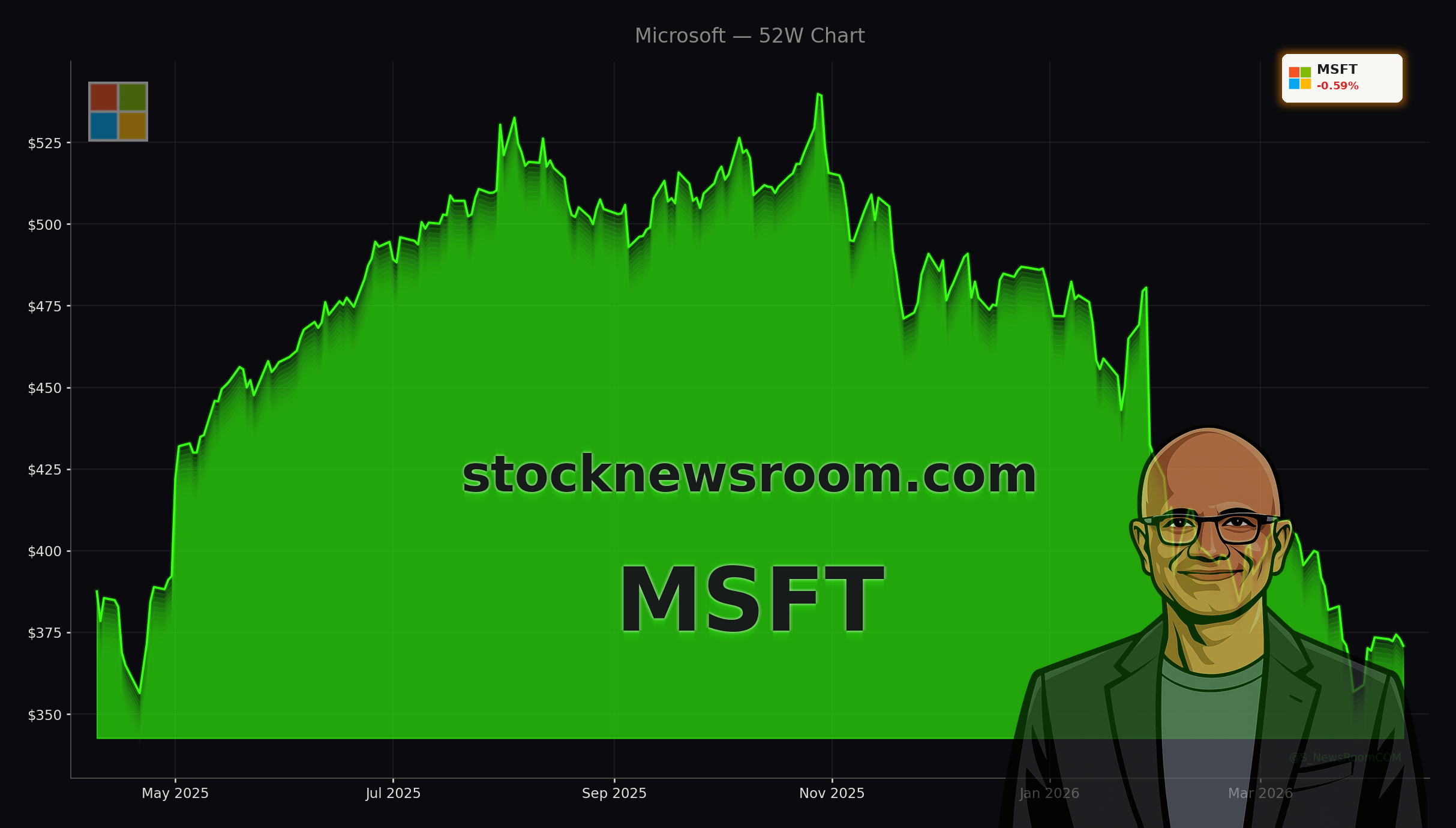
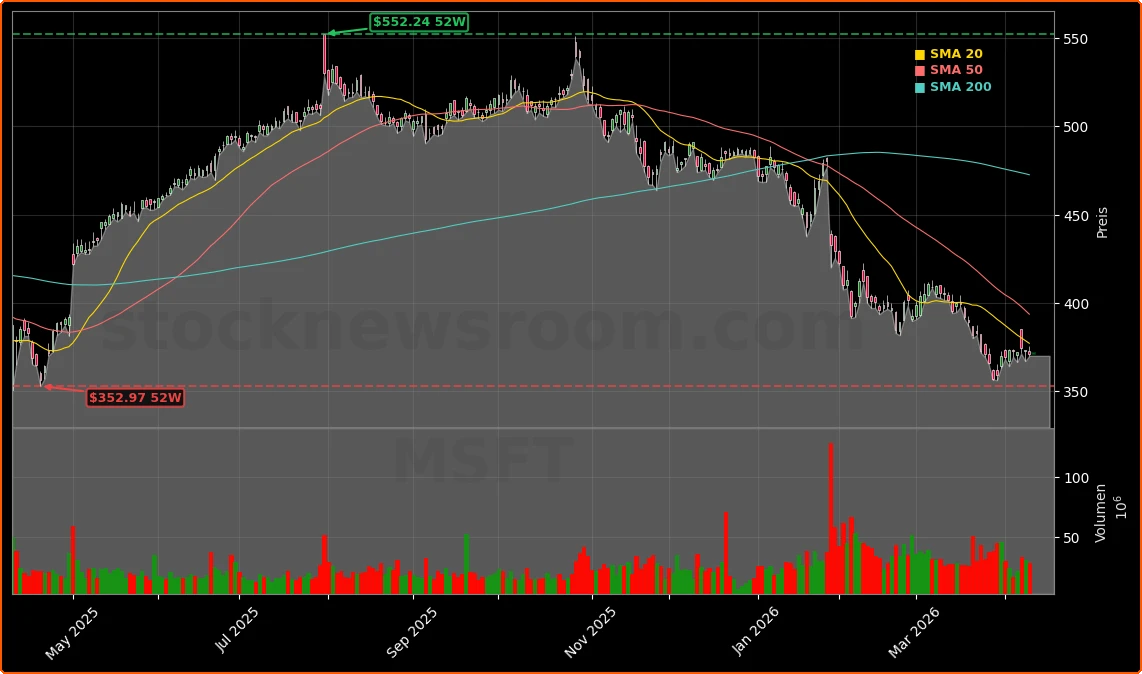
Microsoft Corporation has become one of Wall Street’s purest large-cap plays on enterprise AI, combining a dominant productivity suite, a top-two hyperscale cloud platform and a deep partnership with OpenAI. While the stock has pulled back in early 2026 and underperformed some high-flying AI peers, major institutional investors such as PineStone Asset Management and several U.S. wealth managers have modestly increased positions, signaling confidence that the current consolidation is more pause than peak.
The centerpiece of the Microsoft AI Strategy is to turn its massive installed base into paying AI customers. Copilot add-ons in Microsoft 365 create high-margin upsell, while Azure AI services convert AI model demand into recurring infrastructure revenue. At the same time, management is absorbing near-term earnings pressure from heavy data center capex to expand capacity for AI workloads, betting that usage-based economics will more than offset the spending curve over the long term.
Is Azure justifying the spending surge?
Azure remains the clearest proof point for investors evaluating whether AI infrastructure spending can pay off. Recent results showed Azure revenue growing about 39% year over year, with management indicating that growth would have been even higher if more capacity had been made available for external customers rather than internal AI priorities. In practical terms, Microsoft is capacity-constrained, not demand-constrained, in its cloud AI business.
Behind the scenes, Azure is scaling to support a reported AI computing backlog of roughly $625 billion. That figure represents multi-year customer commitments for cloud and AI services and is driving a massive build-out of data centers, networking, and accelerator hardware, much of it sourced from partners like NVIDIA and key networking vendors such as Arista Networks. Analysts broadly expect that as new capacity comes online, a larger share of this backlog will convert into recognized revenue, supporting high-30s Azure growth even as the base gets larger.
Goldman Sachs analyst Gabriela Borges recently reiterated a Buy rating on Microsoft, arguing that elevated AI-related capex and near-term Azure competitive concerns are already priced in. Her thesis centers on exactly this dynamic: capex is front-loaded, but the cloud and AI opportunity stretches across the decade as enterprises modernize their infrastructure and shift more workloads to Azure.
Can Copilot meaningfully move the needle?
While Azure is the primary growth engine, Copilot is an important second pillar of the Microsoft AI Strategy. Copilot licenses are sold on top of existing Microsoft 365 subscriptions, improving ARPU and deepening customer lock-in. The company has embedded Copilot across Office apps, Windows, GitHub and security products, opening multiple monetization surfaces across its software stack.
There is debate on Wall Street about how quickly Copilot can scale into a material revenue line. Some critics argue that Copilot still trails frontier assistants from leading AI labs, and that enterprise adoption curves could be gradual as companies work through governance and productivity measurement. Still, early feedback from large customers and the willingness to pay a premium for generative tools suggest that Copilot could become a multi-billion-dollar run-rate business over the next few years, with attractive margins relative to hardware-centric AI plays.
Importantly for investors, Copilot leverages assets Microsoft already owns—Office distribution, installed base, and cloud infrastructure—so incremental economics can be compelling even if unit pricing faces competitive pressure from rivals such as Apple in ecosystem AI and Alphabet on the productivity side.
What risks could derail the Microsoft AI Strategy?
Even a robust Microsoft AI Strategy faces meaningful risks. First, the company is spending tens of billions of dollars on data centers and accelerators at a time when some investors fear an AI overbuild similar to the telecom bubble. If AI usage or enterprise adoption trails expectations, returns on invested capital could compress. Second, regulatory and policy risks are rising: the White House has convened Microsoft, Alphabet and major banks to discuss AI-related cyber risks, highlighting potential future compliance and security cost burdens.
Third, competition remains intense. NVIDIA is capturing an outsized share of AI economics at the hardware layer, while cloud rivals like Amazon and Alphabet are racing to secure their own AI workloads. On the application side, Meta, Anthropic, and others are pushing new models that may challenge Microsoft’s perceived lead via OpenAI. At the same time, Microsoft’s own sustainability goals are under scrutiny as data center emissions rise and the company reportedly pauses some carbon credit purchases for 2026, complicating its broader ESG narrative.
Related Coverage
Investors looking for a deeper dive into long-term valuation scenarios can review how AI spending feeds into 2030 price targets in Microsoft Forecast Boom: Are 2030 AI Price Targets Realistic?, which explores whether the current pullback sets up a new multi-year entry point. For a sector-level lens, Alphabet AI Investments Record: Inside the $185B Capex Boom analyzes how Alphabet’s record AI capex compares with peers and what that might mean for competitive dynamics across the mega-cap tech space.
In sum, the Microsoft AI Strategy hinges on two levers: converting a $625 billion AI backlog in Azure into durable cloud revenue and scaling Copilot into a profitable software upsell across its ecosystem. For U.S. investors in the S&P 500 and NASDAQ, the stock’s recent weakness, continued institutional interest, and sustained analyst Buy ratings suggest Microsoft remains a core AI compounder rather than a fading giant. The next few quarters of Azure growth, Copilot adoption data, and AI capex guidance will show whether Microsoft can turn its AI ambitions into the kind of consistent earnings power that keeps it at the top of global portfolios.