
Is MicroStrategy’s Bitcoin strategy still a chance despite billions in book losses and a stock crash, or is it already a high-risk gamble?
MicroStrategy Bitcoin Strategy: What’s Behind the 100th Purchase?
MicroStrategy Incorporated acquired 592 Bitcoin for approximately $39.8 to $40 million last week, completing its 100th purchase since the launch of its Bitcoin strategy in August 2020. The average price of the latest acquisition was $67,286 per coin, including fees. The purchase was financed through the sale of nearly 298,000 common shares as part of an ongoing at-the-market program.
This transaction increases the company’s Bitcoin holdings to a total of 717,722 BTC. The total acquisition cost amounts to about $54.6 billion, resulting in an average purchase price of around $76,020 per Bitcoin. With the current Bitcoin price around $65,000, this translates to a market value of approximately $47 to $47.5 billion—and an unrealized loss of about $6.8 to $7.1 billion.
Notably, despite this massive book loss, MicroStrategy’s Bitcoin strategy shows no signs of restraint. The company has been purchasing almost weekly since the beginning of 2026, signaling that there are still shares worth several billion dollars available for further BTC purchases.
MicroStrategy Incorporated: Stock Between Crash and Leverage on Bitcoin
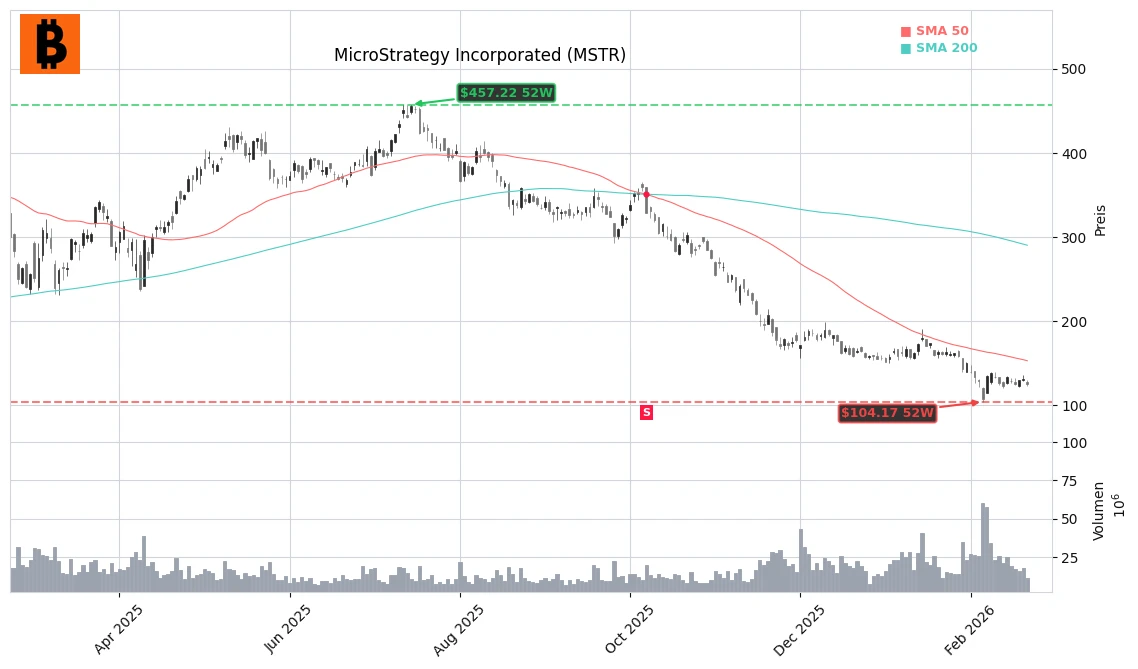
While the Bitcoin holdings are historically high, the stock of MicroStrategy Incorporated is in a pronounced consolidation phase. MSTR recently closed at $125.27, down 4.41% from the previous day ($131.05). Over the past six to twelve months, the decline has totaled around 60 to 62%, significantly more than the correction in Bitcoin itself.
Despite the price drop since mid-2025, MSTR remains well above 2020 levels: since the first Bitcoin purchase in August 2020, the stock has increased by about 950% from approximately $12.44. For investors, MicroStrategy continues to serve as a highly leveraged vehicle for the cryptocurrency’s price development, amplified by additional effects from capital measures and structured financing.
Analyst firms such as Zacks Investment Research note that MicroStrategy has raised over $25 billion in capital over the past few years, accumulating around 225,000 additional Bitcoin in 2025 alone. At the same time, the high volatility of the stock, declining multiple valuations, and a recently reported quarterly loss in the double-digit billions have dampened the sentiment of some market participants. Traditional Wall Street firms like Citigroup, Goldman Sachs, or RBC Capital Markets are being closely watched by investors, but specific new ratings at the current price level are the focus of ongoing debates.
MicroStrategy Incorporated: How Sustainable is the Financing Model?
A central element of MicroStrategy’s Bitcoin strategy is the consistent use of capital markets. The company utilizes both the issuance of common shares and variable-rate preferred shares to generate additional funds for Bitcoin purchases. A particular focus is on a preferred equity instrument with a monthly dividend yield of 11.25%, which the company used extensively to finance BTC purchases in 2025.
This structure continuously provides MicroStrategy with fresh capital but also increases fixed costs. To service the dividends, the company has reportedly built a cash buffer of around $2.25 billion. Strategically, management under Michael Saylor aims to issue $6 to $10 billion in so-called “digital credit” annually, thereby expanding Bitcoin holdings by 5 to 14% per year.
MicroStrategy’s Bitcoin strategy is explicitly designed for very long time frames—Saylor speaks of a horizon between 10 and 100 years. He sharply articulates the risk-reward profile of Bitcoin: either the price falls to zero or rises to a million dollars in the long term. Accordingly, he describes the current phase as a “mild crypto winter,” where price fluctuations are high, but structural acceptance by banks and institutions is significantly greater than it was four years ago.
At the same time, it is evident that the market evaluates this radicality ambivalently. Data from research providers and prediction markets indicate a declining expectation that MicroStrategy will need to sell Bitcoin in the short term, but the strong dependence on the crypto market and high debt levels remain central risk factors.
From an investor’s perspective, a clear decision is at hand: those who believe in Bitcoin’s bullish long-term thesis find in MicroStrategy’s Bitcoin strategy an extremely focused but risky leverage on the cryptocurrency. Conversely, skeptics may interpret the billions in book losses and the aggressive use of equity and debt as a warning signal.
If Bitcoin doesn’t go to zero, it will go to a million.
— Michael Saylor
Bottom Line
MicroStrategy’s Bitcoin strategy has reached a symbolic milestone with the 100th purchase, making the company a clear leverage play on the cryptocurrency—despite a multi-billion dollar book loss. For investors, this represents an extremely speculative but consistently executed long-term bet, where corporate value and stock price are almost entirely tied to Bitcoin. Whether this radical approach pays off will be revealed in the next market cycles, but MicroStrategy remains a central vehicle for investors looking to play the Bitcoin story to the fullest.
Related Sources
- MicroStrategy Incorporated on Yahoo Finance (Yahoo Finance)
- Strategy’s Bitcoin Accumulation Accelerates: More Upside Ahead? (Zacks Investment Research)
- Strategy shows no fear — it keeps adding to a losing bitcoin position as prices drop (Market Watch)
- Strategy: Time To Accumulate (Seeking Alpha)