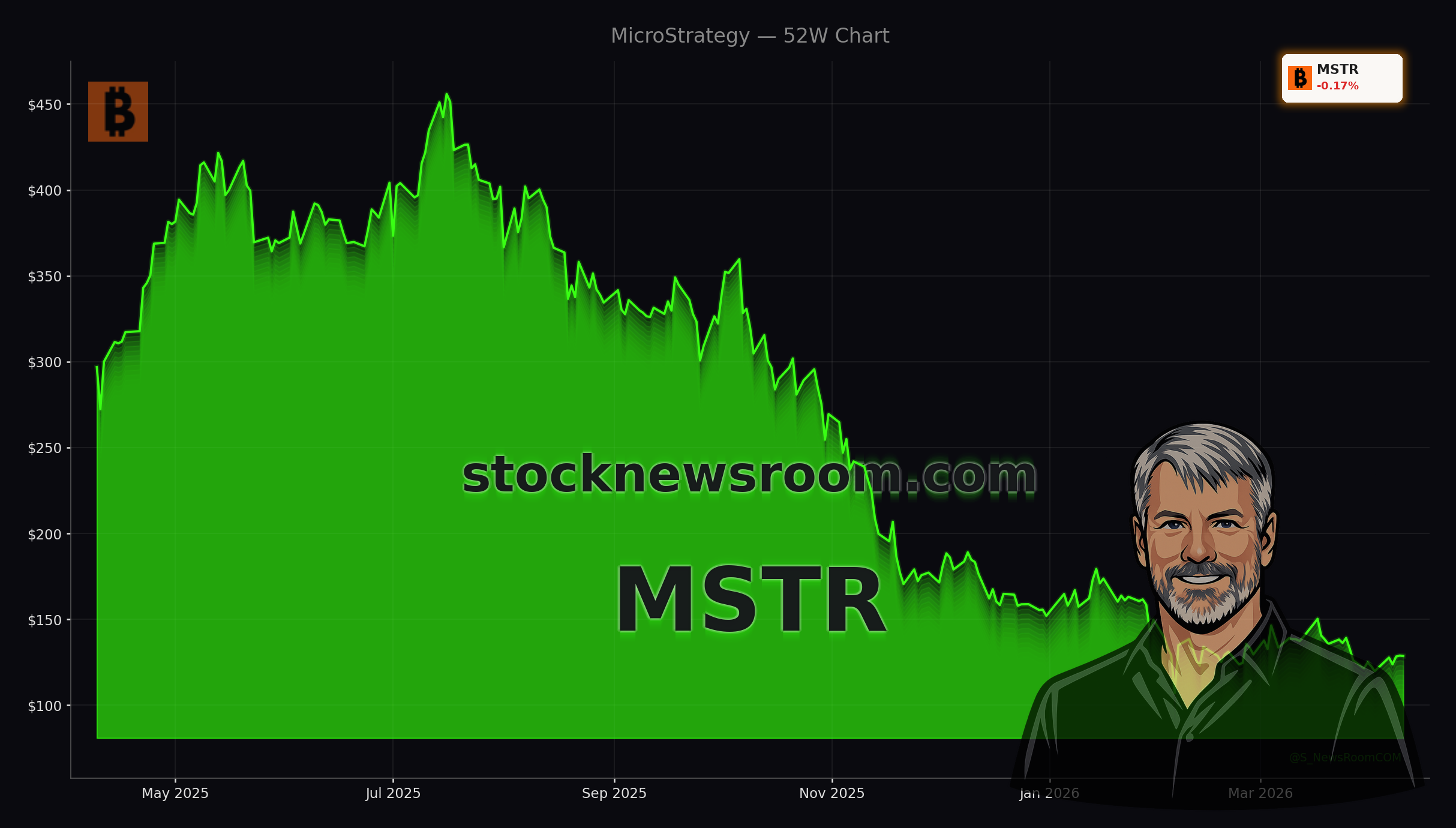

Is the MicroStrategy Bitcoin Strategy a visionary balance-sheet revolution or a leveraged time bomb for equity investors?

Is MicroStrategy outgrowing its own market cap?
On paper, the MicroStrategy Bitcoin Strategy has turned the company into the world’s largest corporate BTC holder by a huge margin. Operational filings show roughly 766,970 BTC on the balance sheet, worth about $54.8 billion at a Bitcoin price near $71,000. That figure exceeds the company’s own equity market capitalization by roughly $11 billion, a rare inversion where the treasury asset clearly dominates the operating business.
Despite that headline number, investors are currently staring at an unrealized loss of around 5.4% on the Bitcoin position versus its aggregate acquisition cost near $75,700 per coin. That drawdown follows a far steeper slide from Bitcoin’s $126,000 all‑time high in October 2025, a roughly 46% peak-to-trough move that would normally cause corporates to slam the brakes on further buying. Instead, the MicroStrategy Bitcoin Strategy has accelerated again, signaling that Michael Saylor is treating every correction as an opportunity to remove more coins from circulation.
Between March 23 and March 29, the company briefly paused purchases, holding about 762,099 BTC and emphasizing that no new stock was sold in that window. That lull ended in early April with another buying wave, underlining just how central BTC accumulation has become to the corporate playbook.
How is MicroStrategy financing nonstop BTC buying?
The latest disclosure on April 6 showed an additional 4,800+ BTC added in the first week of the month, funded via Series A preferred shares (ticker STRC). This is textbook MicroStrategy Bitcoin Strategy: raise capital through equity or convertible debt and immediately convert the proceeds into Bitcoin. The approach has turned MSTR into a high‑beta proxy on BTC, frequently trading with more volatility than the underlying coin.
That financing model comes with a clear cost. Common shareholders face ongoing dilution as new stock and preferred instruments are issued to feed the BTC buying machine. If Bitcoin’s long‑term trajectory is up and to the right, per‑share net asset value can still grow despite a rising share count. But if Bitcoin grinds sideways or moves lower for several years, existing investors risk owning a smaller slice of an underwater position, while leverage and preferred claims sit above them in the capital stack.
Insider activity highlights how management is managing personal exposure as well. Recent Form 144 filings show planned open‑market sales by executives and affiliates, including proposed disposals of 700 and 1,400 Class A shares linked to older option grants and restricted stock vesting. While relatively small versus total float, these moves underscore that some insiders are taking chips off the table even as the company keeps adding Bitcoin.
What does this mean for U.S. investors versus BTC ETFs?
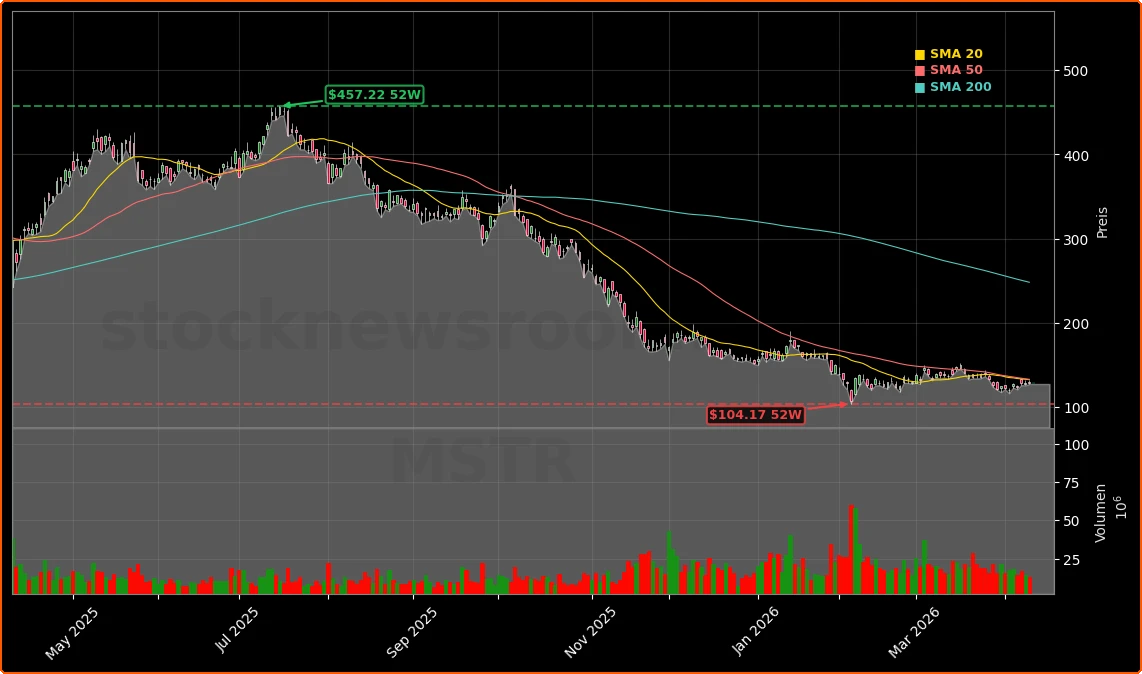
For American portfolios, the central question is whether it still makes sense to own MSTR instead of simply using a spot Bitcoin ETF or direct BTC holdings. Over the past five years, the strategy appears to have worked: MicroStrategy stock is up about 95%, compared with roughly 19% for Bitcoin and 74% for the S&P 500. That outperformance reflects leverage plus Saylor’s timing through multiple bull cycles.
However, the risk profile is fundamentally different from a pure BTC position. Bitcoin ETFs do not dilute shareholders or issue convertible debt; they simply track the coin. In contrast, the MicroStrategy Bitcoin Strategy layers equity dilution and credit risk on top of Bitcoin volatility. Trading ideas on platforms like TradingView increasingly frame MSTR as a leveraged BTC call option, with technical analysts pointing to key support zones and warning that a deep Bitcoin drawdown could pressure the balance sheet.
At the same time, some institutional research desks have warmed to the name as a high‑growth, high‑risk technology play. Screens from TradingKey highlight above‑average growth metrics and categorize the stock as a “Buy” with significant upside tied to higher BTC prices. While specific price targets vary, the thesis is broadly consistent: if Bitcoin heads markedly higher, MSTR’s equity could compound faster than a plain ETF, albeit with sharper drawdowns.
How does MicroStrategy compare to other corporate BTC bets?
The digital asset treasury trend that swept through corporate finance in 2025 has mostly faded. Many previously active buyers, including miners and smaller tech firms, have cut or reversed their BTC exposure. Some have liquidated coins to retire convertible debt or shore up balance sheets, underscoring how unforgiving the combination of volatility and leverage can be.
Against that backdrop, MicroStrategy stands almost alone. It now controls roughly three‑quarters of all Bitcoin held by publicly listed companies and about 3.6%–3.8% of the nearly 20 million coins already mined. Every additional purchase tightens free float, reinforcing the narrative that long‑term holders are absorbing supply ahead of future demand waves driven by ETFs, institutional allocators, and potentially mega‑cap technology players such as NVIDIA, Tesla or Apple if they ever follow with larger treasury allocations.
For now, major Wall Street banks like Goldman Sachs, Morgan Stanley or Citigroup have largely confined their published ratings and price targets to Bitcoin miners or crypto‑adjacent infrastructure, not MicroStrategy itself, leaving retail and hedge fund investors to interpret the risk-reward profile on their own.
Related Coverage
For a deeper dive into the downside scenarios, including the risk of a forced unwind if Bitcoin suffers a major crash, readers should review “MicroStrategy Bitcoin Strategy: -3.1% Crash Warning for $MSTR”, which analyzes how leverage and dilution could magnify losses. For context on broader crypto sentiment beyond Bitcoin, “Ripple Price Outlook: Trillion-Dollar Dreams or Crash Risk” examines whether XRP’s bullish narratives can withstand mounting macro and regulatory uncertainties.
The MicroStrategy Bitcoin Strategy has transformed **MicroStrategy Incorporated** from a niche software vendor into a leveraged Bitcoin holding company, delivering market‑beating returns but at the cost of elevated dilution and balance‑sheet risk. For most U.S. investors, straightforward BTC exposure via spot ETFs or direct holdings will likely remain the cleaner option, while MSTR is best viewed as an aggressive satellite bet for those convinced Bitcoin will dramatically re-rate higher. The next leg in Bitcoin’s cycle will determine whether Saylor’s approach becomes a case study in visionary capital allocation or a warning about the limits of financial engineering.