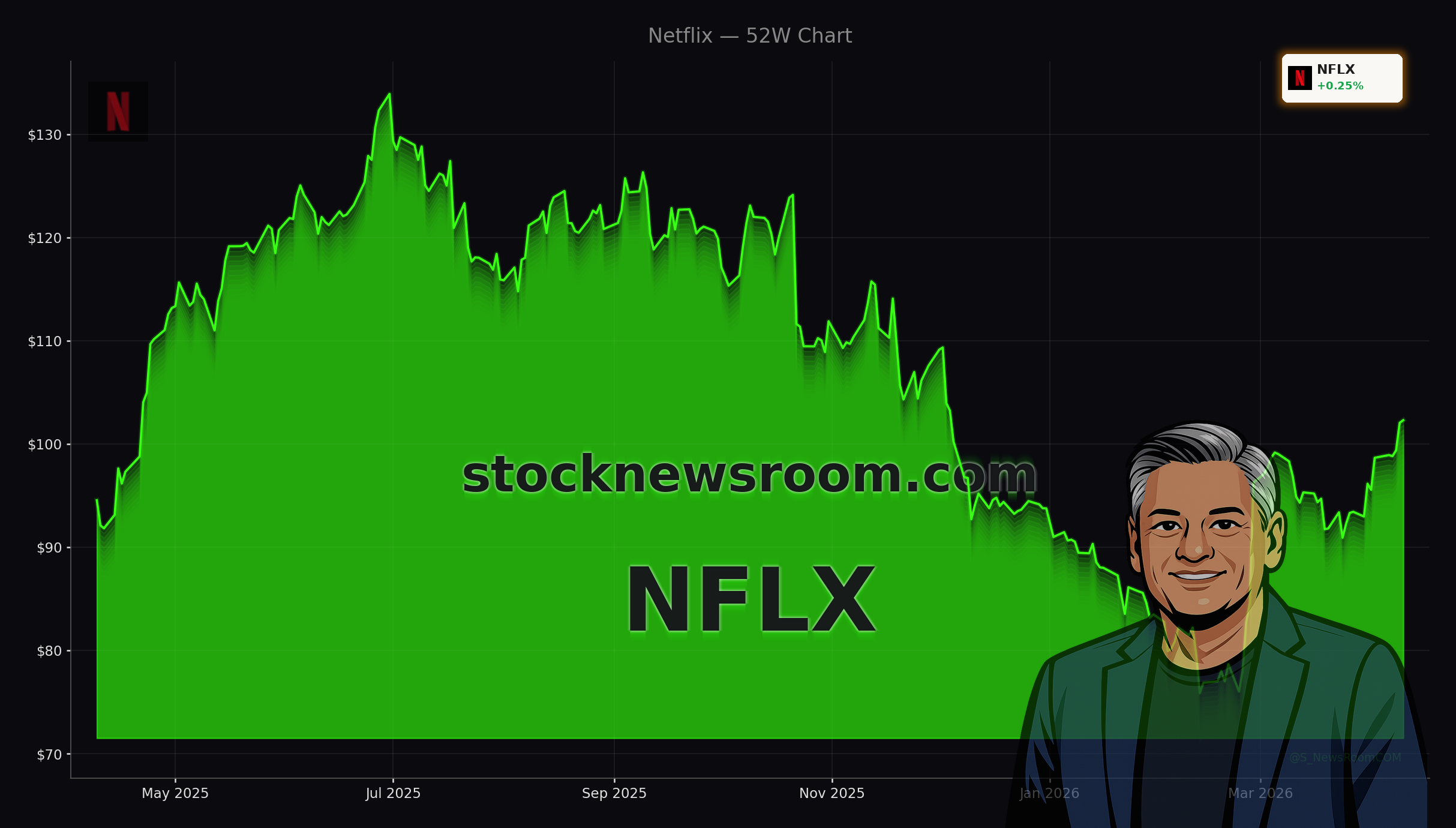

Did the failed Netflix Merger just kill a mega-deal dream—or quietly set up the streamer’s next phase of growth?

How did hedge funds react to the failed Netflix Merger?
The breakdown of the planned all‑cash acquisition of Warner Bros. Discovery reset expectations around capital allocation at Netflix, Inc. and created a sharp window of volatility. Three of Wall Street’s most closely watched hedge funds took the other side of that uncertainty in Q4 2025. Ken Griffin’s Citadel Investors lifted its Netflix position by roughly 549%, adding about 5.8 million shares. Jim Simons’ Renaissance Technologies bought around 4.5 million shares, a 164% increase, while Philippe Laffont’s Coatue Management added 4.7 million shares, up 75.5%. All three firms built positions as deal worries weighed on valuation, effectively treating the failed Netflix Merger as a one‑time shock rather than a thesis breaker.
The original Netflix Merger proposal involved an all‑cash offer for Warner Bros. Discovery at $27.75 per share, backed by a $42.2 billion bridge facility. When Paramount stepped in with what was deemed a superior bid, Netflix walked away, triggering a breakup fee scenario and ending its most aggressive M&A push to date. Importantly for equity holders, that also removed a massive balance sheet overhang: management no longer needs to finance or integrate a legacy media empire, and can instead redirect focus to organic growth and shareholder returns.
Is Netflix’s core business strong enough without Warner Bros. Discovery?
For many institutional investors, the collapse of the Netflix Merger clarified rather than clouded the outlook. Full‑year 2025 revenue climbed to about $45.2 billion, up nearly 16% year over year. Net income grew more than 26% to roughly $11 billion, and free cash flow surged around 37% to $9.5 billion. That kind of cash generation is central to the buy case: Netflix now has more flexibility to resume share buybacks and potentially boost capital returns after temporarily pausing repurchases to fund the deal effort.
A key pillar of the standalone thesis is advertising. Netflix’s ad‑supported tier has evolved from an experiment into a meaningful revenue stream, contributing more than $1.5 billion in 2025 and expected to roughly double again in 2026. Wedbush Securities this week reiterated an Outperform rating and raised its price target to $118, projecting ad revenue could reach about $3 billion by 2026 as low churn and strong engagement make the platform more attractive for brands. With over 325 million paid subscribers and U.S. TV time share hitting a record 9.0% in December, Netflix offers advertisers scale rivaled only by giants like Apple TV+ and the broader streaming bundles built around Disney+ and other services.
What are Wall Street analysts signaling now?
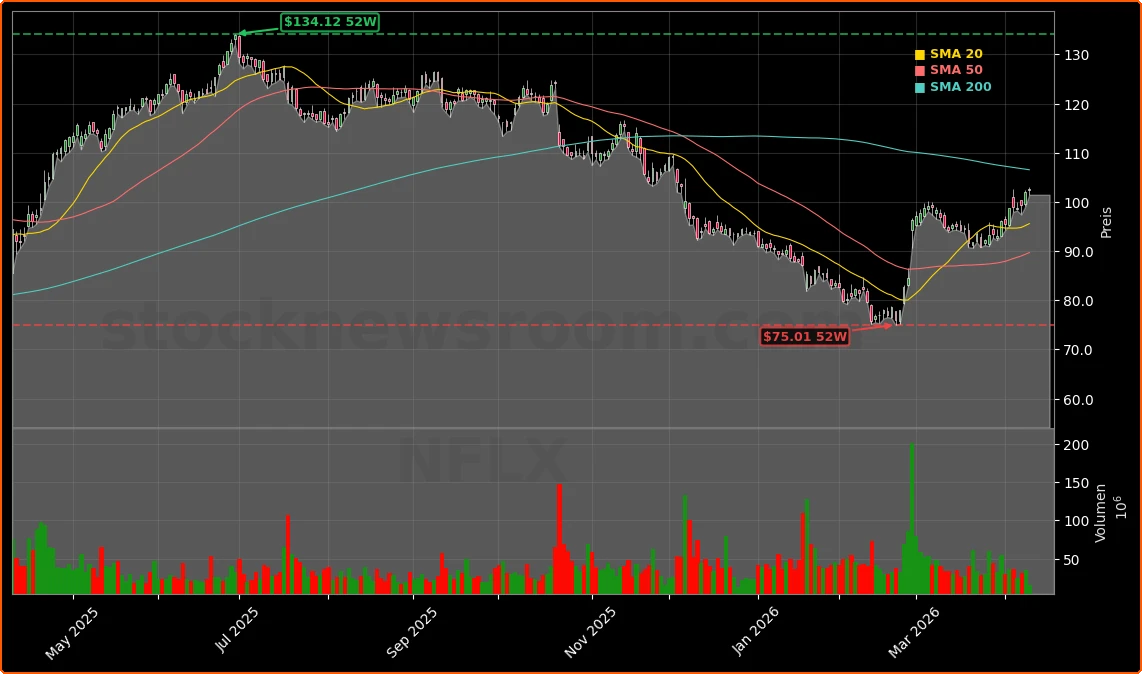
Analysts have largely treated the abandoned Netflix Merger as a positive reset rather than a missed growth lever. Goldman Sachs upgraded Netflix to Buy on April 7 with a $120 price target, citing accelerating revenue, improving margins, and scope for increased shareholder payouts now that a $42 billion financing commitment is off the table. Morgan Stanley followed on April 9, lifting its target to $115 and maintaining an Overweight rating, arguing that concerns about engagement and margins are easing and that the current price offers an “attractive entry point.” BMO Capital is even more bullish, reiterating a Buy rating with a $135 target and naming Netflix one of its top Communication Services picks alongside media names that compete with platforms like NVIDIA‑powered cloud gaming and Tesla’s in‑car entertainment ecosystems.
Not every voice on Wall Street is convinced. Morningstar assigns Netflix a 2‑star rating with a fair value estimate of $80, calling the stock moderately overvalued and highlighting elevated competitive risk across streaming. Yet even that more cautious view acknowledges a strong balance sheet and a narrow but durable economic moat, with pricing power and international expansion offsetting some of the pressure from rival bundles that now package Netflix alongside Disney+, Hulu, HBO Max, and others.
How does guidance and valuation stack up?
For 2026, Netflix is guiding to revenue of $50.7 billion to $51.7 billion, implying 12% to 14% growth, with an operating margin target of 31.5% and free cash flow of about $11 billion. At roughly 40x trailing earnings and 26x forward earnings, the stock trades at a premium to the broader NASDAQ and S&P 500 but below many high‑growth communication and tech names. The market appears willing to pay up as long as operating leverage and ad monetization trends hold.
Investors are also watching how Netflix manages “subscription creep” following a series of price hikes that helped push video subscription costs up around 13% for U.S. consumers. To mitigate churn risk, the company is layering in new value drivers: a growing slate of live sports and events, including NFL games and WWE RAW, and family‑oriented initiatives like the ad‑free “Netflix Playground” mobile gaming app for kids. These moves aim to defend engagement and justify higher ARPU in a world where Comcast’s Xfinity and others are bundling Netflix with rivals to cut consumers’ effective streaming bills.
Related coverage on Netflix strategy
For a deeper dive into how the company’s evolving playbook ties together, including ad growth and bigger content bets, readers can explore Netflix Strategy +2.7% Rally: Quality Pivot and Ads, which examines whether a focus on higher‑impact shows, advertising, and new products can re‑ignite the growth story. The same article, also featured as a sector piece at Netflix Strategy +2.7% Rally: Quality Pivot and Ads, places Netflix within the broader streaming and Communication Services landscape and contrasts its approach with competitors facing similar pressures.
Ultimately, the failed Netflix Merger has cleared the deck for a cleaner, cash‑rich growth narrative centered on ads, pricing, and live content rather than mega‑deals. For U.S. and global investors, the key question is whether upcoming earnings will confirm that this standalone strategy can sustain double‑digit growth at today’s valuation. With hedge funds and major banks leaning bullish, the next few quarters will show whether Netflix just dodged a bullet—or passed on a transformative opportunity.