
Will the latest Netflix Price Increase boost long-term growth or finally push frustrated streamers to cancel their subscriptions?

How big is the new Netflix Price Increase?
Netflix, Inc. has raised prices across all its U.S. plans by $1 to $2 a month, including both ad-supported and ad-free tiers. The standard plan with ads now costs $8.99 per month, up from $7.99. The ad-free standard subscription jumps by $2 to $19.99, while the top-end premium plan climbs by $2 to $26.99. Add-on fees for extra members are also moving higher, to $6.99 for ad-supported accounts and $9.99 for ad-free accounts.
The company quietly updated its plan page on Thursday, marking its second broad-based Netflix Price Increase in just over a year. At nearly $27 a month, the premium tier is now priced more like a cable add-on than a budget streaming option, underscoring how far the industry has moved from the early “cord-cutting” discount narrative.
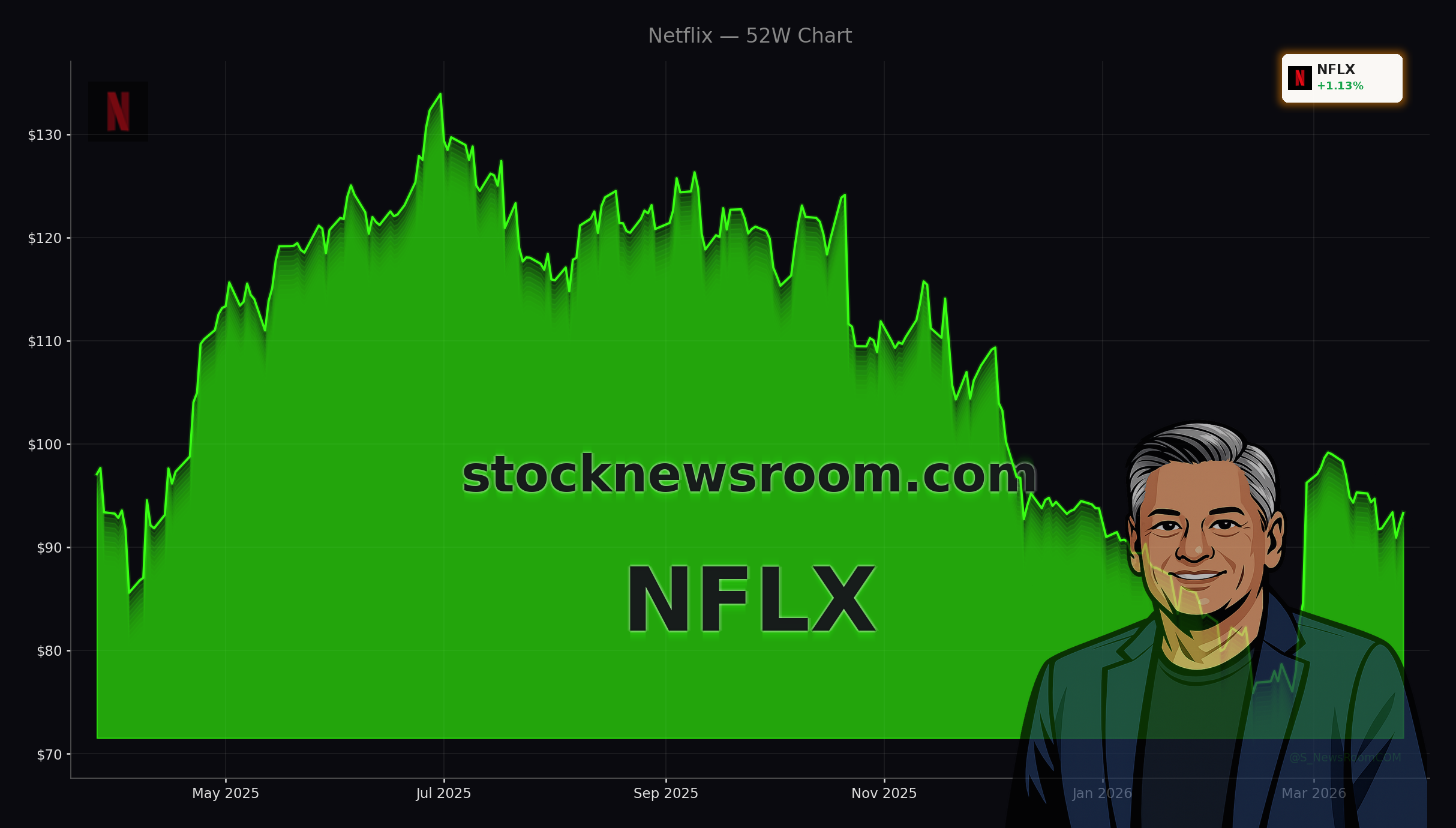
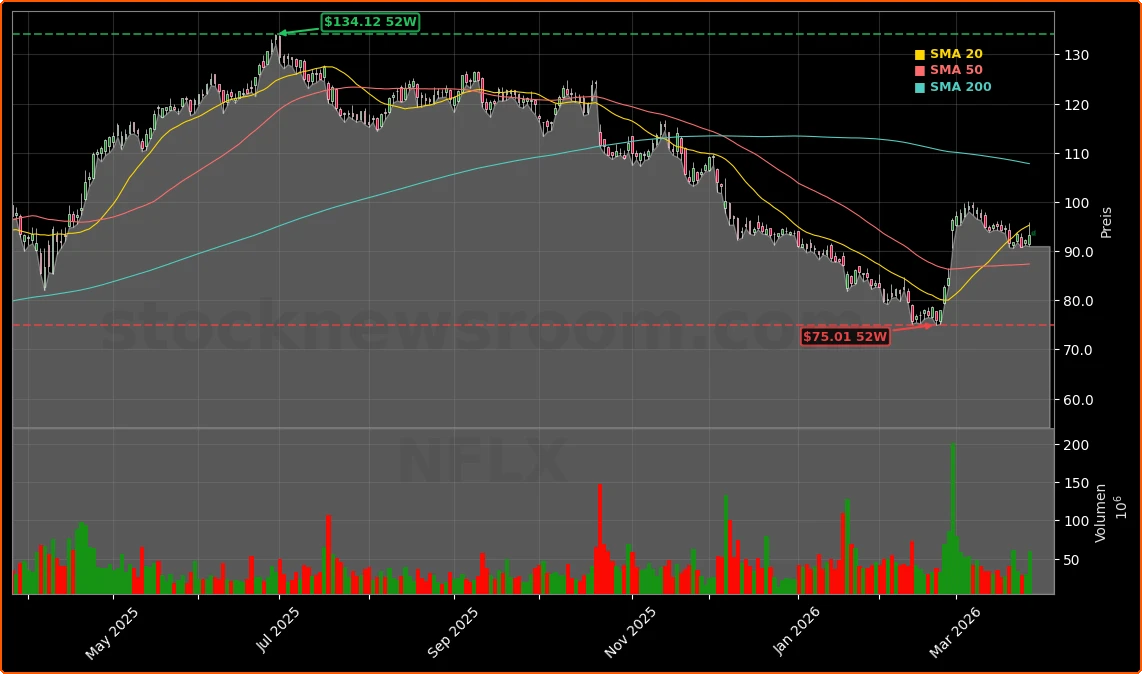
Despite the higher prices, Netflix shares finished Thursday up about 1.13% at $93.32, with after-hours trading lifting the stock to roughly $94.00. The stock remains down modestly over the past 12 months but is trading well above its 52-week low, signaling that investors broadly see the move as supportive for margins rather than a red flag for demand.
What is Netflix buying with higher prices?
Management is justifying the Netflix Price Increase with an aggressive ramp in content and product investments. The company plans to spend roughly $20 billion on programming this year, about $2 billion more than in 2025. That budget covers an expanding slate of series and films, live events such as sports broadcasts, and new formats including video podcasts and games.
On the creative technology front, Netflix is also pushing deeper into AI-enabled production workflows. In one high-profile example, the company acquired Ben Affleck’s AI-driven post-production firm InterPositive, which focuses on visual logic and editorial consistency in editing rather than pure generative AI. Deals like this are designed to streamline post-production, scale output, and potentially improve margins over time.
On the revenue side, Netflix has guided for 2026 revenue in the $50.7 billion to $51.7 billion range, with higher membership fees and a near-doubling of advertising income expected to be key growth drivers. The ad-supported tier, now priced at $8.99, is central to that strategy as the company tries to balance affordability for price-sensitive users with the need to monetize viewership more efficiently.
How does this compare to other streamers?
Netflix is not alone in raising prices, but it remains the pace-setter that often gives cover to rivals. Over the past 18 months, major platforms including Disney+, HBO Max, Paramount+ and Apple TV+ have all pushed through higher subscription costs in the U.S. The trend has helped coin the term “stream-flation,” capturing how the once-cheap streaming bundle increasingly resembles the old cable bill.
Yet Netflix still commands outsized engagement. Recent viewing data showed the service as the second-most-watched platform in the U.S., behind only YouTube, which is owned by Alphabet. That audience scale gives Netflix more leeway than smaller rivals to test how far it can take a Netflix Price Increase before subscribers defect in large numbers or downgrade to ad-supported tiers.
At the same time, the competitive landscape is shifting. Netflix recently walked away from a contested bid for Warner Bros. Discovery, after a rival offer from Paramount–Skydance changed the deal dynamics. Analysts at several Wall Street firms, including Citigroup and Morgan Stanley, argued that while the aborted deal removes a near-term catalyst, avoiding a highly leveraged acquisition may ultimately prove prudent if Netflix can instead drive growth organically through pricing and advertising.
What does the move mean for Wall Street?
For portfolio managers focused on the S&P 500 and NASDAQ heavyweights, the Netflix Price Increase reinforces the company’s role as a high-beta play on streaming profitability. The stock’s modest year-to-date underperformance, down around 0.5%, reflects lingering concerns about slowing subscriber growth and the absence of a major M&A narrative following the Warner Bros. episode. But the quick positive reaction to Thursday’s news suggests investors are ready to reward tangible steps to expand monetization.
Analyst commentary has generally framed the hike as a manageable risk. Zacks Research recently highlighted Netflix’s expanding global subscriber base and ad-supported traction as key offsets to rising churn risk. Other firms, including TD Cowen, estimate that this round of adjustments represents roughly an 11% blended price increase across tiers in the U.S., a level they see as digestible given the depth of the content library and the service’s role as a default entertainment option in many households.
In the broader tech complex, Netflix sits alongside giants like NVIDIA, Tesla and Apple as a core holding in growth-focused ETFs such as QQQ and SPY. While chipmakers and AI leaders are capturing more of the current market narrative, Netflix’s ability to convert engagement into recurring, inflation-resilient cash flows keeps it firmly on the radar of long-term growth investors.
Related Coverage: What changed after the failed deal?
Investors looking to understand how strategy has shifted around content ownership and capital allocation can revisit the recent analysis in Netflix Acquisition Shock as Warner Bros. Deal Dies. That piece explores whether stepping away from Warner Bros. Discovery was a missed chance to lock in a deep content vault or a smart decision to avoid balance sheet strain just as pricing power is being tested. Together with the current Netflix Price Increase, it paints a picture of a company leaning more heavily on internal content development, pricing optimization and advertising rather than transformative acquisitions.
The latest Netflix Price Increase underscores how the streaming leader is shifting from pure subscriber growth to revenue and margin optimization, even at the risk of modest churn. For U.S. investors, the move reinforces Netflix’s status as a pricing-power story within the communication services and tech complex, alongside other platform giants. The next few quarters of subscriber and ad-tier data will show whether this bet on monetization over scale pays off, but for now Netflix remains a central, if volatile, building block in many growth-oriented portfolios.