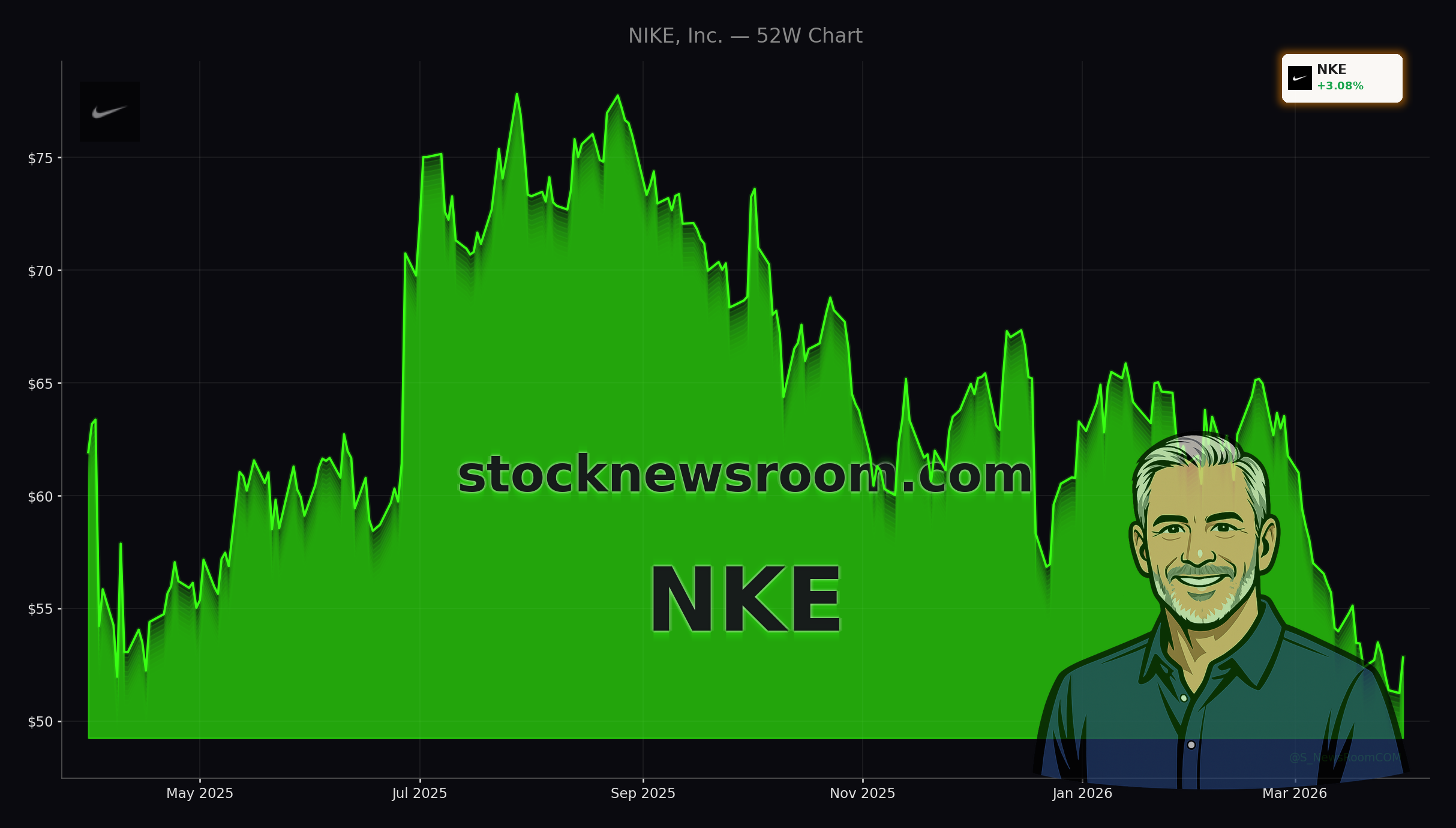

Can a headline beat on Nike Earnings offset a brutal after-hours sell-off and mounting pressure in China and Converse?

How did Nike Earnings compare with expectations?
Fiscal third‑quarter Nike Earnings came in ahead of consensus, but with clear signs of strain. The company reported earnings per share of $0.35, easily topping Wall Street forecasts around $0.29–$0.31 and demonstrating some benefit from tighter discounting and cost discipline. Revenue reached roughly $11.3 billion, slightly above expectations of $11.24 billion and essentially flat year over year on a reported basis, but down on a currency‑neutral basis as legacy demand fades in key categories.
Gross margin improved to about 40.2%, beating estimates near 39.8%, helped by lower promotions and a better mix of full‑price sales. However, overall profit still fell from $0.54 per share in the prior‑year quarter, underscoring that the recovery is far from complete. Management highlighted progress in cleaning up older inventories and emphasized a renewed focus on performance product and innovation, including more localized assortments in Asia and new concepts such as massage‑style slides aimed at wellness‑oriented consumers.
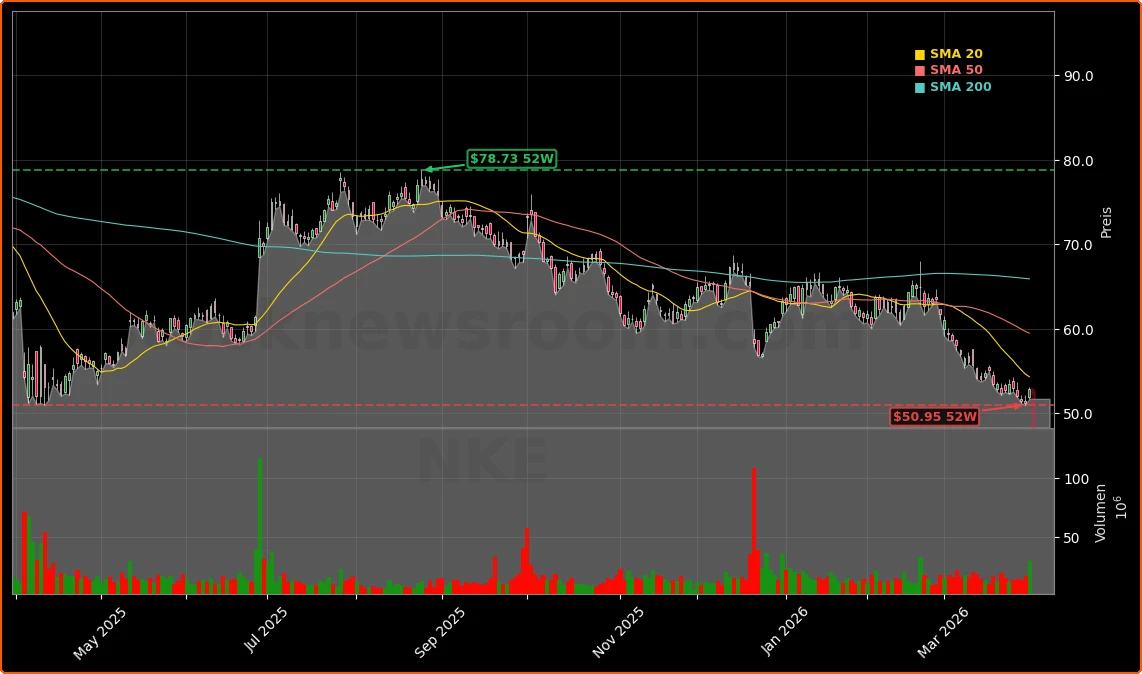
Despite the headline beat, after‑hours trading told the real story: NKE dropped to around $48.12, leaving the stock near nine‑year lows and signaling that these Nike Earnings, while better on paper, did not change the prevailing bearish narrative on Wall Street.
What do the numbers say about North America and China?
For US‑focused investors, regional performance was critical. North America, Nike’s largest market, showed modest resilience. Revenue in the region came in at roughly $5.03 billion, up low single digits year over year and essentially in line with analyst expectations of $5.04 billion. Importantly, wholesale partners such as Foot Locker have again become a growth lever as Nike leans back into wholesale after years of chasing a direct‑to‑consumer (DTC) strategy.
Wholesale revenue overall grew about 5% to $6.5 billion, while NIKE Direct revenue fell roughly 4% to $4.5 billion. That mix shift reflects a deliberate reset under CEO Elliott Hill, who is roughly eighteen months into a multiyear turnaround. The company is rebuilding relationships with key retailers and rebalancing its digital push after an overemphasis on its own apps and stores. For American portfolios, this suggests Nike may behave more like a traditional branded supplier again, closer in model to Apple’s blend of own‑store and third‑party distribution than the prior DTC‑at‑all‑costs playbook.
Greater China remains the swing factor. Segment EBIT surged to about $467 million, far above some analyst models that had penciled in nearer $270 million, signaling early operational improvement. Yet demand is still underwhelming compared with pre‑slowdown levels, and overall China revenue continues to lag as local competitors step up and consumer confidence remains fragile. Several Wall Street strategists still describe China as a 12‑month‑plus repair story, not a quick fix.
Is Converse now Nike’s biggest structural headache?
Converse turned from a modest growth engine into a visible drag. Revenue at the iconic brand is expected to fall about 19% this fiscal year and another 25% in fiscal 2026, potentially dropping to $1.3 billion. That downtrend has fueled repeated speculation that Nike could eventually divest Converse, with interest reportedly coming from global brand aggregators. Management reiterated that it has no intention of selling the business for now, but many investors believe a spin‑off or sale could unlock value and simplify the turnaround.
For US investors comparing options within consumer discretionary, this is a key differentiator versus rivals like Adidas and Puma, which are more focused on their core banners without a struggling side brand of this size. If Converse continues to shrink, it will weigh on consolidated growth metrics even if the core Nike and Jordan lines stabilize. In the meantime, management must decide whether to reinvest to revive the brand or quietly right‑size it to protect margins.
How is Wall Street reacting to Nike Earnings and the turnaround?
Sentiment around NKE remains divided. Earlier in March, Barclays upgraded the stock to “Overweight,” arguing that expectations had been reset to a level where even modest execution could drive upside. Oppenheimer reiterated an “Outperform” rating, likewise betting that the worst of the reset is behind the company. However, other voices are far more cautious. CFRA analyst Zachary Waring maintained a “Hold” stance, calling the stock fully valued even at depressed levels and warning that the turnaround will likely take longer than the market hopes, especially with legacy franchises such as Jordan 1, Air Force 1 and Dunks showing fatigue.
Television personality and portfolio manager Jim Cramer labeled Nike the “most controversial stock of the week,” noting there is still “no line of sight” back to former greatness and insisting that management must both clear remaining old inventory and launch must‑have new products. Options activity heading into the release reflected similar uncertainty: traders were actively buying in‑the‑money April call options at the $50 strike, positioning for a post‑earnings bounce, even as technicians pointed to a relentless long‑term downtrend and nine‑year price lows.
From a broader benchmark perspective, Nike has been one of the worst performers in the Dow Jones Industrial Average in recent months, even as megacap winners like NVIDIA and Tesla drove gains in the S&P 500 and NASDAQ. That underperformance is precisely what attracts contrarian value hunters—but also what keeps risk‑averse investors on the sidelines.
Related Coverage
For a deeper dive into how analyst calls are shaping sentiment, our recent piece “Nike Forecast Warning: Can the Barclays Upgrade Ignite a Real Rally?” examines whether Barclays’ bullish stance can truly break the stock out of its downtrend or if investors should remain cautious. If you are comparing retail and consumer names, it is also worth reading “Walmart Forecast Warning: Can the Valuation Boom Last?”, which looks at whether Walmart’s AI‑and‑e‑commerce‑driven premium is sustainable versus more cyclical players like Nike.
In summary, the latest Nike Earnings beat consensus but failed to convince the market that the turnaround is firmly on track, as China weakness and the Converse drag continue to overshadow incremental progress in North America. For US investors, the stock now sits at a crossroads between deep value and ongoing execution risk, with mixed analyst ratings reflecting that split view. The next few quarters of Nike Earnings—especially any evidence of durable growth in China and a clearer strategy for Converse—will likely determine whether NKE graduates from Dow laggard back to reliable core holding.