Can a reshuffled Nike innovation team revive growth fast enough to justify the stock’s premium valuation as rivals close in?

Why is Nike under pressure today?
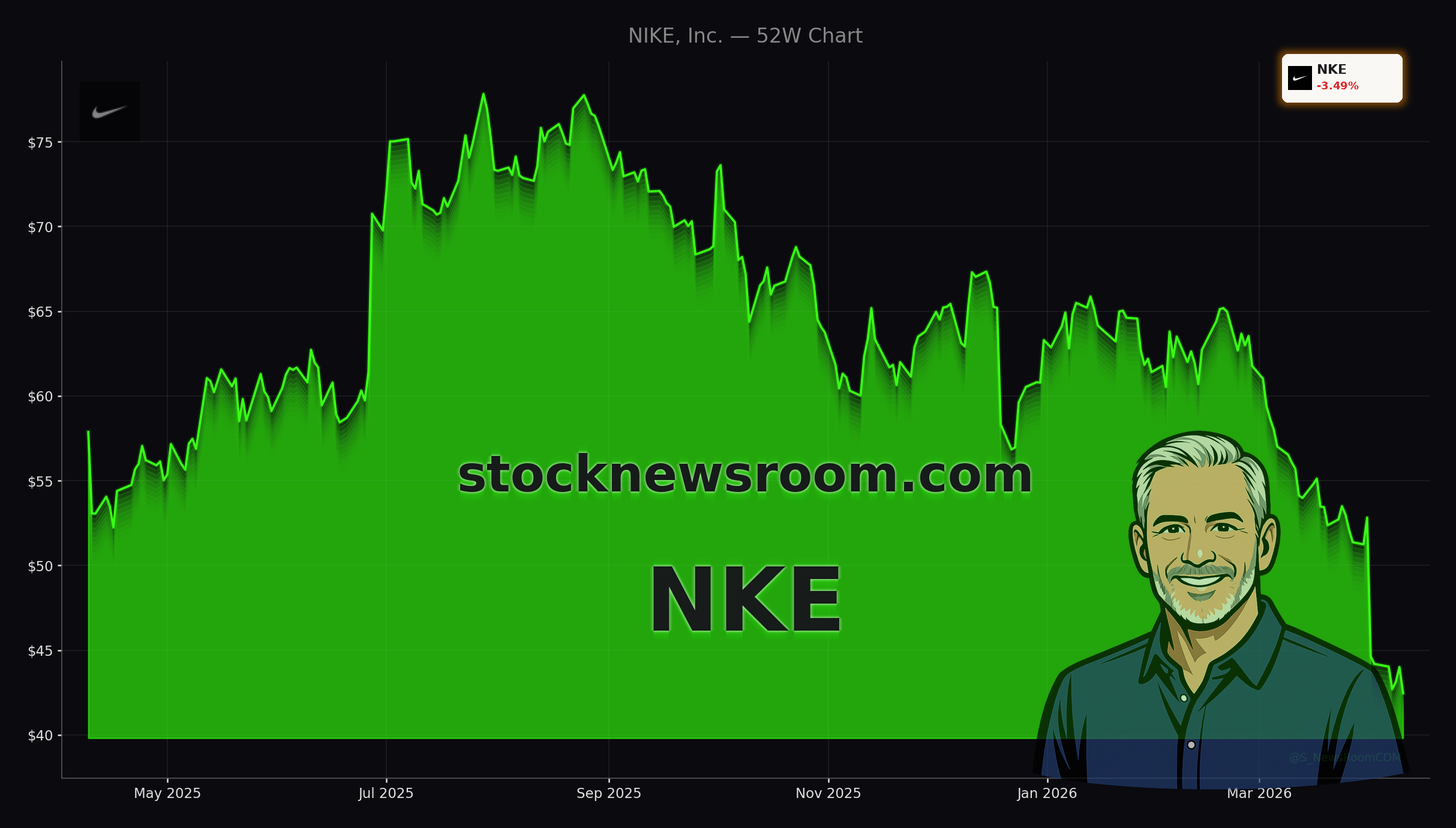
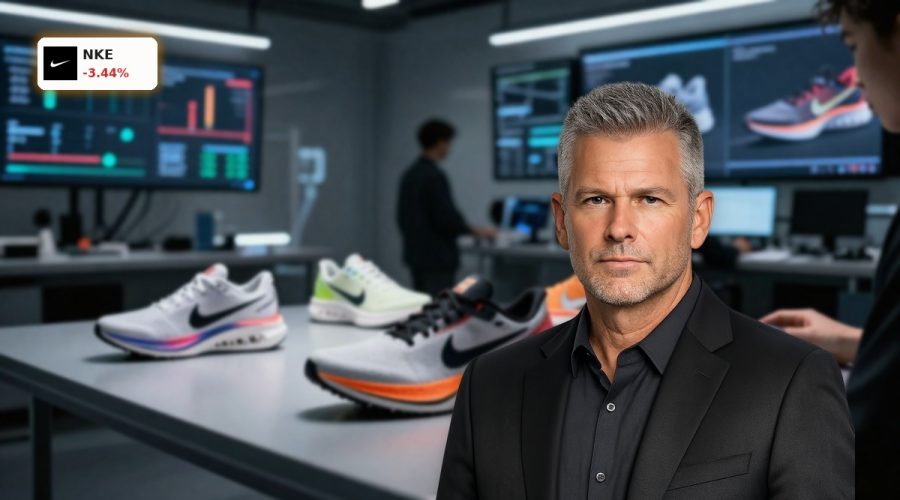
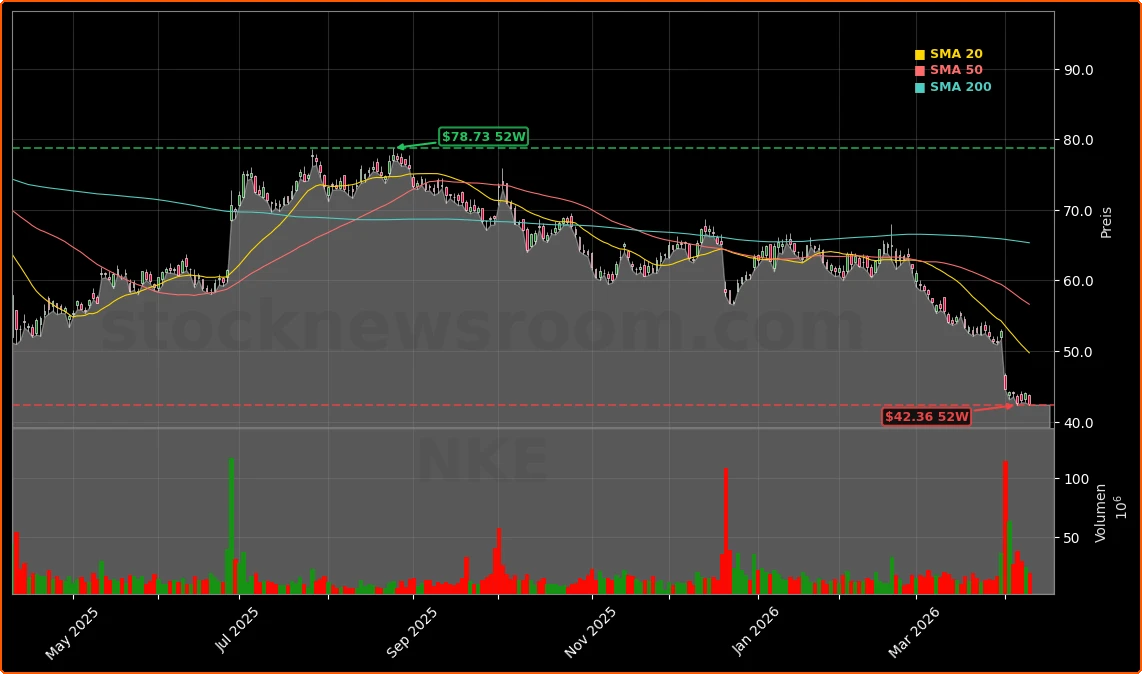
On Friday, Nike stock slipped to $42.48, a 3.44% decline from Thursday’s $43.95 close, extending a brutal slide that has left the shares more than 70% below their late‑2021 peak. The move comes on the heels of a weak outlook: management is guiding for a 2% to 4% revenue decline on a constant‑currency basis this year, with China sales expected to drop around 20% in the current quarter. Revenue in the latest reported quarter was a little over $11 billion, essentially flat, while earnings per share of $0.35 only modestly exceeded expectations.
The market’s patience is wearing thin. Nike is still a profitable behemoth with roughly $45 billion in annual sales, but growth has slowed to a crawl, margins are pressured by tariffs and discounting, and the stock continues to trade at a premium multiple relative to peers despite the drawdown. That disconnect makes execution on product and strategy — and, by extension, Nike Innovation — central to the investment case.
What changed in Nike Innovation leadership?
This week, CEO Elliott Hill announced that chief innovation officer Tony Bignell is leaving after less than a year in the role, marking the third innovation chief to exit in under three years. Bignell, a three‑decade company veteran credited with breakthrough running models like the ZoomX Vaporfly and the fast‑tracked Vomero Premium, is departing to pursue creative and philanthropic interests.
He will be replaced by Andy Caine, currently vice president and creative director for sportswear, effective Sunday. Caine will report to Phil McCartney, whom Hill installed last year as chief innovation, design and product officer. The shake‑up underscores how critical and yet unsettled the innovation function has become inside Nike as it fights to regain its edge against faster‑moving competitors.
Hill has repeatedly framed the turnaround as a “comeback in the middle innings,” with a key goal of shortening product‑development cycles. In China, Nike’s second‑largest market, local brands can bring seasonal products to market in about half the time, a speed gap that has contributed to seven consecutive quarters of sales declines and heavy discounting that risks eroding brand equity.
How big is Nike’s innovation and fashion problem?
Wall Street is increasingly skeptical that Nike Innovation is keeping pace with consumer trends. Piper Sandler analysts Anna Andreeva and Noah Helfstein cut Nike from “Overweight” to “Neutral,” warning that the athleisure market may be peaking across the industry and that the category is becoming more mature, with brands looking similar and demand shifting toward newer entrants rather than legacy players.
The analysts argue that footwear purchase frequency is at all‑time highs and that, with a fragile consumer backdrop, future market‑share gains will be driven less by a rising tide and more by true product breakthroughs — something they say they “have yet to see from NKE at scale outside of Running.” At the same time, fashion footwear declines are moderating, and a “return of the dressy cycle” could divert spending away from sneakers and hoodies.
Competition is biting. Upstarts such as On, Hoka and Salomon, alongside established rivals like Lululemon and New Balance, have chipped away at Nike’s dominance in performance and lifestyle segments. Social media and influencer culture now allow niche brands to go viral overnight, eroding the traditional marketing advantages Nike enjoyed from its iconic campaigns with global stars and long‑running franchises like Air Jordan.
Is leadership tenure part of the challenge at Nike?
Piper Sandler also flags Nike’s leadership structure as a risk for the turnaround. The average senior executive tenure at the company is about 20 years, and the firm worries that “correct execution of the turnaround requires more outside perspective as opposed to NKE veterans.” The rapid churn in the top Nike Innovation role, contrasted with long‑tenured leadership elsewhere, highlights a tension between institutional knowledge and fresh thinking.
Some initiatives show promise. In North America, Hill’s push to clean up inventories, sharpen assortments and re‑embrace wholesale partners has driven mid‑single‑digit wholesale growth, even as direct‑to‑consumer sales slip. Performance running is a relative bright spot. Nike is also pursuing new partnerships — including collaborations with fashion and shapewear brands — and is in exclusive talks with UEFA to become official match‑ball supplier for men’s club competitions from 2027, potentially displacing adidas after 25 years.
But macro headwinds complicate the picture. Higher oil prices and persistent inflation squeeze lower‑income consumers, while Nike’s mid‑to‑premium price positioning offers only partial protection. If discretionary spending weakens further, even affluent shoppers may delay sneaker purchases or trade down to cheaper brands and retailers like Costco, which is seeing strong traffic trends compared with discretionary names like Nike or Apple.
What does this mean for Nike stock?
On valuation, opinions diverge sharply. Some commentators argue that with a market cap around $63 billion and no clear growth engine, the stock remains expensive, especially after a 74% drawdown from its 2021 high and a still‑rich earnings multiple compared with more beaten‑down consumer names. Others see an opportunity in a global brand whose shares have gone effectively nowhere for more than a decade and now yield around 3.8% in dividends, with potential upside if the China business stabilizes and product heat returns.
Legal and structural signals add another layer for investors to monitor. Kuehn Law is encouraging long‑term shareholders to explore potential derivative claims over past disclosures around the direct‑to‑consumer strategy and competitive positioning. Separately, institutions like Royal Bank of Canada are issuing structured notes linked to Nike’s stock, highlighting ongoing demand for Nike‑tied instruments even amid volatility. Internally, director Travis Knight has reshuffled indirect holdings through estate‑planning moves, but without net selling into the open market.
Related Coverage
For a deeper dive into how guidance and China risk first rocked sentiment, our earlier analysis “Nike Earnings Q3: -8.9% After-Hours Plunge Shocks Wall Street” breaks down the last quarterly report, including constant‑currency declines and the guidance that triggered the steep after‑hours sell‑off. Investors comparing consumer discretionary trends can also read “Costco Sales Update +11%: Record Boom in March Sales”, which highlights how membership‑club giant Costco is delivering robust March sales growth even as branded apparel names like Nike struggle to reignite demand.
We worry if correct execution of the turnaround requires more outside perspective as opposed to NKE veterans.— Anna Andreeva, Piper Sandler analyst
In the end, the latest shake‑up in Nike Innovation leadership underlines how much still has to go right for this turnaround to gain traction. For U.S. investors, Nike remains a durable global franchise but not yet a clear value story, with execution on product speed, China and brand heat likely to determine whether the stock can reclaim lost ground. The next few quarters of launches and guidance updates will show whether the refreshed innovation team can finally put Nike back on offense.