
Are NIO Earnings finally marking a lasting turn to profitability, or just another brief rally in a high‑risk EV story?

Are NIO Earnings signaling a real inflection?
The most important development for investors is that NIO booked a GAAP net profit in Q4 2025 for the first time in its history. Revenue in the quarter reached about $4.95 billion, with vehicle sales of roughly $4.5 billion and deliveries jumping 71.7% year over year to 124,807 units. Earnings per share came in at $0.01, translating into net income of $40.4 million – modest in absolute terms, but a stark contrast to years of heavy losses.
That Q4 report, published in March, has become the anchor for current NIO Earnings debates on Wall Street. Vehicle margins expanded sharply to 18.1%, up from 13.1% a year earlier, suggesting the company is finally gaining operating leverage as volumes scale. HSBC responded by upgrading NIO to “Buy” and lifting its price target from $4.80 to $6.80, citing improved earnings visibility and stronger conviction in 2026 volume growth.
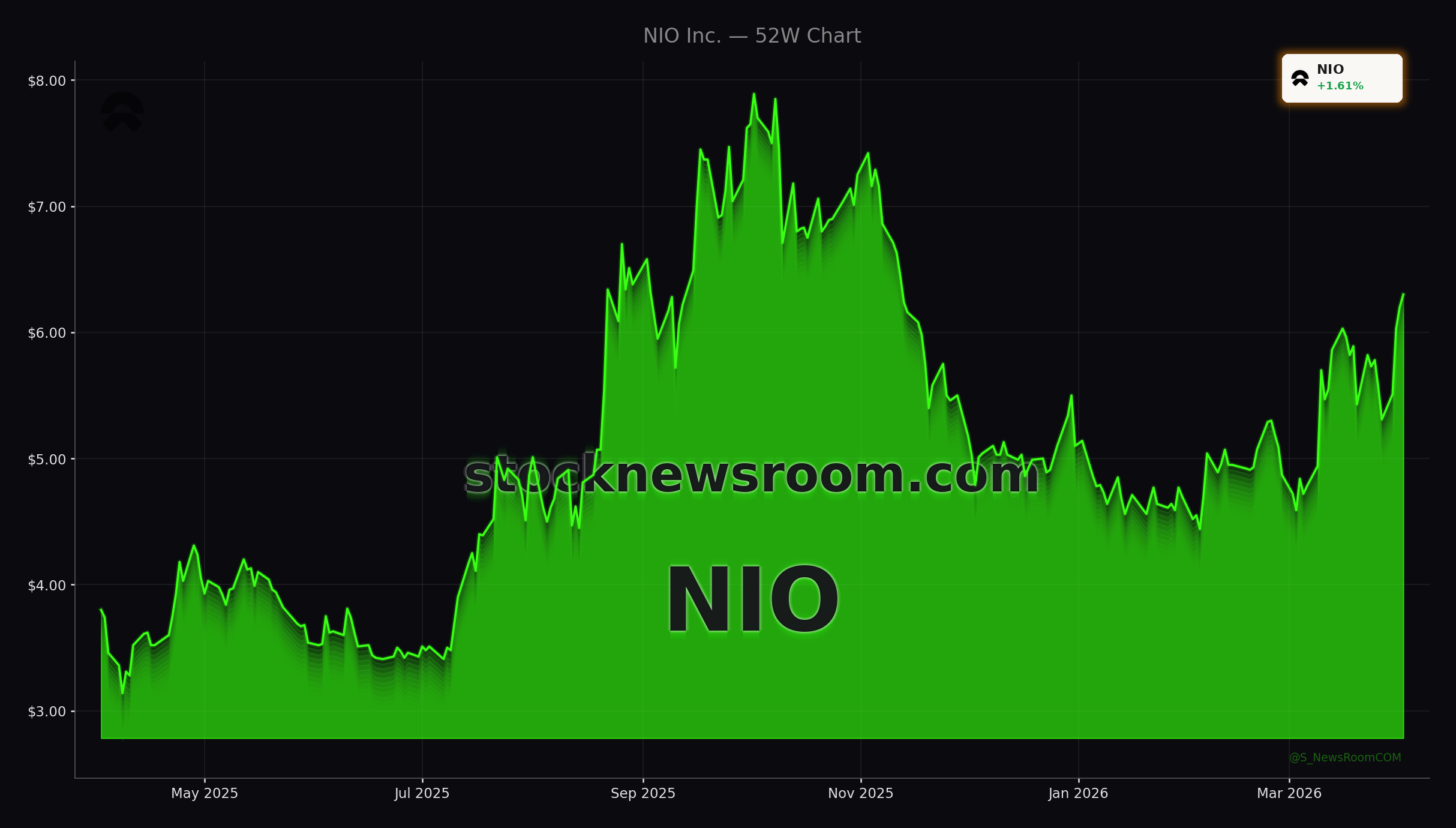
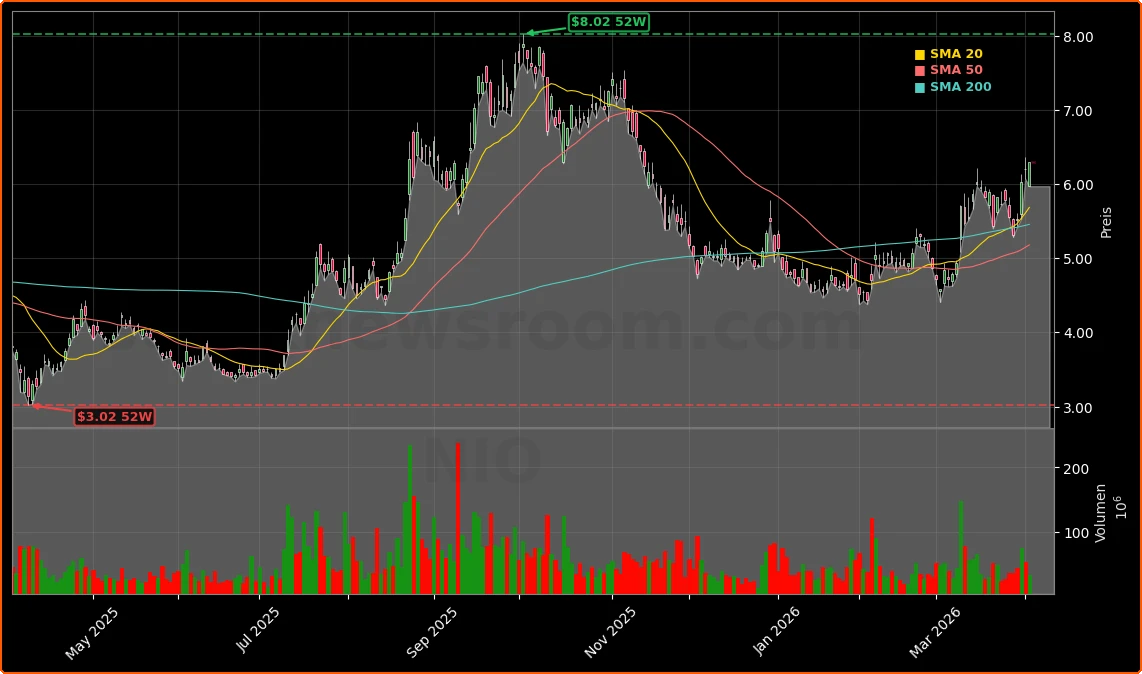
At today’s roughly $6.30 share price (after-hours $6.29) and a 52‑week range of $3.02 to $8.02, the market is starting to price in a recovery, but is still far from the 2021 mania. The key question for U.S. investors is whether NIO Earnings can stay in the black over multiple quarters as the company ramps its multi-brand strategy and expands overseas.
How do deliveries and margins stack up versus rivals?
Operationally, NIO is putting up growth numbers that stand out even in a hot EV segment. Management guided for Q1 2026 deliveries of 80,000 to 83,000 units, implying around 90% to 97% year-over-year growth, and revenue of $3.5 billion to $3.6 billion, up more than 100% from the prior year. Actual delivery data now shows the company handed over 83,465 vehicles in Q1 – roughly 98% growth – and 35,486 vehicles in March alone, a 136% year-over-year surge and a 71% jump versus February.
This pace is outpacing many peers. While Tesla continues to dominate EV headlines in the U.S. and Europe, NIO’s recent delivery growth has been far stronger percentage-wise, and substantially better than Chinese rivals XPeng and Li Auto over the last year. A recent analysis of cheap EV growth stocks highlighted NIO alongside Rivian as two names still trading at low sales multiples despite rapid top-line expansion.
Importantly, the March strength was broad-based across NIO’s three brands: the premium NIO lineup grew deliveries around 120% year over year, mid-tier Onvo saw robust gains, and the newer Firefly label accelerated from a low base. If the mix continues to skew toward higher-priced models while scale supports 17%+ vehicle margins, future NIO Earnings reports could show improving profitability even in a cutthroat market.
Can NIO’s strategy overcome its balance sheet risks?
Despite the celebratory tone around recent NIO Earnings, the bear case is grounded in uncomfortable balance sheet math. For full-year 2025, the company still posted a net loss of about $2.13 billion. Shareholders’ equity sat at just $592 million against total liabilities of nearly $16 billion at year-end, and current liabilities exceeded current assets – a setup that led management to include going-concern language in its filings.
NIO also raised $1.16 billion through an equity offering of 209 million shares in 2025, diluting existing holders and reminding investors that future capital needs could again be met with share issuance. For U.S. portfolios, that combination of high growth and structural funding risk places NIO squarely in the high-beta, high-volatility bucket, closer to emerging EV players like Rivian than to cash-rich mega caps such as Apple or NVIDIA.
On the strategic side, however, NIO is sharpening its focus. Management has doubled down on three pillars: core automotive products across NIO, Onvo and Firefly; its battery-swapping network as a differentiated charging solution; and in-house chip development through its Shenji unit, which has attracted over RMB 2.2 billion in external investment. Domestically sourced semiconductors – a target of 35% to 40% by 2027 – could lower per-vehicle costs and reduce supply-chain risk.
How is Wall Street valuing future NIO Earnings?
On valuation, NIO still trades close to just 1–1.2 times current-year sales, a discount to many high-growth tech names on the NASDAQ even after the recent rally. One detailed price model pegs fair value at $7.09 over the next 12 months, implying roughly 12% upside from today’s $6.30, and labels the stock a “Buy” but with only 50% confidence. That tempered stance reflects the tension between an impressive operational turnaround and a fragile balance sheet.
The same model sees a potential path to $8 in the next year – in line with NIO’s 52‑week high – if delivery momentum holds and margins stay above 17%. Longer term, projected targets climb into the $11–$12 range by 2030, which would translate to high-teens annualized returns from current levels if NIO converts scale into sustained profitability and its lower-cost brands contribute meaningfully to volume.
Related Coverage
For a deeper dive into how NIO’s first GAAP profit reshaped market sentiment, including a breakdown of the Q4 numbers and stock reaction, see NIO Earnings +3.8% Rally: First GAAP Profit Record. If you want to compare NIO’s trajectory with its most prominent U.S. rival, particularly on how investors are weighing deliveries versus AI and robotics ambitions, read Tesla Earnings -4% Shock as Deliveries Miss Targets, which highlights how diverging strategies could shape the next phase of the EV race.
NIO Earnings have finally flipped to black on a quarterly basis, and the company is pairing that milestone with near-triple-digit delivery growth and aggressive expansion across brands and geographies. For U.S. investors, the stock remains a speculative, high-risk play, but one where the upside case is becoming more tangible as margins improve and the valuation stays muted. The next few quarters of NIO Earnings will be crucial in proving that this is not a one-off blip, and sustained profitability could push the shares closer to their prior highs and keep NIO firmly in the global EV conversation alongside Tesla.