
Can NIO’s first-ever GAAP profit and surging deliveries really turn a battered EV stock into a sustainable comeback story?

How are NIO Earnings moving the stock today?
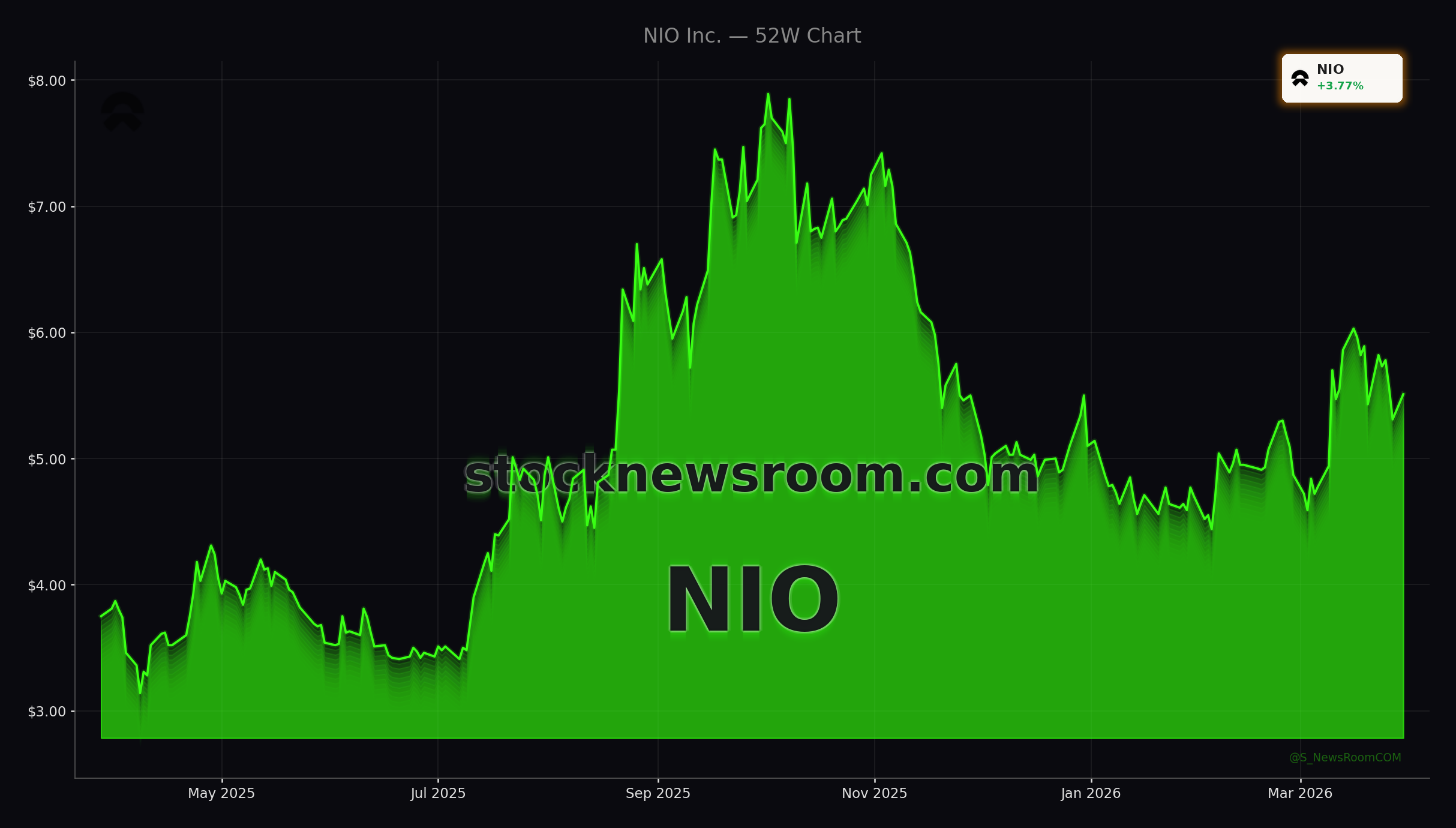
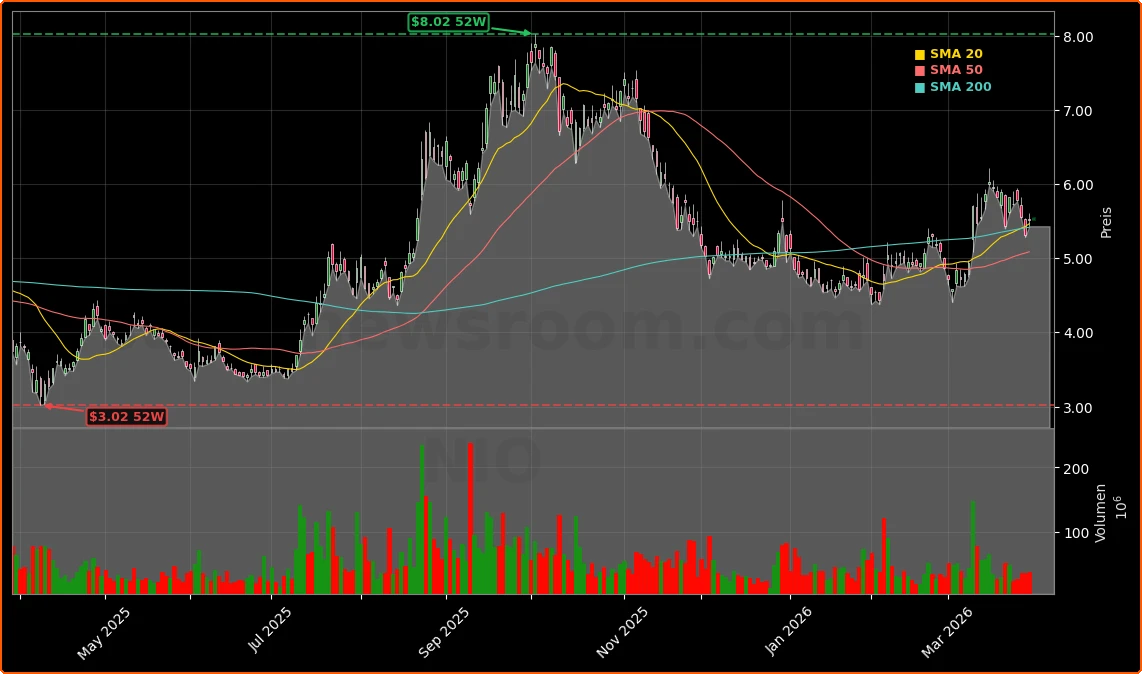
On Monday, NIO Inc. outperformed much of the EV complex, rising 3.77% to $5.51 on the NYSE, with after‑hours trading nudging the stock to $5.54. The move extends what has been a strong 12‑month run, with NIO up roughly 49% over the past year, outpacing long‑time rival Tesla even as broader EV sentiment on Wall Street has cooled. The latest NIO Earnings remain the anchor for this rebound narrative: they confirm that a business once defined by losses can at least intermittently operate in the black.
At $5.51, NIO still trades well below its historical peaks and under typical U.S. large‑cap EV valuations, which keeps the stock firmly in turnaround territory rather than in the premium growth cohort. That discount is precisely why the market reaction to the recent NIO Earnings matters. For investors comparing NIO to names like Tesla or even vertically integrated chip players such as NVIDIA that benefit from EV‑related demand, the question is whether NIO is finally proving it can grow without permanently diluting shareholders.
What did NIO Earnings show in Q4 2025?
The turning point for sentiment came with NIO’s Q4 2025 report, when the company delivered its first‑ever quarterly GAAP net profit. NIO booked net income of $40.4 million on revenue of $4.95 billion, powered by record deliveries of 124,807 vehicles across its three brands: Nio, Onvo, and Firefly. That delivery total represented a 71.7% year‑over‑year increase, an impressive growth rate for a company that had already reached substantial scale in China.
The NIO Earnings also revealed meaningful margin progress. Vehicle margin expanded to 18.1%, up from 13.1% a year earlier. While still below the high‑20s or low‑30s gross margins that top‑tier tech names like Apple routinely post in hardware, the improvement is substantial in the hyper‑competitive EV space, where price cuts and subsidy changes can quickly erode profitability. For equity investors, NIO’s ability to widen margins while accelerating unit growth is arguably the most important takeaway from these NIO Earnings.
Cost discipline played a central role. Research and development expenses fell 44.3% year over year in Q4 2025, while selling, general and administrative expenses declined 27.5%. These cuts did not prevent NIO from hitting record deliveries, suggesting a more efficient operating model. Management emphasized that total 2025 deliveries across all three brands reached 326,028 units, up 46.9% from 2024, underscoring that the Q4 profitability was not a fluke driven purely by one‑off items but by a broader scaling of the business.
How is NIO positioning for 2026 growth?
Looking ahead, NIO has set aggressive guidance for the current quarter. For Q1 2026, the company expects deliveries of 80,000 to 83,000 units, which would represent year‑over‑year growth of roughly 90.1% to 97.2%. Revenue is projected in a range of $3.50 billion to $3.60 billion. If achieved, these targets would extend the volume momentum seen in the Q4 NIO Earnings while sustaining a trajectory that could support further margin expansion.
Wall Street remains cautious but constructive. According to recent research coverage, analysts currently assign NIO a consensus Hold rating, with an average 12‑month price target around $6.80 to $6.83, implying modest upside from Monday’s close. Macquarie stands out on the bullish side, rating the stock Outperform with a $6.10 target, reflecting confidence that NIO can convert Q4’s one‑quarter profit into a more consistent earnings profile. Other firms, including Zacks Investment Research, highlight NIO as a trending name but stress that volatility and execution risk remain high.
Institutional interest is also creeping higher. Recent regulatory filings show SG Americas Securities LLC nearly doubling its stake in NIO during Q4, acquiring an additional 1.42 million shares to bring its total position above 3 million shares. While a single holder does not make a trend, it does suggest that some U.S. institutions are willing to re‑engage with the stock after a prolonged drawdown.
What does the Americas expansion really mean?
Beyond the financials, NIO’s latest strategic move is its expansion into the Western Hemisphere. On March 30, the company opened its first Americas showroom in San José, Costa Rica, showcasing all three of its brands simultaneously: Nio for the premium segment, Onvo for the mass market, and Firefly for compact, more affordable models. This Nio House is NIO’s first overseas location to debut the full three‑brand lineup at once, underscoring its multi‑tier approach to international growth.
Costa Rica is not a random choice. The country has one of Latin America’s highest EV adoption rates and offers a relatively welcoming regulatory environment for electric mobility, giving NIO a testbed before moving into larger, more complex markets in the region. The Costa Rica operation is also structured under an asset‑light general distributor model in partnership with Horizontes Cielo Azul, the nation’s largest EV dealer, rather than the capital‑intensive direct‑sales approach NIO used in China and parts of Europe.
This shift matters for investors watching cash flows. An asset‑light distributor structure should reduce upfront capital needs for showrooms and service infrastructure, potentially supporting the earnings improvements showcased in recent NIO Earnings. If successful, the model could be replicated across other Latin American markets as part of NIO’s broader ambition to be present in 40 countries and regions by the end of 2026. For now, the company has no confirmed near‑term plans for entry into the U.S. market, where regulatory, political, and tariff hurdles remain significant.
How does the three‑brand strategy stack up?
NIO’s three‑brand architecture is central to its long‑term thesis and to how investors on Wall Street should compare it to other EV players. The flagship Nio brand targets premium buyers, competing more directly with Tesla’s higher‑end offerings and even some luxury incumbents. Onvo is aimed at mid‑market consumers, where scale and cost control are critical. Firefly, focused on compact and lower‑priced vehicles, gives NIO a lever in emerging markets and among younger buyers.
The early data from Firefly are particularly notable. The brand has reached 50,000 cumulative deliveries just 11 months after launch, including new right‑hand‑drive versions in Southeast Asian markets such as Thailand and Singapore. In Thailand, Firefly models are priced around $24,500, positioning them as relatively affordable EV options in that region. The rapid ramp suggests NIO can create and scale new sub‑brands faster than traditional automakers, a capability that could support valuation upside if replicated across more markets.
For U.S. investors accustomed to seeing EV exposure through a narrow lens of a few high‑profile names, NIO’s approach looks more like a diversified consumer‑tech strategy. The company is simultaneously building premium branding, mass‑market penetration, and geographic diversification. Paired with investments in proprietary technology, such as battery swapping and in‑house chips, this could put NIO closer to the integrated tech ecosystems of firms like Apple or NVIDIA than to a pure‑play automaker, though it still lacks the balance‑sheet strength and global reach of those giants.
How should U.S. portfolios view the risk‑reward?
From a Wall Street perspective, NIO remains a high‑beta satellite holding rather than a core position in most diversified portfolios. The stock trades well below its 52‑week high and remains vulnerable to shifts in Chinese policy, global trade tensions, and the intense price competition that has defined the EV space. Unlike mature S&P 500 constituents, NIO offers no dividend and still has to prove that its first GAAP profit is repeatable across cycles.
At the same time, the combination of the most recent NIO Earnings, the Q1 2026 guidance, and the Americas expansion has changed the narrative from mere survival to potential profitable growth. If NIO can hit its 80,000–83,000 Q1 delivery target while preserving or expanding margins, analysts may have to revisit both price targets and ratings. Upcoming product launches, including the ES9 flagship SUV and the Onvo L80 expected in May 2026, will further test demand and pricing power at higher volumes.
Investors considering NIO alongside U.S. EV and tech leaders should recognize that its risk profile is closer to an emerging‑market growth stock than to a mega‑cap compounder. Position sizing, time horizon, and tolerance for volatility will be key. But the core facts from the latest NIO Earnings—first GAAP profit, strong delivery growth, and tighter costs—offer a more concrete foundation than the speculative narratives that drove the stock’s first wave of enthusiasm.
Related Coverage
For a deeper dive into how the first‑ever profit changed market sentiment, readers can explore NIO Earnings +9.9% Surge as First Quarterly Profit Hits, which analyzes whether a single quarter can anchor a longer‑term turnaround in the shares. The piece focuses on how these financial milestones might reshape expectations for cash flow and capital needs.
Investors tracking consumer‑facing auto and mobility names should also read Carvana Short Report: -3.7% Plunge and Split Warning. That article highlights how fast‑growing, capital‑intensive businesses like Carvana can face sharp reversals when leverage and execution risks pile up—risks that are also relevant when assessing NIO’s path from growth at all costs to sustainable profitability.
For the full year of 2025, total deliveries across the three brands reached 326,028 units, up 46.9% year over year, reflecting our accelerating growth trajectory.— William Li, CEO of NIO Inc.
In summary, the latest NIO Earnings, combined with the company’s first Americas showroom and ambitious global expansion plans, have given investors fresh reasons to reassess the stock. NIO is still a volatile, high‑risk EV play, but it now has a tangible profit milestone and a more disciplined cost base supporting its growth story. The next few quarters, starting with Q1 2026 deliveries, will be crucial in determining whether this momentum can translate into a more durable rerating on Wall Street.