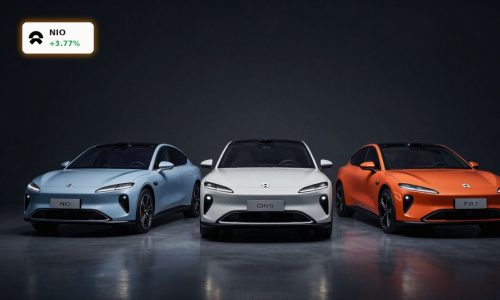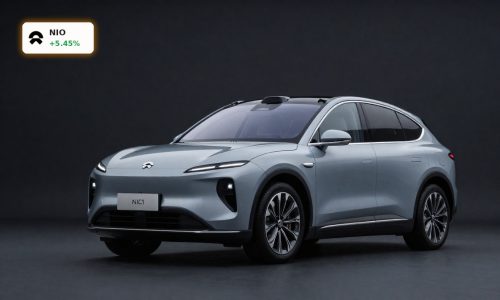
Can NIO’s first-ever quarterly profit turn a one-day stock pop into a lasting turnaround story for the Chinese EV maker?
What do the latest NIO Earnings show?
The latest NIO Earnings mark a clear inflection point for the Chinese EV maker. For the fourth quarter of 2025, NIO Inc. generated revenue of about RMB 34.65 billion (roughly $4.95–$5.0 billion), up around 76% year over year. Vehicle deliveries hit a quarterly record of 124,807 units, rising 71.7% compared with Q4 2024 as demand rebounded across its three brands: premium NIO, family-focused ONVO and mass-market Firefly.
Most importantly for Wall Street, the company moved into the black. NIO reported a small net profit in the range of RMB 120–280 million (roughly $18–$40 million), swinging from a net loss of more than RMB 7 billion a year earlier. Adjusted operating profit (non-GAAP) climbed to about RMB 1.25 billion (around $179 million), versus a loss of RMB 5.5 billion in the prior-year quarter, underscoring how quickly the cost structure has shifted.
On a per-share basis, NIO Earnings came in at roughly $0.04–$0.05, a stark improvement versus expectations for a loss. Some analyst models had penciled in a negative EPS of about $0.05, so the move into positive territory – even if modest – represents a meaningful inflection for a company long associated with heavy cash burn.
How did margins and brands drive the turnaround?
Behind the headline NIO Earnings, margin improvement is the key pillar of the story. Q4 2025 vehicle gross margin improved into the high teens, around 17.5–18.1%, up from roughly 11–13% a year earlier. For the full year 2025, NIO’s gross margin rose to 13.6% from 9.9% in 2024, helped by a richer product mix and lower battery and component costs.
The premium NIO-branded lineup continues to anchor pricing power. The all-new ES8 SUV maintained strong delivery momentum and set new monthly records among vehicles priced above RMB 400,000, reinforcing NIO’s positioning in China’s high-end EV segment. ONVO’s L90 model emerged as one of the best-selling large battery-electric SUVs in its class, while the Firefly small-car line gained traction in the more affordable urban segment.
Management has also leaned into cost discipline. Lower research and development spending relative to revenue, combined with more efficient sales and marketing, helped operating expenses grow much slower than sales. That operating leverage is what ultimately converted volume growth into the first sustained operating profit in NIO’s history.
What is Wall Street focusing on in NIO Earnings?
From a US investor perspective, these NIO Earnings are less about a single profitable quarter and more about the path to sustainable profitability. Management is targeting full-year profitability in 2026, supported by continued volume growth and further cost reductions. For Q1 2026, NIO expects deliveries of roughly 80,000–83,000 vehicles, implying year-over-year growth of about 90–97%, and revenue in the RMB mid-20 billion range (about $3.5–$3.6 billion). That revenue outlook sits comfortably above earlier consensus forecasts.
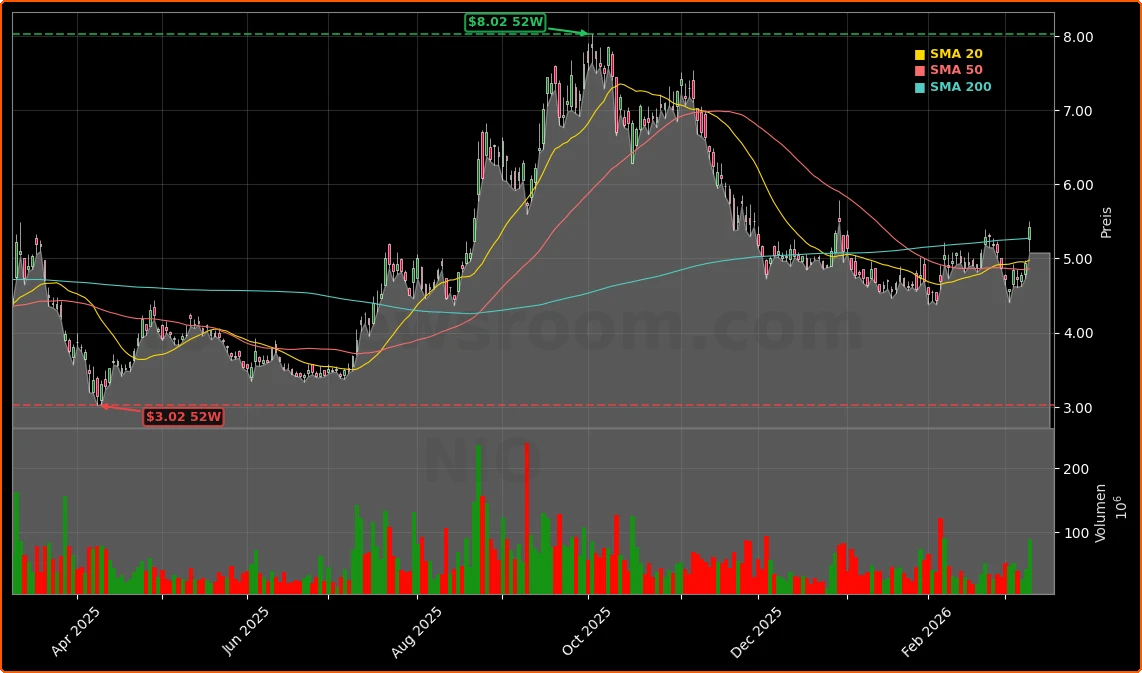
Analysts have responded positively. Morgan Stanley rates the stock “Overweight” and highlighted the drop in operating expenses as a notable upside surprise. Citigroup’s Jeff Chung has pointed to new model launches and declining battery costs as tailwinds that could support further margin expansion, assigning a price target around $6.20 per share, implying meaningful upside from current levels near $5.43.
On the NYSE, NIO shares recently traded around $5.43, up roughly 9.9% on the day and well off their 52-week low, but still far below past peaks when the company briefly commanded a market capitalization near $100 billion. Options activity has been elevated, with heavy call buying around the $6 strike, suggesting traders are positioning for continued volatility and potential upside as the turnaround thesis develops.
How does NIO stack up against Tesla and other EVs?
For US investors who primarily follow Tesla and domestic EV names, NIO’s shift to profitability adds a new dynamic to the China–US EV narrative. NIO is now joining a smaller club of Chinese manufacturers, including BYD and Li Auto, that are proving they can make money in the world’s most competitive EV market. Its battery-swapping technology and premium service model differentiate it from pure price-focused competitors that remain deeply loss-making.
At the same time, the broader EV sector remains under pressure. Many start-ups in China and the US are struggling to achieve scale, mirroring earlier boom-and-bust cycles seen in other high-growth tech segments such as chips and AI hardware, where leaders like NVIDIA and established platforms like Apple eventually pulled away from weaker rivals. NIO’s ability to post positive NIO Earnings, with clear evidence of operating leverage, could help separate it from the crowded field.
Still, risks remain. Despite the Q4 profit, NIO posted a full-year 2025 net loss of roughly RMB 15–15.6 billion, albeit narrower than the 2024 loss. The balance sheet also shows that short-term liabilities still exceed current assets, leaving little room for execution missteps if China’s EV price war intensifies or global trade tensions flare.
On the strategic side, NIO is nurturing in-house technology assets, including its chip subsidiary Shenji, which recently attracted outside capital of about RMB 2.26 billion. That move underscores management’s ambition to build a vertically integrated tech stack that could, over time, support software, autonomous driving and data services revenue – areas that have helped support higher valuations for peers in the broader tech ecosystem.
In 2025, the competitiveness of our products across three brands was widely recognized in their market segments.
— William Bin Li, Founder and CEO of NIO Inc.
Conclusion
For now, the latest NIO Earnings confirm that the company can turn scale into profit rather than just larger losses. If NIO can sustain double-digit delivery growth, hold vehicle margins in the mid- to high-teens and keep operating expenses in check, Wall Street may begin to treat it less like a speculative EV bet and more like an emerging, albeit still volatile, auto-tech player. The next few quarters will show whether this first profitable period is a one-off or the foundation of a longer-term earnings trajectory.
Further Reading
- NIO Inc. (NIO) Stock Price, Quote & News (Yahoo Finance)
- NIO Posts First Quarterly Profit on Record Sales, Strong Margins (Wall Street Journal)
- NIO Inc. Reports Unaudited Fourth Quarter and Full Year 2025 Financial Results (GlobeNewsWire)
- NIO Stock Jumps After Earnings. How the EV Maker Delivered a Surprise Profit. (Barron’s)