Can a double‑digit stock rebound really offset the mounting Norwegian Cruise Line Debt and fuel shock investors now face?

Is Norwegian Cruise Line Debt now the main risk?
For equity investors, Norwegian Cruise Line Debt has become the central variable in the NCLH story. The company carries about $14.6 billion of total debt against roughly $2.2 billion in book equity, a leverage ratio that leaves little margin for error if travel demand stumbles. Unlike larger peers Carnival and Royal Caribbean, which have started to pay down borrowings accumulated during the COVID shutdowns, Norwegian’s net debt has continued to creep higher.
Management has tried to buy time. Around $2 billion of obligations have been refinanced, pushing some 2027 maturities further out and easing near‑term repayment pressure. The business also returned to profitability in 2025 thanks to strong demand and high occupancies, showing that the core product remains attractive. But the absolute size of Norwegian Cruise Line Debt limits flexibility if the macro backdrop weakens or capital markets tighten.
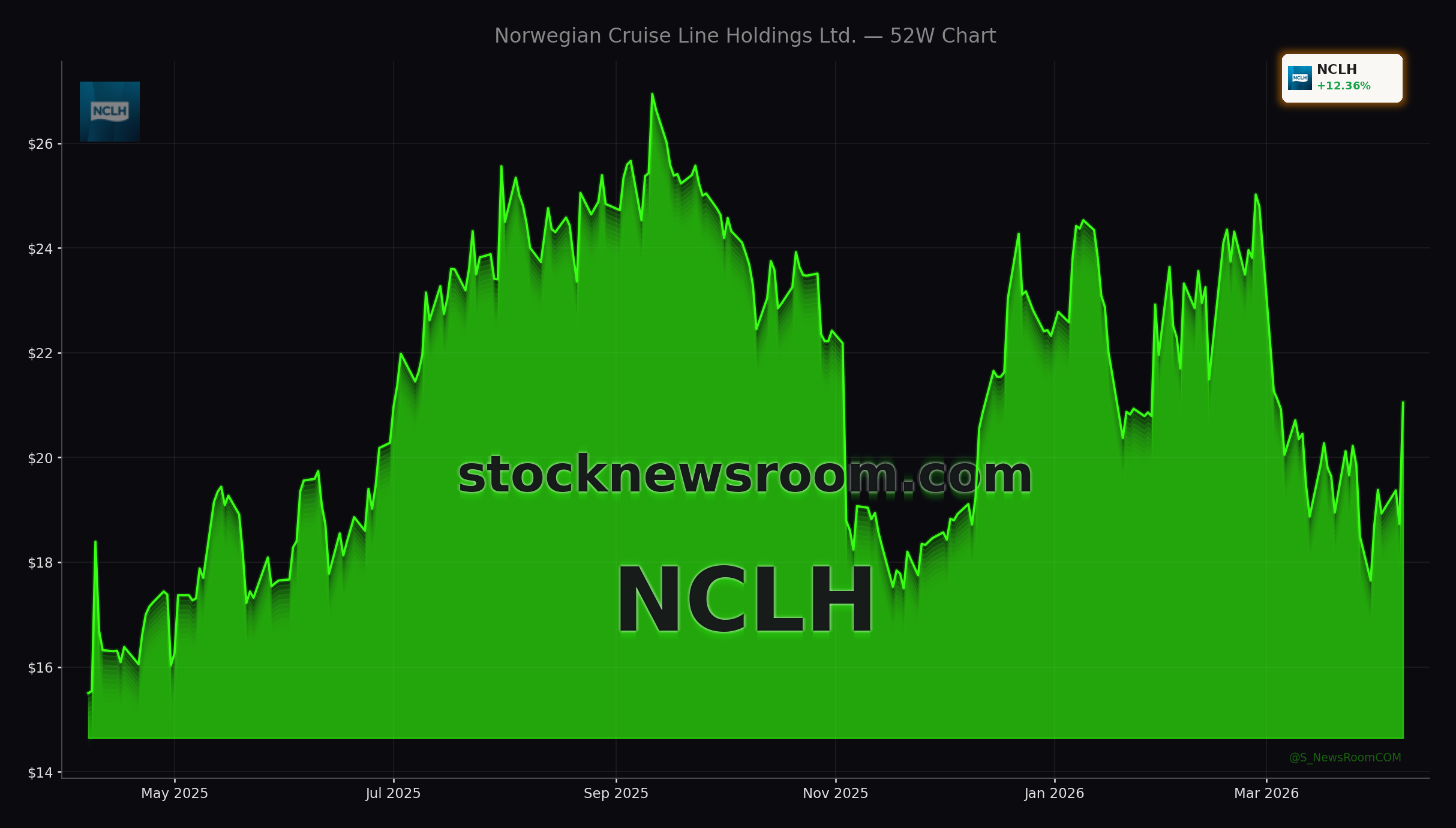
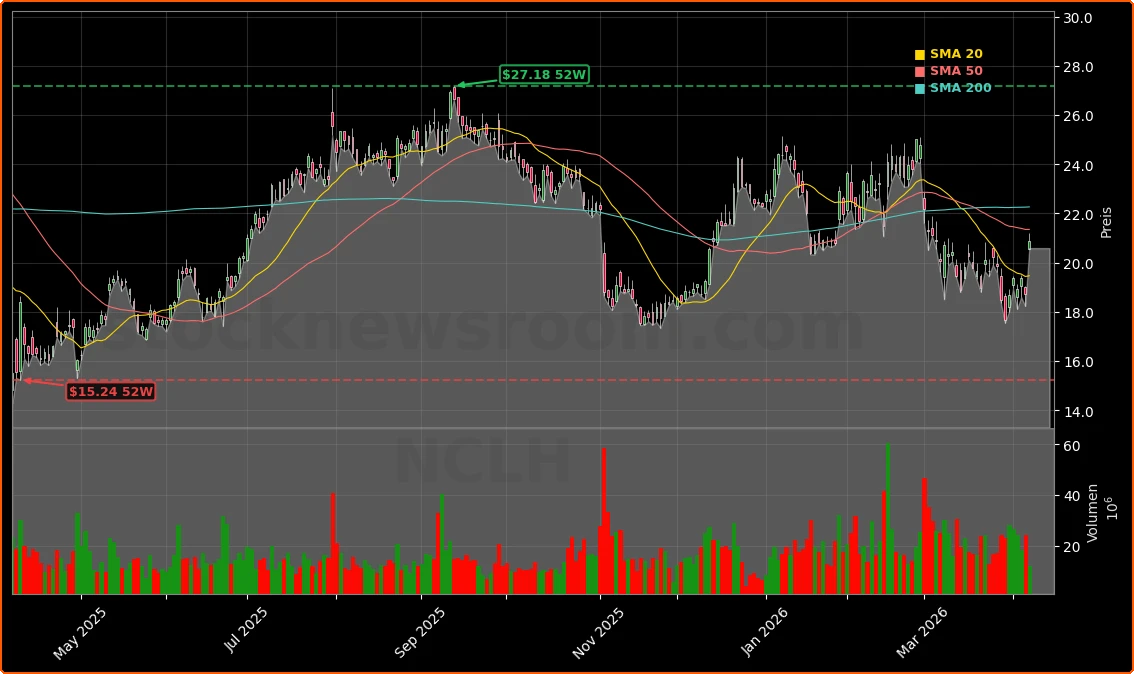
Recent trading underlines that tension. NCLH slid into the high teens earlier this week, with shares around $18–$19 and roughly 30% below a 52‑week peak of about $27, before snapping back to $20.88. That rebound reflects traders leaning into the sector recovery, but also leaves the stock heavily dependent on flawless execution and continued consumer resilience.
How do fuel costs challenge Norwegian Cruise Line Holdings?
On top of Norwegian Cruise Line Debt, sharply higher fuel prices have re‑emerged as a major earnings risk. Marine fuel prices are up about 45% year to date, directly squeezing margins for cruise operators that are already juggling higher interest costs and wage inflation. In 2025, Norwegian Cruise Line Holdings Ltd. spent $676 million on fuel while generating $423 million in net income.
Running that math forward, a 45% jump in fuel would lift the annual bill near $980 million. All else equal, last year’s profit would have shrunk to roughly $119 million, a drop of about 72%. While companies can attempt to offset some of that pressure through fuel hedging, itinerary optimization, or higher ticket prices and onboard spending, competitive dynamics with Carnival and Royal Caribbean limit how far costs can be passed on.
For U.S. investors comparing travel and leisure plays across the S&P 500, that sensitivity matters. Cruise operators lack the pricing power of premium consumer brands like Apple or the secular tailwinds of AI leaders such as NVIDIA, making their earnings far more exposed to commodity swings and the economic cycle.
Can new ships justify today’s valuation?
A key reason Norwegian Cruise Line Debt has not come down is the company’s aggressive capacity build‑out. Seventeen ships are on order for delivery between 2026 and 2037, including the recently launched Norwegian Luna. If booking momentum holds and the company can fill these vessels at attractive yields, the enlarged fleet could drive multi‑year revenue and cash flow growth.
However, the strategy is inherently pro‑cyclical. Cruise ships are capital‑intensive, long‑lived assets; once ordered, they are difficult to cancel without penalties and reputational damage. If a recession, persistent inflation, or another exogenous shock crimps demand, Norwegian could find itself servicing Norwegian Cruise Line Debt with under‑utilized assets. That contrasts with asset‑lighter business models in sectors like EVs, where companies such as Tesla can more quickly adjust production schedules.
Governance changes are aimed at tightening execution. The board has been overhauled, CEO John Chidsey has been elevated to chairman, and airline veteran Alex Cruz has taken the role of lead independent director, bringing experience in cost discipline and network optimization. At the same time, management is revamping revenue management systems to better monetize cabins and onboard services, an approach more akin to dynamic pricing seen in airlines and other travel companies.
How is Wall Street reacting to Norwegian Cruise Line?
Analyst sentiment on NCLH is mixed, reflecting the tug‑of‑war between leverage risk and earnings recovery. Citigroup recently trimmed its price target to $25 from $28 but maintained a Buy rating, signaling confidence in upside from current levels despite balance sheet concerns. Goldman Sachs cut its target to $18 from $19 and kept a Neutral stance, highlighting a more cautious view on risk‑reward at today’s prices.
Other coverage points to meaningful upside if Norwegian can execute. Across recent notes, consensus target prices cluster in the mid‑$20s, implying roughly 30%–40% potential appreciation from the high‑teens trading range seen earlier this week. Yet rating actions have skewed cautious, with JPMorgan moving to a more negative stance via a downgrade, and short‑term trading pressure earlier in April as the stock gapped lower around $18.
At the same time, there are reputational positives. Through its Sail & Sustain program, Norwegian Cruise Line Holdings Ltd. recently donated $50,000 to support flood relief efforts in Hawaii, a gesture that underscores the brand’s engagement with key destinations and could modestly support long‑term customer loyalty.
Related Coverage for NCLH and consumer stocks
Investors looking for a deeper dive into recent volatility can review how a weaker outlook triggered a sharp sell‑off earlier this year in NCLH. An in‑depth analysis at Norwegian Cruise Line Forecast -10.7% Plunge After Weak Outlook examines whether that move marked the start of a broader rerating across cruise stocks or a short‑term overreaction. For those comparing discretionary spending plays, large consumer staples groups are showing a very different risk profile; PepsiCo Earnings +1.5% Surge and Record Cash Strategy Shift looks at how a blue‑chip beverage giant is using record cash flows to reset its capital allocation strategy, offering a contrast to the highly leveraged cruise sector.
Norwegian Cruise Line Debt remains the key swing factor for the stock: the company is profitable again and aggressively expanding its fleet, but high leverage and fuel sensitivity amplify downside in a downturn. For U.S. investors, NCLH can be part of a higher‑risk, higher‑beta allocation rather than a core holding, with position sizing and time horizon critical to managing volatility. The next few quarters of booking trends, fuel dynamics, and balance sheet moves will determine whether today’s rebound is the start of a sustainable rerating or just another tradeable bounce in a highly leveraged name.