Can Novo Nordisk defend its GLP-1 dominance as a potent oral rival emerges and a bold US telehealth deal reshapes distribution?
How does Structure Therapeutics challenge Novo Nordisk?
The latest data from Structure Therapeutics’ oral GLP-1 candidate Aleniglipron has sharpened Novo Nordisk GLP-1 competition, particularly in the fast-growing obesity pill segment that matters to US retail and institutional investors. In a phase 2 trial lasting roughly 11 months, patients on Aleniglipron achieved about 16% average weight loss at both 180 mg and 240 mg doses, translating to roughly 39 pounds more weight loss than placebo. That performance outpaces the 13.6% weight reduction reported for Novo Nordisk’s oral Wegovy in 16‑month studies, and the roughly 11.2% seen with Eli Lilly’s oral GLP‑1 candidate Orforglipron.
For Wall Street, the competitive threat is not just about headline efficacy. Analysts highlight that such results could position Aleniglipron as one of the most effective oral weight-loss therapies to date, potentially rivaling some injectable GLP‑1 options, which until now have dominated the obesity segment. This raises the prospect that future US obesity demand could shift more quickly from injections to once‑daily pills, narrowing Novo Nordisk’s window to capitalize on its injectable Wegovy lead and eroding part of its valuation premium versus Eli Lilly.
Are tolerability and adherence a bigger risk for Novo Nordisk?
Side-effect profiles and discontinuation rates are emerging as critical battlegrounds in Novo Nordisk GLP-1 competition. Many GLP‑1 therapies cause gastrointestinal side effects that drive patients to stop treatment, limiting real‑world effectiveness and long‑term revenue per patient. In the Aleniglipron phase 2 study, discontinuation rates were reported between just 2% and 3.4%, significantly below historical data for other oral GLP‑1 assets.
For comparison, clinical trials of Novo Nordisk’s oral Wegovy tablet reported discontinuation rates up to 16.9%, while Eli Lilly’s Orforglipron reached as high as 10.3%. If these gaps hold in larger phase 3 programs, payors and US physicians could favor Structure Therapeutics’ pill on adherence and quality‑of‑life grounds, potentially putting additional pressure on Novo Nordisk’s growth assumptions beyond 2026. Moreover, trial data for Aleniglipron have not yet shown a clear plateau in weight loss, suggesting that patients might continue losing weight with longer use, a feature that could support durable pricing power.
How does the Hims & Hers deal shift US telehealth dynamics?
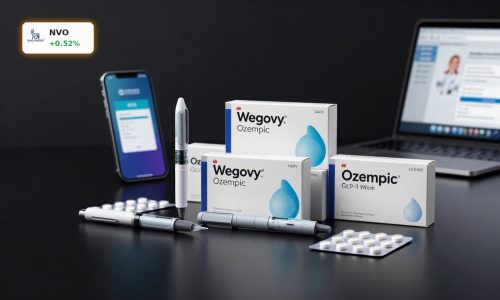
Amid mounting Novo Nordisk GLP-1 competition on the pharma side, the company is also moving aggressively to secure its distribution channels. Novo Nordisk has entered into a partnership with Hims & Hers, a major US telemedicine platform focused on consumer health. Under the agreement, Hims & Hers will offer FDA‑approved Ozempic injections and both tablet and injectable forms of Wegovy at self‑pay prices that match other telehealth providers, giving Novo Nordisk direct access to a fast‑growing online patient base.
Crucially, Hims & Hers will halt the sale and advertising of compounded GLP‑1 products, which had emerged as lower‑cost, unapproved alternatives during the GLP‑1 supply crunch. Existing patients will be transitioned or given the option to move to branded, FDA‑approved therapies. Novo Nordisk is dropping its ongoing patent lawsuit against Hims & Hers as part of the deal, although it retains the right to refile in the future. For investors, this signals a dual strategy: litigate and lobby against non‑approved compounded products while simultaneously partnering with leading digital platforms to lock in patient flows.
What does this mean for US investors watching Novo Nordisk GLP-1 competition?
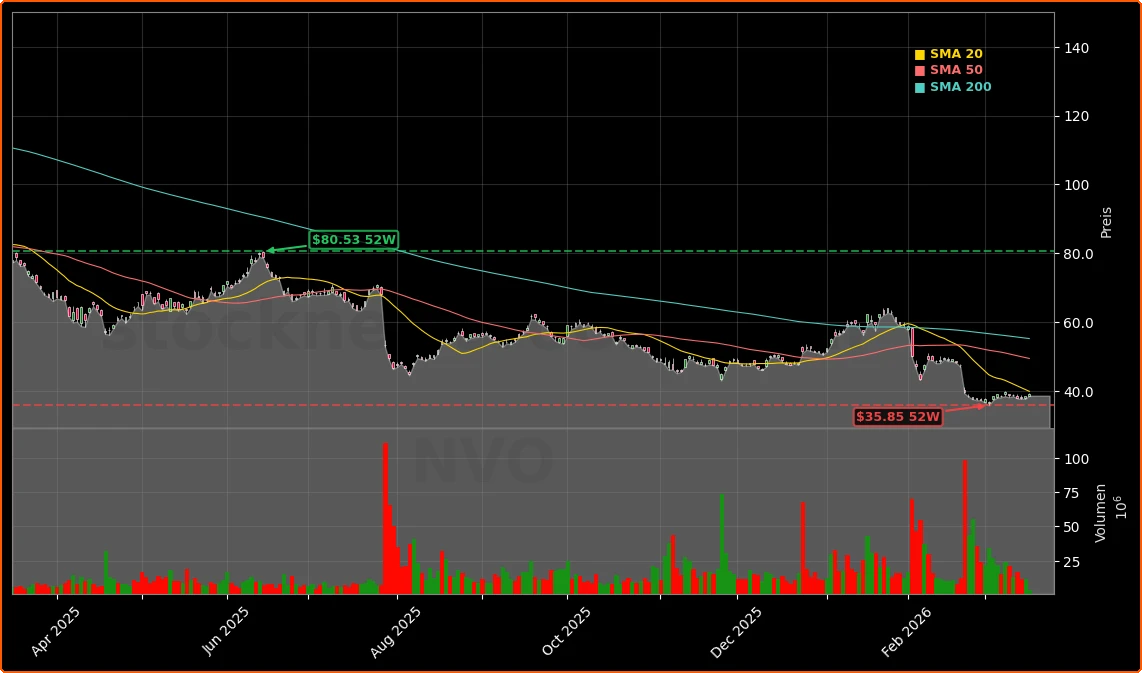
The new data from Structure Therapeutics and the Hims & Hers agreement arrive after a volatile period for Novo Nordisk’s stock, which has faced concerns that its once‑dominant GLP‑1 moat is narrowing. While Eli Lilly shares have rallied sharply over the past year on optimism around its obesity and diabetes pipeline, Novo Nordisk has experienced significant drawdowns from prior highs as market participants reprice long‑term growth and competition risk.
This is a clear win for patients, prioritizing safe, proven FDA-approved GLP‑1 medicines over riskier compounded alternatives.
— Mike Doustdar, CEO of Novo Nordisk
Conclusion
Sell‑side analysts, including teams at firms such as BMO Capital Markets and Piper Sandler, have underscored the potential of Aleniglipron to reshape the oral obesity drug landscape if larger studies confirm the phase 2 profile. At the same time, several Wall Street research houses still highlight Novo Nordisk as an undervalued long‑term compounder in diabetes and obesity, given its scale, manufacturing capability, and expanding telehealth relationships. For diversified US portfolios, the interplay between rapid innovation from smaller biotech names and defensive moves like the Hims & Hers alliance will be central to evaluating risk‑reward in the broader Novo Nordisk GLP-1 competition narrative over the coming years.
Further Reading
- Structure Therapeutics reports phase 2 Aleniglipron obesity data (Reuters)
- Hims & Hers announces GLP-1 partnership with Novo Nordisk (Bloomberg)
- Analyst views on GLP-1 obesity market and oral competitors (The Wall Street Journal)
- Novo Nordisk GLP-1 Konkurrenz und Telemedizin-Deal bei Yahoo Finance (Yahoo Finance)