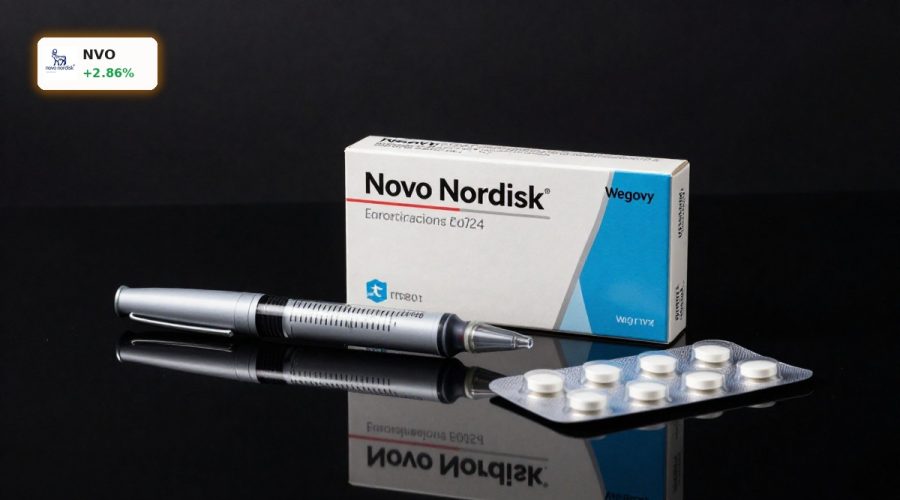
Can the aggressive Novo Nordisk Wegovy Strategy subscription push really reverse a 70% stock slide and close the gap to Eli Lilly?

How hard has Novo Nordisk’s stock been hit?
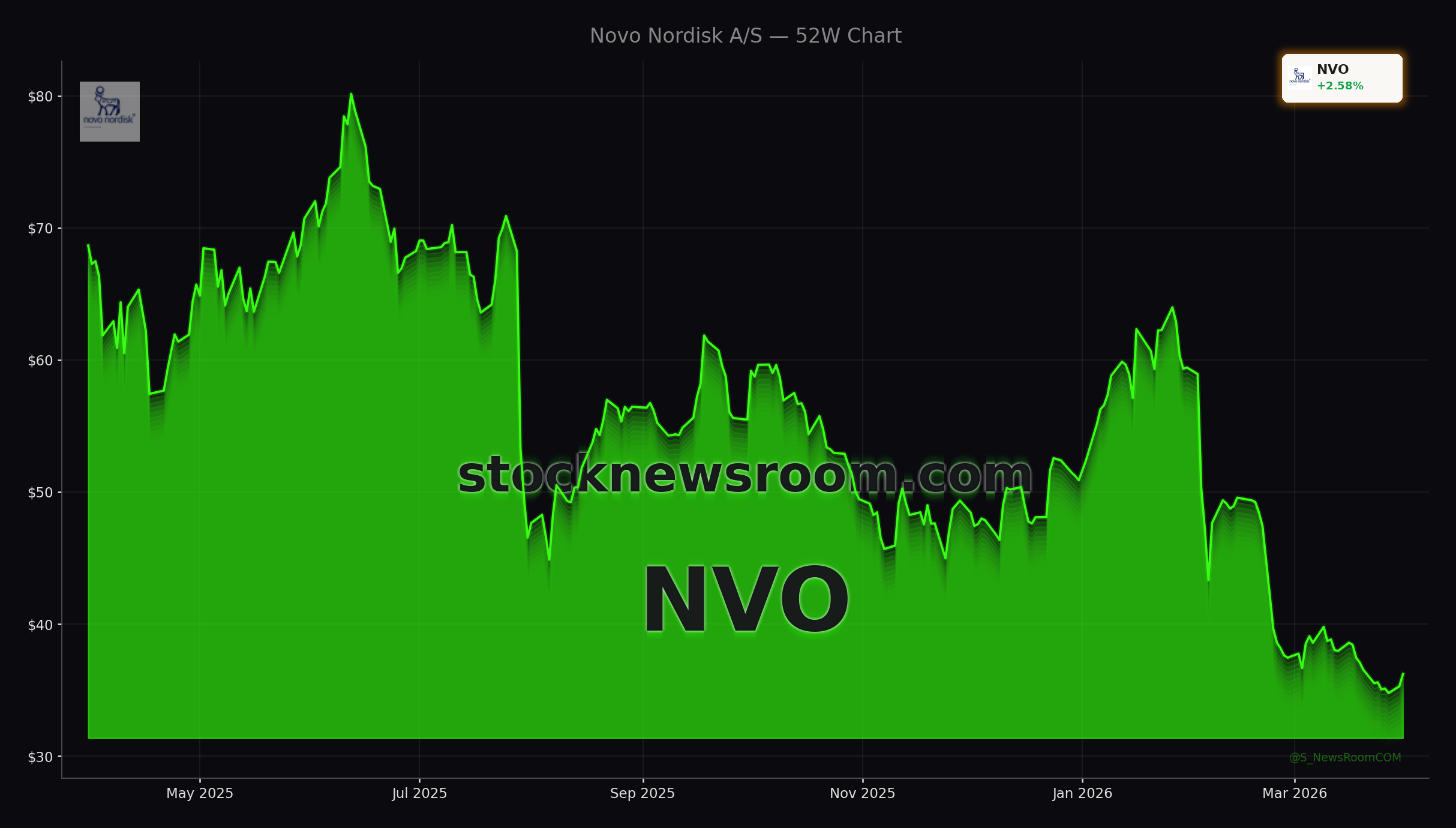
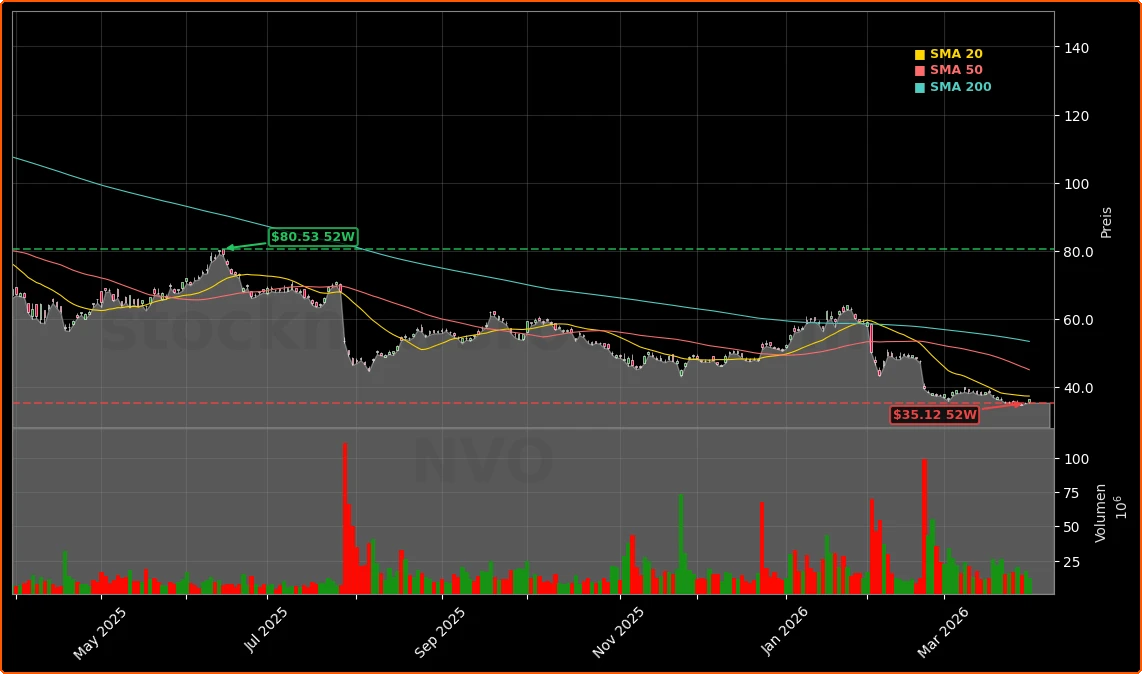
Novo Nordisk shares have undergone a dramatic derating. After a series of rallies and sharp selloffs through 2024 and 2025, the stock is now down roughly 70% from its all‑time high and back to 2021 valuation territory. The ADRs recently traded around $36.30, up about 2.9% on the day but still deep in a longer‑term bear trend, with every minor bounce repeatedly sold. Technical indicators such as stochastic momentum are hovering at levels last seen during the 2016 insulin crisis, underscoring just how extreme the negative sentiment has become.
The selloff accelerated after disappointing data from Novo Nordisk’s next‑generation obesity candidate, seen as weaker than Eli Lilly’s tirzepatide franchise. That fueled concerns that Lilly now leads on both current GLP‑1 injectables and the medium‑term pipeline. Message‑board talk of “total loss” and single‑digit price targets reflects capitulation psychology, even though Novo Nordisk continues to generate substantial cash, buy back shares, and secure new approvals.
Despite this backdrop, some fundamental-focused investors and analysts still view NVO as oversold. Research from firms like Zacks and Seeking Alpha’s contributor community has highlighted the stock’s multi‑year low valuation relative to its long‑term obesity and diabetes opportunity, even as the technical picture remains fragile.
What exactly is the Novo Nordisk Wegovy Strategy?
The core of the current Novo Nordisk Wegovy Strategy is a multi‑month subscription program for U.S. self‑pay patients using Wegovy injections or the highest‑dose Wegovy pills. Patients can lock in 3‑, 6‑, or 12‑month plans with flat, predictable pricing regardless of dose escalation. Injection plans are priced at roughly $329 per month for three months, $299 for six months, and $249 for a 12‑month commitment, implying savings of up to $1,200 per year versus standard monthly pricing. For the pill (9 mg and 25 mg doses), monthly prices run about $289, $269, and $249, with up to $600 annual savings.
The offer is being rolled out via major U.S. telehealth platforms such as Ro, WeightWatchers, LifeMD, Sesame, and Hims & Hers, rather than through Novo’s own NovoCare pharmacy for now. The strategy serves several purposes: widen access for cash‑pay obesity patients, increase adherence in a class where roughly two‑thirds of patients stop within a year, and pre‑empt churn as Eli Lilly’s competing oral GLP‑1 is expected to arrive later in 2026. Importantly, the Wegovy pill has so far attracted many patients who were not previously on GLP‑1 injections, making it a critical growth leg that the Novo Nordisk Wegovy Strategy aims to protect.
At the same time, Novo Nordisk is tweaking stand‑alone pill pricing. Lower doses will remain at $149 per month for now, but the 4 mg dose is slated to rise to $199 from August, while the newly approved 7.2 mg dose will be added to the subscription program later. Patients can opt out of subscriptions mid‑term, a nod to concerns around long‑term commitment in a therapy often associated with side effects.
How does Novo Nordisk stack up against Eli Lilly?
In the U.S. branded GLP‑1 market, Eli Lilly currently holds an estimated 60% share, compared with about 39% for Novo Nordisk. Lilly’s tirzepatide-based drugs have set a high bar on efficacy, and its upcoming oral GLP‑1 threat looms large over the Wegovy pill’s growth trajectory. Many on Wall Street now see Lilly as the clear leader in both current GLP‑1 injectables and the medium‑term pipeline, while Novo’s successor programs like Kakrisema are perceived as lagging.
Where Novo Nordisk maintains an edge is in oral formulations and, increasingly, patient access tools. The explosive U.S. launch of the Wegovy pill since January has delivered one of the strongest drug debuts in recent history, surprising analysts with the pace of uptake. The Novo Nordisk Wegovy Strategy is to leverage that momentum with predictable pricing, digital distribution, and a first‑mover advantage in orals before Lilly’s entrant arrives. In parallel, Novo has secured FDA approval for a higher‑dose Wegovy injection (7.2 mg) to close the perceived gap with Lilly’s injectable strengths, as well as Avikli, the first once‑weekly insulin for type 2 diabetes.
However, this expansion is not without pressure. In India, Novo Nordisk has already cut prices on Ozempic and Wegovy by up to roughly 36–48% to fend off cheaper generics, highlighting the growing global pricing squeeze. U.S. investors need to weigh how much margin compression the company can absorb while still funding its obesity and diabetes pipeline.
What catalysts could shift sentiment on Novo Nordisk?
The next major test for the Novo Nordisk Wegovy Strategy will be Q1 2026 earnings on May 6, covering the crucial period when Novo held an effective monopoly on oral obesity pills in the U.S. Management will be under pressure to quantify how much the Wegovy pill and subscription initiatives contribute to revenue and profit. If the pill underwhelms, some retail investors have indicated they are prepared to exit even at steep personal losses; if it overdelivers, it could trigger a sharp short‑covering rally in a technically oversold stock.
The recent annual general meeting on March 26 offered a small preview of how volatile positioning is: the stock opened down roughly 3% with no major negative news but rebounded about 6% during the event, suggesting a market primed for knee‑jerk moves. Ongoing share repurchases—part of a DKK 15 billion buyback program running through early 2027—provide some downside buffer, but they have not yet offset the weight of competitive and pipeline fears.
For U.S. portfolios, Novo Nordisk now represents a classic “fallen angel” in large‑cap pharma: still profitable, still central to the global obesity theme, but trading at significantly lower multiples after a brutal reset. Investors comparing it with U.S. names like Apple or NVIDIA from a risk‑reward standpoint should note that GLP‑1 dynamics are far more binary and policy‑sensitive than consumer tech, even if the total addressable market is similarly massive.
Related Coverage
For a deeper dive into how a powerful new pill rival and a bold telehealth partnership could reshape the GLP‑1 landscape, see this analysis of Novo Nordisk’s GLP‑1 competition warning and telehealth strategy. It explores how emerging players and distribution models may challenge Novo’s current advantage in oral obesity drugs.
Investors interested in broader pharma innovation beyond obesity may also want to read our coverage of AbbVie’s dermatology data boom at AAD 2026, which looks at how breakthrough immunology data could support a post‑Humira growth story and offer diversification away from GLP‑1 cycle risk.
In summary, the Novo Nordisk Wegovy Strategy combines discounted subscriptions, new FDA approvals and a strong pill launch to counter Eli Lilly’s dominance even as the share price languishes near multi‑year lows. For long‑term investors, NVO now offers a high‑risk, high‑reward way to play the global obesity theme from a reset valuation. The upcoming Q1 results and Lilly’s first oral GLP‑1 launch will show whether this strategy can stabilize Novo Nordisk’s competitive position and restore confidence on Wall Street.