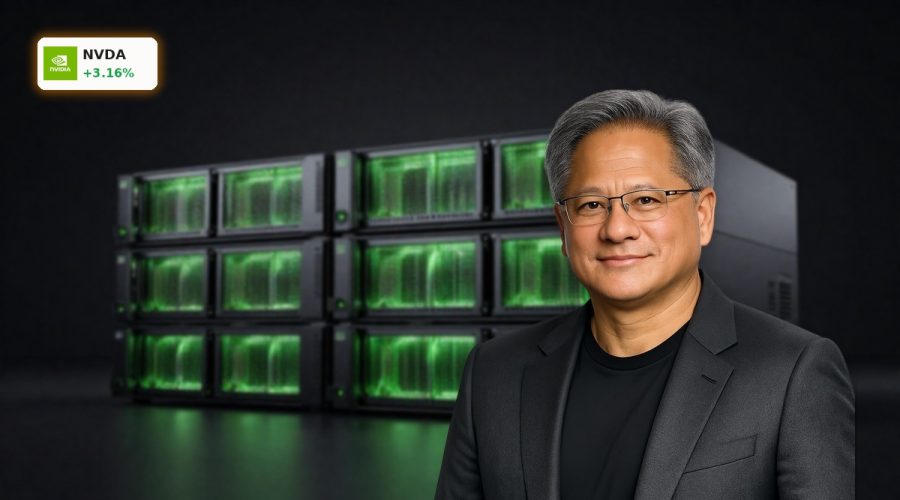
Is NVIDIA’s massive AI infrastructure spending spree setting up the next leg higher for NVDA or a painful reset?
Is Wall Street underestimating NVIDIA’s reset?
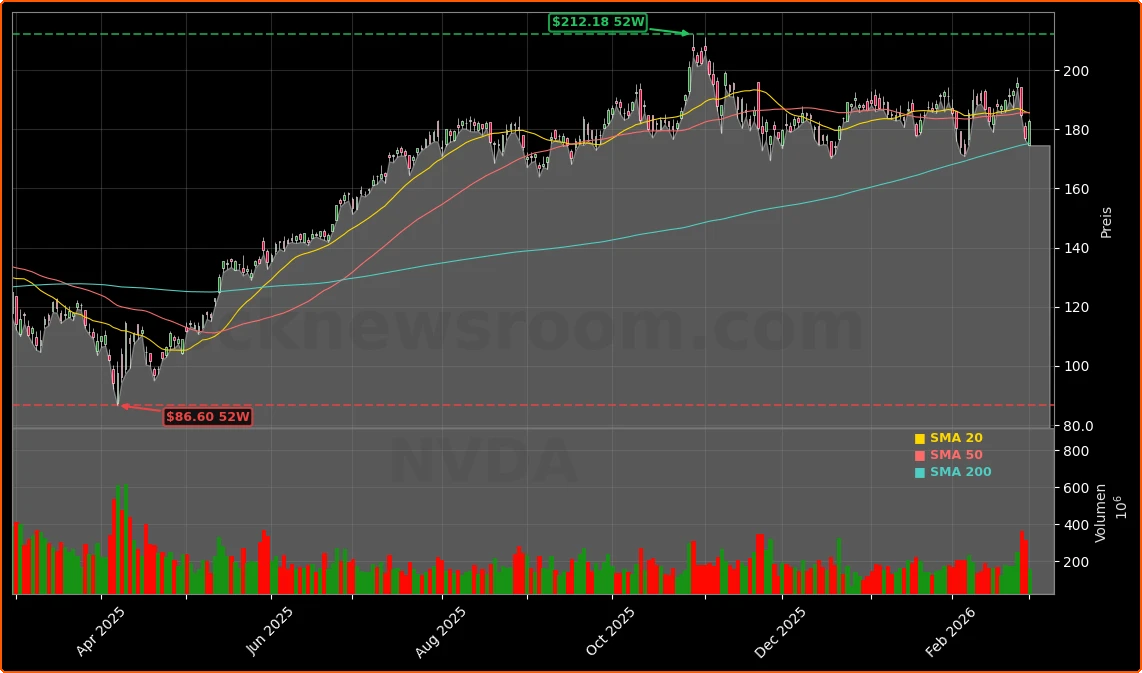
After a post‑earnings selloff that dragged the broader Nasdaq and semiconductor complex lower, NVIDIA Corporation is trying to stabilize just above key technical support. The stock, once close to a $5 trillion market cap, has pulled back toward its 200‑day moving average, with traders eyeing the $175–$170 range as a potential support zone. Despite the correction, NVDA still gained roughly 45% over the past twelve months and remains one of the largest drivers of point moves in the S&P 500 and Nasdaq 100.
Wall Street is split between fear of an over‑owned AI trade and confidence in NVIDIA’s fundamentals. Morgan Stanley reinstated an “overweight” rating on the shares and called the company its top semiconductor pick, setting a $260 price target that implies about 40% upside from current levels. The bank argues that concerns over market share loss and demand sustainability are overstated, pointing to a deep product roadmap and persistent scarcity for high‑end GPUs in AI data centers.
Others are more cautious. Some research houses warn that the violent reaction to NVDA’s latest blowout quarter — revenue up more than 70% year over year and guidance once again ahead of consensus — shows how fragile AI sentiment has become. One prominent downgrade framed the move as part of a broader rotation out of richly valued tech, while still expecting NVDA to print new highs over the next 12 months as earnings catch up with price.
How is NVIDIA AI Infrastructure being fortified?
Beneath the volatility, NVIDIA AI Infrastructure is being expanded aggressively across optics, networking and sovereign AI projects. The company has agreed to invest a total of $4 billion — $2 billion each — into U.S. photonics specialists Lumentum and Coherent. Both deals combine equity‑style funding with multi‑year purchase commitments and capacity rights for advanced lasers and optical networking components that are critical for AI data centers.
The multiyear agreement with Coherent includes a multibillion‑dollar order backlog for high‑speed optical interconnects designed to move massive volumes of data between GPUs inside AI clusters. A parallel arrangement with Lumentum secures silicon‑photonics and laser components that aim to make next‑generation “AI factories” more energy‑efficient and scalable up to gigawatt‑level power usage. CEO Jensen Huang describes these moves as building the “most demanding silicon photonics in the world” to support the coming wave of global AI capacity.
NVIDIA AI Infrastructure also extends into partnerships with cloud and telecom players. A new collaboration with Keysight Technologies and Samsung showcases an end‑to‑end AI‑RAN testbed for 6G, using NVIDIA platforms to validate AI‑driven radio access networks. At the edge, projects like Duos Technologies’ GPU‑as‑a‑Service cluster with Hydra Host highlight how smaller data‑center operators are standardizing on NVIDIA hardware to monetize AI workloads.
Can NVIDIA stay ahead of AMD, Intel and Big Tech?
NVIDIA still controls an estimated >90% share of the data center GPU market, but competition is intensifying on several fronts. Advanced Micro Devices, Intel and cloud giants such as Apple’s peers Amazon and Alphabet are pushing custom accelerators that promise better performance per watt, especially for AI inference workloads where cost and energy efficiency are critical.
In response, NVIDIA is preparing what could be the next catalyst for NVIDIA AI Infrastructure at its GTC conference later this month: a dedicated AI inference chip. The new processor, built around a fresh architecture and leveraging technology from start‑up Groq, is designed to tackle the most energy‑sensitive inference tasks and reduce total cost of ownership for hyperscalers. OpenAI has already committed to several gigawatts of capacity based on NVIDIA systems, and the first deployments of the new inference‑centric chip are expected to land there.
At the same time, NVIDIA continues to embed its CUDA software stack deeply into enterprise workflows. That combination of hardware and software keeps customers locked into the ecosystem and extends the life of earlier‑generation chips, supporting gross margins in the mid‑70% range — far above the roughly 50% typical for the broader semiconductor sector. With sovereign AI initiatives proliferating and governments funding their own national data centers, demand for high‑end accelerators from Tesla‑like autonomy to robotics remains robust despite macro headwinds.
For U.S. investors, the debate now centers on valuation and cycle timing rather than on whether NVIDIA AI Infrastructure will grow. The stock trades at a forward multiple that has compressed toward the high‑20s even as earnings expand around 60% annually, leading some managers to reframe the name as a “value play” within megacap tech after the pullback.
We are building the world’s most demanding silicon photonics to power the next generation of AI factories at gigawatt scale.
— Jensen Huang, CEO of NVIDIA
Conclusion
In the end, NVIDIA AI Infrastructure remains the backbone of the current AI build‑out, and the company’s $4 billion optics bet signals confidence that hyperscaler and sovereign spending will stay elevated. For long‑term portfolios on Wall Street, the next quarters will show whether the new inference chips, photonics partnerships and data‑center investments translate into another leg of growth. If they do, NVIDIA is likely to retain its role as the key barometer of the AI cycle for years to come.
Further Reading
- NVIDIA Corporation (NVDA) Stock Price and Data (Yahoo Finance)
- Nvidia’s stock is stuck. Morgan Stanley says it’s time to buy again (CNBC)
- NVDA signs multi-year agreement with Coherent to advance next-generation AI infrastructure (Nasdaq)
- Nvidia plans to release a new speedier AI chip that could be a game changer (The Motley Fool)