
Can Oracle’s sweeping AI restructuring and mass layoffs really justify its massive ‘Stargate’ cloud gamble in the eyes of investors?

How is Oracle’s stock reacting?
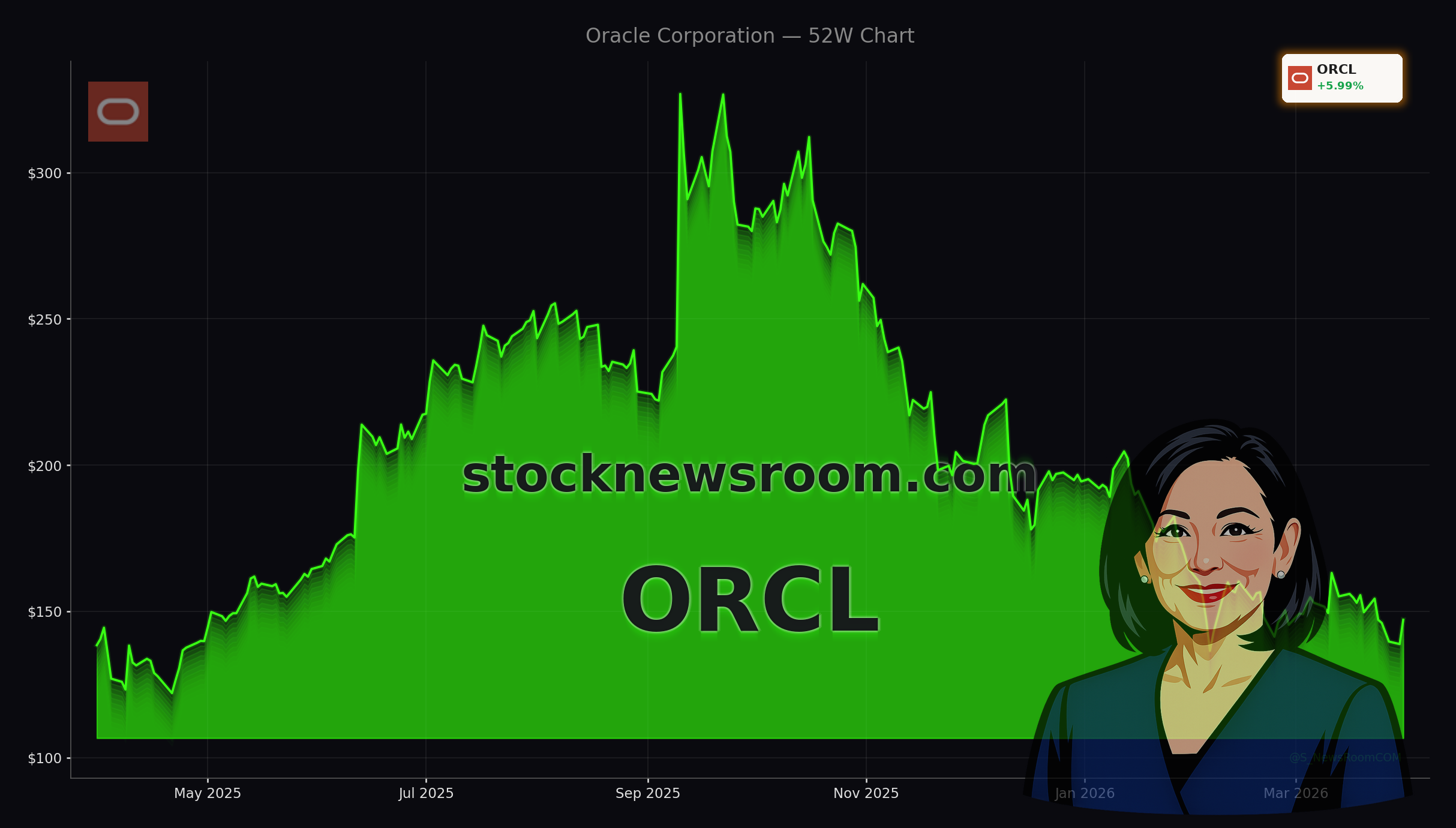
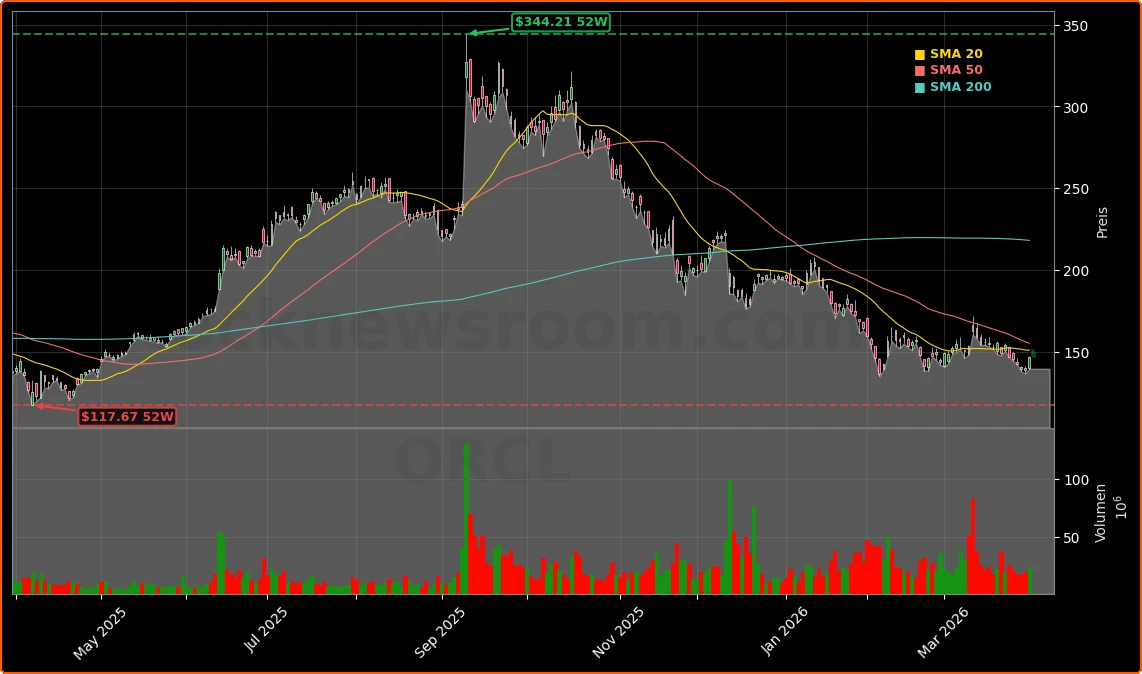
Oracle Corporation (ORCL) is firmly back in Wall Street’s spotlight. After months of underperformance versus the S&P 500 and Nasdaq, shares surged about 5.99% on Tuesday to $147.11 and gained another 2.81% pre-market to $151.25 ET, as investors cheered aggressive cost cuts tied to the Oracle AI Restructuring. Options desks also flagged unusual call activity in ORCL, signaling that institutional traders are positioning for further upside if the AI plan delivers.
The stock move comes despite lingering concerns over Oracle’s heavy spending and leverage. The company has committed at least $50 billion in infrastructure capex for fiscal 2026 and raised roughly another $50 billion in debt to fund hyperscale data centers tailored for AI workloads — a capital intensity on par with leaders like NVIDIA and far above traditional enterprise software peers.
What exactly is Oracle cutting?
Oracle began sending termination emails early Tuesday morning, informing employees that “today is your last working day” and immediately cutting off access to corporate systems. Internal tallies cited by staff suggest job reductions already number in the thousands, and TD Cowen has estimated that this Oracle AI Restructuring cycle could ultimately hit between 20,000 and 30,000 workers, or roughly 18% of the company’s 162,000-person global workforce as of May 2025.
Regulatory filings in Washington state show 491 positions being eliminated there alone, including senior engineers, architects and vice presidents. Units from Oracle Health and Revenue and Health Sciences to SaaS, Cloud, Customer Success and NetSuite have reported losing 30% or more of team headcount. In a March filing, Oracle projected restructuring costs of up to $2.1 billion for fiscal 2026, largely driven by severance and related expenses, and more recently added another $500 million to that figure, underscoring that the plan is accelerating rather than winding down.
Management has framed the cuts as efficiency, not distress. Co-CEO Mike Sicilia recently highlighted that AI coding tools inside Oracle are allowing smaller engineering teams to ship more complete solutions faster, while AI-driven lead generation and service automation are trimming the need for legacy roles in sales and operations.
How risky is the ‘Stargate’ AI megaproject?
At the center of the Oracle AI Restructuring is ‘Stargate,’ a multi-year initiative with OpenAI and SoftBank to build what could become the world’s largest AI-capable cloud footprint. The flagship site in Abilene, Texas, is designed as a 1.2 billion-watt data center hosting roughly 500,000 top-tier GPUs, most of them from NVIDIA. Oracle expects several additional hyperscale campuses to follow over the next four years, with total associated investment talked about in the $300 billion range when fully built and financed by all partners.
For now, Stargate is only partially operational and unlikely to contribute meaningfully to near-term revenue. That time lag, combined with tens of billions in new debt and OpenAI’s still-unprofitable business model, is why many analysts view the project as one of the riskiest single bets in cloud infrastructure today. On the upside, Oracle’s remaining performance obligations already sit above $500 billion, up more than 400% year over year, suggesting strong contracted demand for AI and cloud capacity once the hardware comes online.
In recent quarters, Oracle reported 22% year-over-year revenue growth to $17.2 billion and a 21% EPS increase to $1.79, with over 70% of total revenue categorized as recurring or renewable. JPMorgan’s Mark Murphy rates the stock Overweight with a $210 price target, arguing that the mix shift toward cloud apps and Oracle Cloud Infrastructure could support continued outperformance if execution remains disciplined.
How does Oracle stack up against AI rivals?
For U.S. investors, the Oracle AI Restructuring must be weighed against opportunities in other AI winners. Hyperscalers like Apple’s primary cloud partners, Alphabet and Microsoft, as well as GPU king NVIDIA, have already re-rated sharply higher on AI enthusiasm. Enterprise-focused players such as Palantir and even auto-AI hybrid Tesla are also pitching AI-heavy narratives, though with far smaller legacy software bases than Oracle.
Analysts at The Motley Fool note that Oracle, now a roughly $400 billion software giant, combines a sticky database and applications franchise with a fast-growing cloud and AI layer. They see the risk-reward as attractive at current levels, especially if the company can convert its massive backlog into cash flows while keeping restructuring and financing costs in check. Still, the human toll of the layoffs and integration risk across health, cloud and applications businesses remain key overhangs to monitor.
Oracle AI Restructuring: What should investors watch next?
For portfolio managers, the next milestones in the Oracle AI Restructuring story will be crucial: confirmation of total headcount reductions, updated capex and debt guidance, and clearer revenue timelines for Stargate and other AI data centers. Any sign that costs are spiraling faster than expected, or that AI demand is normalizing, could quickly pressure the stock again after this week’s relief rally.
At the same time, continued 20%+ growth in cloud and AI services, alongside stable recurring revenue from databases and applications, would strengthen the case that Oracle can thread the needle between aggressive investment and balance sheet safety.
Related Coverage: Investors who want a deeper dive into the financing and balance-sheet implications of Oracle’s mega-project can review a detailed analysis of whether a $300 billion AI cloud deal could push Oracle toward a $1 trillion valuation or overload it with debt. For a broader sector lens, the impact of AI and security spending on other tech giants is explored in an examination of Alphabet’s security business amid geopolitical risk and quantum computing advances.
The use of AI coding tools inside Oracle is enabling smaller engineering teams to deliver more complete solutions to our customers more quickly.— Mike Sicilia, Oracle Co-CEO
In the end, Oracle AI Restructuring is a high-stakes wager that painful near-term job cuts and a $2.1 billion-plus restructuring bill will unlock long-term AI dominance. For investors, Oracle remains a leveraged but potentially rewarding way to play the build-out of global AI infrastructure. The coming quarters — especially updates on Stargate ramp-up and cloud bookings — will determine whether this restructuring becomes a textbook example of disciplined transformation or an overextended bet in the AI boom-and-bust cycle.