Can Oracle’s surprise CFO change really de-risk a $50 billion AI capex wave that could push free cash flow negative for years?

Why does this Oracle CFO Change matter for Wall Street?
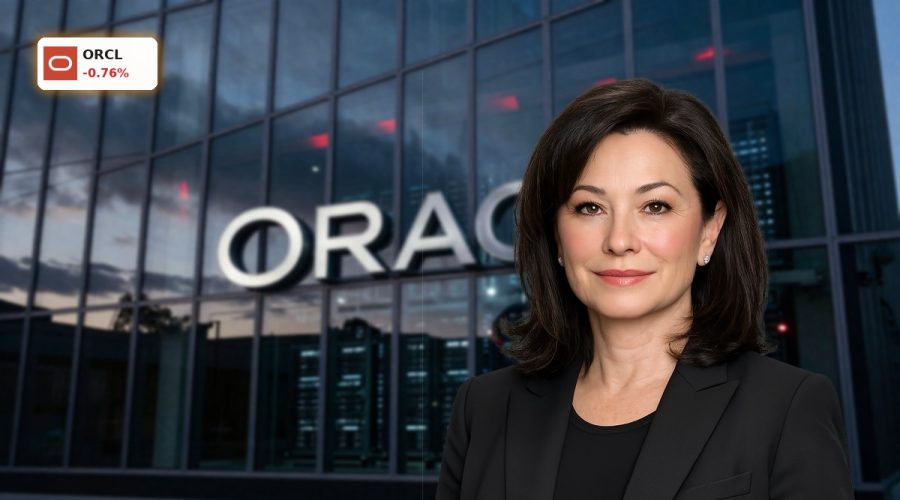
Oracle Corporation has hired 48-year-old Hilary Maxson as its new chief financial officer, effective immediately, bringing in a veteran of industrial and energy-capex cycles just as the group embarks on its most aggressive investment phase in decades. Maxson joins from Schneider Electric, where she served as executive vice president and group CFO since 2020, and previously spent 12 years at global power company AES in finance, strategy, and M&A roles. Her compensation package includes a $950,000 base salary, a target annual bonus of $2.5 million, and an initial equity grant valued at about $26 million, aligning her closely with shareholder outcomes.
The Oracle CFO Change also resets the company’s leadership structure after months of transition. Doug Kehring, who had been acting as principal financial officer following the retirement of long-time CEO Safra Catz and the elevation of Clay Magouyrk and Mike Sicilia to co-CEOs, will now refocus on operations and strategic initiatives as executive vice president. Maxson will report to Magouyrk and oversee Oracle’s global finance organization at a time when free cash flow is expected to turn negative for several years, driven by heavy AI data center spending.
How does Hilary Maxson fit Oracle’s AI capex strategy?
Oracle’s pivot from a primarily software and database business toward capital-intensive cloud and AI infrastructure is at the core of this Oracle CFO Change. The company has flagged an extraordinary capex plan of roughly $50 billion in fiscal 2026 to expand Oracle Cloud Infrastructure (OCI), including large-scale data centers designed to run next-generation AI workloads. Bloomberg has reported that Oracle intends to tap both debt and equity markets to fund this build-out, and some analysts expect negative free cash flow into 2030 as construction costs surge.
This cycle mirrors the playbook of hyperscale competitors such as NVIDIA’s largest cloud partners and big-tech players like Apple and Tesla that have poured tens of billions into vertical infrastructure. What differentiates Oracle is its late but aggressive push, coming after the company’s first quarter in more than 15 years with both revenue and earnings growth above 20%. OCI revenue jumped 84%, while total cloud revenue climbed 44%, underscoring strong demand that still exceeds current capacity.
Analysts say Maxson’s industrial background is tailor-made for this moment. Citi analyst Tyler Radke described the move as “a CFO announcement built for capex,” while KeyBanc’s Jackson Ader argued that her experience in energy and equipment puts her ahead of where Oracle’s business is now heading. Mizuho analyst Siti Panigrahi also endorsed the fit, highlighting the need for disciplined capital allocation as Oracle converts its roughly $553 billion order backlog into revenue. Both Citi and Mizuho maintain Buy-equivalent ratings on Oracle, with price targets around $320, while KeyBanc stays Overweight with a $300 target, implying substantial upside from current levels.
How are layoffs and lawsuits shaping sentiment on Oracle?
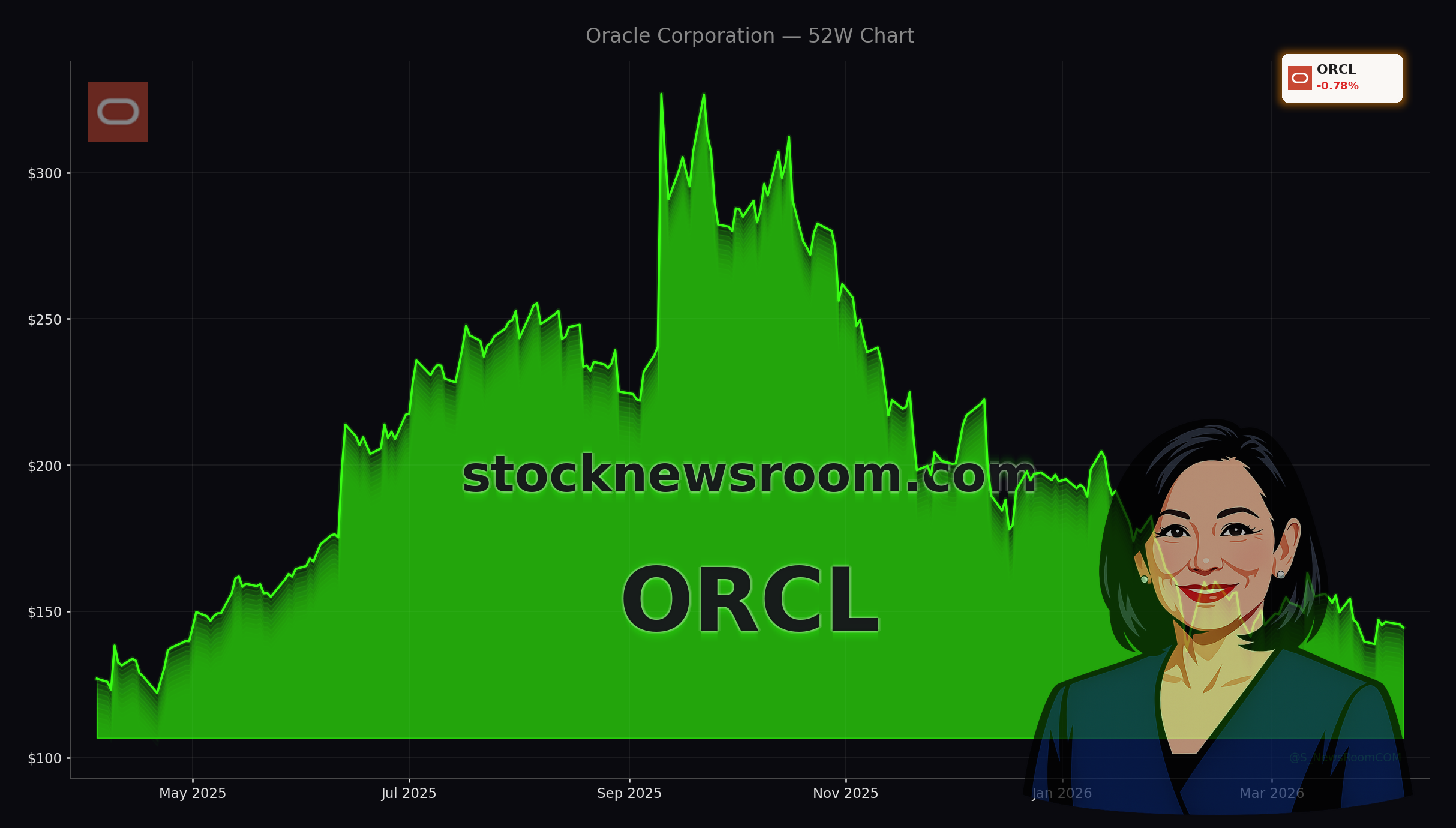
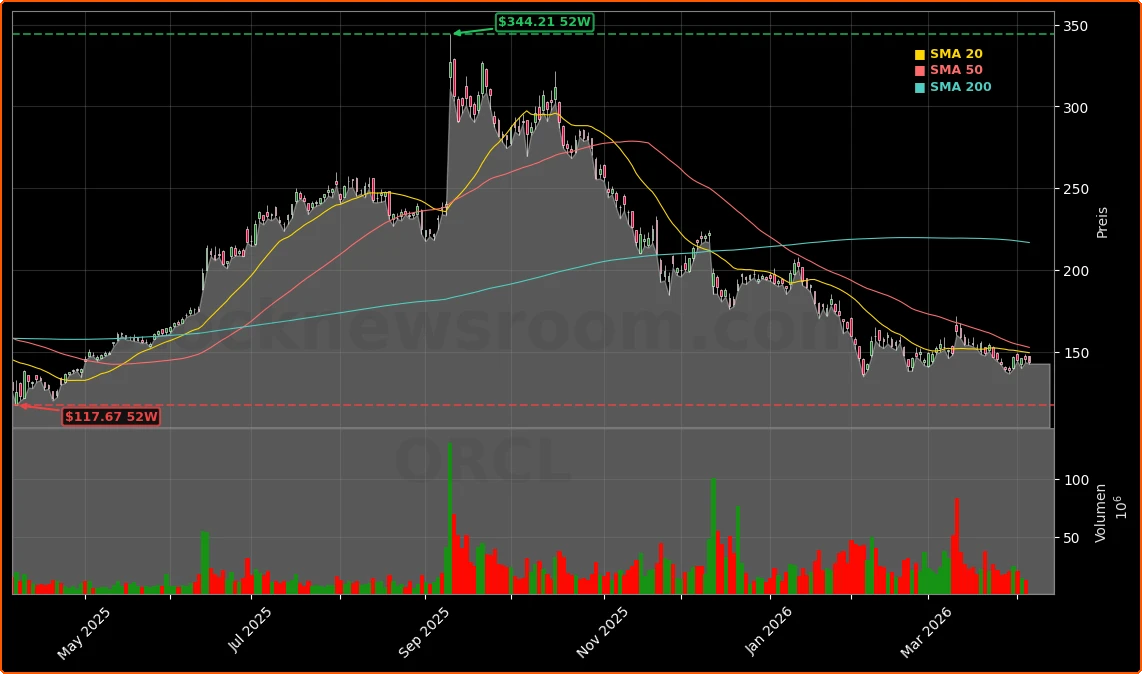
The Oracle CFO Change arrives against a more controversial backdrop. To fund its AI infrastructure build-out, the company has raised substantial debt and embarked on a sweeping restructuring, including tens of thousands of layoffs worldwide. Commentary on Wall Street frames these cuts as part of a broader “AI dividend” narrative, where automation and cloud margins eventually offset near-term pain. A recent analysis on Seeking Alpha, for example, argues that Oracle’s workforce reduction—about 18% of staff—could unlock significant operating leverage and supports a Buy-the-dip stance even after the stock’s more than 25% slide from its 2025 peak.
At the same time, investor-rights law firms such as Levi & Korsinsky and Bronstein, Gewirtz & Grossman have filed class action lawsuits alleging securities law violations tied to disclosures between June 2025 and December 2025. The cases aim to recover losses for shareholders who bought during that period, adding a layer of legal risk just as capital markets funding becomes more important. For portfolio managers, this combination of elevated leverage, headline risk from layoffs, and litigation makes execution by the new CFO especially crucial.
Where does Oracle stand in the AI competitive landscape?
Despite this turbulence, Oracle is pushing hard to show that its AI strategy has real-world traction. In healthcare, for instance, Southwest General in Ohio has rolled out the Oracle Health Clinical AI Agent across 18 specialties, generating more than 81,000 clinical notes in a year and cutting documentation time per patient by nearly 19%, while reducing after-hours work by about 14%. These metrics help illustrate how Oracle’s AI stack, built on Oracle Cloud Infrastructure, can translate into tangible productivity gains for customers.
Oracle is also signing AI-native partners such as Veritone, which is migrating its enterprise and government AI workloads to OCI under a multi-year deal. For investors who are already exposed to NVIDIA and other AI hardware names through the S&P 500 and Nasdaq, Oracle offers a different angle: a software-and-services player reinventing itself as a vertically integrated AI infrastructure provider. The Oracle CFO Change positions Maxson at the financial steering wheel of this transition, with Wall Street watching closely how she balances capex intensity, debt levels, and shareholder returns.
Related Coverage
For deeper insight into how restructuring and workforce cuts tie into the AI investment story, readers can explore Oracle AI Restructuring +6% Surge as Layoffs Fund AI Bet, which examines whether Oracle’s mass layoffs can truly justify its massive “Stargate” cloud gamble. Investors interested in the broader semiconductor and infrastructure backdrop can also read Intel Advanced Packaging Boom: Billion-Dollar AI Shock, a look at how Intel’s advanced packaging push aims to convert hyperscaler AI demand into a long-term profit engine.
No one becomes a doctor to click boxes on a drop-down menu. Doctors practice medicine because they want to care for people, and Oracle Health Clinical AI Agent is giving them more time to do so.— Seema Verma, executive vice president and general manager, Oracle Health and Life Sciences
In the end, the Oracle CFO Change installs a capex-seasoned finance chief just as the company leans hardest into AI and cloud infrastructure. For investors, the key question is whether Hilary Maxson can translate Oracle’s huge backlog and rapid cloud growth into sustainable returns while managing debt, layoffs, and legal overhangs. The next few quarters of execution on OCI build-out and margin trends will show whether this leadership shift marks the start of a new, durable chapter for Oracle’s AI ambitions.