
Are blockbuster Oracle Earnings and a massive AI cloud backlog enough to offset mounting leverage, legal risks and a sliding share price?

How are Oracle Earnings moving the stock?
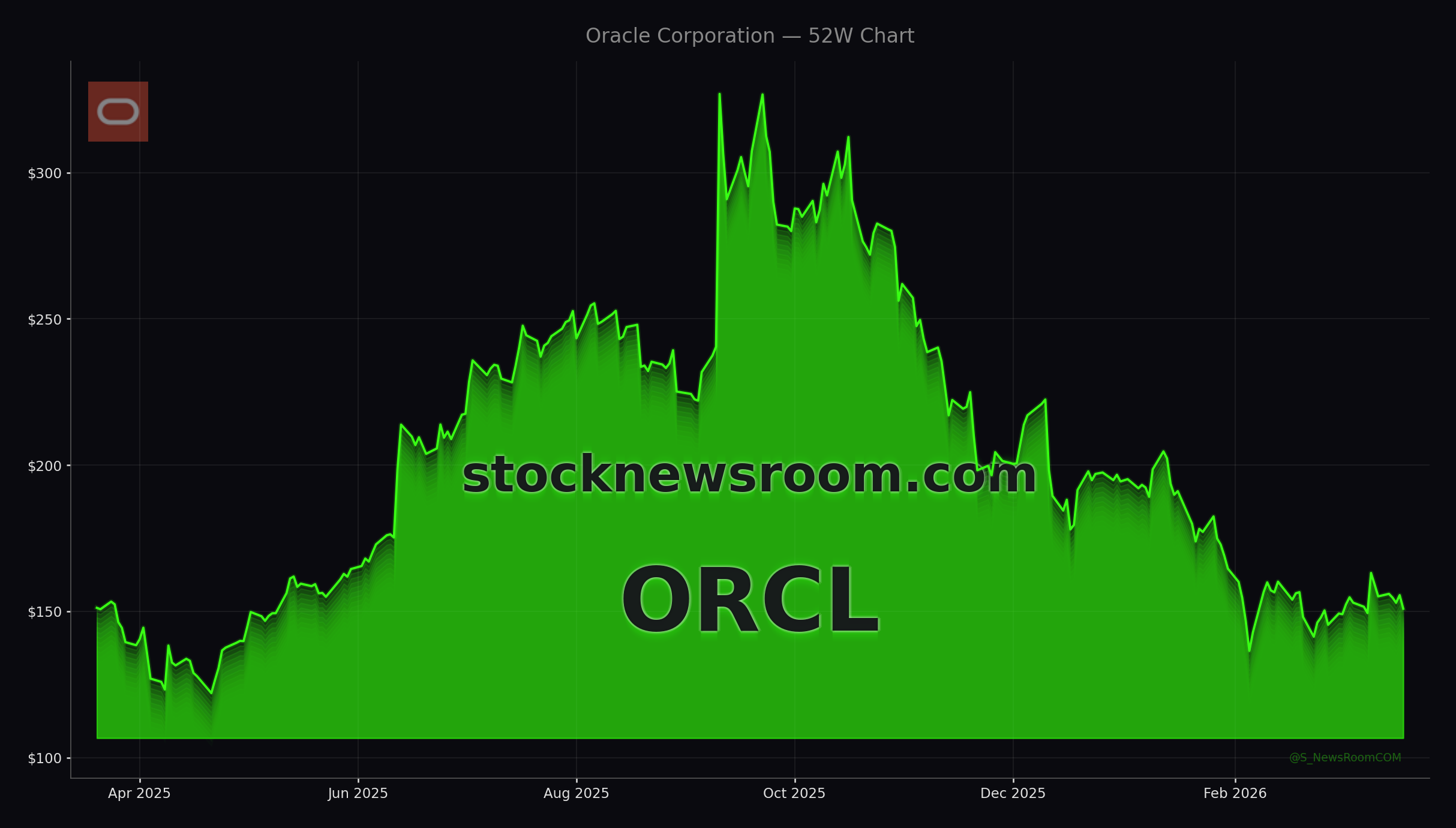
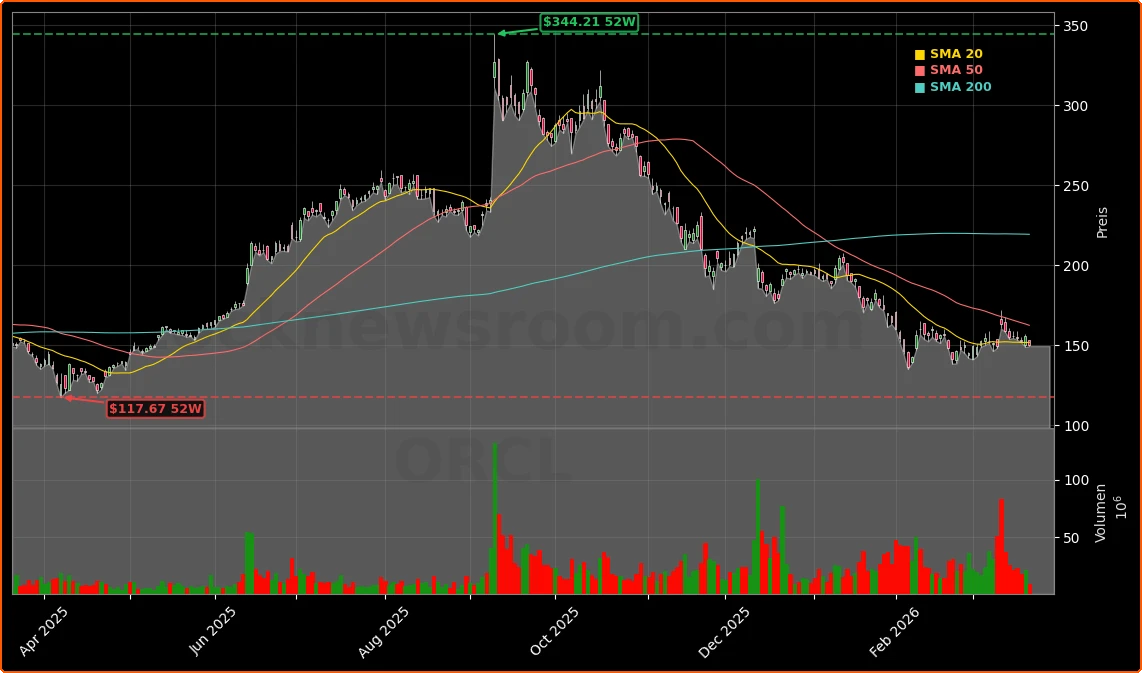
Oracle Corporation (ORCL) traded at about $149.91 in Friday afternoon action, down roughly 3.6% on the day and well below its recent highs, underscoring how volatile sentiment around AI infrastructure has become on Wall Street. The latest Oracle Earnings for fiscal 2026 Q3 (ended Feb. 28) showed revenue growing 22% year over year to $17.2 billion and non‑GAAP earnings per share rising 21% to $1.79, both ahead of consensus expectations. Those upside surprises briefly sent the stock more than 9% higher on March 11 before profit‑taking, concerns about leverage and new legal headlines pulled the shares back again.
Despite the near‑term pressure, Oracle’s AI‑driven cloud story looks very different from a year ago. Cloud infrastructure revenue surged 84% year over year to $4.9 billion, outpacing many larger incumbents and highlighting how Oracle is positioning itself alongside hyperscale players that depend heavily on chips from NVIDIA. For S&P 500 and NASDAQ‑focused investors, the question now is whether Oracle Earnings can keep growing fast enough to justify the balance‑sheet strain required to keep building AI data centers at scale.
Is Oracle’s AI strategy too aggressive?
The centerpiece of the bullish thesis is Oracle’s towering backlog. Remaining performance obligations (RPO) jumped 325% year over year in the latest quarter to about $553 billion, after adding roughly $30 billion in just three months. That figure dwarfs Oracle’s expected current‑year revenue of around $105 billion and reflects multi‑year contracts from enterprises and AI players looking to run demanding workloads on Oracle Cloud Infrastructure.
To service that backlog, Oracle is embarking on one of the most aggressive capex programs in big tech. Management plans to spend about $50 billion on capital expenditures this fiscal year, up from $21 billion previously, and to raise roughly $50 billion through debt and equity. Around $30 billion has already been raised via convertible preferred stock and bonds, contributing to investor unease over leverage and interest costs. At the same time, Oracle has secured about 10 gigawatts of future data center power capacity, with partners expected to fund roughly 90% of the build‑out, which could otherwise cost hundreds of billions of dollars if financed entirely on Oracle’s balance sheet.
What makes the Oracle Earnings story unique in AI?
What differentiates Oracle from mega‑cap peers like Apple or cloud‑heavyweights that lean on NVIDIA hardware is its “bring‑your‑own‑hardware” model for AI infrastructure. Customers and partners effectively pre‑fund a significant portion of the build‑out by supplying equipment or upfront payments, allowing Oracle to expand capacity “without any negative cash flow” from those specific deals, according to management commentary. In the most recent quarter, Oracle signed about $29 billion in contracts under this structure, helping to offset the cash drain from its broader capex surge.
On the top line, Oracle has guided to about $67 billion in revenue for fiscal 2026 and a sharp step‑up to roughly $90 billion in fiscal 2027, implying 34% growth as more of the RPO converts into recognized sales. Various Wall Street models now assume earnings per share could reach around $10.7 by fiscal 2028. Using earnings multiples similar to those awarded to large NASDAQ‑100 constituents, that trajectory would leave room for a meaningfully higher share price over the next two years, even after the recent volatility.
How do legal risks and sentiment affect Oracle?
Against this bullish Oracle Earnings backdrop, U.S. investors must also weigh growing legal risk. Multiple securities class action filings have targeted Oracle, accusing the company of misstatements and omissions related to its AI data center capabilities and capex plans over the June 2025 to December 2025 period. Firms such as Kessler Topaz Meltzer & Check, Rosen Law Firm, Bronstein Gewirtz & Grossman and The Gross Law Firm are all soliciting shareholders who suffered losses in ORCL during that window, with an April 6, 2026, deadline to seek lead‑plaintiff status.
So far, these lawsuits have not materially altered analyst stances on Oracle, but they do add another layer of uncertainty. Recently, JPMorgan upgraded the stock following the strong Q3 print, while Oppenheimer raised its price target and argued that the steep six‑month sell‑off was not justified by fundamentals, particularly in light of the $553 billion backlog. For now, the market seems to be treating the legal headlines as a valuation overhang rather than a thesis‑breaker.
Where could Oracle sit in U.S. portfolios?
Relative to high‑flying AI leaders such as Tesla or pure‑play chip names leveraged to NVIDIA’s ecosystem, Oracle screens as a more value‑oriented AI infrastructure bet, trading at roughly the high‑teens forward earnings multiple. Zacks Investment Research has highlighted the debate as a classic “high risk or high reward” setup, with Oracle’s elevated capex and leverage counterbalanced by rapid cloud growth and an unusually large contracted revenue base.
If the company can execute on its build‑out, maintain discipline on partner‑funded capacity and avoid major setbacks in its legal cases, the current Oracle Earnings trajectory suggests room for both revenue and margin expansion into 2027–2028. Conversely, any slowdown in AI demand, delays in bringing new data centers online or adverse litigation outcomes could pressure both earnings estimates and multiples, extending the stock’s underperformance versus the broader S&P 500 technology cohort.
Related Coverage
Investors looking for a deeper dive into the last quarter can read “Oracle Earnings Record: Can Its AI Cloud Boom Last?”, which analyzes whether Oracle’s blockbuster AI cloud results mark the start of a durable new growth era or simply raise balance‑sheet risks. For a sector contrast on how the AI cycle is affecting other parts of the value chain, “Micron Technology Earnings: -1.6% Shock After Record AI Boom” examines whether memory specialist Micron is at the start of a supercycle or nearing a cyclical peak.
In sum, the latest Oracle Earnings underscore a company betting boldly that AI cloud demand will justify massive investment, with a $553 billion backlog as its key proof point. For U.S. investors, the stock offers leveraged exposure to AI infrastructure with more volatility and legal noise than the average blue chip. The next few quarters will show whether Oracle’s earnings and cash flows can keep pace with its ambition, making the name a high‑conviction, high‑risk consideration for tech‑heavy portfolios.