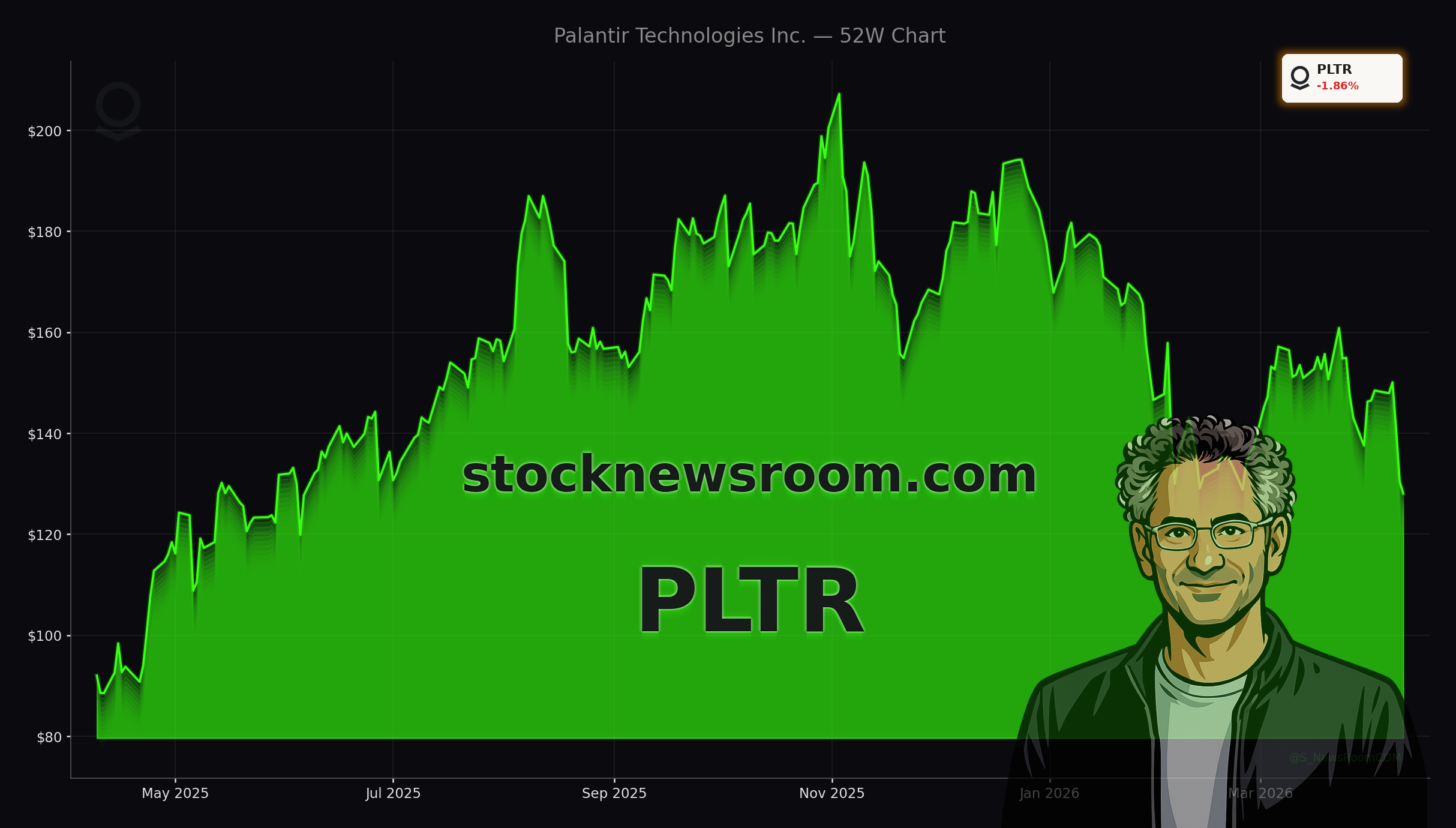

Is Palantir’s soaring AI valuation a durable moat story or a fragile bet priced for near-perfect execution?

Is Palantir pricing in too much AI perfection?
The core of any serious Palantir AI Analysis today is the gap between fundamentals and expectations. PLTR has been one of the strongest performers on the NASDAQ over the past three years, driven by double-digit revenue growth and accelerating demand for its AI operating system. That rally has pushed the stock to valuation levels that many institutional investors now describe as “priced for perfection.” Forward price-to-earnings estimates sit well above 100x, while price-to-sales is close to 50x on current-year forecasts, multiples more akin to early-stage software names than a maturing platform.
This tension is playing out in flows. Cathie Wood’s ARK Invest recently added 85,485 PLTR shares across its ETFs, a roughly $11 million bet on Palantir as a long-term AI infrastructure leader. At the same time, high-profile bear Michael Burry has disclosed put positions and publicly argued fair value is closer to $46, underscoring how split smart money is on the risk-reward profile at current prices.
How strong is Palantir’s AI moat?
A balanced Palantir AI Analysis has to start with the technology stack. Palantir built its reputation delivering advanced data integration, analytics and AI solutions to the U.S. military and intelligence community, supporting use cases from battlefield intelligence to border enforcement. Those contracts are still a key pillar of the story, and the company has posted robust government growth despite broader defense budget pressures and Washington gridlock.
The real growth engine, however, is commercial. Palantir’s Foundry and its newer Artificial Intelligence Platform (AIP) are designed to sit as a contextual “brain” between raw data and workflows. AIP ingests data from disparate systems, organizes it into an ontology that maps entities and actions, and then lets third-party large language models generate recommendations and actions grounded in real-world context. That ontology layer is difficult to replicate at scale and is a central reason why Palantir currently faces limited direct competition in mission-critical deployments.
Palantir’s go-to-market strategy reinforces that moat. Its much-publicized AI boot camps aim to solve a prospect’s real business problem with their own data in roughly five days, drastically shortening sales cycles and turning pilots into production deployments. This combination of deep integration, high switching costs and fast time-to-value is what has some bulls arguing that Palantir could eventually belong in the same conversation as platform giants like Apple and Microsoft as a central operating layer for enterprises.
Where do risks and new rivals emerge?
On the bear side, valuation is only the first concern. Government revenue can be lumpy, and Palantir’s close association with prior administrations has raised questions about political risk if procurement priorities shift. On the commercial front, some of the recent growth may reflect customers rushing to “catch up” on AI, raising the possibility of a demand air pocket if projects get consolidated or delayed.
Competition is also intensifying as the market moves toward agentic AI and broader orchestration layers. Enterprise software leaders like ServiceNow and Salesforce are pushing to become the system of record for corporate data, while hyperscale cloud providers aim to build their own integration and AI orchestration layers. BigBear.ai, for example, is touting a model-agnostic platform for defense and regulated industries that directly targets some of the same mission-critical use cases. Short seller commentary has also flagged Anthropic’s rapidly growing AI agents business as a threat, with some arguing it could “eat Palantir’s lunch” in new enterprise spending.
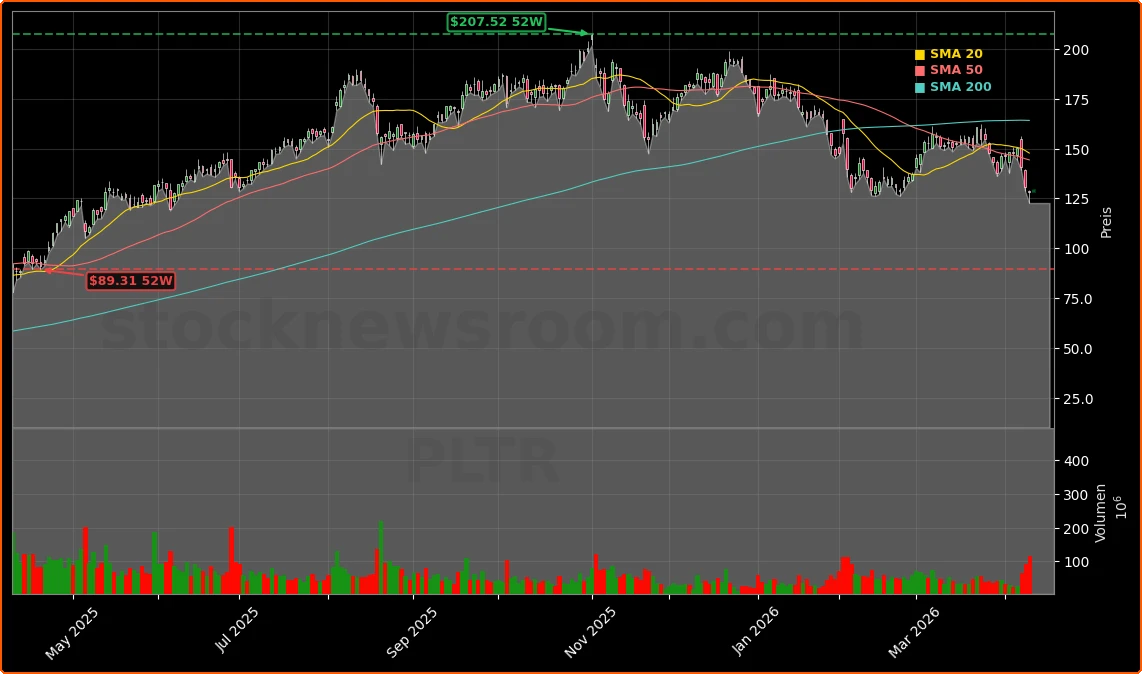
That narrative has real market consequences. The IGV tech-software ETF, where Palantir is one of the heaviest weights, is down sharply year-to-date, with PLTR’s recent 7–8% pullback on Anthropic-related fears amplifying the drawdown. Yield-focused traders are also circling around PLTR’s volatility: a YieldMax PLTR option-income ETF just declared a fresh weekly distribution, highlighting how options markets are monetizing the stock’s wide trading ranges rather than committing to the common equity.
How does Palantir stack up against U.S. AI peers?
For U.S. investors, any Palantir AI Analysis inevitably turns into a relative call across the AI complex. Mega-cap chip leader NVIDIA dominates AI compute and carries a premium multiple, yet still trades at a substantial discount to PLTR on earnings and sales metrics while generating far higher free cash flow. A recent comparison with Broadcom concluded the diversified chip and infrastructure giant looks like the cleaner AI buy today, citing its broader revenue base, stronger margins and more reasonable valuation.
On the pure-play software side, Palantir’s narrative sits somewhere between high-growth cloud names and controversial AI stories like C3.ai. Retail enthusiasm remains elevated, with PLTR frequently among the most-discussed technology stocks alongside Tesla and other momentum favorites. But analyst stances are cautious: several Wall Street desks, including Zacks, effectively rate the stock a “Hold,” pointing to stretched multiples and execution risk despite acknowledging the uniqueness of the platform.
Related Coverage
Investors who want to dive deeper into Palantir’s political and ESG overhang can read Palantir Military AI -1.9%: Trump Shock and ESG Warning, which explores how military contracts, election risks and ethical concerns intersect with today’s lofty valuation. For a broader AI sector angle, NVIDIA AI Strategy +65% Boom: Can This Rally Keep Running? examines whether NVIDIA’s explosive run can continue, offering a useful benchmark when comparing AI exposure across a portfolio.
In sum, this Palantir AI Analysis suggests a world-class AI infrastructure asset trading at a price that already bakes in years of near-flawless execution. For aggressive, long-term investors who believe Palantir can entrench itself as the default ontology and decision layer for enterprises and governments, volatility may present selective entry points. For more valuation-sensitive portfolios tied to the S&P 500 and NASDAQ, upcoming earnings and contract wins will be critical in proving that today’s premium remains justified in tomorrow’s AI landscape.