
Is the Palantir Anthropic rivalry exposing a deeper weakness in PLTR’s AI story or setting up a high‑risk buying opportunity?

Why did Palantir plunge while the NASDAQ held up?
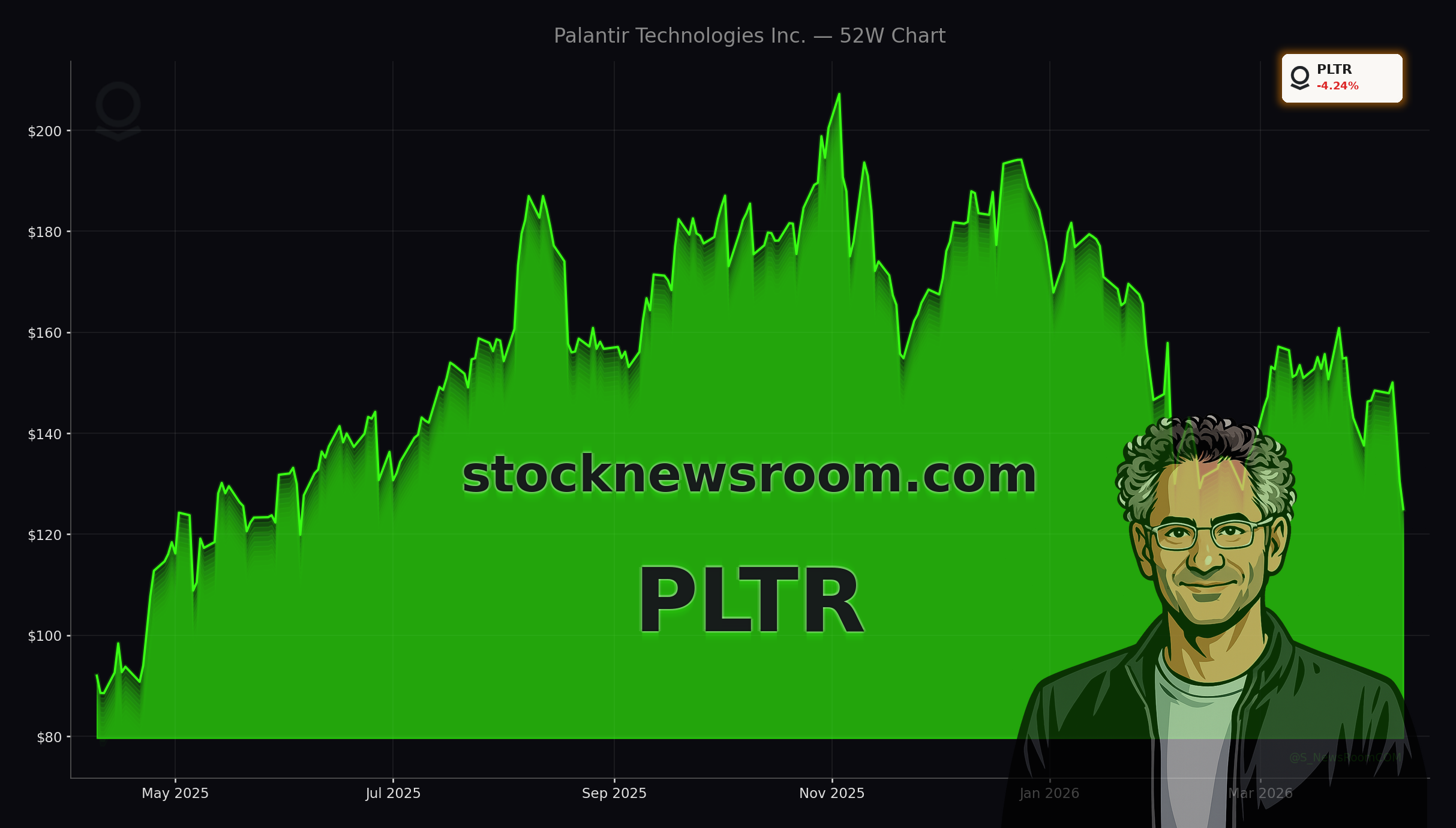
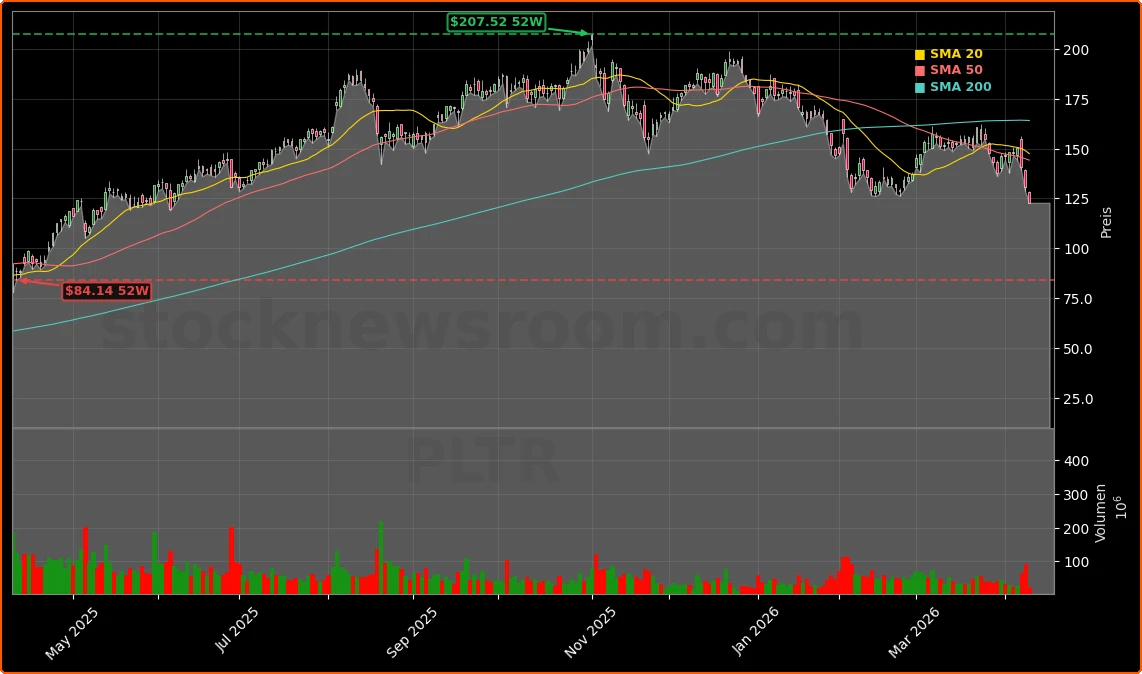
While the broader NASDAQ and S&P 500 have remained relatively resilient, Palantir Technologies Inc. has been hit hard. PLTR closed at $122.80 on Friday, down 5.93% on the day and nearly 14% over the last two sessions, after already sliding about 37% from its 52‑week high near $207. The stock is still roughly 40% higher than a year ago, underscoring just how far it had run in the AI boom before this correction.
The immediate trigger was a sector‑wide rerating of software and AI platform names as investors processed Anthropic’s latest product launches and the idea that enterprises may increasingly favor “model‑first” vendors over complex data platforms. ETFs focused on software have stumbled, with funds like IGV suffering one of their worst stretches since 2008 as heavyweights such as Salesforce, Adobe and ServiceNow were sold alongside Palantir. Concerns that the Palantir Anthropic dynamic could accelerate a shift in AI budgets away from traditional software stacks have amplified the move.
At the same time, short‑term trading pressure has been intensified by options activity and quant strategies that react quickly to social‑media headlines and high‑profile investor commentary, adding fuel to downside momentum even as fundamentals remain robust.
What exactly is at stake in the Palantir Anthropic rivalry?
The core of the Palantir Anthropic debate is about where value accrues in the next phase of enterprise AI. Anthropic’s Claude models and newly launched managed AI agents are pitched as plug‑and‑play tools that companies can deploy quickly, paying primarily for compute rather than building deep data integration layers. Michael Burry argued that Anthropic is capturing a dominant share of new enterprise AI spend and that its annual recurring revenue has exploded far faster than Palantir’s, framing Palantir as a slower, heavier solution best suited for government work.
By contrast, Palantir’s value proposition centers on its Artificial Intelligence Platform (AIP), Foundry and Apollo, which sit closer to the data and operational workflows of large organizations. The company boasts a net dollar retention rate of around 139%, indicating existing customers are expanding their spend materially over time. In areas like defense, logistics and highly regulated industries, Palantir’s advocates say that ripping out such deeply embedded systems in favor of a simpler model wrapper is neither practical nor safe.
That distinction—foundation model provider versus decision‑intelligence and data‑ontology layer—matters for investors comparing PLTR to high‑profile AI names such as NVIDIA or platform players like Apple and Tesla that are building AI into tightly controlled ecosystems rather than just selling access to models.
How are fundamentals holding up for Palantir?
Despite the volatility, Palantir’s recent financial performance has been strong. In its most recent reported quarter, revenue climbed roughly 70% year over year to $1.4 billion, with U.S. commercial sales surging about 137% to $507 million. Full‑year 2026 guidance calls for around 61% revenue growth to between $7.18 billion and $7.20 billion, driven largely by U.S. commercial revenue more than doubling to above $3.14 billion.
Profitability metrics are equally eye‑catching: gross margins sit above 82%, and the company’s Rule of 40 score—combining growth and margins—reached about 127, far above typical software peers. At the same time, valuation remains demanding. Palantir trades on a trailing price‑to‑earnings multiple north of 200 and a forward multiple above 100, versus many cloud and SaaS names that cluster in the 40–60 range even after the sector pullback.
For U.S. investors running diversified technology exposure via the S&P 500 or NASDAQ, that means Palantir is both a potential growth engine and a source of valuation risk, especially if the Palantir Anthropic narrative continues to pressure sentiment around enterprise AI platforms.
What are analysts like Wedbush saying now?
Wall Street remains sharply divided. Wedbush’s Dan Ives pushed back hard against the idea that Anthropic is “eating Palantir’s lunch,” calling the short thesis a fictional storyline. Ives reiterated an Outperform rating and a $230 price target, implying significant upside from current levels. He highlighted Palantir’s unique data ontology architecture, its expanding commercial and government deal pipeline, and its role as a core infrastructure player in the AI build‑out, rather than a commodity software vendor.
On the bearish side, Michael Burry previously disclosed large put positions against Palantir and NVIDIA, and his latest criticism focused on Palantir’s reliance on lower‑margin government work and slower accumulation of enterprise ARR. While he later suggested the stock’s sharp drop reflected broader market forces rather than his comments alone, the episode underscored how sensitive richly valued AI names remain to any sign of competitive threat.
Other research houses have not rushed to downgrade PLTR en masse, but investors are watching closely to see whether more cautious targets or neutral ratings from firms like Morgan Stanley, Citigroup or RBC Capital follow if volatility persists and software multiples compress further.
How should investors frame the risk‑reward now?
For growth‑oriented portfolios, the key question is whether Palantir can convert its early U.S. commercial momentum into durable, diversified revenue that justifies its premium valuation, even if model providers like Anthropic win a bigger slice of AI budgets. Bulls point to a growing backlog of about $4.4 billion, strong net retention and success stories like healthcare and defense partners integrating Foundry into mission‑critical operations. Recent deals, such as powering real‑time medical data search platforms, illustrate how Palantir’s stack can sit beneath customer‑facing AI experiences rather than compete directly with Claude‑style agents.
For more cautious investors, the combination of a 100+ forward P/E, rising competitive noise and a sector‑wide derating in software suggests that position sizing and entry timing matter. After a two‑day, double‑digit drop, some may see the move as an opportunity to start or add to positions in stages, while others may wait for confirmation in upcoming quarterly results that commercial growth is not being dented by Anthropic’s rise.
Either way, the next few reports will be critical in proving whether Palantir’s thesis as a “national security‑grade” AI platform transcends the current Palantir Anthropic hype cycle and allows the stock to regain leadership in the AI trade.
Related coverage
For a deeper dive into how this week’s pullback fits into the broader PLTR story, including valuation scenarios and sentiment drivers, see Palantir Forecast: -4.8% plunge as AI boom meets bubble fears. Investors comparing Palantir’s trajectory with other AI beneficiaries in hardware may also want to review Intel AI Strategy Rally: Can This Boom Really Last?, which explores whether Intel’s AI push can sustain its recent share price rally.
In the end, the Palantir Anthropic showdown is forcing investors to distinguish between AI excitement and durable infrastructure value. Palantir still looks like a central player in data‑driven decision intelligence, but the stock’s path from here will depend on execution, competitive proof points and whether Wall Street remains willing to pay a premium for its AI moat. The next few quarters should reveal whether this correction is a buying opportunity or an early warning that the AI trade is maturing.