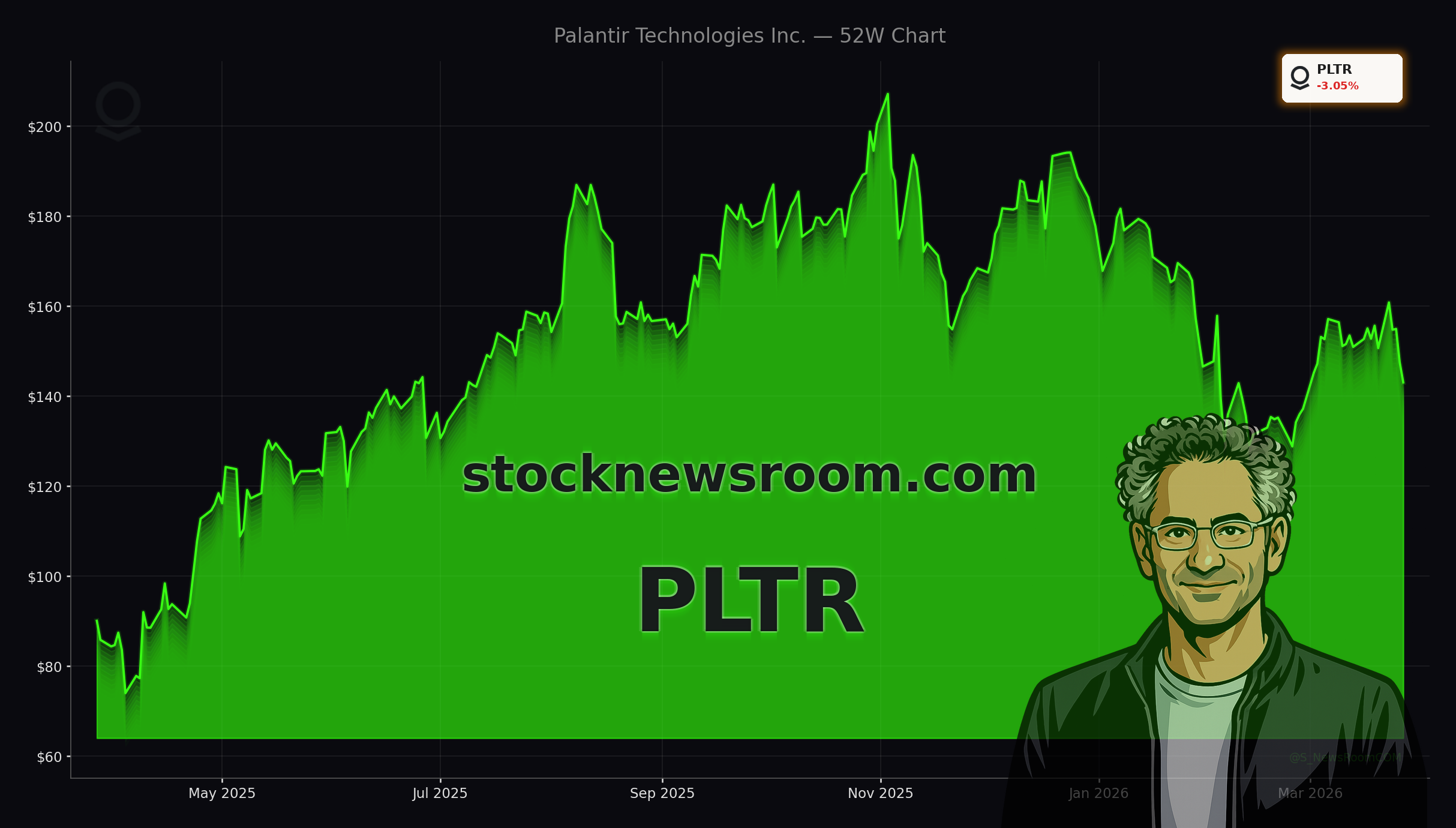

Can Palantir’s surging government contracts justify its sky-high AI valuation as the stock slips and defense spending ramps up?

How are Palantir Government Contracts shifting the story?
Palantir Technologies Inc. (PLTR) remains one of NASDAQ’s most hotly debated AI names. The U.S. Department of Defense has moved to classify Palantir’s Maven Smart System as a formal “program of record,” effectively making it a standard battlefield command-and-control platform across the services. That status typically unlocks stable, multi‑year funding streams and deepens the moat around key Palantir Government Contracts.
Maven integrates data from drones, satellites, sensors, and radar to prioritize targets in live combat theaters. This comes on top of Palantir’s role as a core software developer in the $185 billion “Golden Dome” missile‑defense initiative, where analysts at Rosenblatt estimate the company’s piece could ultimately be worth “many billions” of dollars — close to its roughly $4.5 billion of 2025 revenue.
How do defense wins stack up against AI rivals?
While mega‑cap AI hardware leader NVIDIA dominates data‑center chips, Palantir plays higher in the software stack, selling decision platforms to governments and enterprises. Recent quarterly results showed revenue surging 70% year over year to $1.4 billion, its 10th straight quarter of accelerating growth, with U.S. commercial sales up 137% and U.S. government revenue up 66%.
Yet valuation remains a flashpoint. PLTR trades around 200–250 times trailing earnings and well over 70 times forward earnings — roughly five times richer than NVIDIA on a P/E basis. Several Wall Street desks, including Goldman Sachs and Morgan Stanley, highlight the stretched multiple, while bullish voices such as ARK’s Cathie Wood frame Palantir as “the most important defense tech play out there.” Zacks and other research shops stress that Palantir Government Contracts do provide visibility but may not fully offset multiple‑compression risk if growth cools.
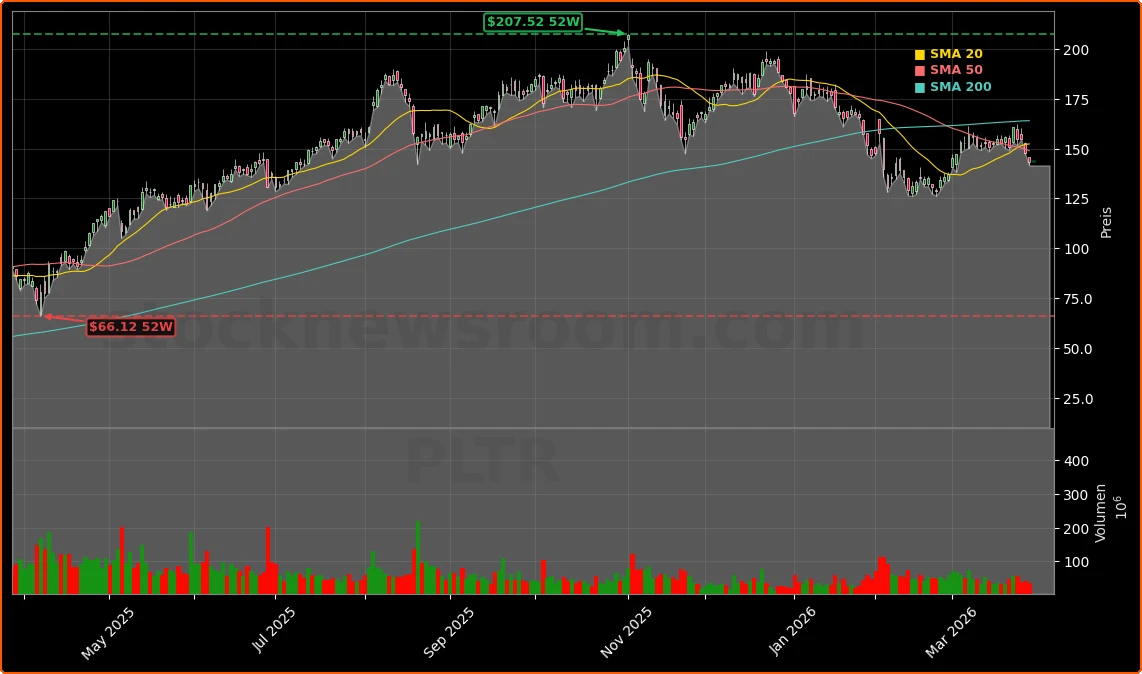
Can Palantir balance government and commercial demand?
Beyond defense, Palantir is deepening ties with European automaker Stellantis through a renewed five‑year data and AI agreement and is powering real‑time underwriting for AIG via its Foundry platform. The U.K. Financial Conduct Authority is also piloting Palantir software to detect insider trading and money laundering, underscoring how Palantir Government Contracts and regulatory engagements can seed broader commercial adoption.
Remaining performance obligations jumped 143% in the latest quarter, adding over $1.6 billion of contracted but not yet recognized revenue, while a separate $1 billion software purchase agreement with U.S. Homeland Security further strengthens the government backlog.
Related Coverage: For a deeper dive into how Palantir’s expanding Bain alliance feeds into valuation debates, see “Palantir Bain Partnership -4.6%: AI Boom or Valuation Crash Warning”. To understand the broader AI infrastructure backdrop and how chip leader NVIDIA is funding its own growth via buybacks, read “NVIDIA AI Infrastructure -2.2%: Record Demand And Buyback Boom”, which helps frame where Palantir sits along the AI value chain.
Overall, Palantir Government Contracts, from Maven to Golden Dome, now underpin a powerful, defense‑heavy backlog that offsets some valuation concerns. For U.S. investors, the next few quarters will show whether commercial AI demand and new mega‑projects can sustain hyper‑growth long enough to justify today’s multiples. Palantir Government Contracts make the company a strategic, if volatile, AI defense play for long‑term portfolios.