
Can the Palantir Maven Program’s Pentagon upgrade really justify one of the richest AI valuations on Wall Street?

How does the Palantir Maven Program change the story?
The Pentagon has used Palantir’s Maven Smart System since 2017, but only on a project basis. By naming it a formal program of record, the Department of Defense is effectively locking the technology into core operations, much like standard hardware platforms or weapons systems. That transition should mean more predictable budgeting, multi‑year funding lines, and a clearer roadmap for expansion across the Army, Air Force, Navy, and other branches.
For Palantir Technologies Inc., whose total 2025 revenue reached roughly $4.47 billion with about $2.4 billion coming from government customers, the Palantir Maven Program designation could be the single most important catalyst on the public-sector side. It directly supports an Army enterprise deal worth up to $10 billion over ten years and raises the odds Palantir captures the higher end of that range as Maven deployments scale. At the same time, the move deepens Palantir’s moat in military AI, making it harder for rivals like NVIDIA-backed defense startups or large integrators to displace its software stack.
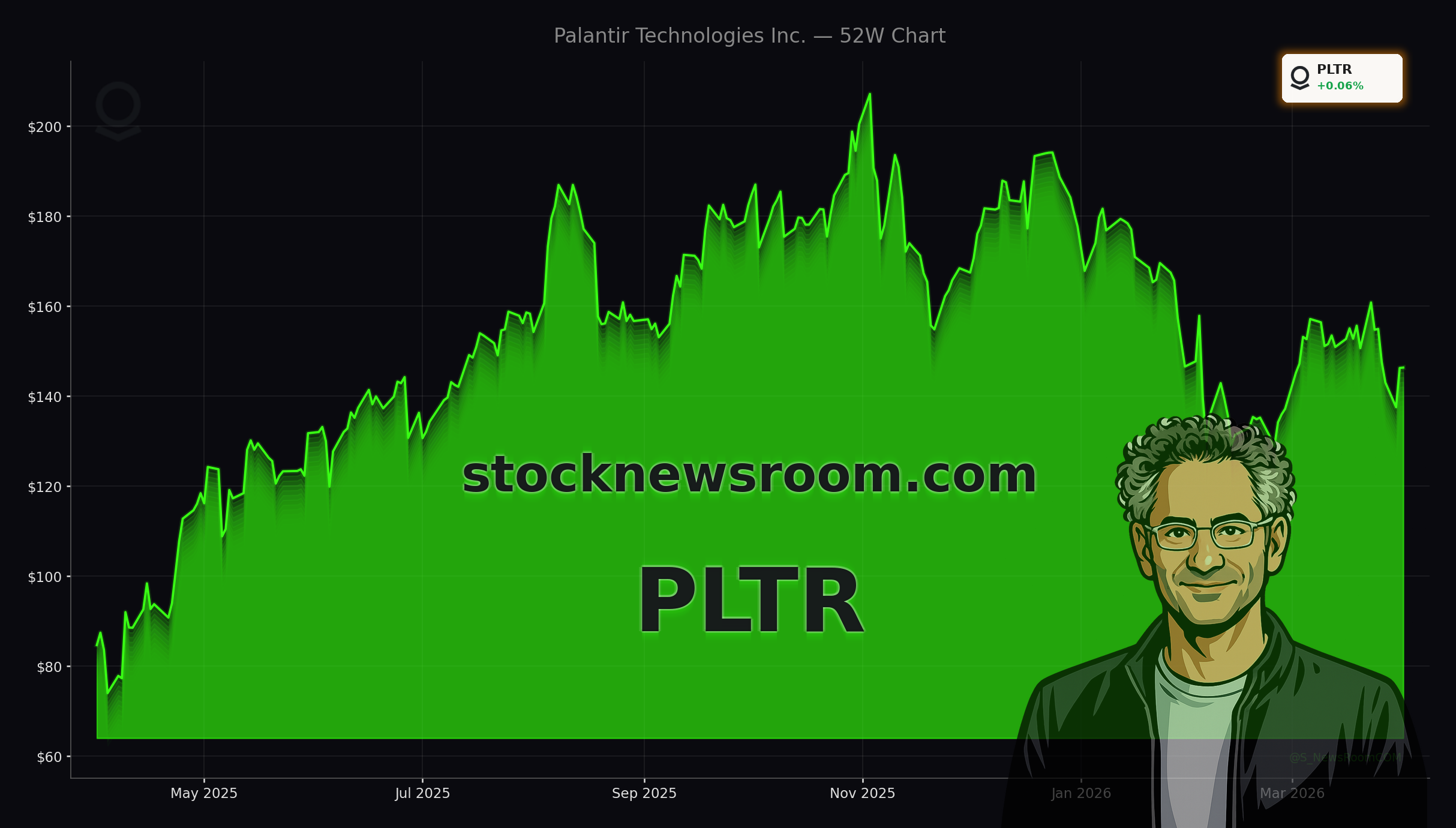
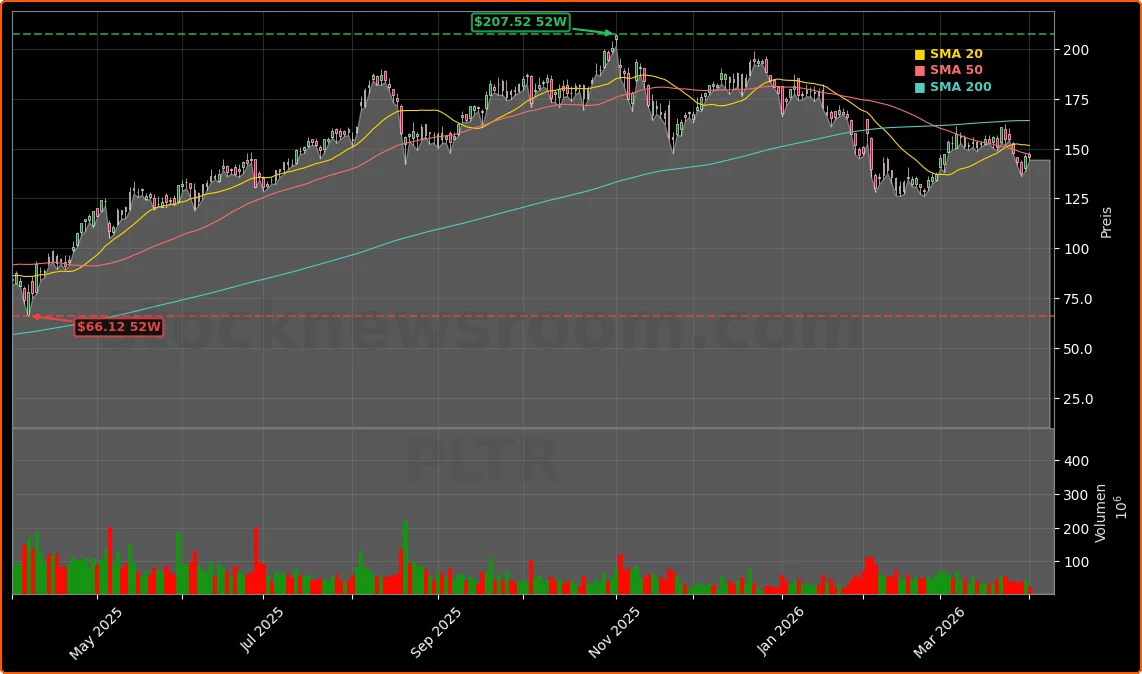
Shares currently trade around $145.77, down modestly on the day and roughly 30% below recent highs after a blistering multi‑year run. That volatility reflects the tug‑of‑war between accelerating fundamentals and one of the richest revenue multiples in the AI universe.
Palantir Technologies Inc.: Can growth match the price tag?
Government demand is only part of the equity story. Palantir’s commercial business has inflected sharply since the 2023 launch of its Artificial Intelligence Platform (AIP), used by enterprises to operationalize internal data the way Gotham and Foundry do for security and government clients. U.S. commercial revenue jumped triple digits year over year in late 2025, and management is guiding for more than $3.14 billion in U.S. commercial revenue in 2026, implying growth above 100% from that segment alone.
Across the whole company, consensus now calls for roughly 62% revenue growth this year and around 30% next year, with total sales potentially reaching about $10.4 billion by 2027. Even if those aggressive forecasts materialize, Wall Street still has to digest today’s extreme starting point: Palantir recently traded at more than 80 times trailing twelve‑month revenue and is valued at roughly 34 times 2027 sales estimates.
Benchmark analyst Yi Fu Lee initiated coverage with a Hold rating, arguing the current valuation is “priced for near‑perfection” and would require sustained 60% to 70% annual revenue growth to avoid a meaningful derating. That skeptical stance sits alongside more bullish commentary from growth‑oriented managers who see Palantir as a core AI platform name in the same conversation as NVIDIA, Apple, Meta Platforms, and other large‑cap beneficiaries of the data‑infrastructure build‑out.
How does Maven stack up in the AI arms race?
The Palantir Maven Program also matters in the broader race to monetize AI. While hyperscale cloud providers and chip leaders dominate AI infrastructure, Palantir is one of the few software‑first names at scale that directly monetizes mission‑critical AI deployments. Maven turns unstructured sensor and intelligence feeds into actionable targets and recommendations, a capability that becomes more indispensable as geopolitical tensions flare in regions like Iran and Eastern Europe.
On the civilian side, Palantir’s Foundry and AIP platforms are powering projects such as OneMedNet’s iRWD data platform for oncology, which Inka Health is now using to accelerate cancer drug development and train its SynoGraph AI model. That illustrates how Palantir’s core data‑fusion tooling can span from battlefields to hospitals, reinforcing cross‑domain network effects that may be hard for newer AI startups to replicate.
Yet the stock’s explosive ascent has drawn skeptics. GMO, for example, cited Palantir as its single largest detractor on the short side in a market‑neutral strategy after the shares climbed 135% in 2025, noting the price‑to‑sales multiple had at times exceeded 100. That kind of speculative excess leaves the name vulnerable to sharp drawdowns in any broader tech or AI correction, particularly if growth decelerates even modestly from current projections.
What should Palantir Maven Program mean for investors now?
The Palantir Maven Program upgrade gives long‑term investors something concrete: deeper integration into the U.S. defense machine, higher odds of capturing full value on existing contracts, and a stronger position when new AI‑enabled weapons and intelligence systems are scoped. Combined with surging commercial adoption of AIP, that supports the thesis that Palantir can evolve from a controversial government contractor into a diversified AI software powerhouse.
Still, the stock is unlikely to be a smooth ride from here. Technical analysts on Wall Street highlight sideways trading and overbought conditions after the recent run, and even bullish fundamental investors acknowledge that a bear market or AI sentiment reversal could compress Palantir’s earnings and sales multiples quickly. Dollar‑cost averaging or “nibbling” on pullbacks rather than going all‑in at current levels may be a more prudent approach for retail investors building long‑term positions.
In the near term, attention will focus on whether the Palantir Maven Program translates into visible contract ramps in quarterly filings and whether commercial AIP wins can sustain triple‑digit growth rates. Over a multi‑year horizon, the combination of entrenched defense AI, expanding commercial use cases, and improving profitability keeps Palantir firmly on the radar of institutional portfolios that already hold major AI leaders like Tesla and NVIDIA.
Related Coverage: For a deeper dive into how valuation risk intersects with Palantir’s AI narrative, investors can read Palantir Forecast: -3.9% Crash Tests Its AI Premium, which examines whether the latest pullback has reset expectations enough. To see how another major chip player is shaping sentiment across the AI complex, including potential read‑throughs for Palantir, take a look at Advanced Micro Devices Forecast +4.2% Rally Shakes AI Leaders, which explores whether AMD’s momentum signals a broader, more durable AI rally.
Overall, the Palantir Maven Program underscores that this is no longer just another AI story stock but a core piece of U.S. defense infrastructure paired with a rapidly scaling commercial franchise. For investors comfortable with volatility and premium valuations, Palantir remains a high‑beta way to express a long‑term conviction in AI, with upcoming defense contract disclosures and commercial AIP adoption likely to determine whether today’s price still leaves room for attractive upside.