
Is the soaring Palantir valuation still grounded in fundamentals, or has AI euphoria pushed the stock into bubble territory?

Is Palantir Technologies now priced for perfection?
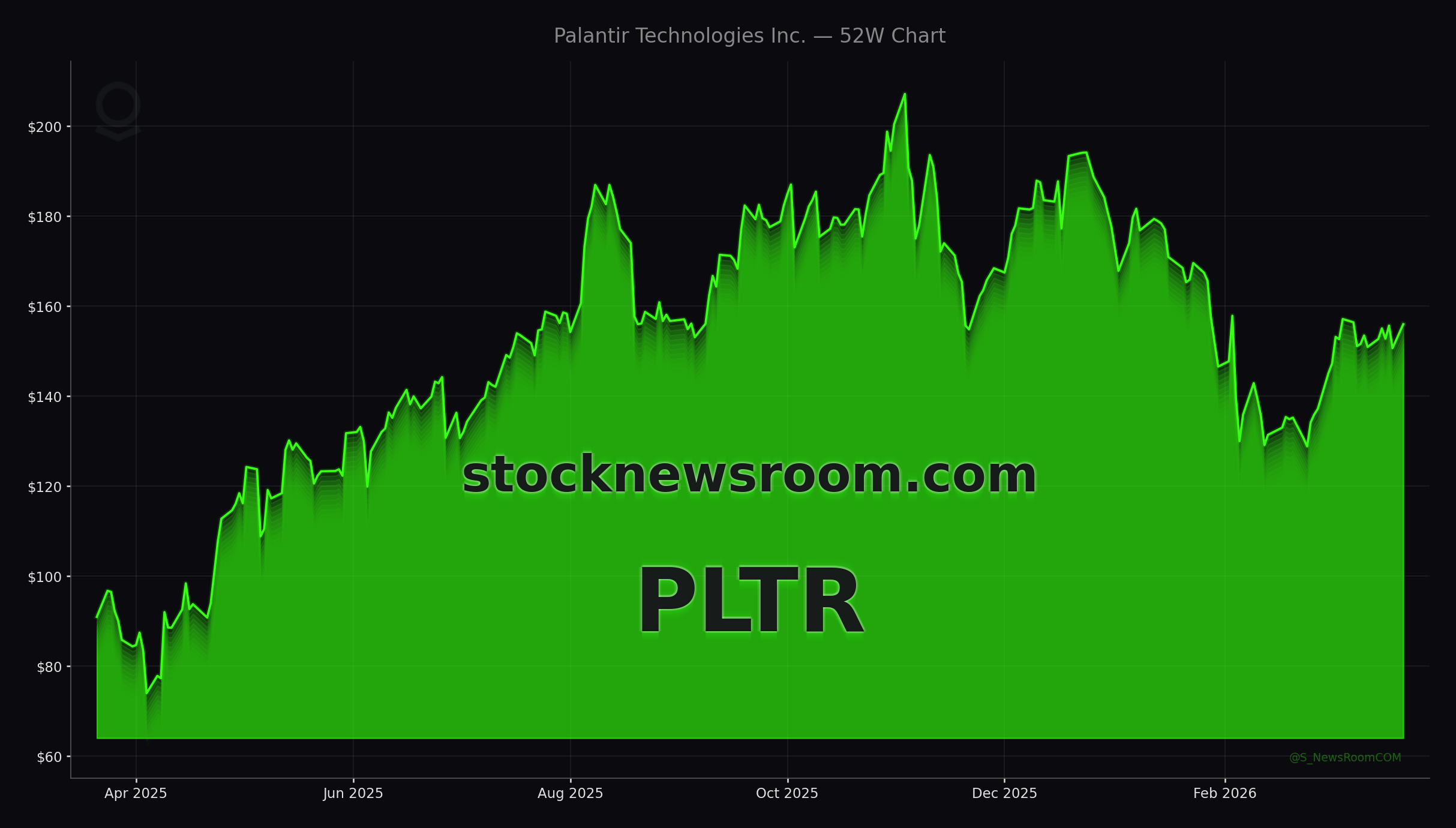
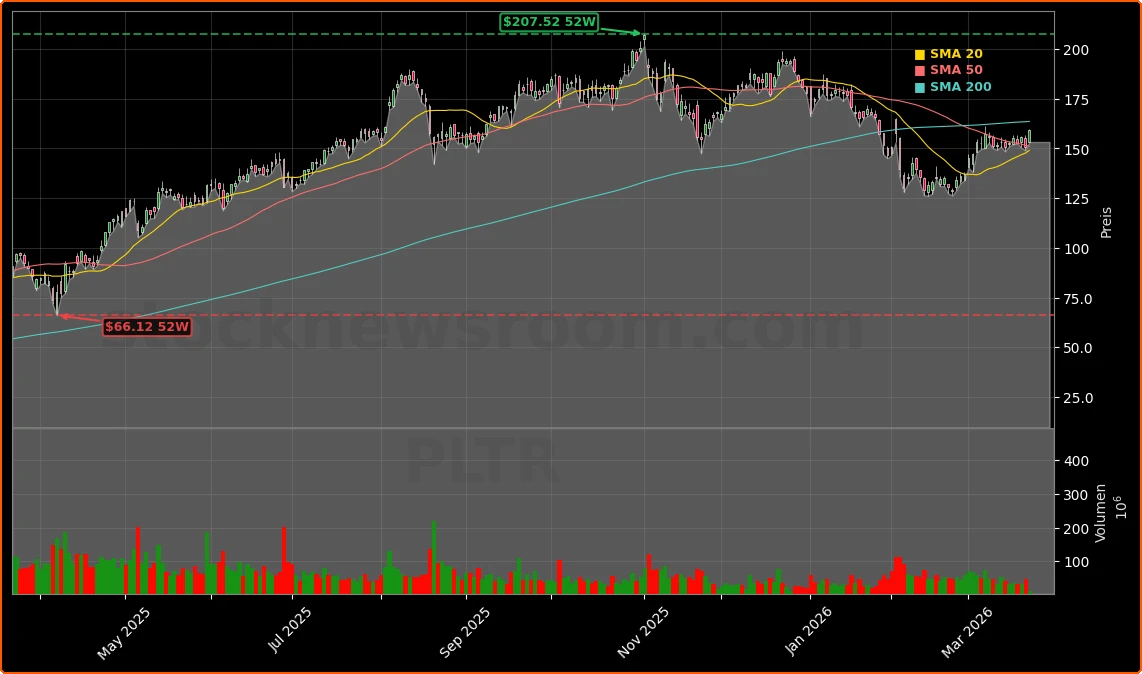
Palantir Technologies Inc. (PLTR) climbed 5.70% on Monday to $159.34, extending a remarkable rally powered by enthusiasm for its Artificial Intelligence Platform and defense contracts. At roughly $368 billion in equity value, Palantir is now worth almost as much as the combined market caps of Salesforce and SAP, putting its valuation metrics at the very top of the software universe.
On traditional multiples, Palantir Valuation looks extreme versus typical SaaS names. The company trades at a hefty premium to high‑growth peers in data, analytics, and security, even though many of those competitors are also benefiting from the AI wave. That disconnect is driving an unusually wide split between bullish and cautious analysts as they reassess what a category‑defining AI software platform might be worth.
Unlike day‑traders trying to time short‑term volatility in PLTR or Tesla, institutional investors are building multi‑year theses around Palantir’s entrenched position in U.S. and allied government infrastructure and its rapid commercial expansion. The debate is no longer just about whether the stock is expensive, but whether the business itself is becoming a strategic utility for AI‑driven decision making.
How do analysts judge Palantir Valuation?
Wall Street’s formal coverage reflects that tension. Wedbush Securities reiterated its bullish stance on Palantir, lifting its price target again and flagging the stock as a core AI winner. Wedbush argues that sustained revenue growth, expanding margins, and deepening government ties can support a premium multiple for years as AI software budgets scale across the S&P 500 and global public sector.
By contrast, Morgan Stanley maintains an “Equal Weight” rating, warning that Palantir Valuation already implies years of near‑flawless execution. The bank notes that the current price bakes in aggressive assumptions around adoption of the company’s Ontology‑based architecture and continued upside from its AI deployments. For Morgan Stanley, the next big test will be the Q1 2026 earnings report in May, where any slowdown in commercial deals or margin expansion could challenge the bull case.
Other research houses are similarly cautious. One recent Wall Street note grouped Palantir among AI stocks that could fall more than 50% if sentiment cools, arguing that its valuation has decoupled from even elevated software norms. Still, several growth‑oriented managers have publicly acknowledged missing benchmark performance in 2025 precisely because they did not own Palantir, underscoring how central the name has become in AI‑focused portfolios.
Does the Pentagon change the Palantir Valuation story?
The fundamental backdrop continues to improve, particularly on the defense side. The U.S. Department of Defense has now designated Palantir’s Maven Smart System as an official “program of record,” effectively upgrading it from a series of pilots to a long‑term, funded capability deployed across the military. That shift supports a more durable revenue base and strengthens Palantir’s reputation as a mission‑critical AI supplier.
Palantir is already supporting U.S. and allied operations in the Middle East and other theaters, while also holding a multibillion‑dollar contract with the U.S. Army and a rapidly expanding backlog that management says is growing at triple‑digit percentages. These developments help explain why many bulls argue that Palantir Valuation should not be compared directly to commoditized SaaS or database players, but to rare software platforms with near‑monopoly characteristics.
Beyond defense, new deals such as access to sensitive data at the UK’s Financial Conduct Authority show how deeply Palantir is embedding itself in financial infrastructure. The platform is being used to analyze complex fraud and market‑abuse patterns, giving the company a high‑stakes role inside one of the world’s most important financial centers.
What about competition from NVIDIA and others?
In the broader AI stack, Palantir sits above chipmakers like NVIDIA and Advanced Micro Devices, which provide the hardware muscle for training and inference. While those names dominate the NASDAQ headlines, Palantir aims to own the software layer where enterprises and governments actually design workflows, run simulations, and operationalize AI.
This position also intersects with cybersecurity leaders such as CrowdStrike and Palo Alto Networks, both of which have rallied since recent geopolitical conflicts as investors seek exposure to AI‑driven defense. But Palantir’s Foundry and Gotham suites – and now its AIP – go beyond threat detection to orchestrate entire data ecosystems. That breadth is why some growth investors now liken Palantir to an early‑stage Apple or Microsoft in terms of potential platform dominance, even if today’s revenue base is far smaller.
For portfolio construction, that means Palantir offers a different risk‑reward profile than pure‑play chip names or more traditional SaaS companies. Its cash‑generative, asset‑light model resembles best‑in‑class software, but its exposure to defense budgets and regulated data environments also introduces policy, privacy, and ethical risks that stock pickers must weigh carefully.
Related coverage on StockNewsroom
Investors tracking Palantir’s expanding use cases may want to read how its new mortgage initiative could open another commercial growth vector. Our recent deep dive, “Palantir Mortgage Platform Boom: AI Shock For Mortgage Lenders”, explores whether a partnership in home lending can turn complex underwriting workflows into the company’s next big AI engine. For a broader view of the AI supply chain, “Micron Technology AI Earnings: -4.8% Record Quarter Shock” examines how memory specialist Micron is navigating an AI‑driven demand cycle, offering context for how infrastructure providers and software platforms like Palantir might perform through different phases of the boom.
In summary, Palantir Valuation looks stretched on almost every conventional metric, but a growing camp of investors believes its defense status, commercial traction, and platform potential justify the premium. For long‑term U.S. and global investors, the stock now represents a high‑beta, high‑conviction way to express a view on AI as an enduring transformation rather than a passing hype cycle. The next few quarters of execution and contract wins will determine whether Palantir grows into today’s valuation or tests the resolve of those betting on its AI‑driven future.