
Can PepsiCo’s latest earnings, cash strategy reset and Rockstar impairment really justify the stock’s renewed upside momentum?

How do PepsiCo Earnings stack up to expectations?
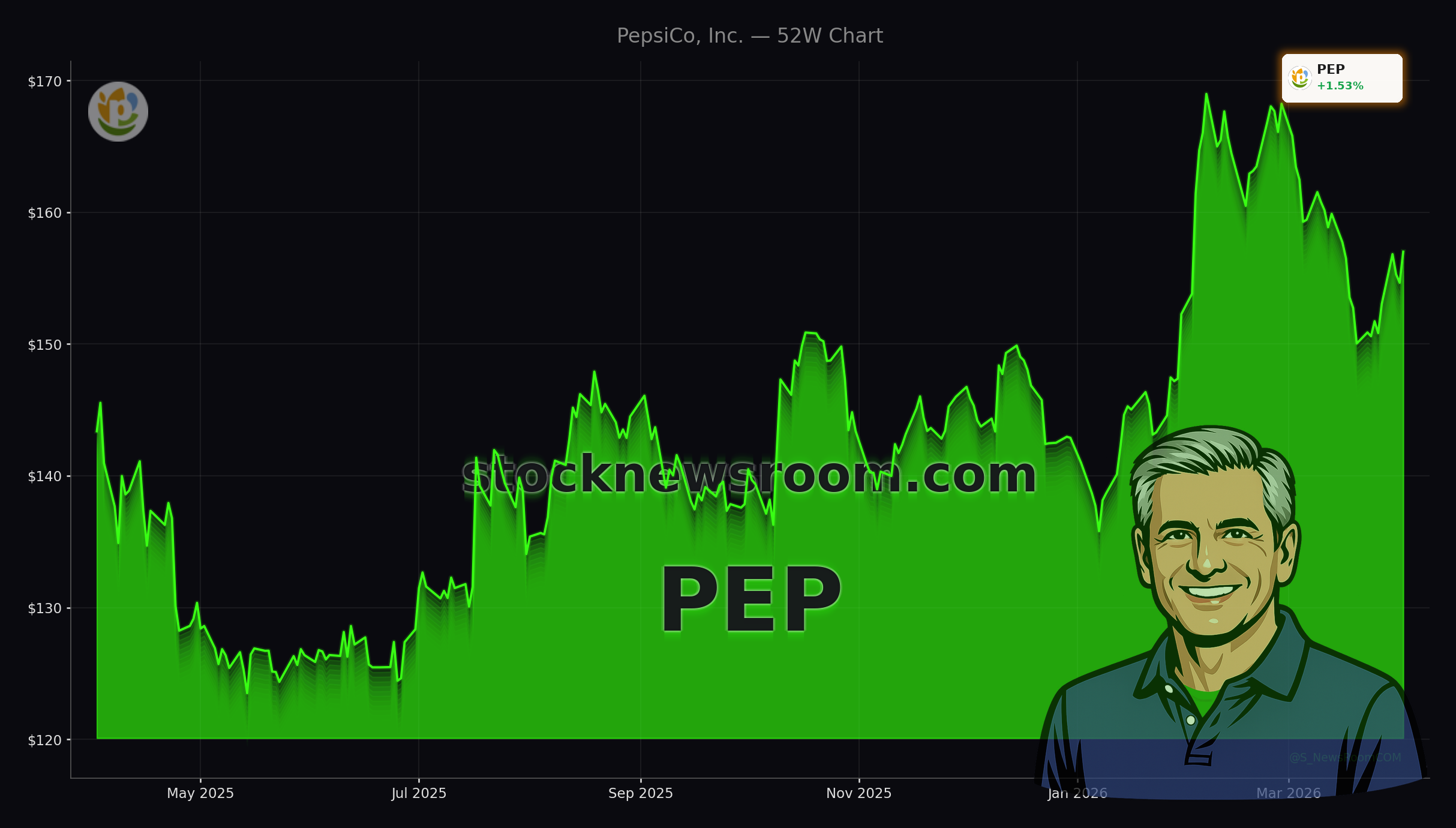
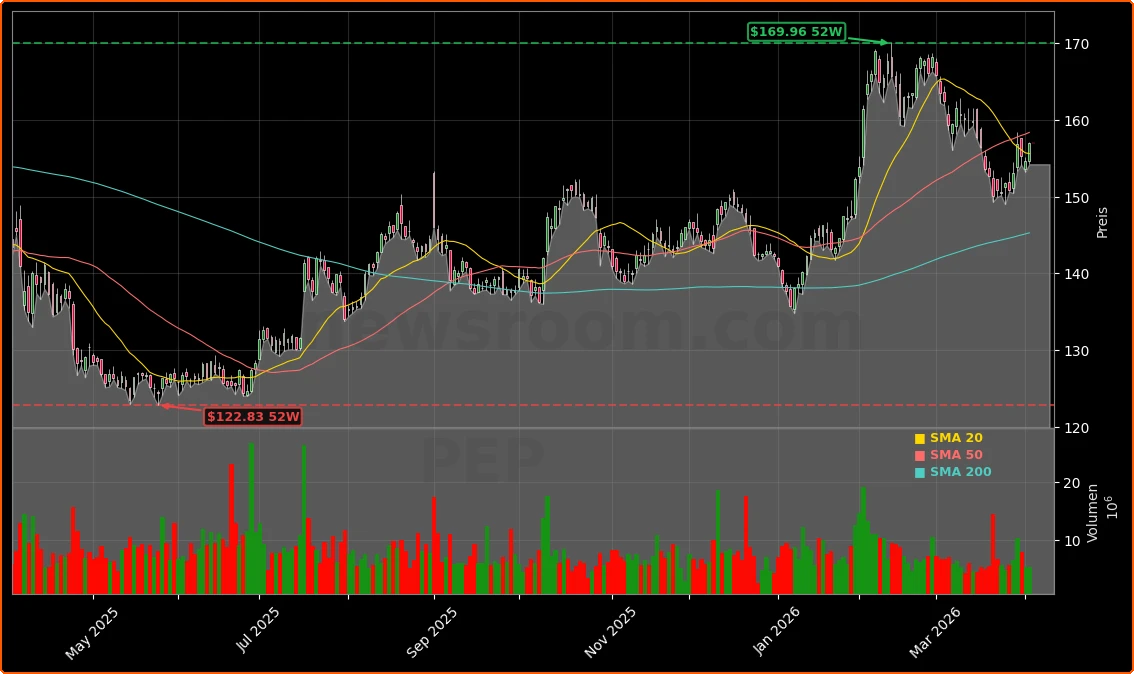
PepsiCo, Inc. closed Friday at $157.01, up 1.53% on the day, and was roughly flat in after-hours trading. That level leaves the stock below its 52-week high and broadly in line with the consumer staples peer group, which has lagged the high-flying technology and AI complex led by names like NVIDIA, Tesla and Apple. Against that muted backdrop, the latest PepsiCo Earnings show a company still leaning on price increases but beginning to rebuild momentum.
For 2025, net revenue reached $93.9 billion, up 2.3% on a GAAP basis and 1.7% organically. The quality of that growth, however, was mixed. Organic volume declined 2% across the portfolio, with convenience foods down 2% and beverages up 1%, while effective net pricing of about 4.5% in Q4 did the heavy lifting. Net income dropped 14% to $8.24 billion, or reported earnings per share (EPS) of $6.00 versus $6.95 a year earlier, largely because of a $1.993 billion impairment tied primarily to the Rockstar energy-drink brand.
Stripping out that hit, core EPS for the year landed at $8.14, underlining that the core franchise remains profitable even as shoppers push back on higher shelf prices. The Q4 slice of PepsiCo Earnings was more encouraging: revenue climbed to $29.3 billion, up 5.6% GAAP and 2.1% organically, and core EPS of $2.26 grew 11% in constant currency as productivity programs flowed through to margins.
What is changing in PepsiCo’s cash strategy?
Behind the headline PepsiCo Earnings, cash generation and deployment are emerging as the key swing factors for equity holders. Free cash flow over the past 12 months totaled $7.67 billion, but dividends and buybacks together consumed roughly 99.5% of that amount. That payout ratio leaves little room for error if input costs rise or if volume softness extends through another year.
Management is now signaling a shift toward more sustainable cash coverage. For 2026, PepsiCo is guiding to free cash flow conversion of at least 80% of net income, with capital expenditures expected to remain below 5% of revenue. Even so, the company plans to return about $8.9 billion to shareholders, including $7.9 billion in dividends and $1 billion in share repurchases. The board approved a 4% dividend increase, to an annualized $5.92 per share, marking the 54th consecutive yearly hike, and authorized a new $10 billion buyback program running through February 2030.
At the current price, the dividend yield sits around the mid‑3% range, competitive with other consumer staples and with many dividend names screened for income-focused portfolios. Recent fund-flow disclosures show a mixed institutional picture: SteelPeak Wealth LLC sharply boosted its stake in PepsiCo, while other managers trimmed positions, reflecting a market split between investors who see value at today’s multiple and those rotating into higher-growth sectors on the S&P 500 and NASDAQ.
How do PepsiCo Earnings compare with Coca-Cola?
Any assessment of PepsiCo Earnings has to be framed against archrival Coca‑Cola. Over the same period, Coca‑Cola generated roughly half of PepsiCo’s revenue base but delivered stronger margin expansion and 23% growth in net income to $13.1 billion. The difference highlights the structural trade-off in PepsiCo’s more vertically integrated model, which owns much of its manufacturing and distribution. That approach enhances control and scale across snacks and beverages but carries higher capital intensity and somewhat thinner margins.
For 2026, PepsiCo is targeting organic revenue growth of 2% to 4% and core constant-currency EPS growth of 4% to 6%. Those goals are modestly below Coca‑Cola’s 4% to 5% organic growth ambition, yet they mark the clearest upward inflection in PepsiCo’s guidance in roughly two years. Management plans record productivity savings to fund brand restaging, innovation in functional beverages and snacks, and sharper value pricing aimed at budget-conscious consumers in North America and resilient international markets.
Valuation is where PepsiCo may have an edge. The shares trade at about 17 times estimated 2026 core EPS, well under the 23–24 times range seen during 2022–2023 and near five-year lows on a forward basis. Wall Street analysts broadly rate the stock a “Hold,” with an average 12‑month price target around the high‑$160s to $170 area, implying low double-digit upside from current levels. Some firms, including large U.S. brokerages such as Deutsche Bank, have recently trimmed price targets but kept neutral stances, underscoring a view that the risk‑reward balance is improving but not yet compelling enough for across-the-board upgrades from houses like Goldman Sachs or Citigroup.
What other risks and catalysts should investors watch?
Beyond the numbers in the latest PepsiCo Earnings, brand and reputational risks briefly resurfaced this week. The company withdrew sponsorship from a major London music festival after Kanye West was named as a headliner, a move that underscores how quickly marketing partnerships can become liabilities amid heightened scrutiny of controversial figures. While the financial impact of this specific decision is likely immaterial, it highlights the broader non-financial risks large consumer brands must manage.
Operationally, investors will be watching whether North America volumes stabilize as value-pack offerings and sharper price points roll out, and whether international regions such as Europe, the Middle East and Africa can maintain their recent double‑digit gains in revenue and operating profit. Private-label competition in snacks and beverages, shifting consumer health preferences, and commodity price volatility all remain clear overhangs.
For diversified U.S. portfolios, PepsiCo sits squarely in the income-and-defensives bucket: a mature S&P 500 name with a long dividend record but slower growth than secular winners in tech and healthcare. The upcoming April 16 earnings release will provide the first checkpoint on 2026 guidance and should clarify whether Q4’s margin recovery can extend into the rest of the year.
In sum, the current PepsiCo Earnings phase shows early signs that the worst of the reset may be behind the company: productivity gains are real, guidance has turned upward, and the dividend continues to grow. For long-term investors who can tolerate a few more choppy quarters, the combination of a lower forward multiple, mid‑3% yield and a clearer cash strategy makes PepsiCo a credible candidate for the core income sleeve of a U.S. equity portfolio, with the next set of results likely to determine whether the turnaround narrative truly sticks.