Can Plug Power’s first positive gross margin really ignite a lasting Plug Power Turnaround, or is Wall Street right to stay skeptical?
Is Wall Street buying the Plug Power Turnaround?
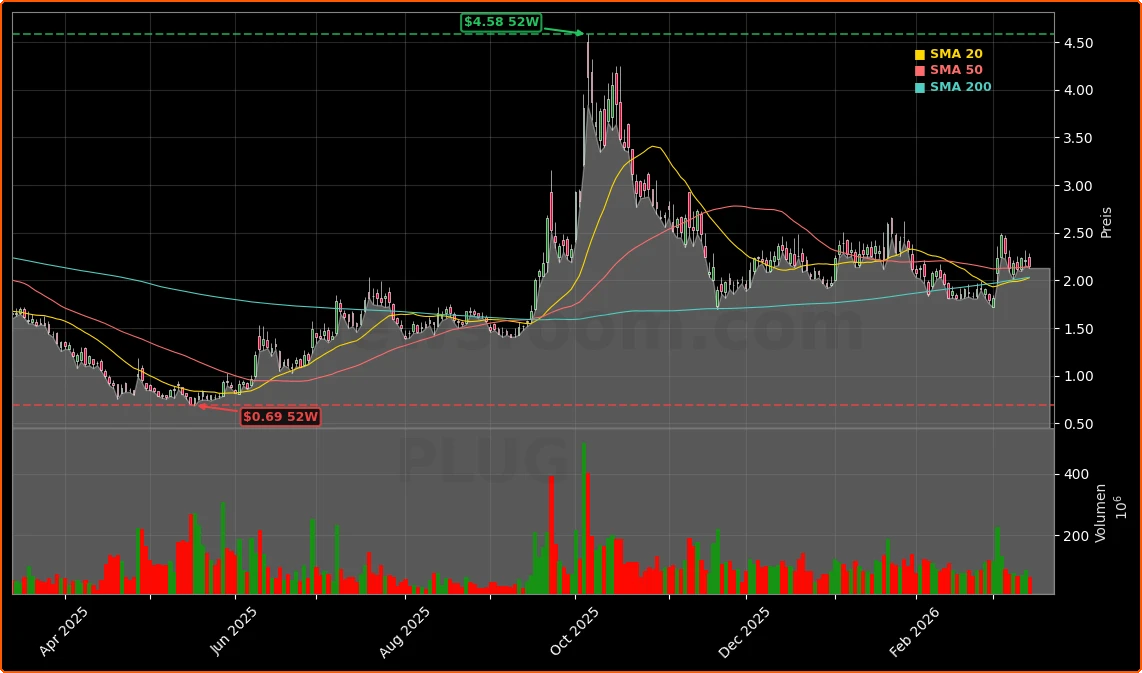
On the surface, the market is skeptical. At roughly $2 per share and well off its 52‑week peak, Plug Power Inc. sits firmly in speculative territory, and the stock has been hit hard by broader risk‑off moves tied to stagflation fears and spiking energy prices. A recent bout of selling left the shares trading more than 40% below their year high as investors rotated away from unprofitable growth names into cash‑generating leaders such as Apple or AI beneficiaries like NVIDIA.
Analyst sentiment mirrors that caution. MarketBeat data shows Plug Power carries a consensus “Hold” rating from 17 firms, with five “Sell,” eight “Hold” and only four “Buy” or “Strong Buy” recommendations. The average 12‑month price target stands near $2.89, only modestly above the current quote, underscoring that Wall Street sees the Plug Power Turnaround as a “show‑me” story rather than a done deal.
Jefferies recently cut its price target to $1.80 from $2.00 while maintaining a “Hold” stance, explicitly questioning whether the nascent margin improvement can be sustained. For portfolio managers benchmarking against the S&P 500 and Nasdaq Composite, that kind of cautious tone makes PLUG more of a tactical high‑risk position than a core holding.
How strong are Plug Power’s new margins?
The bullish side of the Plug Power Turnaround rests on one key metric: margins. In Q4 2025, Plug Power generated revenue of about $225 million, up 17.6% year over year, and reported an adjusted loss of $0.06 per share, beating consensus estimates. Crucially, it posted a positive gross profit of $5.5 million, or a 2.4% gross margin, versus a brutal negative 122% gross margin in the prior‑year quarter.
Management credits “Project Quantum Leap” for the swing. The initiative combines workforce reductions, price increases on select offerings, reprioritization of hydrogen infrastructure projects, and manufacturing efficiency gains. Plug has also pushed its vertically integrated fuel network harder, ramping its own hydrogen plants in Georgia, Tennessee and Louisiana to reduce reliance on costly third‑party suppliers.
Executives now estimate that Project Quantum Leap could deliver $150 million to $200 million in annual cost savings and are targeting positive EBITDA by Q4 2026. Net cash used in operations for 2025 fell 26.5% year over year to about $535.8 million, and the company ended the year with roughly $368.5 million in unrestricted cash plus an asset monetization agreement expected to generate more than $275 million. Those numbers do not remove liquidity risk, but they improve visibility compared with the cash burn that previously scared many institutional investors away.
What role do Walmart and the new CEO play?
Beyond headline margins, the Plug Power Turnaround also hinges on strategic and governance shifts. Plug recently revised its licensing agreement with Walmart, granting the retailer a contingent, limited‑use license to certain GenKey fuel‑cell materials. In exchange, Walmart agreed to forfeit vested warrants and cancel unvested portions, removing more than 42 million shares of potential future dilution — a clear positive for equity holders worried about constant capital raises.
On the strategic side, Plug has exited its planned STAMP green hydrogen facility and appointed José Luis Crespo as CEO. The move signals a pivot toward a more focused deployment of capital and a tighter execution culture. For US investors used to watching disciplined giants such as Tesla adjust their capex and product roadmaps in real time, the leadership change at Plug can be seen as an attempt to import that kind of rigor into the hydrogen space.
At the same time, Plug is positioning itself for emerging power‑grid opportunities, preparing to bid up to 250 megawatts of hydrogen‑generated electricity into an upcoming PJM emergency capacity auction, a market influenced by surging power demand from AI data centers run by players like NVIDIA and large cloud operators. If successful, this could diversify revenue beyond material‑handling fuel cells and electrolyzers.
Do lawsuits and volatility derail the Plug Power Turnaround?
The main overhang on the Plug Power Turnaround is legal and reputational rather than operational. Multiple securities‑fraud class actions have been filed in US federal courts on behalf of investors who bought shares between January 17, 2025 and November 13, 2025. Law firms including Rosen Law Firm, Faruqi & Faruqi, Bernstein Liebhard and Bleichmar Fonti & Auld are all organizing shareholder groups ahead of an April 3, 2026 lead‑plaintiff deadline.
These suits allege misstatements around a Department of Energy loan and Plug’s ability to complete hydrogen production facilities. While such cases often take years to resolve and may ultimately be covered in part by insurance, they can absorb management attention and add headline risk — a key consideration for risk‑averse retail investors or institutions with ESG mandates.
Compounding that, PLUG remains highly volatile, trading more like an option on the future of green hydrogen than a steady energy holding. Macro jitters around inflation, interest rates and geopolitics have whipsawed speculative names across the Nasdaq, and Plug has not been spared.
For investors running diversified US portfolios, the decision is whether the risk/reward of the Plug Power Turnaround justifies a small, speculative allocation versus sticking with more established mega‑caps such as Apple or integrated energy names with strong cash flows.
Conclusion
Ultimately, the company has delivered its first meaningful gross‑margin turnaround, strengthened its balance sheet and reduced dilution risk, but it still has never produced an annual operating profit. The next few quarters will need to confirm that Project Quantum Leap’s gains are structural, not one‑off, before Wall Street fully re‑rates the stock.
Further Reading
- Plug Power Inc. (PLUG) on Yahoo Finance (Yahoo Finance)
- Should You Buy Plug Power Stock While It’s Below $3? (The Motley Fool)
- Plug Power, Inc. (NASDAQ:PLUG) Receives Consensus Recommendation of “Hold” (MarketBeat)
- How Plug’s STAMP Exit And New CEO Appointment Has Changed Its Investment Story (Simply Wall Street)