Are RENK Earnings riding a temporary defense boom or signaling a durable multi-year growth story for this specialized supplier?
RENK Earnings and the global defense backdrop
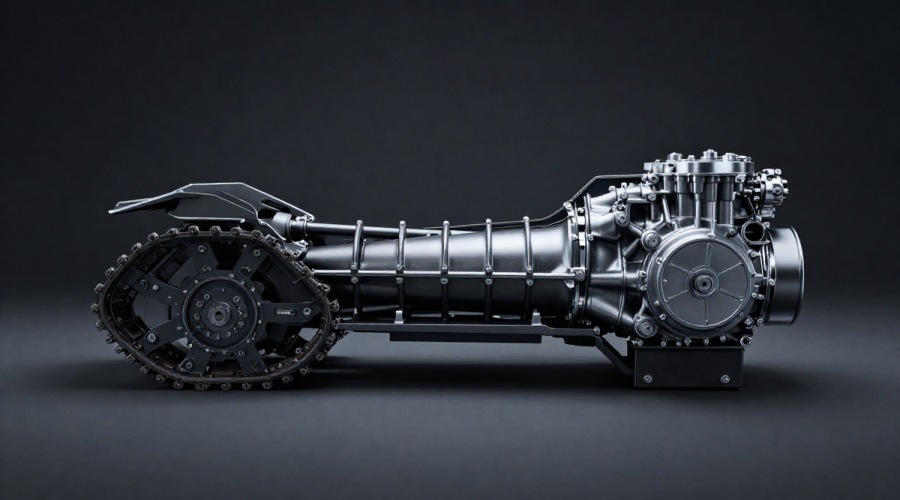
From a U.S. investor perspective, RENK’s latest RENK Earnings snapshot sits squarely in the middle of a powerful multi‑year defense upcycle. Western governments are boosting budgets in response to geopolitical tensions, and Europe in particular is accelerating investments in armored vehicles, artillery systems and naval platforms. Unlike U.S. primes such as Lockheed Martin or Northrop Grumman, RENK is a focused supplier of mission‑critical drivetrains and transmissions for tanks and warships, offering a more specialized, mid‑cap way to play the theme.
In fiscal 2025, RENK generated record revenue of EUR 1.37 billion, up 19.8% from EUR 1.14 billion in 2024. Growth was driven predominantly by defense, which expanded 24.0% and now accounts for roughly 74% of group revenue, versus 72% a year earlier. That concentration makes RENK more cyclical with respect to defense programs than diversified U.S. primes, but also gives it stronger operational leverage as volumes scale.
On profitability, RENK delivered adjusted EBIT of EUR 230 million, a 21.7% year‑on‑year increase from EUR 189 million. The adjusted EBIT margin rose to 16.9% from 16.6%, underscoring the benefit of higher capacity utilization and strict cost control. Management had guided to EUR 210–235 million in adjusted EBIT, so performance landed at the upper end of the range, reinforcing confidence in execution. For context, this margin is now approaching the lower end of what many U.S. aerospace and defense names generate, even though RENK lacks their scale.
Importantly for long‑term visibility, order intake climbed to a new record of EUR 1.57 billion, up from EUR 1.44 billion in 2024, and the order backlog surged to EUR 6.68 billion at year‑end 2025, compared with EUR 4.96 billion twelve months earlier. That backlog equates to nearly five years of trailing revenue, providing a level of earnings visibility that many industrial suppliers would envy.
RENK Group: segment performance and growth engines
RENK structures its operations into three segments, each with different growth and risk profiles for investors evaluating RENK Earnings: Vehicle Mobility Solutions (VMS), Marine & Industry (M&I), and Slide Bearings. Together they show how the company balances high‑growth defense exposure with more traditional industrial niches.
The VMS segment is RENK’s primary growth engine and the main beneficiary of the global rearmament trend. In 2025, VMS revenue jumped 24.8% to EUR 872 million from EUR 699 million in 2024, making it by far the largest contributor to group sales. Adjusted EBIT in VMS increased 27.8% to EUR 178 million, versus EUR 140 million a year earlier, lifting the adjusted EBIT margin to 20.4% from 20.0%. A margin above 20% is notable for a capital‑intensive manufacturing business and reflects both a favorable product mix and operational efficiency gains.
Order intake in VMS rose 11.3% to EUR 1.13 billion, up from EUR 1.02 billion in 2024, resulting in a robust book‑to‑bill ratio of 1.3x (albeit down from 1.5x the year before). Management highlighted that a major main battle tank project for an international customer slipped into 2026, depressing 2025’s book‑to‑bill but raising the probability of another strong order year ahead. RENK America, the group’s U.S. subsidiary, booked more than $550 million of orders, underlining the growing significance of North American demand in the overall growth story.
The Marine & Industry segment posted solid, if less spectacular, expansion. Revenue rose 15.3% to EUR 380 million from EUR 330 million, driven largely by naval programs that offset weak global industrial demand. Adjusted EBIT climbed 29.6% to EUR 45 million from EUR 35 million, with the segment margin rising to 11.9% from 10.6%. Management pointed to several one‑off positive effects in the low single‑digit million euro range that boosted profitability, but the underlying trend still looks encouraging. Order intake advanced 6.3% to EUR 327 million, keeping the book‑to‑bill ratio at 0.9x, which is slightly below one but acceptable in a year of strong revenue growth.
Slide Bearings, the smallest division, demonstrated resilience despite a very weak industrial environment. Sales edged up 2.5% to EUR 128 million from EUR 125 million, with December 2025 marked as the strongest month in the segment’s history. Adjusted EBIT increased 6.9% to EUR 23 million, up from EUR 21 million, translating into a margin of 17.9% compared with 17.2% in 2024. Order intake slipped 4.8% to EUR 126 million, and the book‑to‑bill ratio moderated to 1.0x from 1.1x, suggesting a plateau but no sharp downturn.
RENK Earnings outlook: guidance, long-term targets and risks
Management’s guidance and long‑term ambitions are central to how investors should interpret RENK Earnings today. For the 2026 financial year, RENK expects revenue to exceed EUR 1.5 billion, implying mid‑to‑high single‑digit growth from 2025’s EUR 1.37 billion baseline. Adjusted EBIT is projected in a range of EUR 255–285 million, which would represent another double‑digit increase in operating profit if achieved. That would push the adjusted EBIT margin further into the high‑teens, signaling continued operating leverage as the order book converts into sales.
Beyond the immediate guidance, CEO Alexander Sagel has articulated a 2030 vision that targets revenue of EUR 2.8–3.2 billion, effectively doubling from 2025 levels, alongside an adjusted EBIT margin above 20%. Based on 2025 results, this would translate into potential adjusted EBIT of EUR 560–640 million by 2030. For equity investors, this trajectory, if delivered, could support a compound annual growth rate in revenue of roughly 10–12% and even faster EBIT expansion, a profile that compares favorably with many large‑cap defense names that are expected to grow in the mid‑single‑digit range.
However, these ambitions rest on several assumptions that U.S. and international investors should scrutinize. First, the geopolitical backdrop must remain supportive enough for European and NATO defense spending to stay elevated. While current tensions make this likely in the near term, a major détente or fiscal stresses in key markets such as Germany could slow contract awards. Second, RENK’s reliance on a relatively concentrated set of programs and platforms introduces project risk—delays or cancellations in a few flagship tank or naval projects could impact earnings disproportionately.
There are also execution and capacity‑expansion risks. RENK is implementing a modular production concept at its Augsburg headquarters, which is already in full operation and delivering initial efficiency gains. Scaling this model while maintaining quality and delivery reliability will be critical as volumes ramp. Supply‑chain constraints, particularly in specialized materials and components, could also exert pressure, though RENK’s strong margins leave some buffer. On the regulatory side, export approvals and political scrutiny of arms deals remain perennial variables for European defense firms.
RENK Group versus U.S. and European defense peers
To contextualize RENK Earnings for a Wall Street audience, it is useful to compare the company qualitatively with some listed peers. In Europe, Rheinmetall has been one of the standout beneficiaries of the European rearmament cycle, combining vehicle, ammunition and systems capabilities. RENK is a more narrowly focused supplier, primarily in transmissions and drivetrains for armored vehicles such as the Leopard 2 tank and for naval applications. This specialization gives RENK less diversification but potentially higher margins on its niche products.
Compared with U.S. giants like Lockheed Martin, General Dynamics or RTX, RENK’s scale is much smaller, but so is its dependence on long‑cycle aerospace programs. Its order cycle is more closely tied to land systems and shipbuilding, which can react faster to shifting defense priorities. For investors already heavily exposed to U.S. defense primes through the S&P 500 or defense ETFs, RENK offers geographic and product diversification into European ground and naval systems without additional aerospace exposure.
In terms of profitability, RENK’s 16.9% adjusted EBIT margin in 2025 sits in a competitive range relative to major defense suppliers, and its segment‑leading VMS margin above 20% stands out. If management can deliver on its >20% group EBIT margin goal by 2030, the company would rank among the more profitable names in the sector. That said, RENK does not enjoy the same degree of entrenched program moat as, for example, Lockheed Martin’s F‑35 franchise, meaning competition and pricing pressure could be more intense over the long run.
Analyst coverage in the U.S. remains limited, but several European investment banks follow the name and have highlighted RENK’s leverage to European defense spending and the growing contribution from RENK America. Where available, broker commentary has stressed both the upside from backlog conversion and the dependency on timely contract execution. For American portfolios, RENK might best be viewed as a tactical overweight in the defense allocation rather than a core holding at this stage.
Dividend, balance sheet and what RENK Earnings mean for income investors
Income‑oriented investors watching RENK Earnings will note the clear step‑up in shareholder returns. The management board intends to propose a dividend of EUR 0.58 per share for 2025 at the annual general meeting on June 10, 2026. That would represent a 38% increase from the prior year’s EUR 0.42 dividend and imply a payout ratio of 40.9%. As the company grows earnings, maintaining a payout around this level could support an attractive and growing dividend stream, though the yield will ultimately depend on the share price after the stock’s strong run since listing.
The combination of a high order backlog, strong margins and robust cash generation gives RENK room to fund both expansion and dividends without overleveraging the balance sheet, assuming capital allocation remains disciplined. For U.S. investors, the euro‑denominated payout does introduce FX risk: a stronger dollar would reduce the value of dividends and capital gains in U.S. dollar terms. On the other hand, RENK’s increasing exposure to the U.S. through RENK America may in time provide a partial natural hedge.
Conclusion
From a valuation standpoint, investors need to weigh RENK’s growth profile, margin trajectory and backlog strength against the cyclical and political risks of defense spending. If markets start to discount the full 2030 plan into today’s price, the margin for error would narrow. Conversely, should macro or political headlines trigger volatility in European equities, RENK could offer compelling entry points for long‑term investors who believe that elevated defense outlays are not just a short‑term spike but a structural shift.
Further Reading
- RENK Group AG announces record revenue and order backlog for fiscal 2025 (DGAP / Company release)
- German tank gearbox maker Renk grows strongly in defense boom (Reuters)
- NATO defense spending and implications for European contractors (NATO)
- RENK Group bei Yahoo Finance (Yahoo Finance)