Can the new Ripple Security Strategy built on AI really reprice XRP’s risk profile while the token trades under technical pressure?

How could the Ripple Security Strategy move XRP?
Ripple is retooling its security stack around AI, embedding machine learning into every stage of XRP Ledger development. Automated systems now scan code, stress-test edge cases and flag vulnerabilities before they hit production, shifting from reactive patching to proactive risk mapping. The company has also deployed an AI-assisted red team that continuously simulates real-world attacks and has already driven code refactors and stricter audit workflows.
This expanded Ripple Security Strategy includes tougher pre-release checks, independent reviews and enhanced bug bounties, a structure more reminiscent of large Web2 platforms run by Apple or NVIDIA than a typical open-source crypto project. For institutional allocators in the U.S., those process upgrades matter as much as headline throughput, because security failures are now a primary compliance red flag.
What does it mean for Ripple and price action?
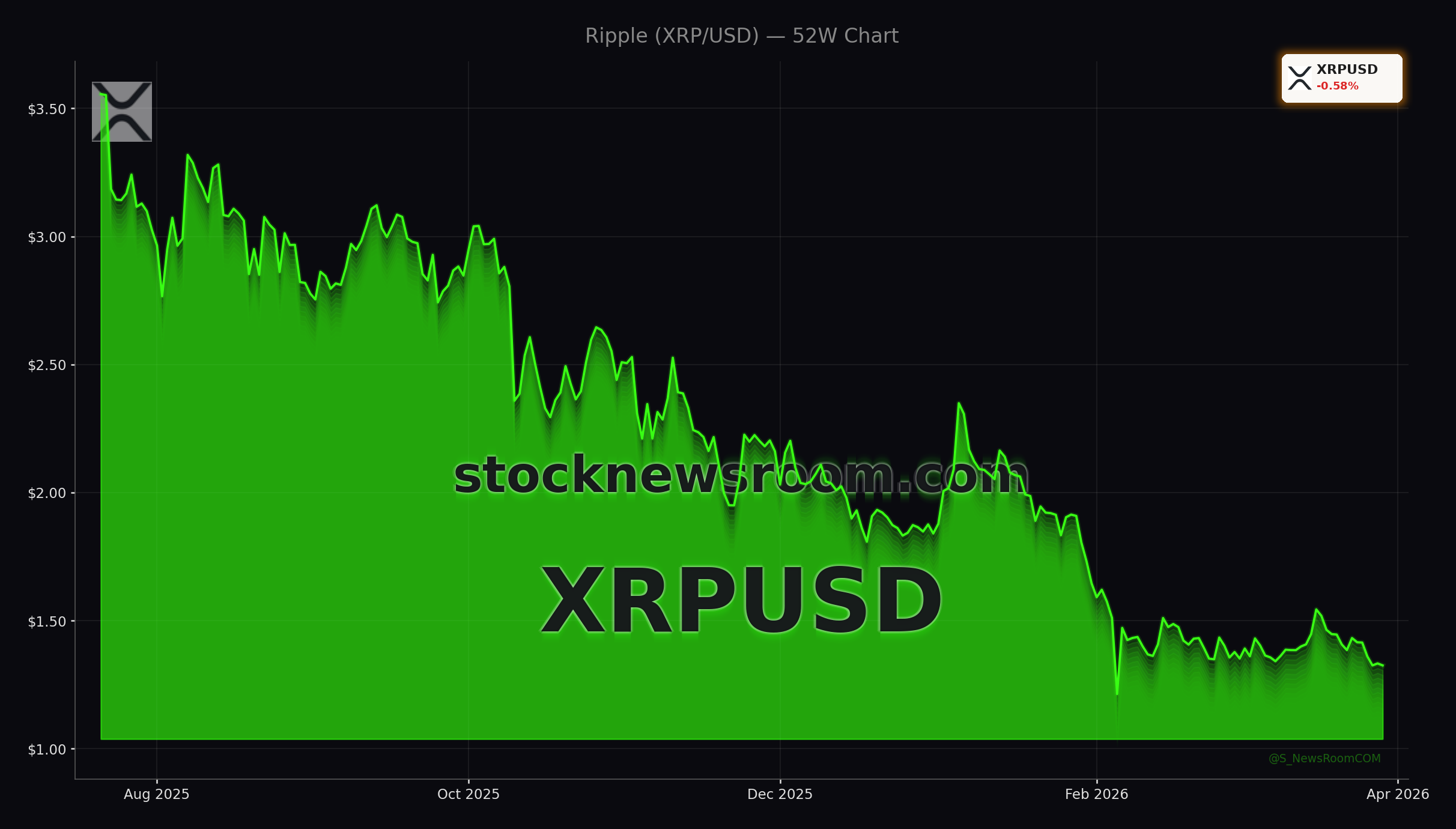
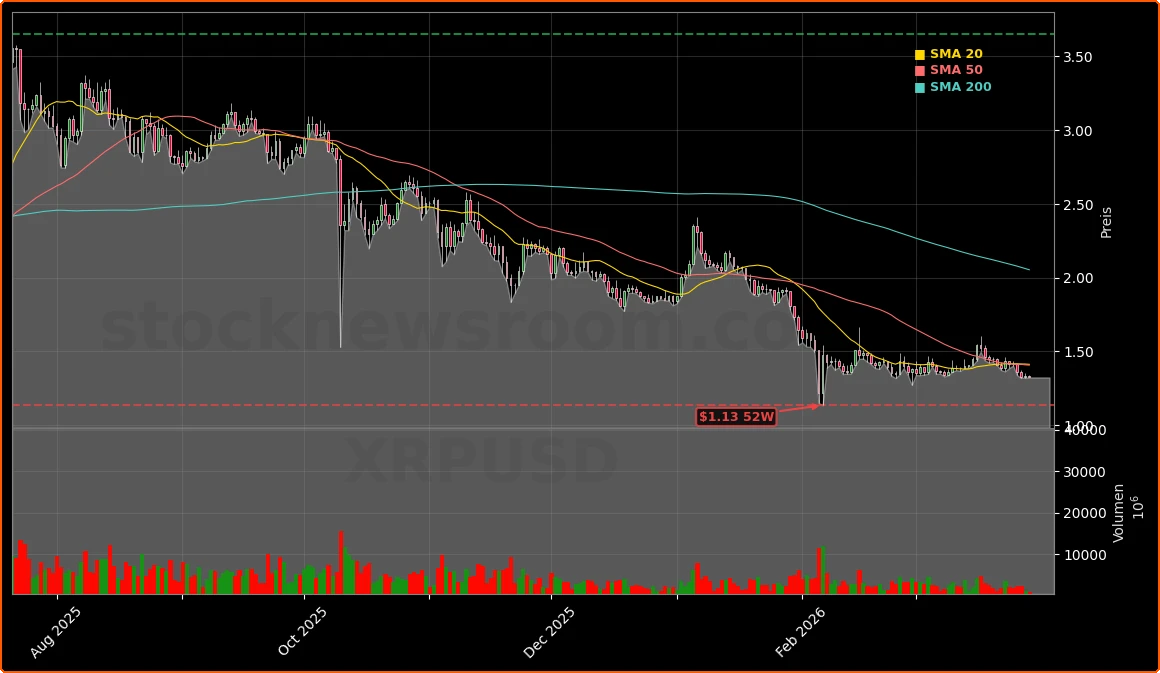
On the chart, XRP remains under technical pressure. The token slipped to about $1.32, below key volume congestion in the $1.37–$1.45 band that many traders see as a make-or-break zone. Daily relative strength shows a bullish divergence, hinting that selling momentum is fading even as price has printed lower lows since February, suggesting the market may be in a late-stage shakeout rather than the start of a fresh leg lower.
Meanwhile, XRP Ledger payment counts have fallen back under one million per day, signaling normalization after earlier spikes rather than a structural collapse in usage. Lower activity and compressed volatility can make the next directional move more violent in either direction. From a risk/reward angle, downside toward $1.20 is visible on the chart, while a close back above roughly $1.37 would be an early confirmation that the revamped Ripple Security Strategy and broader fundamentals are beginning to be priced in.
How do Wall Street targets frame XRP’s upside?
Standard Chartered’s Geoffrey Kendrick still maps a long runway for XRP despite trimming near-term expectations. His revised roadmap now targets $2.80 for 2026, $7 in 2027, $12.60 in 2028, $19.60 in 2029 and $28 by 2030, implying roughly 20x upside from current levels if the thesis plays out. Those numbers assume a recovery in ETF inflows, regulatory clarity from measures such as the CLARITY Act and real-world adoption of XRP for cross-border settlement at scale.
Major U.S. banks like Citigroup and Morgan Stanley have not issued formal, public price targets on XRP, but their institutional clients increasingly ask how to size crypto exposure alongside big NASDAQ names such as Tesla. In that context, an enterprise-grade Ripple Security Strategy could become a gating factor for risk committees deciding whether XRP belongs in multi-asset portfolios next to blue-chip tech and payments plays.
Related Coverage: what else should investors read?
For a deeper dive into how derivatives stress on Binance interacts with on-chain dynamics, investors can review Ripple Q2 Outlook: Binance Margin Shock vs On‑Chain Surge, which analyzes whether shrinking leverage could cap downside just as network signals improve. For context on whale behavior and tactical timing, Ripple Market Analysis Warning: Whales Surge In as Traders Struggle examines how large holders may be quietly accumulating while short-term traders remain focused on XRP’s weak tape.
In summary, the AI-centric Ripple Security Strategy strengthens the XRP Ledger’s institutional narrative at a moment when price and sentiment are fragile but potentially bottoming. For U.S. investors, it reframes XRP less as a speculative token and more as infrastructure that must meet the security standards of global payment rails. The next test will be whether price can reclaim key resistance and validate the long-term roadmaps that see XRP evolving into a core digital asset alongside leading S&P 500 and NASDAQ names.