
Will the Ripple XRP-ETF be the starting signal for a new XRP boom, or will the hype turn out to be an expensive trap?
How are investors positioning themselves ahead of the Ripple XRP-ETF?
In the lead-up to the SEC’s decision on the Ripple XRP-ETF, a clear positioning of professional investors is evident. While Bitcoin and Ethereum products have recently suffered capital outflows, approximately $51 million flowed into XRP-based investment vehicles globally in the first weeks of February alone. Demand is particularly strong in Europe: In Germany, inflows totaled $87.1 million, highlighting institutional interest in XRP as a speculative payment and bridge token.
On the stock market, the cautiously optimistic sentiment is reflected in a favorable price trend: **Ripple (XRPUSD)** rises to $1.40, gaining around 5.1% compared to the previous day’s close of $1.35. However, the cryptocurrency remains over 60% away from its all-time high of $3.65—a clear indication that the recent recovery is more of a technical rebound in an overall weak environment.
Meanwhile, the Bitwise Physical XRP ETP has come into focus in Europe. Although the product is currently priced at €16.20, about 31% below its level at the beginning of the year, it has recently benefited from a stabilization trend and active trading on regional exchanges such as Stuttgart, Düsseldorf, and Hamburg. The outcome surrounding the Ripple XRP-ETF is likely to be a significant price driver for this ETP as well.
How is Ripple responding to competition and regulation?
Ripple Labs is attempting to leverage the potential ETF signal to expand its ecosystem further. In addition to a European payment license, the company is focusing on technical innovations such as a “Permissioned DEX”—a decentralized exchange with access restrictions specifically for regulated financial institutions. The goal is to establish XRP in institutional payments and the tokenization of real assets.
At the same time, competitive pressure is increasing. Major asset managers like Franklin Templeton and Grayscale are entering the market with their products and are vying for capital with aggressive fee models. Overall, the managed assets in XRP investment products now total around $1.2 billion. The approval of a Ripple XRP-ETF in the U.S. could significantly intensify this competition, as more issuers are likely to compete for market share and lower fees.
Structurally, however, the question remains how much XRP actually benefits from the operational success of the Ripple network. Payments through Ripple Payments can also be settled in fiat currencies, and with the introduction of the in-house stablecoin Ripple USD (RLUSD), there is a less volatile alternative as a bridge currency. This weakens the thesis that increasing payment volumes will automatically lead to a sustainably rising demand for XRP.
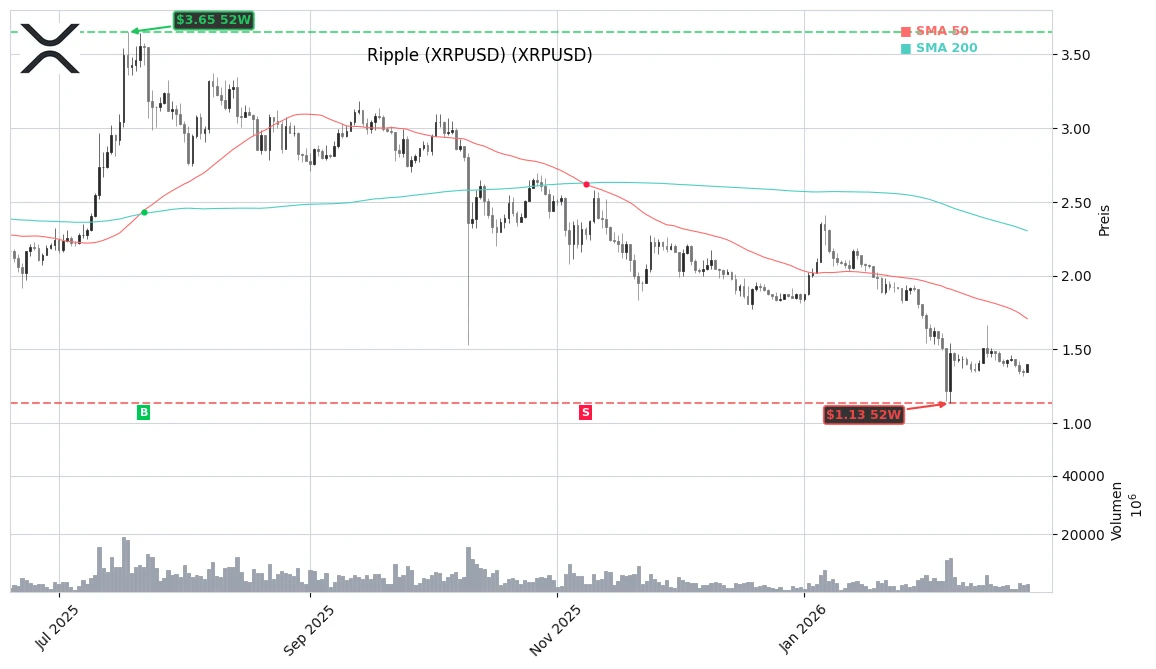
What price targets are banks setting for Ripple (XRPUSD)?
Currently, caution prevails among analysts. Standard Chartered has significantly reduced its price target for XRP by 2026—from $8.00 to $2.80. The bank justifies the cut with the persistently difficult market environment, weak liquidity, and questions regarding the long-term role of XRP in the Ripple ecosystem. In comparison, crypto specialist 21Shares sets a target of $2.45 for the same period, provided that regulatory conditions—such as through a Ripple XRP-ETF—are positively established.
In contrast, skeptical voices derive further downside potential from the historical cycles of falling XRP prices. From a technical analysis perspective, the Bitwise Physical XRP ETP faces the 50-day average at €21.76 as the first relevant hurdle upward in the short term. On the downside, in the event of a negative SEC vote, the area around the 52-week low of €14.11 comes into focus.
Citigroup, RBC Capital Markets, and Goldman Sachs have recently not published explicit new XRP targets, but their more cautious assessments of the overall crypto segment—including reduced expectations for Bitcoin and Ethereum—also indirectly affect the perception of XRP. Investors should keep an eye on the discrepancy between bullish ETF fantasies and the lowered long-term forecasts from major firms.
Bottom Line
The question remains whether the Ripple XRP-ETF will serve as a catalyst for a sustainable revaluation or merely for a short-term speculative wave. What is clear is that the combination of a potential U.S. ETF approval, increasing institutional infrastructure, and simultaneously lowered price targets makes XRP one of the most exciting but also riskiest crypto topics in the current quarter.
Related Sources
- SEC Decision on Crypto ETFs in the U.S. (SEC)
- Standard Chartered Digital Assets Research (Standard Chartered)
- 21Shares Research on Crypto ETPs (21Shares)
- Ripple (XRPUSD) on Yahoo Finance (Yahoo Finance)