Can the ambitious Rivian AI Strategy around the R2 SUV, robotaxis and big-name partners really rewrite the RIVN stock story?

How does Rivian AI Strategy change the stock story?
Rivian’s push into AI comes as markets increasingly reward automakers that look more like software and data platforms than traditional car companies. Tesla has already made that pivot clear, from its $2 billion investment in xAI to dedicating much of its roughly $20 billion 2026 capex plan to artificial intelligence and autonomy. Rivian is trying to follow a similar playbook, but from a much smaller capital base and without the cushion of consistent profitability.
Management used its first AI Day late last year to outline a comprehensive Rivian AI Strategy: deeper use of machine learning in its factories, expanded in-vehicle intelligence and a more aggressive push toward full self-driving capabilities. Crucially for investors, Rivian signaled that higher AI and autonomy spending means profitability will slip further out than previously planned. That trade-off — near-term cash burn versus the chance to capture high-margin software and robotaxi revenue later — now sits at the center of the RIVN investment case.
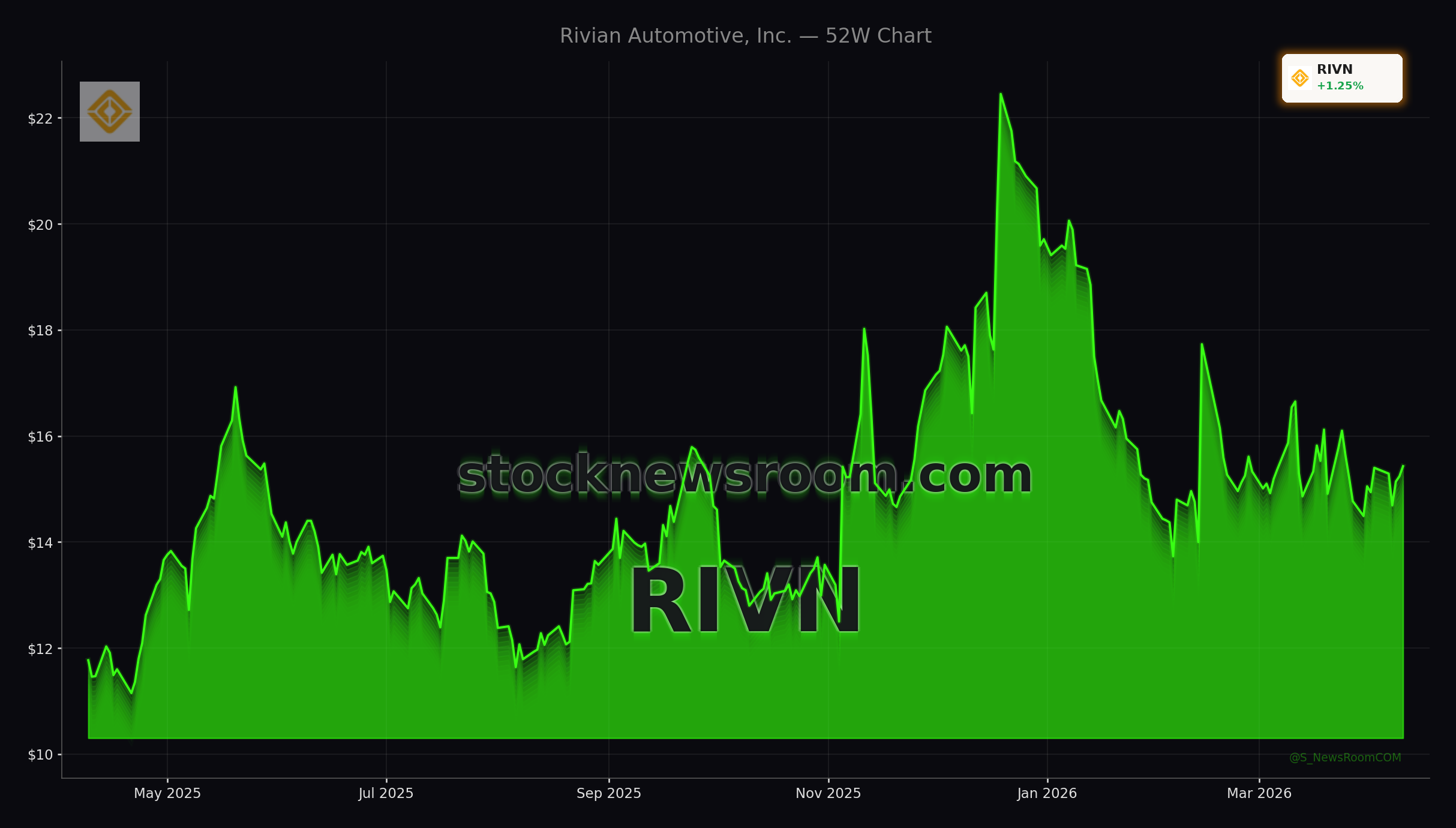
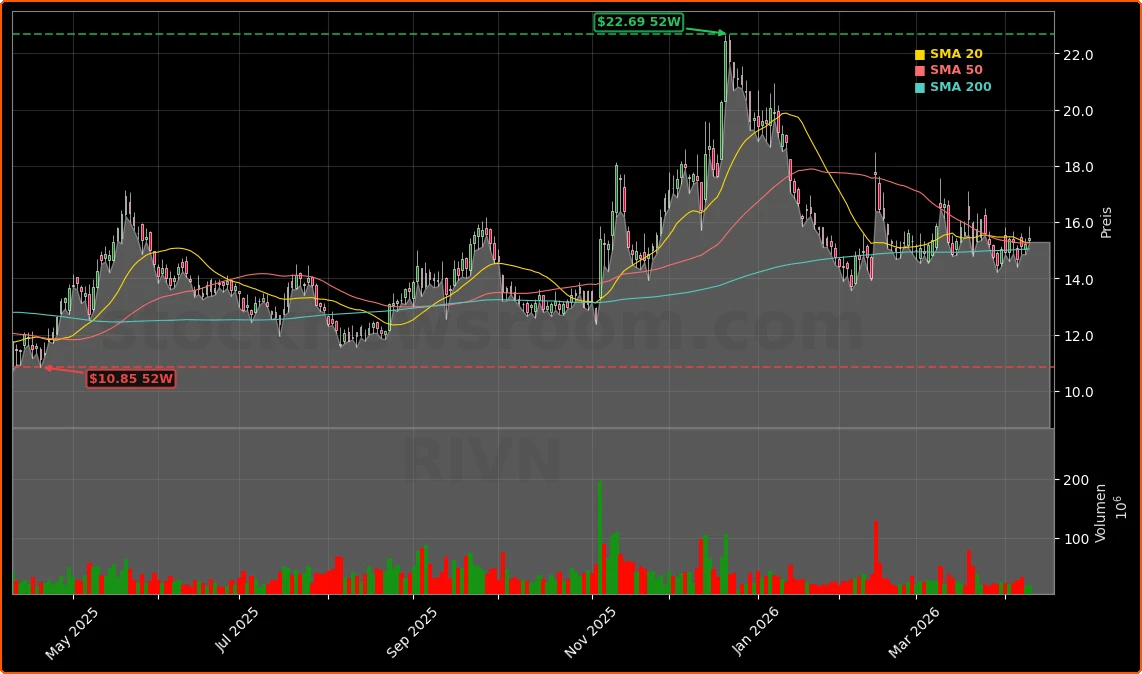
On valuation, Rivian’s share price has been volatile in 2026 and remains down year-to-date, even after recent gains. Some valuation models place fair value above $25 per share, implying substantial upside if execution improves and AI-driven revenue materializes, but the stock also trades at a premium price-to-sales multiple versus legacy automakers, reflecting both growth potential and execution risk.
What role does the R2 SUV play in Rivian AI Strategy?
The R2 mid-size SUV is the practical backbone of the Rivian AI Strategy. EPA documentation suggests the R2 could reach an estimated range of up to about 335 miles, placing it squarely in competition with the Tesla Model Y and other high-volume crossovers. As Rivian’s first vehicle with a starting price below $50,000, R2 is designed to move the company from niche adventure vehicles into real mass-market territory.
Deliveries to employees are expected to start this month, with broader customer deliveries ramping over the coming months. Hitting that production ramp is critical not just for revenue but for AI, because every R2 on the road generates the real-world driving data that Rivian needs to train and refine its autonomous and driver-assistance systems. The company has even floated a long-term plan to design its own chips, which would mirror AI hardware strategies at players like NVIDIA and large consumer-tech ecosystems such as Apple.
If R2 volumes scale as planned, Rivian gains two key levers: better fixed-cost absorption in its factories and a fast-growing fleet that can feed data back into its AI models. That data loop could prove decisive as rivals race toward safe, scalable robotaxis and premium software features that command recurring subscription revenue.
How important are Uber and Volkswagen for robotaxis?
The most eye-catching piece of the Rivian AI Strategy is its push into robotaxis via major partners. Rivian has struck a multibillion-dollar collaboration with Volkswagen focused on software and electrical architectures, giving the young EV maker a powerful ally and potential customer as both companies chase autonomous mobility. Even more transformative for the narrative is Rivian’s alliance with Uber Technologies.
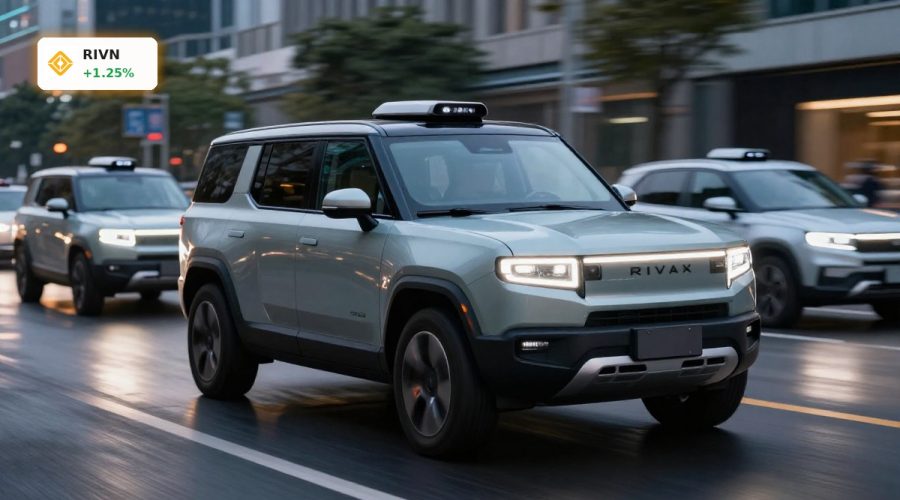
Under that deal, Rivian plans to supply up to 50,000 R2-based SUVs to power Uber’s planned autonomous fleet, with initial deployment of 10,000 autonomous R2 robotaxis targeted for 2028. Uber may invest up to $1.25 billion into Rivian tied to the partnership, signaling that ride-hailing platforms see Rivian as more than a niche EV builder. For Rivian, the Uber agreement turns R2 from a consumer product into a platform for software-enabled services, where autonomy, fleet management and data analytics could eventually matter as much as vehicle hardware margins.
Many estimates see the global robotaxi market reaching several trillion dollars over time. If Rivian can secure even a modest slice of that opportunity through Uber and Volkswagen, the revenue mix could tilt increasingly toward high-margin software and services, helping offset the capital intensity of EV manufacturing.
What are analysts and insiders signaling on RIVN?
Wall Street remains divided. Baird has maintained an “Outperform” rating on Rivian, pointing to the strengthening product roadmap and the strategic importance of its AI and robotaxi pipeline. DA Davidson recently upgraded the stock from “Underperform” to “Neutral” while keeping its $14 price target, reflecting a less bearish stance but also skepticism about near-term upside after recent volatility.
Insider activity has been mixed but not unusual for a growth company. CEO Robert J. Scaringe disclosed multiple small share sales in March under pre-arranged Rule 10b5-1 trading plans, while finance leaders including CFO Claire McDonough and Chief Accounting Officer Venkataratnam Sreela received sizable option and RSU grants designed to align their incentives with long-term performance. For investors, the key question is whether management can translate today’s heavy AI and autonomy spending into durable cash flows before capital markets lose patience.
Related Coverage
For a deeper dive into whether Rivian’s Uber alliance can truly make it an autonomous mobility winner, read Rivian Robotaxi Strategy +2.1%: Uber Deal Fuels Rally, which breaks down the financial mechanics of the billion-dollar partnership. To understand the broader sector backdrop and how rivals are navigating similar challenges, see Tesla Robotaxi warning as EV glut fuels cash crash risk, which examines how aggressive robotaxi bets intersect with weakening EV demand and mounting cash-burn concerns.
In the end, the Rivian AI Strategy is a bold attempt to leapfrog from EV newcomer to full-stack mobility and software provider, with the R2 launch acting as the pivotal first test. For U.S. and global investors, the stock now hinges less on one quarter’s deliveries and more on whether robotaxi partnerships and AI-driven services can emerge fast enough to justify ongoing losses. The next few years of execution on R2 ramp-up, Uber and Volkswagen programs will show whether Rivian can turn its AI gamble into sustainable shareholder value.