Can the Rivian R2 Launch and its AI ambitions finally turn a niche EV story into a scalable, profitable platform?

How could Rivian reshape its Wall Street story?
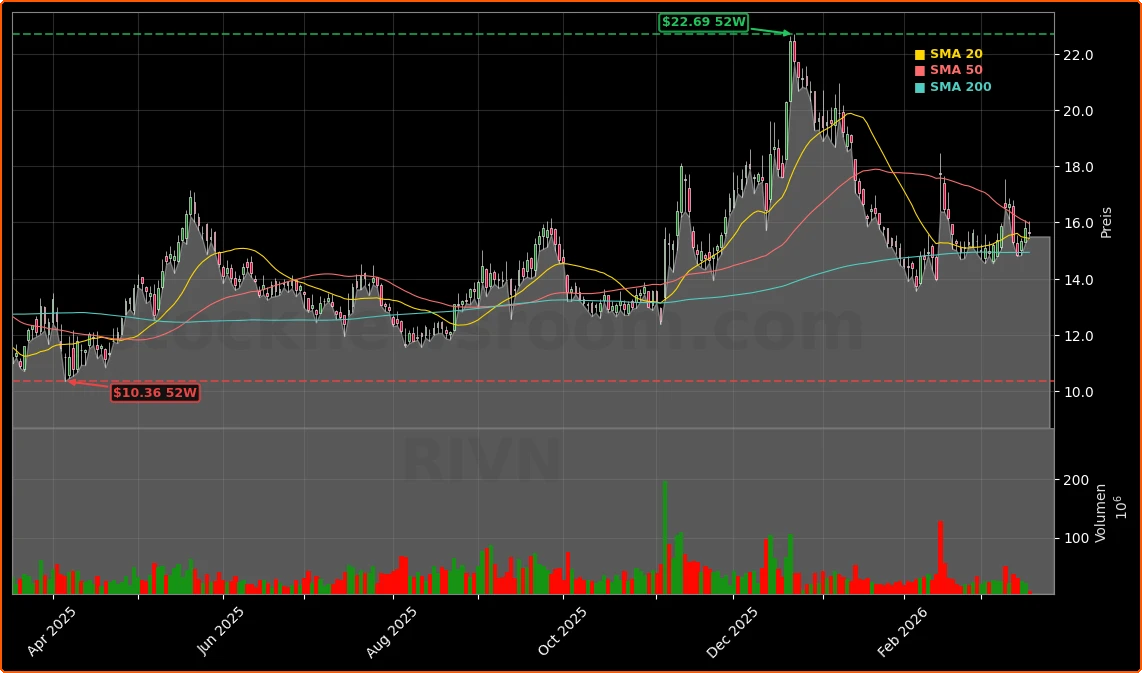
Rivian (RIVN) comes into 2026 with a market capitalization of roughly $18 billion and a sales multiple of about 3.3, a fraction of Tesla’s 14.6 times sales. Shares surged more than 80% in 2025 before giving back nearly 25% year to date, leaving Wall Street divided on whether the company is a cyclical EV trade or a long-term AI platform in the making. The Rivian R2 Launch is central to that debate, because it targets the same high-volume crossover segment dominated by Tesla’s Model Y while also serving as a data engine for Rivian’s autonomous driving ambitions.
Rivian delivered around 42,000 vehicles in 2025, versus more than 400,000 for Tesla. That production gap helps explain the valuation disconnect, along with the fact that Rivian is only just turning the corner on profitability. In 2025, Rivian reported a consolidated gross profit of about $144 million, a dramatic swing from a roughly $1.2 billion gross loss in 2024. Management guides for 62,000 to 67,000 deliveries in 2026, and the R2 ramp will be critical to hitting the upper end of that range and pushing gross margins higher.
What makes Rivian R2 Launch strategically important?
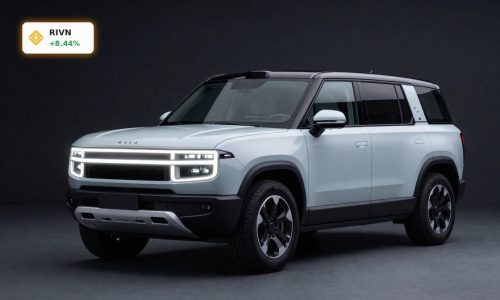
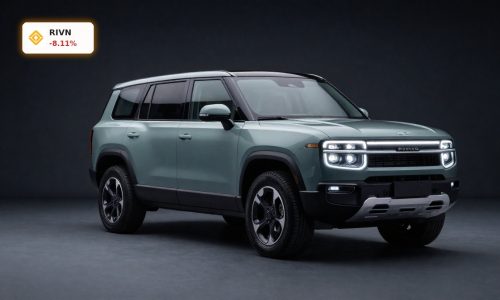
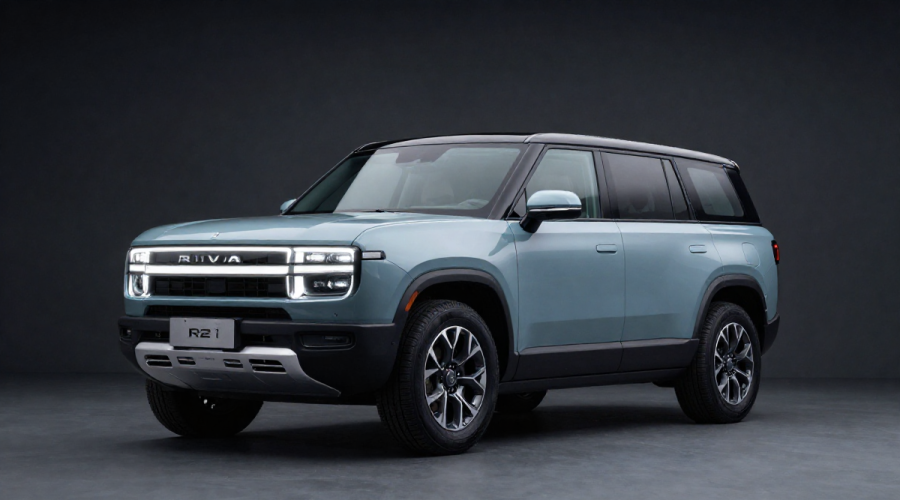
The R2 is Rivian’s first model positioned squarely for the mass market, with an entry configuration expected at about $45,000 and an initial launch variant priced near $58,000. That puts it directly into the price band that has made the Model Y the best-selling EV in the U.S., with roughly 357,000 units sold in 2025. By moving below the $50,000 threshold, Rivian opens its brand to tens of millions of new U.S. and global buyers who were previously priced out of its R1T pickup and R1S SUV.
April 2026 is set as the pivotal month when the first R2 deliveries begin, starting with the higher-priced trims before cheaper versions follow. Analysts at TD Cowen, led by Itay Michaeli, upgraded Rivian to Buy from Hold on March 10, 2026, and raised the price target to $20, explicitly citing the R2 platform as a potential volume driver. Their long-run demand estimates for the R2 range from roughly 212,000 to 335,000 units annually, levels that would fundamentally change Rivian’s scale if achieved.
How does Rivian compete in the EV AI race?
Beyond unit growth, the Rivian R2 Launch is tightly bound to the company’s artificial intelligence strategy. EV autonomy depends on massive real-world data sets and sophisticated AI models to interpret and respond to complex driving conditions in real time. Tesla has built an early lead by deploying millions of vehicles that continuously feed driving data back to its systems, strengthening features like Full Self-Driving.
Rivian is trying to follow a similar path at a smaller scale, investing billions of dollars into in-house AI software and even signaling plans to develop its own AI chips over time. The logic is straightforward: more R2s on the road mean more sensor data, which can be used to train Rivian’s autonomy models, improve driver-assistance features and potentially enable future robotaxi or subscription-based software offerings. Consultancy forecasts now point to nationwide robotaxis by around 2030 and broad full self-driving capabilities a couple of years later, making the next product cycle critical.
Can Rivian turn volume into profitability?
Rivian still faces a capital disadvantage versus larger peers, as well as the challenge of scaling production quickly while keeping quality high. The R2 production ramp is expected to take years, and the lack of certain U.S. federal tax incentives could slow early adoption relative to Tesla. However, each incremental R2 sold should help absorb fixed costs in Rivian’s manufacturing footprint, supporting operating leverage and the path toward sustained net income.
The R2 platform is the first real test of whether Rivian can move from niche adventure brand to mass-market, AI-driven automaker.— Itay Michaeli, TD Cowen (paraphrased commentary context)
TD Cowen’s more constructive stance adds to a slowly improving institutional view that Rivian can move beyond being just another high-burn EV start-up. If R2 demand tracks even the lower end of current estimates and AI features resonate with consumers, investors could start to assign Rivian a premium more in line with AI-enabled auto names, rather than a distressed automaker multiple. Ultimately, the success of the Rivian R2 Launch will determine whether Rivian can convert its early brand strength and AI investments into durable scale, higher margins and a more generous Wall Street valuation.