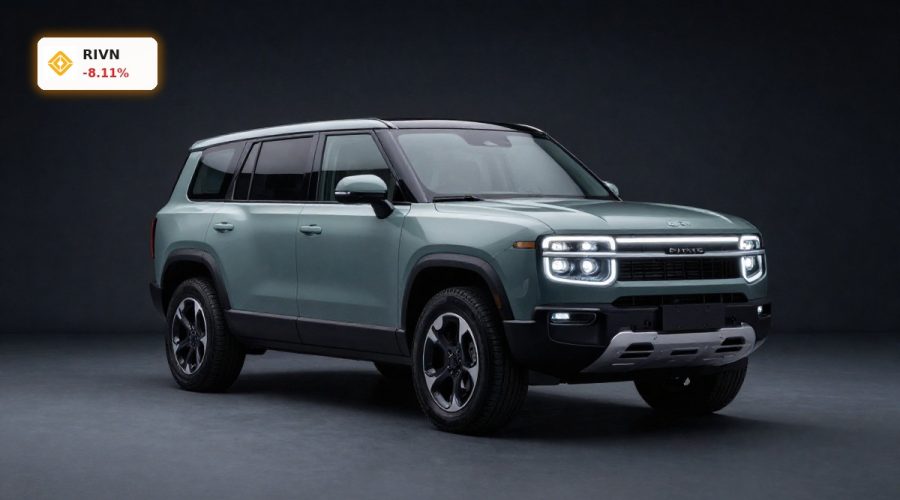
Will the Rivian R2 Launch finally push the EV newcomer toward profitability, or is the latest stock drop a red flag?
How is the market reacting to Rivian?
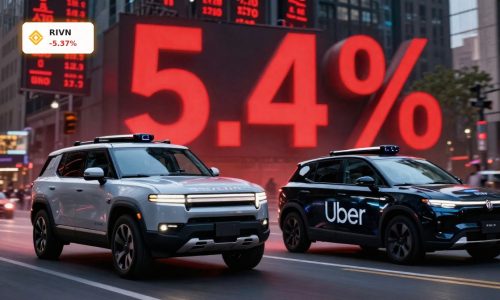
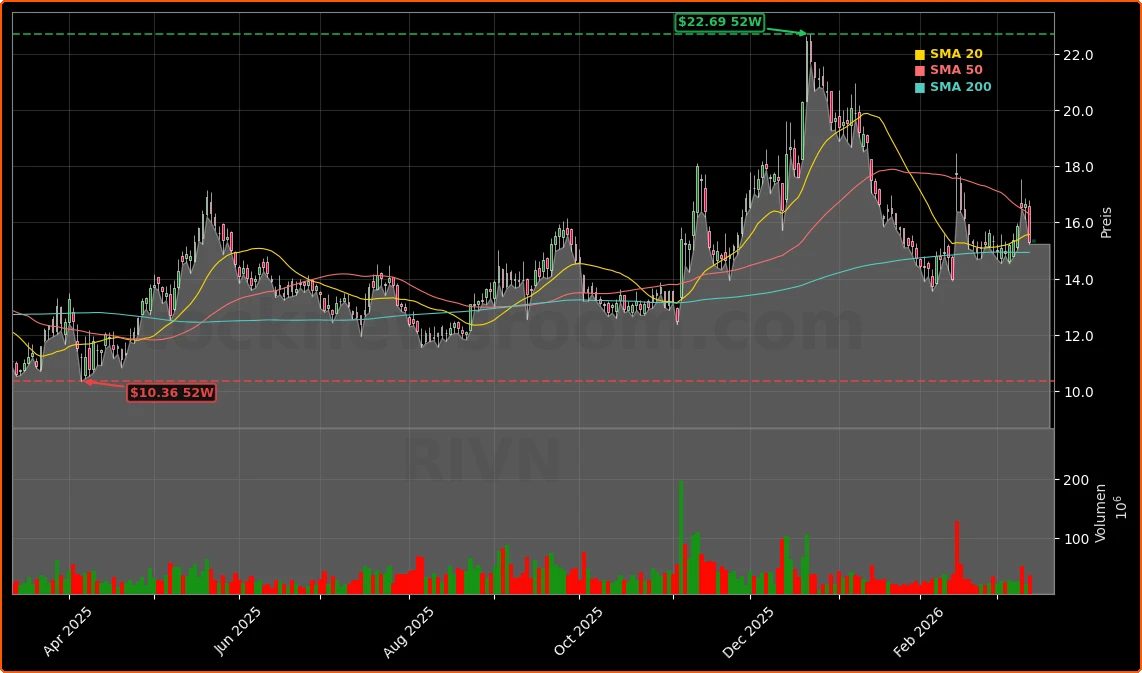
Rivian (RIVN) stock, which trades on the NASDAQ, slipped more than 8% to around $15.30, extending a pullback after a strong run-up ahead of the Rivian R2 Launch. The move fits a classic “buy the rumor, sell the news” pattern: the stock had already rallied sharply following a Q4 2025 earnings beat and optimism around the new SUV reveal. With the current price well below the company’s split-adjusted IPO level near $78, sentiment remains fragile despite recent operational milestones.
From a fundamental standpoint, Rivian has started to show traction. In 2025 it delivered its first full year of positive gross profit, supported by Q4 revenue of about $1.3 billion and quarterly gross profit of roughly $120 million, even as full-year net loss was still around $3.6 billion and free cash flow remained deeply negative. The company exited last year with about $6.6 billion in total liquidity, including nearly $6.1 billion in cash and short-term investments, backed by a $2 billion strategic investment from Volkswagen. That cash cushion is critical as Rivian ramps the R2 and continues spending heavily on new platforms and plants.
What exactly is the Rivian R2 Launch?
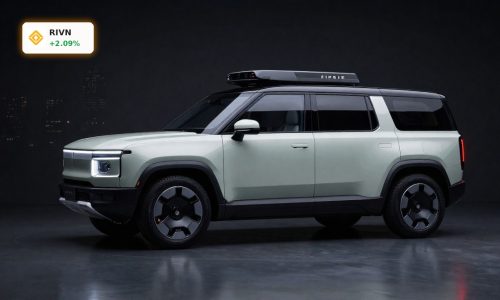
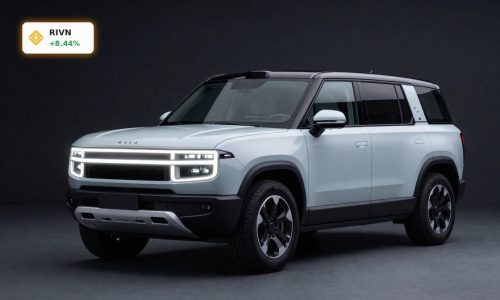
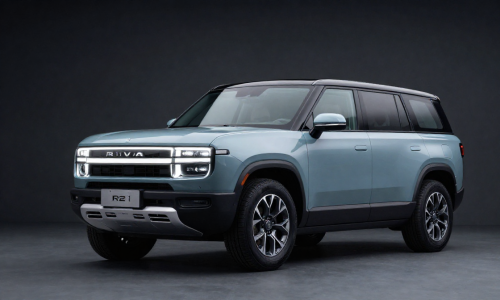
The Rivian R2 Launch centers on a new midsize electric SUV that aims squarely at the heart of the U.S. mass market. The R2 is effectively a smaller, more affordable sibling to the R1S, designed to broaden the company’s addressable customer base beyond premium adventure buyers. Rivian plans a phased rollout, starting with higher-priced trims and moving toward the long-promised $45,000 entry version.
The initial R2 Performance “Launch Package” will begin deliveries in spring 2026, starting around $57,990–$58,000, with dual motors, up to 330 miles of range, 656 horsepower and 609 lb-ft of torque, and 0–60 mph in as little as 3.6 seconds. A R2 Premium dual-motor AWD trim, slated for late 2026, should start near $54,000 with up to 330 miles of range. The long-discussed base R2 Standard, rear-wheel drive with about 350 horsepower, is planned at roughly $45,000–$48,490, but will not arrive until late 2027. That delay is one reason the Rivian R2 Launch has produced a mixed reaction among investors who were hoping for a cheaper model sooner.
Can Rivian compete with Tesla and other EV rivals?
Strategically, the Rivian R2 Launch is aimed directly at Tesla’s Model Y, the bestselling EV globally and a benchmark for midsize crossovers. The R2 is comparable in size, range, and performance to the Model Y, but the pricing dynamic is delicate: the Model Y currently starts around $40,000, undercutting Rivian’s first R2 trims. Rivian is counting on distinctive design, off-road capability, and a premium adventure brand identity to justify the initial price gap until the cheaper R2 Standard arrives.
Competition is not limited to Tesla. Lucid is preparing a midsize lineup starting near $50,000, while legacy automakers across the S&P 500 and NASDAQ ecosystems are slowing or reshaping their EV plans in response to softer demand. At the same time, policy headwinds in the U.S. – including the loss of up to $7,500 in certain federal EV tax credits and evolving tariff and regulatory cost pressures – add uncertainty to volume and margin forecasts for Rivian, Lucid, and other high-growth EV names.
Rivian’s technological story is a key differentiator. The company has developed its own RAP1 autonomy chip on a 5-nanometer process, capable of roughly 800 TOPS per chip, with two chips delivering around 1,600 TOPS in its third-generation autonomy platform. The R2 will be equipped with a suite of 11 cameras, 5 radars and LiDAR, and access to an “Autonomy+” driver-assistance subscription priced at about $49.99 per month. That software and services layer is central to Rivian’s pitch that, over time, it can resemble high-margin tech-oriented models seen at companies like NVIDIA and Apple more than a traditional automaker.
What are analysts saying about Rivian?
On Wall Street, the Rivian R2 Launch is widely viewed as a make-or-break moment. TD Cowen recently upgraded Rivian to “Buy” and raised its price target from $17 to $20, arguing that the R2 rollout could be a key catalyst for demand and investor sentiment. Analysts there estimate potential annual R2 demand between roughly 212,000 and 335,000 units, a level that would dramatically increase Rivian’s scale if realized.
Morgan Stanley has characterized the R2 as the critical transition vehicle enabling Rivian to evolve into a scaled automaker, improving operating leverage not just for the R2 line but also for the existing R1 platform. At the same time, Morgan Stanley has flagged near-term caution as Rivian transitions to its third-generation electrical architecture.
Barclays has taken a more cautious view, highlighting uncertainty around the R2 volume outlook amid weaker U.S. EV demand, expiring tax credits, reduced regulatory credits, and potential tariff impacts. That skepticism reflects a broader chill over the EV sector, where investors have become more selective after years of hyper-growth expectations and subsequent disappointments at peers like Lucid and others.
“R2 is an exceptional vehicle and I believe will be a game changer for our customers, our company and the industry.”
— RJ Scaringe, Rivian founder and CEO
Conclusion
Importantly, Rivian itself is not promising an overnight turnaround. Management has described 2025 as a “foundational year” and 2026 as an “inflection point”, guiding for adjusted pretax losses of roughly $1.8–$2.1 billion in 2026, with capital expenditures of about $1.95–$2.05 billion. That underscores the tension at the heart of the Rivian R2 Launch story: investors must be willing to tolerate heavy investment and continued losses in the near term to reach the potential scale and profitability the R2 lineup could unlock.
Further Reading
- RIVN stock quote and profile (Yahoo Finance)
- Rivian to begin R2 deliveries with $58,000 launch variant this spring (Reuters)
- Rivian’s crucial R2 EV launch to begin with $58,000 model in spring (CNBC)
- Rivian unveils R2 electric SUV lineup (Proactive Investors)
- Rivian Is Down 5% — Did the R2 Reveal Disappoint Wall Street? (24/7 Wall Street)