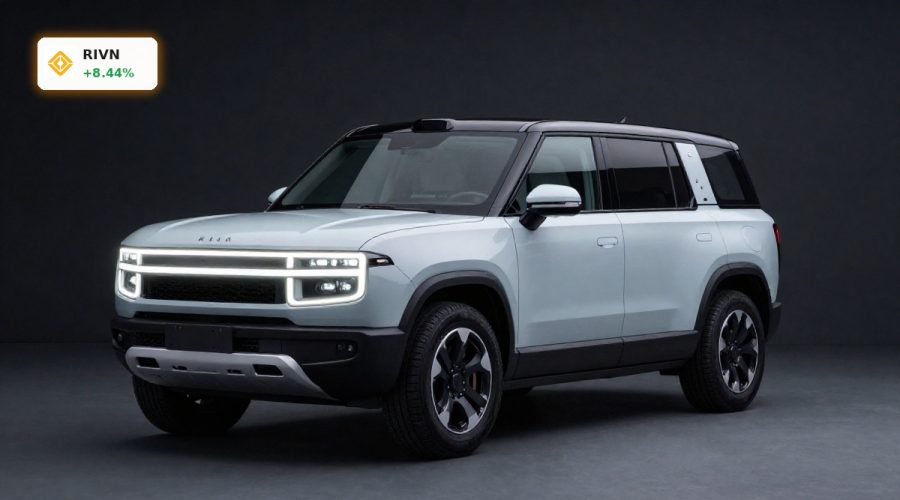
Can the Rivian Robotaxi Deal with Uber really rewrite Rivian’s path to scale, profitability, and relevance in the autonomous EV race?


How big is this Rivian Robotaxi Deal for investors?
The partnership gives Rivian (RIVN) a rare mix of confirmed volume, long-term capital, and technology validation. Uber will start with a firm commitment to purchase 10,000 Level 4 autonomous versions of Rivian’s upcoming R2 SUV for ride-hailing and delivery, with options to buy up to 40,000 additional robotaxis beginning in 2030. The total investment could reach $1.25 billion, starting with an initial $300 million equity subscription once regulatory approvals are cleared.
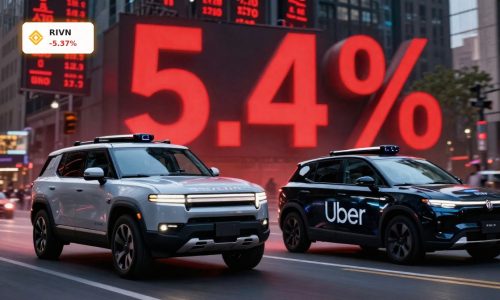
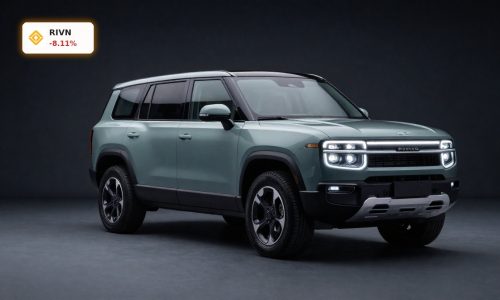
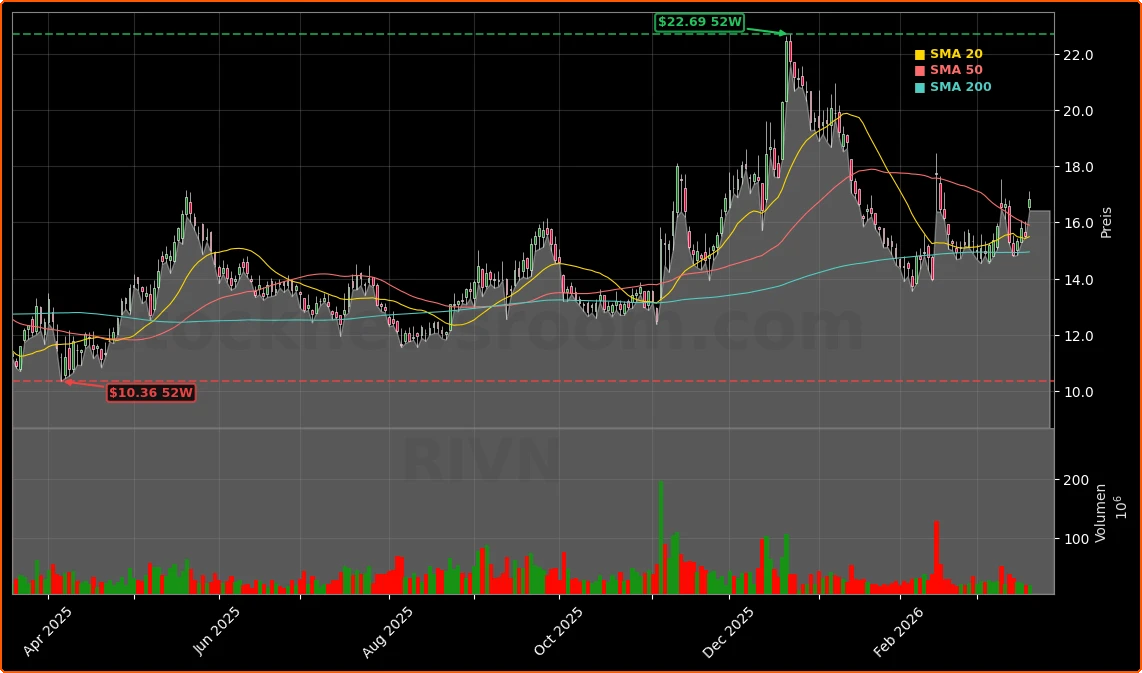
Rivian’s shares are reacting sharply: at $16.84, the stock is up more than 8% on the day, outpacing the broader NASDAQ and signaling renewed risk appetite for EV growth stories. Uber, at $76.83 and up about 0.2%, is essentially flat but underscores how the Rivian Robotaxi Deal is more transformative for Rivian’s path to scale than for Uber’s already diversified mobility platform.
The capital will be deployed in tranches through 2031, tied to autonomy and deployment milestones. That milestone structure directly links Rivian’s ability to technically deliver Level 4 performance to the pace of Uber’s funding and fleet expansion, limiting downside for Uber while rewarding execution at Rivian.
What exactly are Rivian and Uber building?
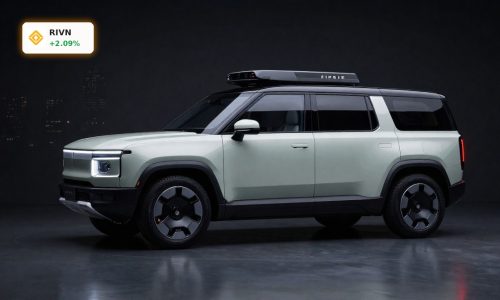
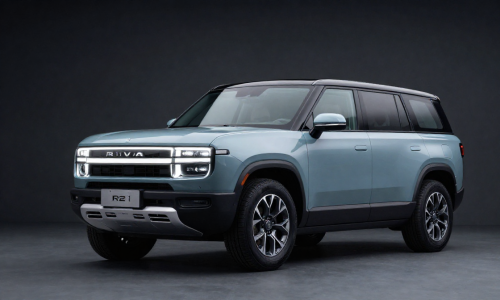
Under a new Master Framework Agreement and Vehicle Production Agreement, Rivian will design and manufacture “Company Robotaxis” based on the R2 platform, each equipped with Rivian’s in-house Level 4 autonomous hardware and software stack. The vehicles will initially roll out in San Francisco and Miami in 2028 before scaling to 25 cities across the U.S., Canada, and Europe by 2031, and will be available exclusively on Uber’s platform in those markets during agreed exclusivity windows.
Rivian has spent the past year laying the technical groundwork, unveiling its RAP1 autonomy processor and a multimodal perception platform that combines advanced sensors with AI inference at the edge. CEO RJ Scaringe argues that vertical integration — owning the vehicle design, compute platform, software, and U.S.-based manufacturing — will allow Rivian to iterate faster than rivals. That approach echoes strategies at Tesla and, on the chip side, NVIDIA, but Rivian is leaning into a pure-play partnership model instead of operating its own ride-hailing network.
For Uber, the agreement includes volume guarantees, most-favored-nation pricing for a specified number of vehicles, and licensing fees for using Rivian’s autonomy software. The deal also restricts Rivian from selling Level 4–equipped vehicles to direct Uber competitors in covered markets for a set period, giving Uber a differentiated robotaxi offering versus other platforms.
How does this change Rivian’s financial roadmap?
The Rivian Robotaxi Deal provides clearer revenue visibility but also raises the company’s cost base. In a regulatory filing, Rivian disclosed that it no longer expects to achieve adjusted EBITDA profitability in 2027 because it plans to increase R&D spending to accelerate its autonomy roadmap. Management is essentially trading near-term margin improvement for a larger, higher-value software and services opportunity later in the decade.
On the positive side, a minimum order of 10,000 R2 robotaxis — plus the prospect of 40,000 more — gives Rivian additional scale to ramp its new, lower-cost R2 platform. That scale is critical as the company moves beyond its premium R1T pickup and R1S SUV into a mass-market segment, where competition from Tesla’s Model Y, upcoming compact EVs from legacy automakers, and Chinese entrants is intensifying. The certainty of a dedicated commercial fleet customer could help smooth factory utilization, support supplier negotiations, and lower unit costs.
Wall Street had already been watching R2 closely as a potential inflection point for Rivian’s profitability. Recent positive commentary from firms such as Zacks Investment Research has highlighted growing investor interest in RIVN as the R2 launch approaches. The Uber partnership now adds a second leg to the thesis: recurring software and services revenue from autonomy, not just hardware margins on consumer EV sales.
Where does this leave Uber and the broader robotaxi race?
For Uber, the Rivian Robotaxi Deal is one of several bets on autonomous mobility, alongside collaborations with Lucid, Amazon’s Zoox, Stellantis, and chip partners like NVIDIA. Rather than building its own vehicles, Uber is positioning itself as an orchestration layer connecting riders, fleets, and multiple autonomy providers, similar to how it aggregates human drivers today.
The Rivian tie-up, however, stands out for its scale and its deep vehicle-level integration. Rivian will tailor both hardware and software to Uber’s network needs, including safety, uptime, and fleet management features. That distinguishes this effort from more generic EV supply deals and puts it in more direct competition with Alphabet’s Waymo and GM’s Cruise in the race to deploy large-scale Level 4 services.
From a competitive standpoint, investors will be watching how quickly Rivian can validate its Level 4 system versus incumbents that already have millions of autonomous miles logged. Success could broaden Rivian’s opportunities beyond Uber, similar to how Apple leveraged the iPhone ecosystem into services, but for now exclusivity constraints tether the near-term upside to Uber’s platform performance.
Related coverage on Rivian’s R2 strategy
The Uber partnership builds directly on Rivian’s broader R2 strategy. Earlier this week, stocknewsroom.com examined whether the new midsize SUV and Rivian’s AI ambitions can transform the company into a scalable platform. Investors who want deeper context on the R2 launch, price points, and autonomy roadmap can read the full analysis in this detailed look at how volume and AI could drive Rivian’s push toward profit.
The scale of Rivian’s growing data flywheel coupled with RAP1, our state of the art in-house inference platform, and our multi-modal perception platform make us incredibly excited for the rapid advancement of Rivian autonomy over the next couple of years.— RJ Scaringe, CEO of Rivian Automotive, Inc.
The Rivian Robotaxi Deal with Uber elevates Rivian from a promising EV manufacturer to a serious contender in the global robotaxi race, backed by up to $1.25 billion in long-dated capital. For investors, the agreement boosts long-term revenue visibility and strategic relevance, even as higher autonomy spending delays the profitability timeline. The next key catalysts will be Rivian’s execution on the R2 launch and its ability to hit autonomy milestones fast enough to unlock the full value of this landmark robotaxi partnership.