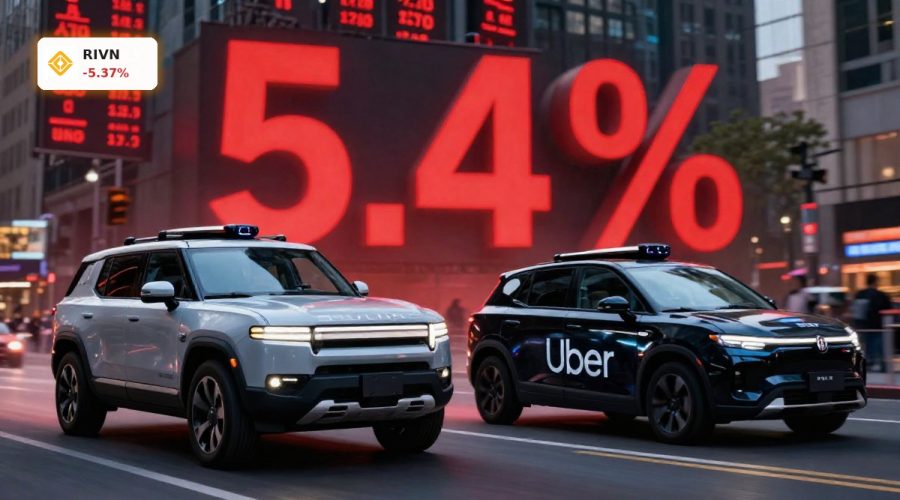
Will Rivian’s massive Uber-backed robotaxi gamble ignite long-term growth or just deepen the company’s financial risk?

How big is the Rivian Robotaxi Deal for growth?
The Rivian Robotaxi Deal centers on Uber’s plan to invest up to $1.25 billion in Rivian through 2031, tied to a series of autonomous driving milestones. In the first phase, Uber or its fleet partners are expected to purchase 10,000 fully autonomous versions of the new R2 SUV, with deployments targeted for San Francisco and Miami starting in 2028. The agreement includes an option for up to 40,000 additional vehicles in 2030, taking the total potential order volume to 50,000 robotaxis by 2031.
The initial funding tranche of about $300 million supports roughly the first 10,000 R2 robotaxis, providing Rivian with a concrete demand anchor as it scales production of its second-generation platform. For a company that posted a net loss of roughly $3.6 billion in 2025, the deal is not just about future revenue. It also serves as a strategic validation of Rivian’s autonomy and AI roadmap, including plans to add lidar to the R2 from late 2026 and ultimately design its own AI chips.
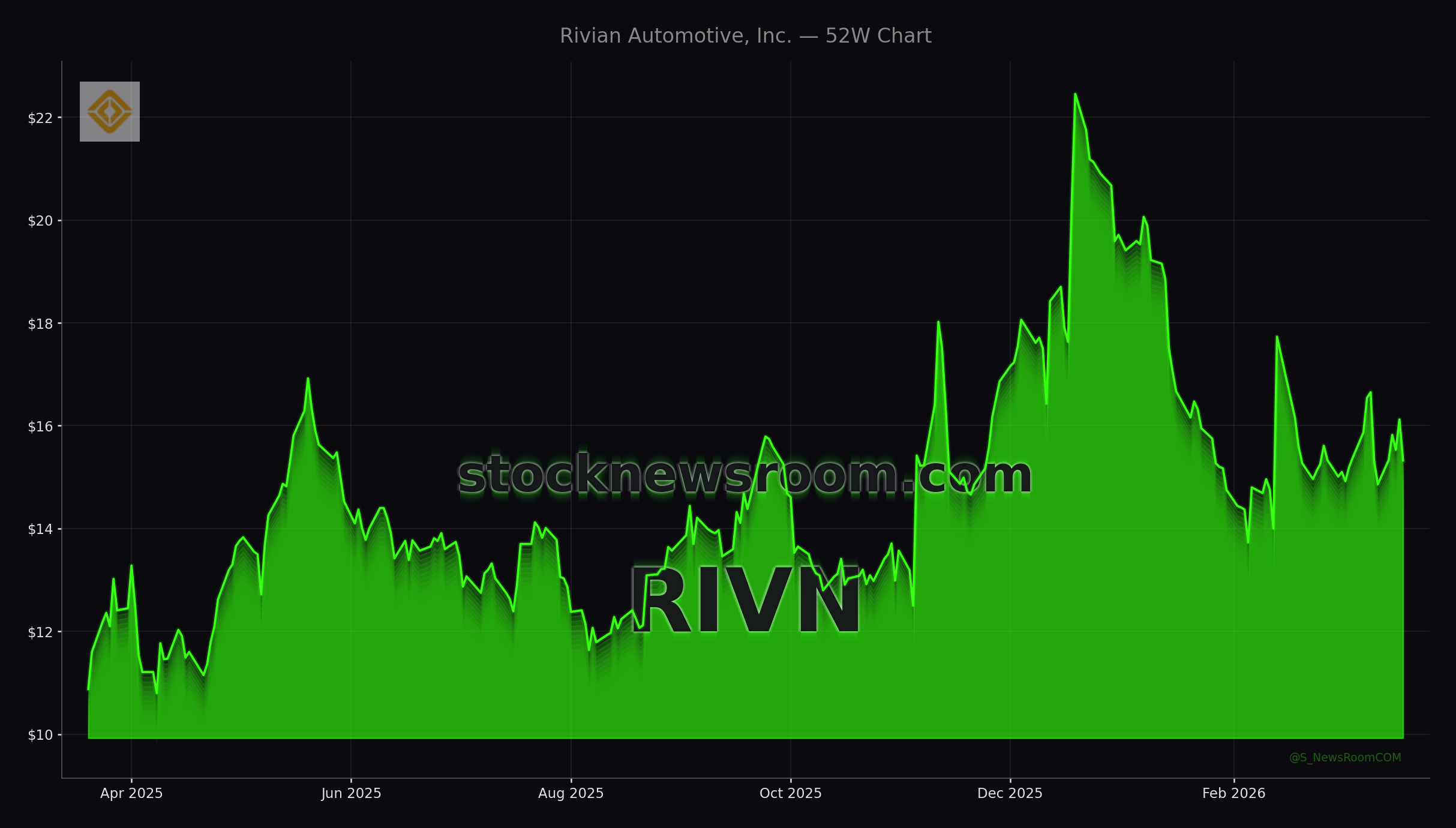
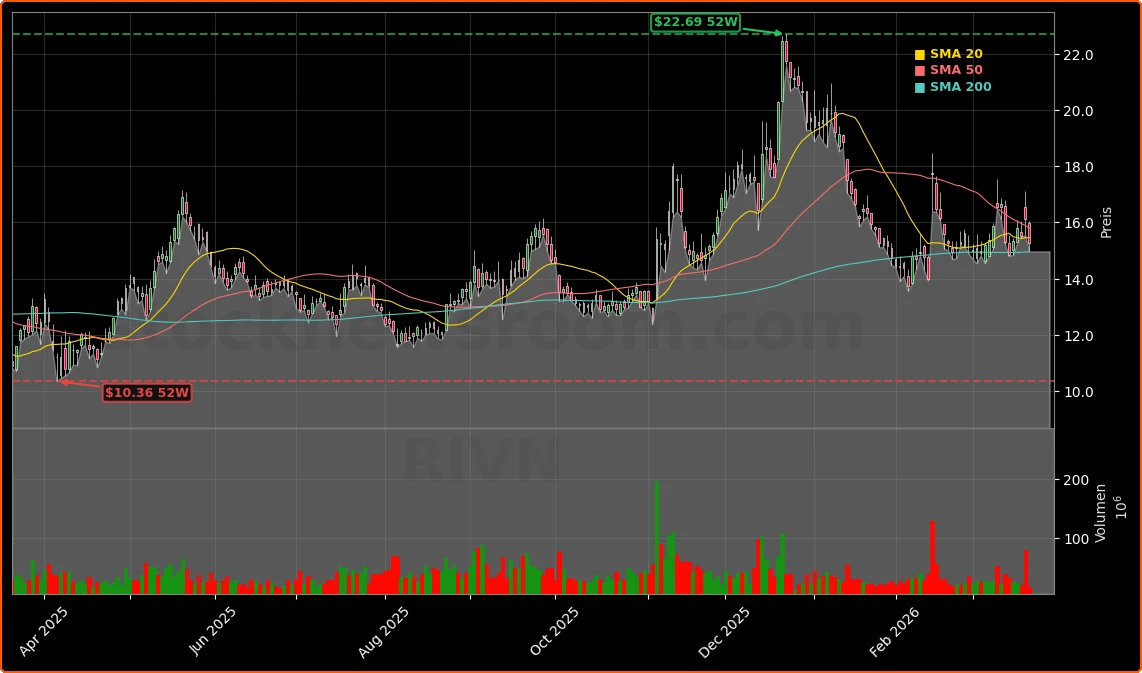
Wall Street initially cheered the announcement, sending RIVN up more than 10% on the day the partnership was unveiled before some profit-taking set in. At around $15–16 per share, the stock still trades well below its 52‑week high, but traders see the Uber-backed robotaxi strategy as a potential catalyst for a move back toward the $20–25 range if execution stays on track.
What does the Uber partnership change for Rivian?
Strategically, the Rivian Robotaxi Deal gives Rivian something many younger EV makers lack: a large, visible, long‑dated demand pipeline in a highly scalable use case. The R2, set to debut with a $57,990 version followed by a more affordable ~$45,000 trim, was already positioned as Rivian’s volume platform. Layering in up to 50,000 commercial robotaxis gives management a clearer line of sight to factory utilization and learning-curve cost reductions over the next five years.
Uber gains an exclusive channel to these R2-based robotaxis on its app, reinforcing its strategy of outsourcing both manufacturing and self-driving software while still competing directly with Tesla’s planned robotaxi service and Alphabet’s Waymo. Uber has also signed similar deals with Lucid and other EV players, so this is not exclusive for Uber overall, but it is a meaningful vote of confidence in Rivian’s tech stack.
For Rivian, the data advantage may be just as important as the vehicle orders. Thousands of R2 robotaxis operating in dense urban environments across up to 25 cities in the U.S., Canada and Europe will generate the real‑world driving data needed to train and iterate its AI models. That could help narrow the gap with autonomy leaders like Waymo and Tesla, and position Rivian alongside automotive AI beneficiaries such as NVIDIA.
Can Rivian’s finances handle the robotaxi push?
Despite the upside, the Rivian Robotaxi Deal does not eliminate execution or balance sheet risk. Management has already cautioned that heavier R&D and capex for autonomy and the R2 rollout mean Rivian no longer expects to reach positive EBITDA in 2027. That admission has revived concerns about ongoing cash burn and the likelihood of future capital raises, a key issue for existing shareholders.
Uber’s funding is milestone-based, which means Rivian must hit defined performance targets to unlock the full $1.25 billion. In the worst case, Uber could take delivery of far fewer than 50,000 vehicles if development or regulatory approvals fall behind schedule. Investors should also remember that Uber retains flexibility, as its broader robotaxi strategy includes partnerships with other EV makers and autonomous software providers.
Still, the structure of the deal offers a powerful incentive system. Each milestone met not only releases additional capital, it also deepens Uber’s installed base of R2 robotaxis, reinforcing a feedback loop of data, software refinement and potential margin expansion from high‑utilization, commercial fleets. That combination makes Rivian one of the more speculative, but also more leveraged, autonomy plays on the NASDAQ, even if it is not yet grouped with pure AI names like NVIDIA or software giants such as Apple.
How does Rivian stack up against EV and robotaxi rivals?
In the broader EV and autonomy race, the Rivian Robotaxi Deal helps differentiate Rivian from U.S. truck and SUV peers while intensifying competition with players in the robotaxi arena. Tesla is pushing ahead with its Full Self-Driving (FSD) platform and has long touted a future robotaxi network, though it continues to face regulatory probes and safety scrutiny. Waymo remains a front‑runner with commercial services already active in multiple U.S. cities, and Lucid is pursuing its own Uber-enabled robotaxi ambitions.
For U.S. investors, the key distinction is that Rivian is now explicitly tying its long‑term growth story to autonomous ride‑hailing, not just consumer EV demand. That makes RIVN more cyclical with risk-on tech sentiment on Wall Street and potentially more correlated with high-growth, AI-exposed names on the NASDAQ than with traditional automakers on the S&P 500. Analyst commentary from firms like Morgan Stanley and Goldman Sachs has previously highlighted autonomy as a major swing factor in Rivian’s valuation, and this kind of high-profile partnership will likely sharpen those debates around price targets and ratings in the coming weeks.
Related Coverage
For a deeper dive into how this agreement reshapes Rivian’s strategic outlook, including valuation scenarios and margin implications, read Rivian Robotaxi Deal +8.4% Surge on Uber’s $1.25B Bet, which analyzes whether Uber’s backing can truly put Rivian on a sustainable path to scale. To understand the regulatory overhang affecting the broader robotaxi narrative, including potential knock‑on effects for Rivian and Uber, see Tesla FSD Probe -3.2% Warning as Regulators Turn Up Heat, which looks at how scrutiny of Tesla’s self-driving software could shape the next phase of autonomous driving policy in the U.S.
Overall, the Rivian Robotaxi Deal with Uber gives Rivian Automotive, Inc. a powerful new growth pillar, combining capital, scale and data to accelerate its autonomy roadmap. For investors, RIVN remains a high‑risk, high‑reward EV and AI hybrid play whose upside now increasingly depends on flawless execution of this ambitious robotaxi rollout. The next updates on regulatory approvals, R2 production ramp and autonomy milestones will be critical in determining whether today’s partnership headlines translate into durable shareholder value.