Can the Rivian Robotaxi Strategy and its billion‑dollar Uber alliance really turn this EV underdog into an autonomous mobility winner?

How does Rivian’s Uber deal change the story?
Rivian Automotive, Inc. has secured one of the most consequential partnerships in the EV space: ride‑sharing giant Uber plans to invest up to $1.25 billion and purchase up to 50,000 R2-based robotaxis over the coming years. The agreement starts with a $300 million cash injection once regulators sign off, followed by a commitment for 10,000 autonomous R2 vehicles and options for 40,000 more by 2030. The vehicles will be used exclusively on Uber’s platform in key U.S. launch markets such as San Francisco and Miami, with initial robotaxi deployment targeted for 2028.
The deal directly supports the broader Rivian Robotaxi Strategy: use a dedicated, sensor‑rich R2 variant as a Level 4 autonomous fleet vehicle, monetized through recurring software and services revenue rather than just one‑time vehicle sales. It also sends a crucial signal to equity markets that a major global mobility player is willing to back Rivian’s autonomy roadmap with over a billion dollars of capital and long‑term volume visibility.
Can Rivian’s autonomy tech really compete?
Rivian is still in development mode on self‑driving, but the technical roadmap is becoming clearer. Management aims to roll out hands‑free navigation comparable to supervised systems like Tesla’s FSD by year‑end, and then push toward Level 4 autonomy by 2028 in time for the Uber fleet ramp. The Rivian Robotaxi Strategy centers on a custom in‑house chip called the Rivian Autonomy Processor (RAP1), initially paired with cameras and radar and later augmented with lidar to create a more sensor‑dense stack similar to Alphabet’s Waymo rather than Tesla’s vision‑only approach.
For investors, this matters because it positions Rivian as a vertically integrated autonomy player, potentially closer to NVIDIA‑style AI economics than a traditional automaker. The company has already highlighted that AI will be used not only in self‑driving software but also in factory optimization and in‑vehicle experiences. Shares trade at roughly 3.2 times trailing sales, a fraction of many AI‑labeled stocks, suggesting the market has yet to fully price in this AI angle or the impact of the Rivian Robotaxi Strategy on long‑term software revenue.
What role does the R2 SUV play for growth?
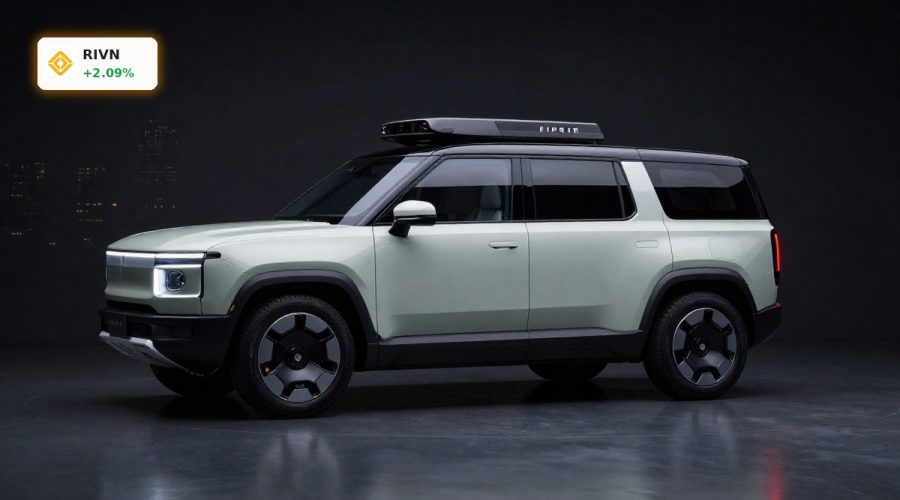
Beyond robotaxis, the R2 platform itself may be Rivian’s most important growth lever. Current R1T and R1S models can approach $100,000 fully loaded, limiting addressable demand. By contrast, the new R2 SUV is expected to start around $45,000 to under $60,000, a price band where nearly 70% of U.S. car buyers want to stay. The R2, and later the R3 and R3X, are designed to bring Rivian into the mass‑market crossover segment that has powered Tesla’s Model Y dominance.
Production guidance for 2026 stands near 63,000 vehicles, with Rivian targeting eventual capacity of about 215,000 units at its Normal, Illinois plant. If the R2 family scales in a way similar to the Model 3/Y ramp for Tesla, it could transform Rivian’s revenue base and manufacturing efficiency, while simultaneously providing the hardware backbone for the Rivian Robotaxi Strategy via dedicated autonomous variants for Uber.
How important are software, services and Volkswagen?
Rivian is increasingly positioning itself as a software‑heavy mobility platform. Software and services revenue roughly doubled year over year to about $447 million and now accounts for roughly 35% of total sales. These higher‑margin streams helped the company reach positive gross margins even as overall Q4 revenue slipped 26% to $1.28 billion and operating losses climbed to $833 million.
A major driver here is the joint venture with Volkswagen, which has committed up to $5.8 billion to access Rivian’s zonal electrical architecture and software stack. This architecture reduces the number of electronic control units and wiring complexity, lowering vehicle weight and cost. Management has indicated that other automakers are already inquiring about tapping into the JV’s technology, which could open a licensing path reminiscent of how Apple monetizes its ecosystem across third‑party hardware. The combination of Uber robotaxis, Volkswagen’s capital, and third‑party software interest creates a diversified revenue mix that reduces reliance on pure vehicle margins.
How does Rivian stack up against other EV stocks?
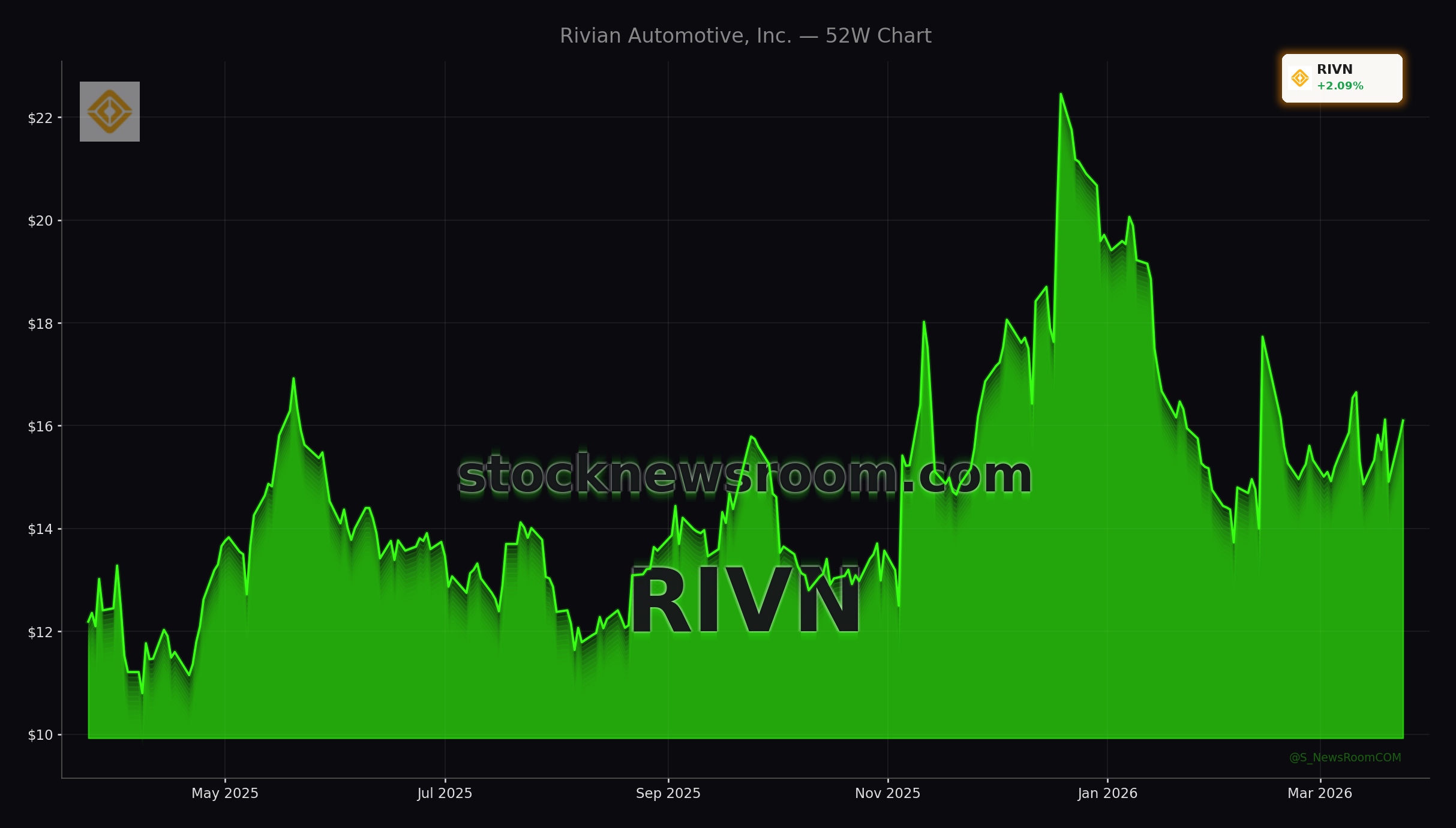
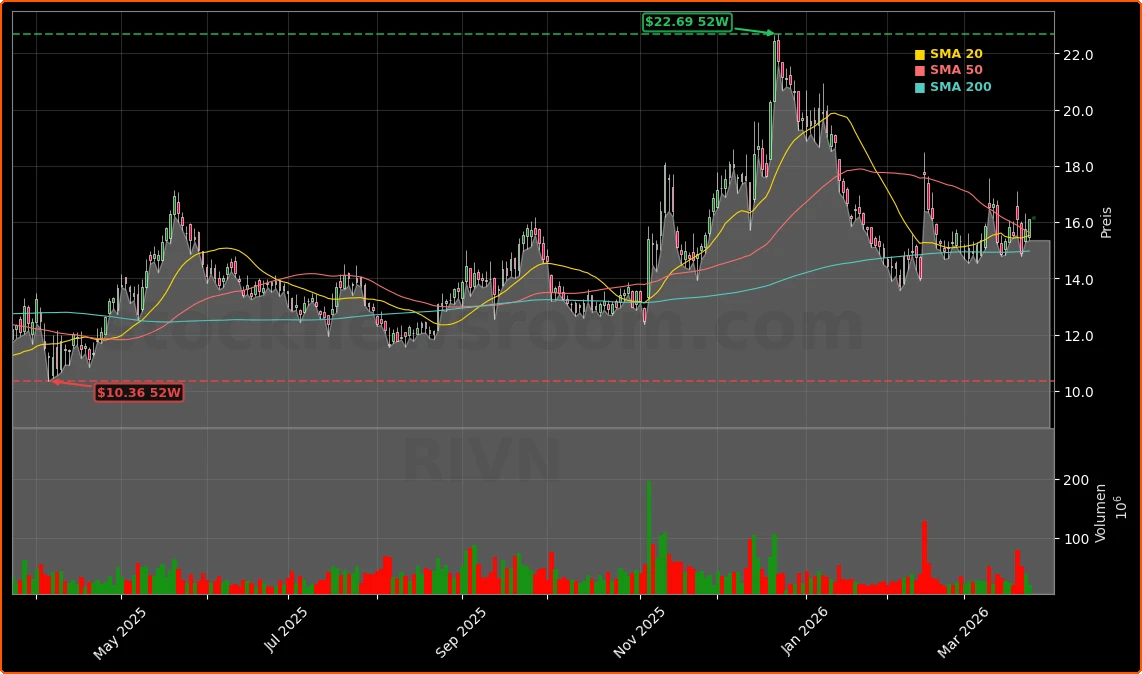
Rivian’s market cap, recently around $18.5 billion, looks far removed from its frothy $100 billion IPO days, but that reset may make the risk‑reward more interesting for U.S. investors. With Ford abandoning its F‑150 Lightning EV pickup and Tesla’s Cybertruck struggling to gain traction, Rivian faces less competition in electric trucks and adventure‑oriented SUVs. At the same time, rising oil prices linked to Middle East tensions enhance the long‑term appeal of EVs as a hedge against fuel volatility.
On profitability, Rivian and Lucid remain in similar territory: both are loss‑making and capital intensive. However, analysts covering the stock increasingly highlight Rivian’s software and autonomy pipeline as a clearer path toward margin expansion than Lucid’s current strategy. While there is no guarantee the Rivian Robotaxi Strategy will hit its aggressive Level 4 timeline, the combination of Uber’s capital, Volkswagen’s JV, and growing software revenue gives Rivian a differentiated play within the broader NASDAQ EV cohort for investors comfortable with volatility.
Related Coverage
For a deeper dive into the Uber partnership economics and early market reaction, see Rivian Robotaxi Deal +8.4% Surge on Uber’s $1.25B Bet, which breaks down how the initial $300 million investment and up to 50,000 vehicle order could reshape Rivian’s balance between hardware and software. For a sector‑wide view of autonomy risks and opportunities, including how Tesla’s own strategy compares, read Tesla Robotaxi Strategy Warning as AI Boom Meets EV Pressure, which frames the regulatory, technological and valuation stakes facing the entire robotaxi space.
The Rivian Robotaxi Strategy is rapidly becoming the centerpiece of Rivian’s turnaround narrative, tying together the R2 launch, Uber fleet deal and expanding software business into a single autonomy‑driven growth story. For U.S. investors, that creates a speculative but increasingly well‑capitalized way to play both EV adoption and AI‑enabled mobility services in one name. The next few quarters of execution on R2 production and autonomy milestones will determine whether Rivian can convert today’s optimism into durable shareholder value.