Can a $1.5 billion Robinhood Buyback Program and a bigger credit line reverse a brutal slide in one of fintech’s most volatile stocks?

What exactly is the new Robinhood Buyback Program?
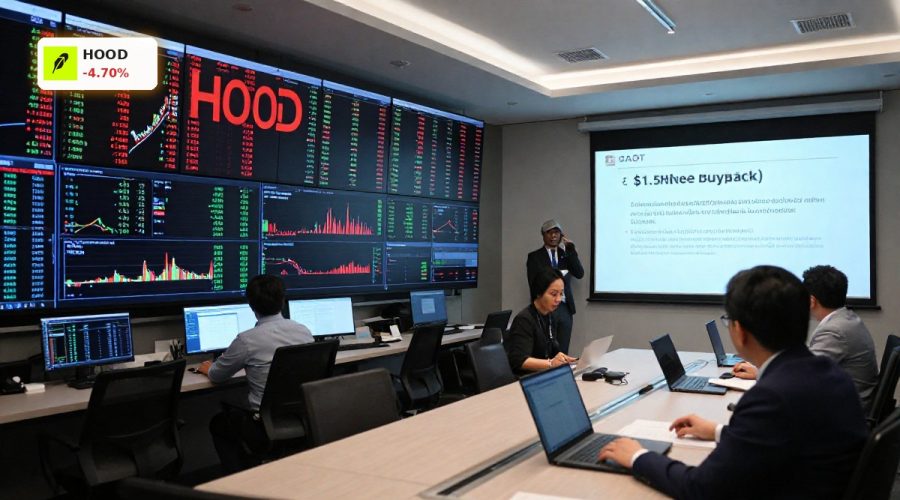
Robinhood Markets, Inc. disclosed that its board has approved a share repurchase authorization of up to $1.5 billion to be executed over the next three years. Roughly $1.1 billion represents fresh capacity, with the rest rolled over from a prior authorization that had not been fully used. Management has flexibility on timing and execution, which means buybacks will likely be paced in response to market conditions and internal capital needs rather than deployed all at once.
Chief financial officer Shiv Verma framed the Robinhood Buyback Program as a vote of confidence in the company’s long‑term prospects and its ability to keep delivering new products while returning capital to shareholders. On Wall Street, such programs are often interpreted as a signal that management views its stock as undervalued, particularly after a sharp drawdown. However, buybacks also compete with growth investments, so portfolio managers will be watching how aggressively Robinhood leans into repurchases versus product expansion.
From a mechanical standpoint, retiring shares via the Robinhood Buyback Program can support earnings per share over time by shrinking the share count, assuming revenue and profits continue to grow. That dynamic is especially important for a still‑developing fintech name trying to prove it belongs alongside more established brokerage players and high‑growth platform companies like NVIDIA and Apple in long‑only growth portfolios.
How is Robinhood stock reacting on Wall Street?
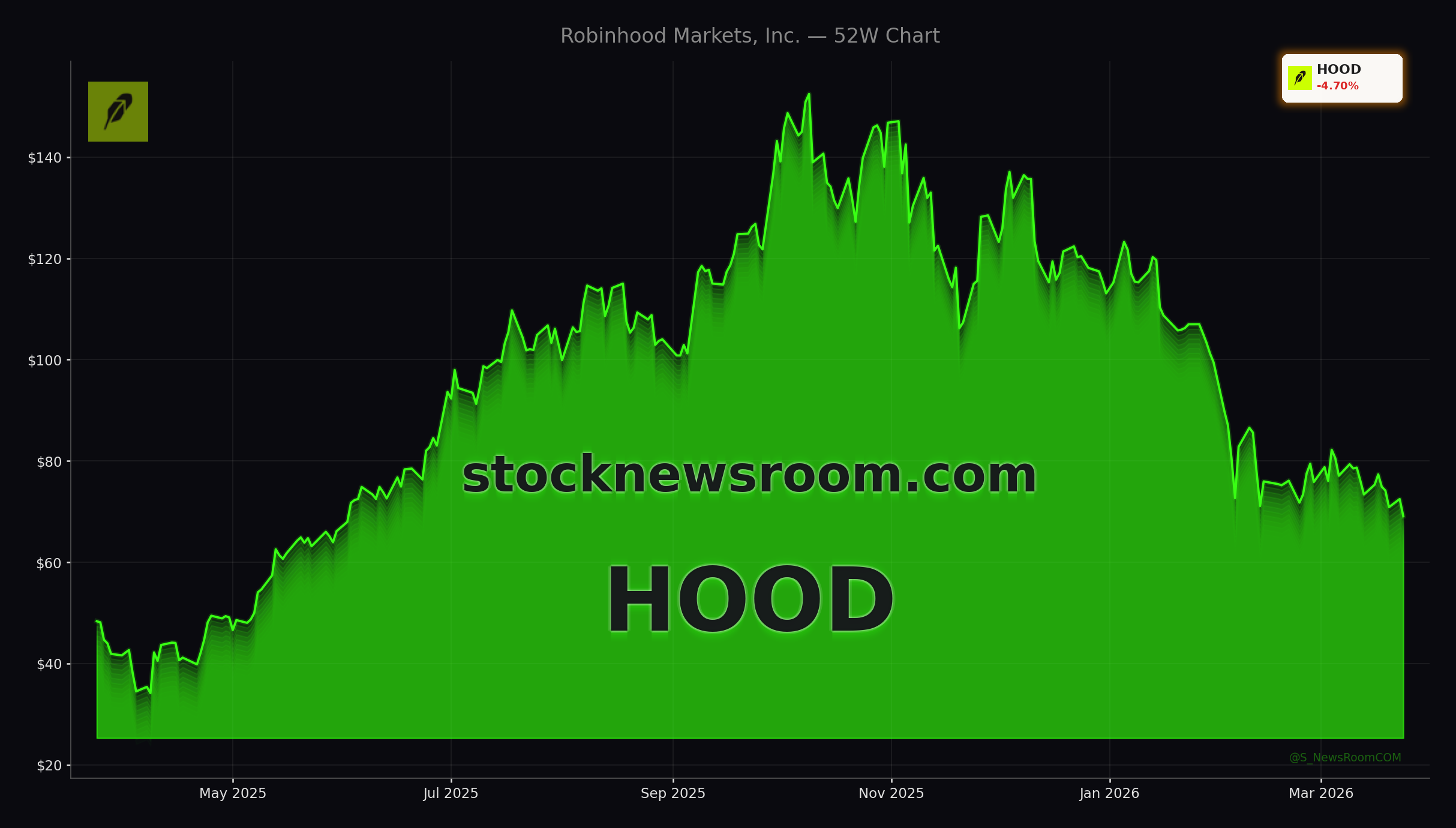
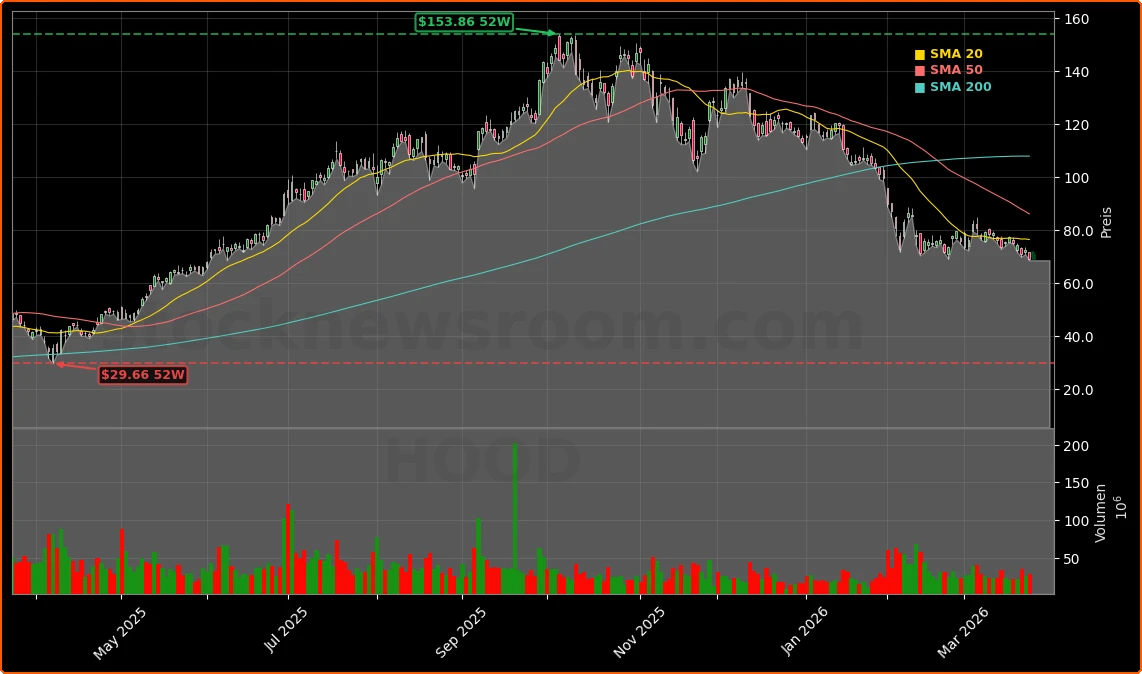
On Tuesday, HOOD closed at $69.08, down 4.7% on the day and marking its lowest closing level of 2026. The stock briefly recovered to $70.90 in after‑hours trading and was indicated around $71.60 in pre‑market action on Wednesday, up roughly 3.6%, as traders digested the buyback and credit news. Even after the bounce, shares remain down about 39% year‑to‑date and roughly 55% below the October all‑time high near $152. That decline comes despite the stock being up about 43% over the past 12 months, highlighting just how volatile HOOD has become for U.S. retail and institutional holders.
Recent performance mirrors broader pressure on risk assets as macro uncertainty and geopolitical tensions weigh on high‑beta names across the NASDAQ. Bears have argued that Robinhood’s revenue mix is still too dependent on speculative trading in options and crypto, leaving it vulnerable when retail risk appetite cools. A high‑profile bearish view from The Motley Fool recently warned that this unstable revenue base was a key driver of the more than 50% slide since last fall. For fund managers indexed to the S&P 500 and NASDAQ, HOOD’s swings may limit position sizing even if they like the product story.
On the positive side, analyst sentiment remains surprisingly constructive. TipRanks’ aggregated data shows a 12‑month average price target of about $123.85 and a “strong buy” consensus based on 16 Wall Street analysts. Individual banks like Citigroup, Goldman Sachs and Morgan Stanley have generally emphasized Robinhood’s user growth, cross‑selling potential and new product launches as reasons the current valuation could prove attractive after the correction, even if near‑term trading activity remains choppy.
How does the credit facility expansion change the risk profile?
Alongside the Robinhood Buyback Program, the company’s clearing subsidiary, Robinhood Securities, entered into a new $3.25 billion revolving credit facility with JPMorgan Chase, replacing a prior $2.65 billion line. The facility includes an accordion feature that can add up to $1.62 billion in additional capacity, bringing the potential maximum to $4.87 billion. This kind of committed liquidity is critical for a broker‑dealer that must meet intraday and overnight margin and clearing requirements during periods of elevated volume and volatility.
The expanded revolver effectively upgrades Robinhood’s ability to weather stress events like the meme‑stock surges of 2021, when clearinghouse deposit requirements spiked across the industry. For institutional investors still wary of operational and liquidity risk, a larger backstop from a money‑center bank like JPMorgan is a concrete step toward de‑risking the business model. It also gives Robinhood more room to keep funding innovation, such as its new banking products and social trading tools, without constantly tapping equity markets.
Compared with peers, Robinhood’s facility now looks more in line with diversified online brokers and trading platforms rather than an under‑scaled fintech start‑up. That may help the stock’s narrative as investors contrast it with more established names in adjacent spaces, including payments players and high‑growth consumer fintechs, as well as headline‑driven innovators like Tesla.
Is growth beyond trading enough to justify buybacks?
Strategically, Robinhood is trying to prove that the Robinhood Buyback Program is compatible with reinvestment in a broader financial ecosystem. The company has pushed into banking and credit cards, including a premium Platinum card aimed at higher‑value customers, while rolling out “Social” features that let verified users share trades and performance. Research from Zacks has highlighted Social as a potential driver of top‑line growth by boosting engagement and in‑app activity.
On the crypto and tokenization front, Robinhood Chain — an Ethereum layer‑2 network currently in public testnet — processed about 4 million transactions in its first week. The planned mainnet launch later this year is intended to support tokenized equities, ETFs and other traditional assets, positioning the platform at the intersection of brokerage and blockchain. For U.S. investors comparing HOOD to high‑beta innovation stories like NVIDIA in AI or Tesla in EVs, this mix of social trading, banking and tokenized assets is central to any bull case that justifies buying into weakness.
Still, skeptics point to questions around monetization quality, regulatory risk and the cyclicality of retail trading. Forbes recently raised the issue of whether HOOD is a value trap after the stock dropped roughly 37% between September 2025 and March 2026 despite a 25% revenue gain, as compressing margins and softer crypto revenue disappointed the market. Whether the Robinhood Buyback Program ends up enhancing long‑term value will depend on management’s discipline in timing repurchases, executing new product launches and stabilizing earnings.
Related Coverage
For a deeper dive into how trading cyclicality and a weak crypto backdrop challenge the growth story, readers can explore Robinhood Strategy Warning as Crypto Slump Bites, which examines whether Robinhood’s business model can withstand a prolonged downturn in digital assets and softer user growth. For a sector‑level perspective on platform transformations, Alibaba Transformation Boom: Cloud and AI Shock Strategy looks at how Alibaba’s pivot from pure e‑commerce to cloud and AI could reshape how investors value large‑scale tech platforms, offering an interesting comparison for Robinhood’s own push beyond pure trading.
This authorization reflects the confidence of our management team and board in our ability to continue delivering innovative products for customers and creating value for shareholders while returning capital over time.— Shiv Verma, CFO of Robinhood Markets, Inc.
In summary, the Robinhood Buyback Program, paired with a larger JPMorgan credit line, underscores management’s conviction that the stock is mispriced and the balance sheet is strong enough to support both capital returns and growth. For U.S. investors, HOOD now offers a higher‑beta way to play the convergence of trading, banking and tokenization, but still with elevated execution and regulatory risk. The next few quarters of user engagement, margin trends and pace of buybacks will show whether the Robinhood Buyback Program marks the start of a sustained rerating or just a temporary support for a volatile fintech name.