
Is the sharp decline of Robinhood’s stock merely a correction after the hype – or the beginning of a larger crash?
Robinhood Forecast: How Severe Was the Crash?
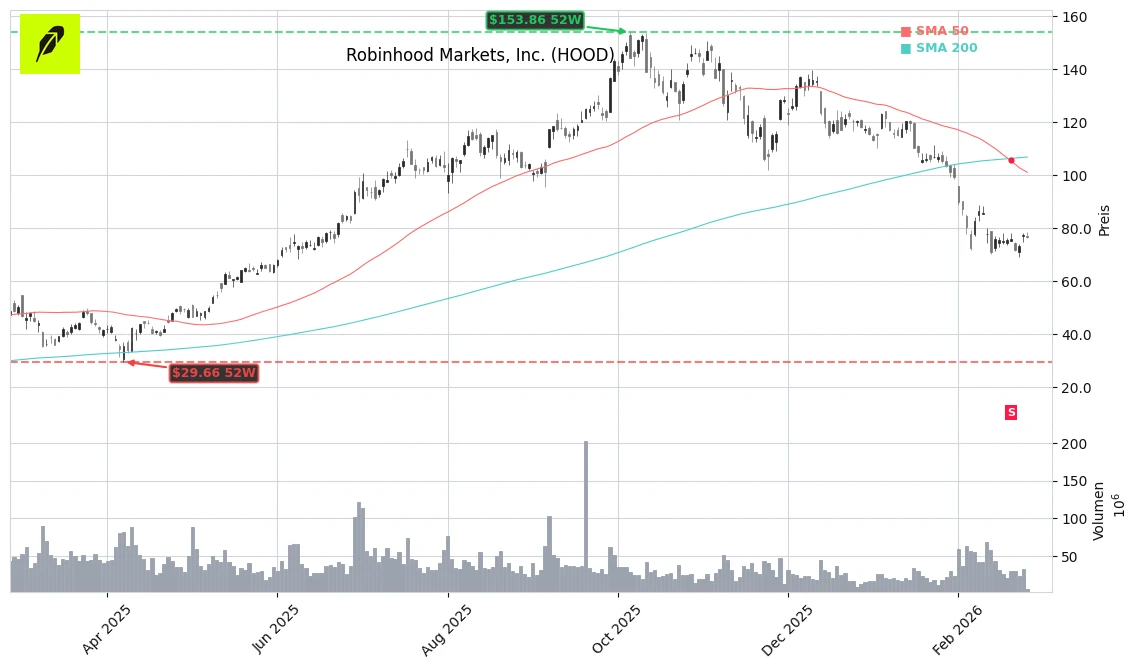
After a strong year in 2025, during which the stock of Robinhood Markets, Inc. nearly tripled, a painful correction followed in early 2026. The stock is down approximately 31% to 37% since the beginning of the year and has lost around 40% to 50% from its recent peak. Currently, Robinhood is trading at $76.81, which is about 10% above its recent low, technically indicating the first recovery phase after the sell-off.
The trigger for the correction was primarily the missed revenue expectations in Q4 2025, along with a significant decline in Bitcoin, which is still about 50% off its highs. Both factors weigh on a platform whose user activity heavily depends on market sentiment and crypto volatility. Nevertheless, some market observers view the decline following the steep rise in 2025 more as a normalization of valuation rather than a structural break in the business model.
Robinhood Markets: Fundamental Trends Despite Volatility
Fundamentally, Robinhood Markets, Inc. is performing well with a significant increase in customer assets. The managed platform assets rose by 59% year-over-year in January 2026 to $324.4 billion. This indicates a growing customer base and higher average balances – key drivers for future transaction and interest income.
At the same time, the broker is working on a “High-Margin Makeover”: moving away from one-sided order flow revenues towards higher-margin products in the areas of brokerage, crypto, and the broader betting and trading market. This includes options, crypto trading, interest income on cash and securities loans, as well as new revenue sources from innovative financial bets and prediction markets. This diversification aims to make earnings more robust and cushion the cyclical risk of pure trading revenues.
Thus, the current weakness phase reflects less an operational crisis and more a reassessment following a valuation hype. In scenario analyses, a price target corridor of $110 to $120 is considered possible this year – an upside of 60% to 70% from the current level, provided the market environment normalizes and the profitability initiative takes effect.
Robinhood Forecast and Crypto Momentum: Is a Rebound Coming?
Central to any Robinhood forecast remains the development in the crypto market. The recent price stabilization in Bitcoin and a strong price jump in crypto-related stocks like Circle fuel hopes that the current “crypto winter” was merely a shorter interlude. Should a new upward trend establish itself and the $72,000 mark in Bitcoin be sustainably surpassed, trading volume at Robinhood is likely to increase significantly.
From a technical analysis standpoint, an interesting support zone has formed around $66 to $70 for Robinhood, which previously acted as resistance. Here, a plateau could establish itself from which a counter-movement towards the 50-day moving average could begin. Traders are therefore increasingly focusing on knockout products with moderate leverage or discount options to benefit from a potential bottom formation with limited capital investment.
An example is a discount option with an expiration in September and a cap at $87.50, which offers a maximum return of over 100% if Robinhood trades above this mark by then. The price decline following the crash is seen by short-term traders as a historically attractive entry opportunity, while long-term investors are betting on structural earnings improvement.
Robinhood Markets: How Do Analysts Assess the Situation?
Analysts point to the high sensitivity of Robinhood Markets, Inc. to market sentiment, crypto prices, and interest rates. Firms like Citigroup, Goldman Sachs, Morgan Stanley, and RBC Capital Markets particularly focus on the combination of a growing asset base and the transformation towards higher-margin earnings in their assessments. The central question is whether the company can sustainably achieve higher net margins without jeopardizing the growth of its user base.
Critical voices, such as those in major U.S. business magazines, highlight the risk of a prolonged crypto bear market, a continued cooling in options trading, and the increased volatility of the stock. Proponents, however, emphasize that Robinhood has built one of the strongest retail brands in the U.S. and is establishing additional revenue pillars with new products in brokerage, crypto, and the betting market.
Thus, the further price development heavily depends on two factors: First, whether profit margins increase as planned, and second, whether the market reassesses platform assets and crypto exposure as an opportunity rather than a risk. Both ultimately determine whether the optimistic Robinhood forecast with price targets near $120 will prevail or whether the stock will remain in a volatile sideways phase for a longer period.
Robinhood remains a speculative but exciting leverage on the return of risk appetite and crypto momentum.
— Editor in Chief
Bottom Line
In summary, the Robinhood forecast is a balancing act between short-term volatility and long-term earnings potential. The significant decline since the beginning of the year meets a sharply increased platform asset base and a clear strategic focus on higher-margin business areas. For risk-aware investors, the current price range offers opportunities for a comeback, while developments in the crypto market and the next quarterly results will show whether the hoped-for trend reversal actually holds.
Related Sources
- Robinhood Markets, Inc. (HOOD) on Yahoo Finance (Yahoo Finance)
- Why The Market Is Missing Robinhood’s High-Margin Makeover (Forbes)
- HOOD’s Platform Assets Rise in Early 2026: Revenue Tailwinds Ahead? (Zacks Investment Research)
- Robinhood Markets, Inc. Reports January 2026 Operating Data (GlobeNewsWire)