
Can the Salesforce Agentic Strategy turn high-stakes U.S. government AI deployments into a durable moat and upside for CRM investors?

Is Salesforce turning AI fear into a federal opportunity?
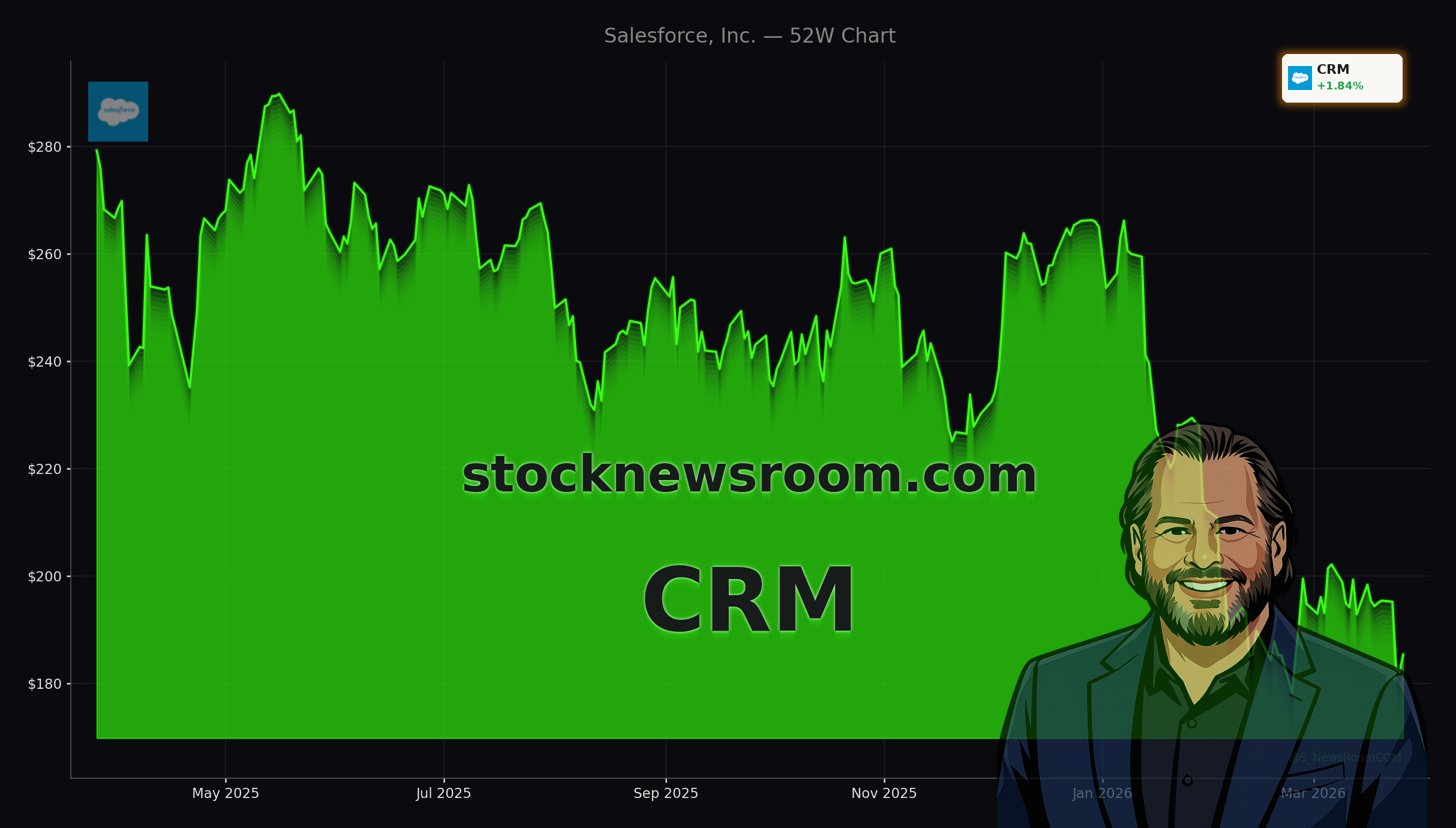
Salesforce Inc. (CRM) traded around $184.98 on Thursday, up roughly 1.7% from the prior close, as Wall Street digested fresh agentic AI wins in Washington and a massive capital return program. While the broader enterprise software cohort has been hit hard in 2026, Salesforce’s latest government deals suggest its AI-first pivot is gaining real-world traction just as its valuation falls to multi‑year trough levels.
The centerpiece of the Salesforce Agentic Strategy is Agentforce, an autonomous agent platform that combines large language models with workflow automation and enterprise data. That platform is now powering a new agentic operating system at the Veterans Health Administration (VHA) and an AI contact center overhaul at the U.S. Department of Labor (DOL), moves that could serve as high-credibility reference wins for other large public-sector and Fortune 500 buyers.
For U.S. investors weighing whether CRM belongs in AI-focused portfolios alongside names like NVIDIA and Apple, these deployments offer a more concrete read-through on adoption than generic AI marketing claims.
How is Salesforce Agentic Strategy playing out at the VA?
At the VHA, the nation’s largest integrated healthcare system serving roughly 16–18 million Veterans, Salesforce and Slack have been combined into an “agentic operating system” that turns static reporting into automated problem-solving. More than 370,000 VA employees now use Slack as a single front door to incident data, metrics, and collaboration, with AI agents automatically assembling the right experts when issues like rising wait times or falling satisfaction scores are detected.
Slack AI summarizes long chat histories, surfaces best practices from similar incidents, and integrates mobile field inputs, effectively creating institutional memory across more than 150 medical and outpatient centers. Thousands of staff hours are being redirected from manual coordination and data gathering to direct Veteran care, providing a tangible demonstration of the productivity upside behind the Salesforce Agentic Strategy.
The VHA is already exploring extending this stack to VA Health Connect, its 24/7 virtual contact center, by linking the Slack-based operating system with Agentforce Health and Agentforce Service. If successful, that could expand Salesforce’s footprint deeper into telehealth triage and interagency coordination, reinforcing its position as the AI backbone for mission-critical government services.
What does the DOL’s DOLA agent say about Salesforce’s moat?
At the U.S. Department of Labor, Salesforce is rolling out “DOLA,” an autonomous AI agent built on Agentforce to modernize the National Contact Center. DOLA acts as a digital workforce for 24/7 support, handling 2.8 million support cases and 9.7 million interactions across 28 federal programs, including Unemployment Insurance and OSHA-related inquiries.
Beyond simple FAQs, DOLA collects intake details, opens formal cases, and initiates escalations across Tier 0 to Tier 2 workloads. When citizen needs require a human touch, the system routes conversations to staff with what officials describe as hospital-like triage precision. The deployment runs on Salesforce Government Cloud, using FedRAMP High-compliant infrastructure and tightly scripted workflows to reduce the risk of hallucinated responses — a critical differentiator for AI in regulated environments.
Collectively, the VHA and DOL projects demonstrate how the Salesforce Agentic Strategy is monetizing AI not just as a feature but as an operating fabric that orchestrates humans, agents, and data. For investors worried that open models from Anthropic or OpenAI might commoditize SaaS, these complex, compliance-heavy rollouts underline why integrated platforms can still command premium pricing and sticky contracts.
Can buybacks and free cash flow offset software sector angst?
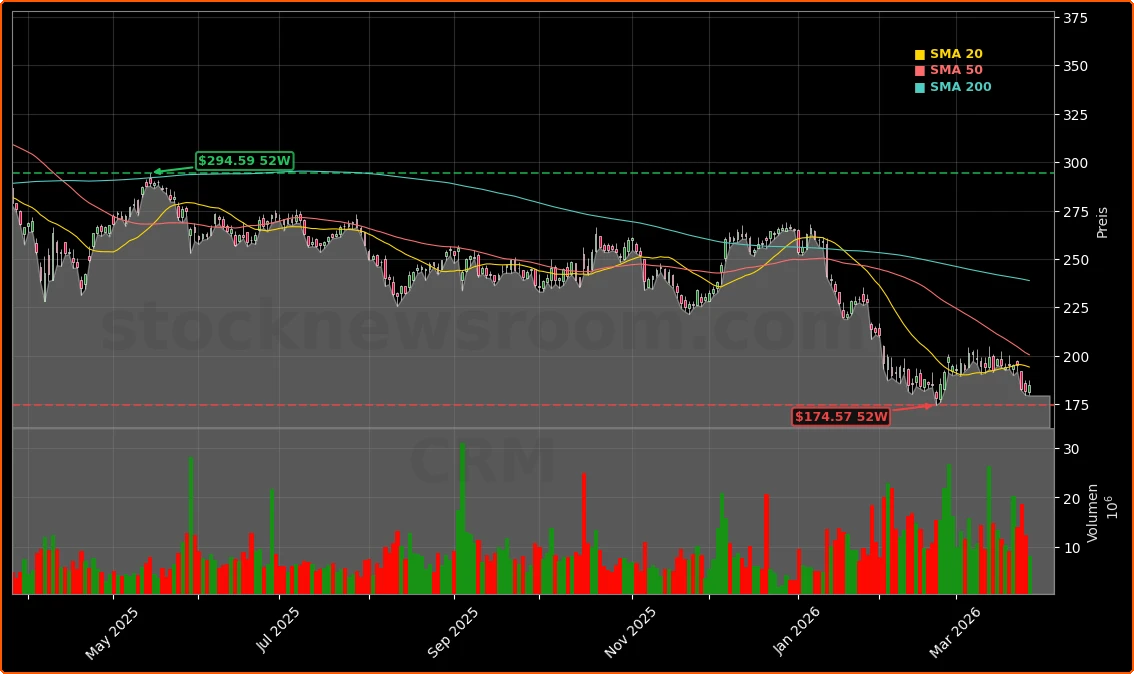
While the AI narrative is improving, the share price tells another story. After a sharp selloff in leading software names, Salesforce’s valuation has compressed to levels not seen in its public history. The company generated about $14.4 billion in free cash flow last year and expects roughly 10% growth in fiscal 2027, implying a multiple of roughly 9.5x current-year FCF — unusually low for a large-cap cloud name with double-digit revenue and faster earnings growth.
Management is leaning hard into this mismatch. Following several years of elevated repurchases ($7.6 billion, $7.8 billion, and $12.6 billion over the last three fiscal years), Salesforce authorized a $50 billion buyback program and recently executed a $25 billion accelerated share repurchase. Roughly $20 billion was deployed up front, retiring about 103 million shares and cutting the share count by over 11% in one move, with another $5 billion to be used over the rest of the year.
Directors David Blair Kirk and Laura Alber added roughly $1 million combined in open-market stock purchases in mid‑March, aligning insider behavior with the corporate buyback push. Large institutional investors focused on capital discipline and per-share earnings growth are likely to view this as a clear signal of confidence in the Salesforce Agentic Strategy and its cash-generating power.
How do margins, competition and portfolios fit together?
On the fundamentals side, Salesforce has already driven notable margin expansion by tightening costs and prioritizing profitable growth, even as top-line growth naturally slowed with scale. High-margin recurring revenue from Data Cloud and Agentforce is helping offset cyclicality elsewhere in the portfolio, a trend that could continue if agentic workloads — measured internally via the fast-growing “agentic work unit” (AWU) metric — scale as expected.
At the same time, Wall Street remains wary. A sector-wide rerating in cloud and SaaS has punished high-multiple names, and some investors worry that AI agents might cannibalize traditional software seats or open the door to cheaper competitors. For now, Salesforce is countering that risk through tight partnerships with model providers, deep integration with large customers like Adecco Group, and a focus on regulated, mission-critical use cases where end-to-end platforms are hard to displace.
For U.S. investors building diversified tech exposure around mega caps such as Tesla and other S&P 500 growth leaders, CRM now offers a mix of defensive cash flows, aggressive buybacks, and asymmetric upside if its agentic thesis plays out. The stock is still sensitive to macro headwinds and sector sentiment, but its combination of federal AI wins and shareholder-friendly capital allocation gives it a differentiated profile within large-cap software.
Related Coverage: For a deeper dive into how AI is reshaping Salesforce’s earnings power, including its latest quarterly results and Agentforce momentum, see this detailed review of Salesforce’s AI strategy and Q4 profit surge. Investors tracking regulatory and legal overhangs in big tech may also want to read this analysis of the recent Alphabet lawsuit and what it could mean for the broader mega-cap tech complex, which provides useful context for evaluating systemic risks around AI and data practices.
In the end, the Salesforce Agentic Strategy is emerging as both a growth engine and a narrative reset, supported by marquee government deployments and a record-sized buyback. For long-term investors, the blend of expanding AI use cases, disciplined free cash flow deployment, and insider conviction makes CRM a name to watch as the next wave of enterprise AI spending unfolds. The next few quarters of AWU growth and public-sector wins will be critical in determining whether Salesforce can convert today’s discounted multiple into tomorrow’s AI-driven rerating on Wall Street.