Are SanDisk earnings still an AI dream story, or is the latest double-digit slide a warning that the cycle is turning?

How Are Markets Digesting SanDisk Earnings?
The latest SanDisk earnings snapshot for Q4 showed just how dramatically the business has changed in the AI era. Revenue climbed to $3.025 billion, up 61% year over year, powered by surging demand for NAND flash and enterprise SSDs tied to AI and cloud workloads. Earnings per share nearly doubled relative to analyst consensus, and free cash flow hit roughly $980 million for the quarter, giving management meaningful firepower for capacity and R&D investments.
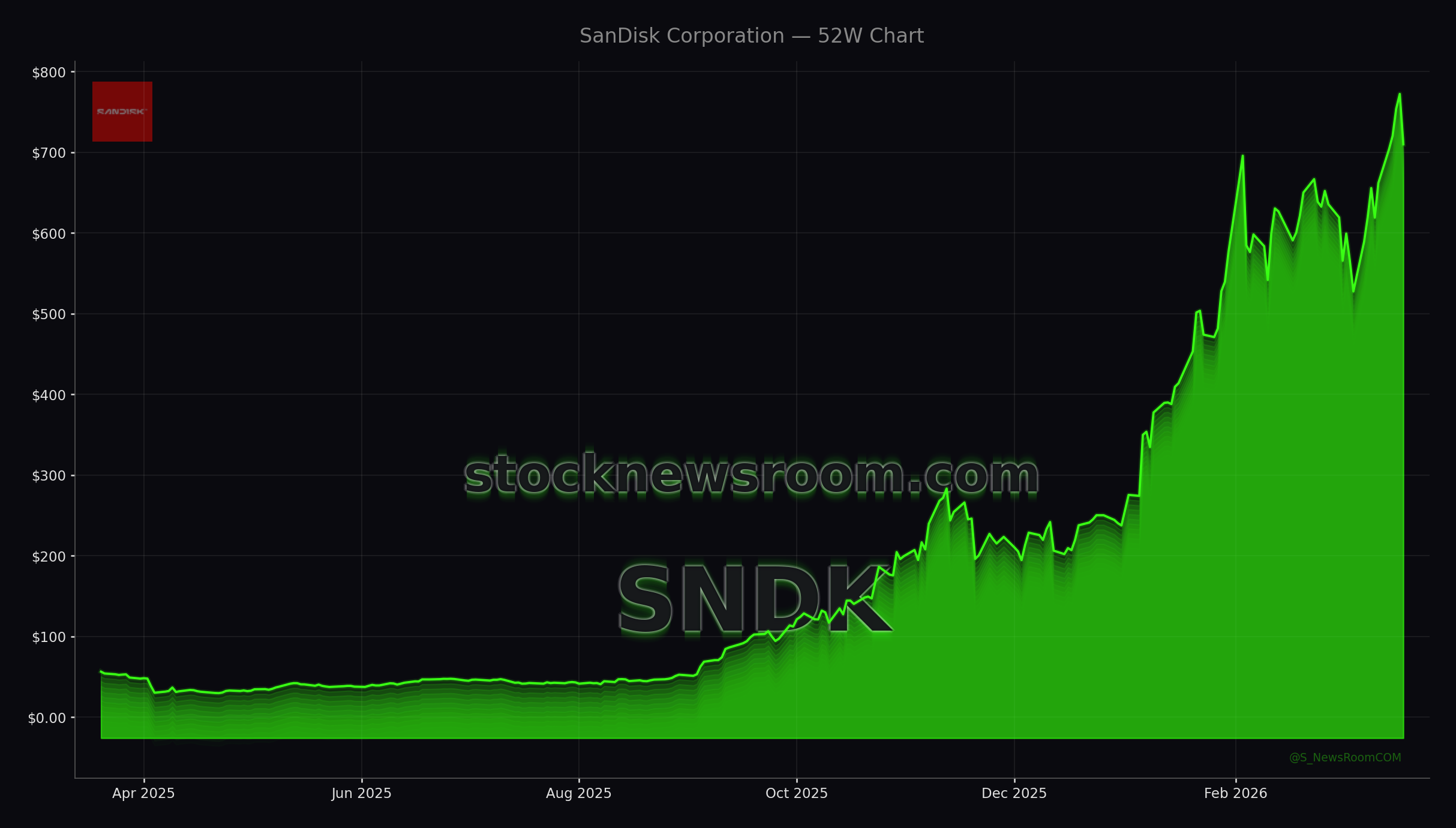
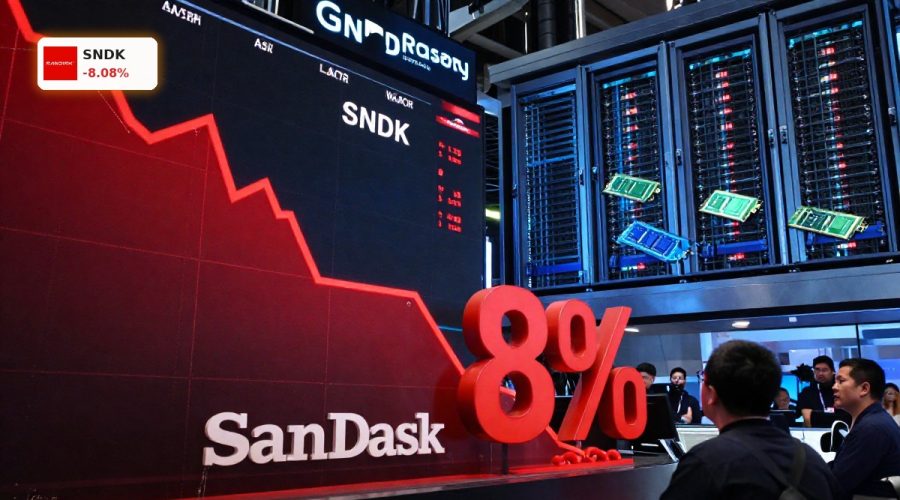
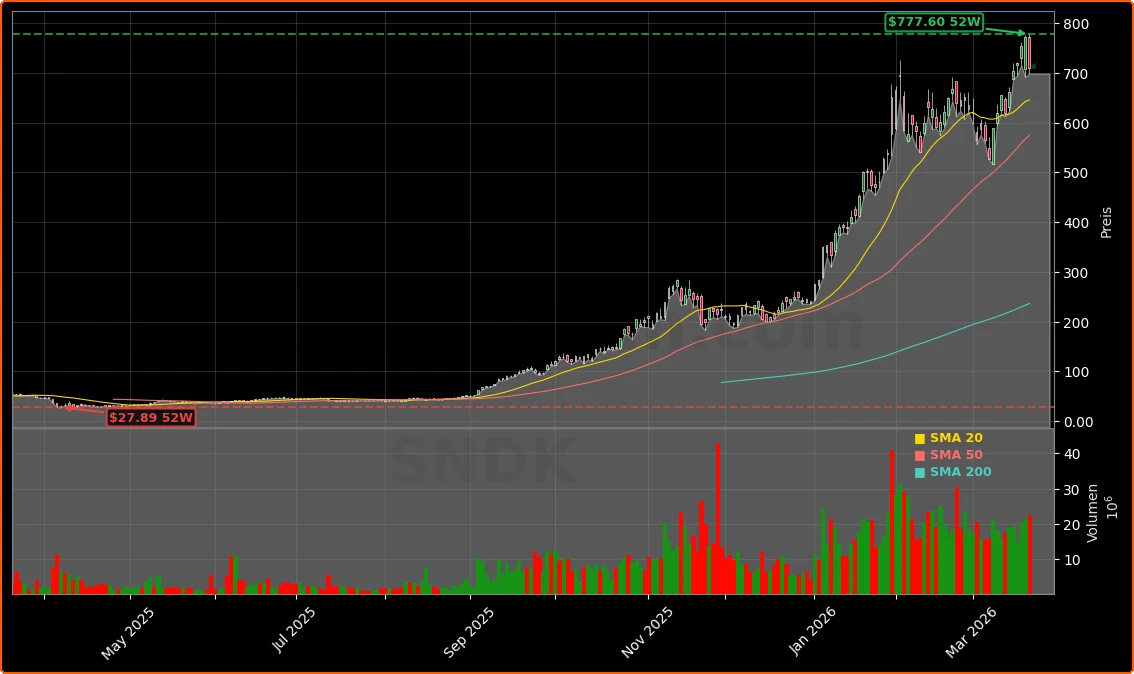
Yet despite these strong fundamentals, the stock has pulled back sharply from recent highs. SNDK is still up about 208% year to date and roughly 1,200% over the past 12 months, putting it among the most explosive performers on the NASDAQ and well ahead of even AI bellwethers like NVIDIA. After such a surge, Friday’s 8% slide looks more like positioning and profit‑taking than a fundamental reset, but it underscores how tightly the share price is now tethered to each incremental data point.
Wall Street’s reaction is split. On one side are bullish growth investors who see SanDisk earnings momentum as confirmation that the company has become a core AI‑infrastructure play, similar to how NVIDIA dominates GPUs and Apple defines premium consumer hardware. On the other are skeptics who argue that a stock already trading above the average analyst target leaves little room for execution missteps or a normalization of memory pricing.
Is Micron Undercutting the SanDisk (Western Digital) Story?
The immediate catalyst for the pullback is not the SanDisk earnings report itself but commentary from Micron Technology about aggressive capital expenditure plans. Micron’s latest results and guidance pointed to stepped‑up investment in new capacity, with long lead times that could eventually push more supply into the NAND market. Even if that extra supply does not hit in force until late 2026 or beyond, the prospect alone is enough to pressure sentiment across memory stocks in the near term.
For SanDisk bulls, the fear is clear: a multi‑year AI shortage narrative could morph into a familiar semiconductor cycle where exuberant demand attracts too much supply. That risk is especially sensitive now because SanDisk’s valuation has already moved ahead of consensus. Recent commentary from 24/7 Wall Street highlighted that the stock trades above the average analyst price target of roughly $761, even though top‑down calls like KGI Securities’ bullish $992 objective still frame significant upside if growth targets are hit.
Despite these concerns, the structural AI story remains intact. Datacenter and enterprise SSD revenue grew about 76% year over year in the latest quarter, reflecting accelerating deployments by hyperscalers and cloud providers building out AI clusters. That puts SanDisk squarely in the slipstream of mega‑cap capex from platforms like Amazon and Tesla’s AI‑driven data initiatives, which rely heavily on high‑performance storage systems to keep GPUs fed with data.
What Do SanDisk Earnings Signal for AI Portfolios?
The forward guidance embedded in recent SanDisk earnings is where the bull‑bear debate becomes most intense. Management is targeting next‑quarter revenue of $4.4 billion to $4.8 billion with non‑GAAP EPS of $12 to $14, implying a powerful sequential ramp if demand and pricing hold. Some analysts argue that, on those numbers, today’s valuation looks more reasonable: Seeking Alpha’s coverage has pointed out that consensus 2027 EPS around $86 would leave SNDK trading at a mid‑single‑digit forward earnings multiple in the $750–$850 price range, unusually low for a company riding one of the strongest secular trends in technology.
Others remain cautious. The Motley Fool recently noted that even as major firms raise their targets, the stock’s 1,200% 12‑month gain means the consensus still views it as stretched, and that “earnings delivery or price correction” will eventually close the gap. FXEmpire underscored how institutional “big money” flows helped propel SNDK nearly 1,200% higher in a year, a reminder that momentum‑driven inflows can amplify both upside and downside once sentiment shifts.
For diversified U.S. portfolios, the takeaway is nuanced. Investors already overweight AI infrastructure through positions in NVIDIA, Advanced Micro Devices, and storage peers like Seagate and Western Digital may see SanDisk as a high‑beta extension of that theme. Those with limited AI exposure might view the recent drop toward the low‑$700s as an entry point—but only with the understanding that future SanDisk earnings must keep beating a bar that is now set extremely high.
Related Coverage
Investors looking for more background on how AI has supercharged SanDisk Earnings can revisit the Q2 beat and rally described in SanDisk AI Infrastructure +7.4% Boom on Q2 Earnings Beat, which walks through how datacenter demand reshaped the company’s growth profile. For a broader take on AI spending and its ripple effects on chip and storage names, the piece Amazon AI Strategy $200B Boom: Can Profits Keep Up? analyzes Amazon’s massive capex plans and helps contextualize why hyperscaler budgets matter so much for memory suppliers.
This quarter’s performance underscores our agility in capitalizing on better product mix, accelerating enterprise SSD deployments, and strengthening market demand dynamics, all at a time when the critical role that our products play in powering AI and the world’s technology is being recognized.— David Goeckeler, CEO of SanDisk (Western Digital)
In the end, SanDisk Earnings underscore both the power and the peril of being at the center of the AI buildout. The company is posting exceptional growth and expanding margins, but its stock price already reflects a belief that this pace can continue for several years. For investors on Wall Street, the next few quarters will be decisive: consistent beats could validate the premium and cement SanDisk as a core AI holding, while any stumble on guidance or a shift in memory pricing could quickly turn today’s volatility into a deeper reset.