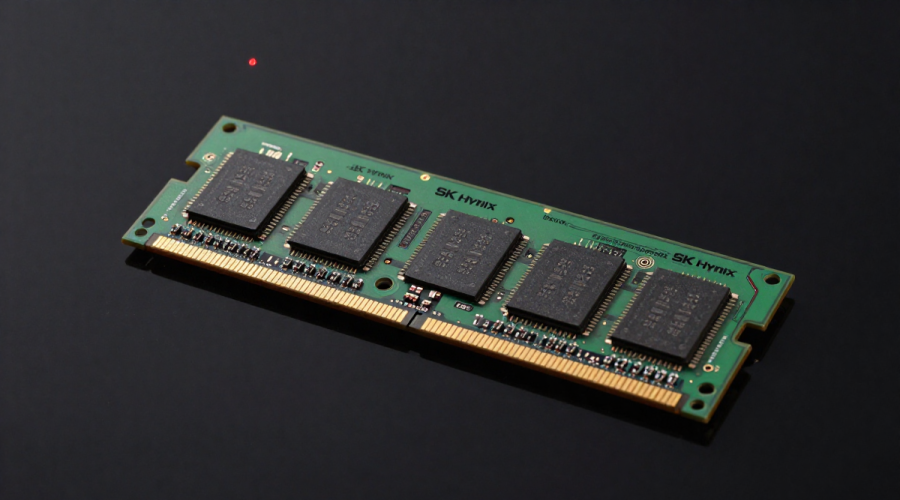
Is the SK Hynix Crash a temporary KOSPI panic or the start of a deeper reset for the global AI memory trade?
SK Hynix Inc. and the KOSPI Meltdown: What Just Happened?
South Korean equities have just experienced their largest one‑day crash on record, with the KOSPI plunging about 12% in a single session and nearly 20% over two days. That move triggered circuit breakers after an 8% intraday decline and marks the sharpest two‑day fall since the global financial crisis in 2008. At the center of this shock are Samsung Electronics and SK Hynix Inc., which had been among the biggest winners of the global AI trade and now rank at the top of the losers’ list.
The SK Hynix Crash is being driven by several overlapping forces. First, there is brutal profit‑taking after a powerful rally fueled by demand for AI‑related chips and HBM products. Second, a surge in geopolitical risk stemming from the conflict involving the U.S., Israel and Iran has pushed up oil prices and raised questions about the security of shipping lanes around the Strait of Hormuz. Third, that shock comes on top of the fact that Korea is one of the world’s largest crude oil importers, making its energy‑intensive semiconductor industry especially vulnerable to rising input costs.
For U.S. investors looking at their NASDAQ and S&P 500 exposure, this is not a local story. Korea is effectively the global hub for DRAM and high‑bandwidth memory used in data centers and AI infrastructure. When the KOSPI crashes and SK Hynix shares fall more than 10% in a session alongside double‑digit drops in Samsung, it sends a shockwave through the entire semiconductor value chain, from hyperscale cloud providers in the U.S. to GPU makers like NVIDIA.
SK Hynix Inc.: From AI Darling to Margin‑Call Victim?
SK Hynix entered this selloff after months of outsized gains. As AI spending on data centers and accelerators accelerated, the company’s HBM portfolio became one of the critical choke points for the entire ecosystem. Together with Samsung, SK Hynix controls roughly two thirds of the global DRAM market and around 80% of revenue from high‑bandwidth memory, the specialized chips that sit next to GPUs in advanced AI servers.
That dominance meant that as Wall Street bid up NVIDIA, AMD and other AI names, global funds also piled into Korean memory suppliers. The SK Hynix Crash is therefore partly a mechanical reaction to excessive positioning: when highly leveraged investors are forced to meet margin calls during a broad risk‑off move, they often dump their top winners first. Reports out of Seoul highlight “massive selling and margin calls” in SK Hynix and Samsung after their earlier AI‑driven rallies.
However, the demand backdrop for AI memory has not evaporated. Market observers note that the underlying need for chips used in data centers and AI infrastructure remains intact, even as equity markets react violently to geopolitics and energy prices. For investors in the U.S., this raises a crucial question: is this simply a market‑structure event and a valuation reset, or the beginning of a deeper earnings downgrade cycle for SK Hynix and its peers?
At this stage, most of the stress appears to be in financial markets rather than in the company’s order book. The real tension for SK Hynix lies in the cost and reliability of energy and materials, not in a sudden collapse of AI‑related demand. That nuance is central to interpreting the SK Hynix Crash correctly from a portfolio perspective.
How the SK Hynix Crash Intersects With the Middle East Conflict
The latest leg of the SK Hynix Crash cannot be separated from the escalation in the Middle East. The conflict involving the U.S., Israel and Iran has pushed crude prices sharply higher and rekindled fears about disruptions around the Strait of Hormuz, one of the world’s most critical oil shipping lanes. South Korea, as roughly the eighth‑largest oil consumer globally, is acutely exposed to this risk.
Semiconductor fabrication is extremely energy‑intensive. Running fabs, maintaining ultra‑clean rooms and operating advanced process equipment all require large, stable electricity supplies. Higher oil prices can work through to higher electricity rates and logistics costs, especially in an import‑dependent economy like Korea. Additionally, any disruption to maritime shipping could complicate the flow of raw materials and finished goods.
For SK Hynix, that means potential margin pressure from both higher operating costs and higher transportation expenses, just as it is scaling up its HBM output to keep pace with global AI build‑outs. The market is now questioning whether Korea will be able to secure energy at reasonable prices to sustain capacity expansions that underpin global data center strategies. This concern is amplified by commentary that if the Strait of Hormuz becomes a long‑term bottleneck, Korea will have a structural problem in supporting its role as the world’s memory foundry.
From the perspective of a U.S. investor, the risk is not only to SK Hynix’s equity price. A prolonged energy or logistics disruption could slow the availability of HBM units used in NVIDIA‑based AI systems and high‑growth cloud regions. That could, in turn, temper the earnings trajectories of several U.S.-listed names that depend on aggressive data center investment, spreading the impact of the SK Hynix Crash far beyond Seoul.
SK Hynix Inc. vs. Global Peers: Where Does the Risk Premium Sit Now?
To frame the SK Hynix Crash within a broader semiconductor context, it is useful to compare it with other major chip names. Asian chip stocks have been “pulverized” in the latest selloff. Alongside SK Hynix’s double‑digit drop, Samsung has fallen around 10% and Taiwan Semiconductor Manufacturing Company has dropped roughly 4%. This contrasts with relatively more muted declines among U.S. chip designers, although their share prices have also been under pressure as investors reassess how far the AI cycle can run without disruption.
From a structural standpoint, SK Hynix differs significantly from TSMC and U.S. fabless companies. Its business is leveraged primarily to memory – DRAM and NAND – with a unique strategic exposure to HBM. That position gives it enormous upside when AI and data center capex are accelerating, but also makes its cash flows more cyclical than those of diversified logic foundries or broad‑based analog players.
On valuation, SK Hynix had re‑rated substantially on the back of the AI narrative, narrowing the discount it typically trades at relative to U.S. chip peers. The latest correction partially rebuilds that discount, reflecting both Korea‑specific risks (energy, geopolitics, currency) and the inherently higher volatility of memory pricing cycles. By contrast, U.S. peers that design GPUs or CPUs do not face the same direct energy‑cost transmission, even though they are indirectly exposed via their supply chains.
For international investors, the key decision is whether the current discount compensates adequately for the Korean macro overhang. If one believes that the Middle East shock is a temporary event and that governments can stabilize energy supplies, then SK Hynix’s dominant role in HBM could justify maintaining or even increasing exposure on weakness. If, however, one expects a prolonged conflict and structural changes in shipping routes, the risk premium attached to Korean memory makers may need to stay elevated for longer.
SK Hynix Crash: Implications for AI Data Centers and HBM Supply
One of the most important angles of the SK Hynix Crash for Wall Street is its potential impact on AI infrastructure spending. Korea is effectively “the country that makes memory” for the world. Samsung and SK Hynix together control roughly two thirds of global DRAM and about 80% of the market for high‑bandwidth memory products, which are core components for advanced AI training and inference systems.
Every large‑scale AI data center built by U.S. hyperscalers – firms like Alphabet, Microsoft and Amazon – relies on a steady flow of HBM devices that sit beside GPUs such as NVIDIA’s H100 and next‑generation accelerators. If Korea’s energy costs spike or if shipping is disrupted, the supply of these memory modules could become a bottleneck for new deployments. Investors already worried about whether AI spending can maintain its blistering pace now have to factor in a potential supply chain constraint on top of ordinary budget and demand risks.
This is why market commentary emphasizes that the SK Hynix Crash is about more than a stock chart. It forces a reassessment of the feasibility and timing of global AI build‑outs. If SK Hynix and Samsung must slow the ramp of HBM capacity because energy becomes too expensive or volatile, then projects at U.S. data center operators could slip. That would feed back into revenue expectations for chips, networking gear and even software vendors whose products depend on accelerated computing clusters.
At the same time, some analysts point out that the fundamental demand for AI infrastructure is not going away. In fact, a temporary supply constraint could support memory pricing if DRAM and HBM availability tightens. The net earnings impact for SK Hynix would then depend on whether higher selling prices can offset higher input costs. For U.S. investors, the most direct implication is that volatility in SK Hynix shares may translate into more erratic earnings trajectories for the broader AI hardware complex.
How Are Analysts Positioning Around SK Hynix Inc. Now?
Global investment banks have been closely tracking SK Hynix’s AI‑driven upswing, and many had turned increasingly constructive on the stock before the recent rout. Firms like Citigroup, Morgan Stanley and Goldman Sachs have highlighted the company’s leadership in HBM and its leverage to the AI server cycle. Citigroup, for example, has previously lifted price targets on SK Hynix in response to stronger‑than‑expected HBM demand and improving DRAM pricing trends. RBC Capital Markets has similarly framed SK Hynix as a key beneficiary of structural AI data center growth, while still emphasizing the inherent cyclicality of the memory market.
The violent nature of the SK Hynix Crash is likely to trigger a round of recalibration rather than a wholesale abandonment of the long‑term thesis. Analysts will need to adjust their models for higher energy costs, potential logistics delays and higher equity risk premia for Korea as a whole. That may translate into slightly lower earnings estimates and somewhat higher discount rates, tempering previous target prices even if ratings such as “Outperform” or “Overweight” are maintained.
For investors reading Wall Street research, the key is to distinguish between near‑term valuation volatility and structural changes in the business model. So far, research commentary suggests that the AI memory story remains intact, but with fatter geopolitical tail risks than a few months ago. Where houses like Citigroup and RBC Capital Markets ultimately settle on target prices over the next few weeks will offer a useful signal for how much of the SK Hynix Crash they view as an opportunity versus a warning.
What the SK Hynix Crash Means for U.S. Portfolios
For American investors, exposure to SK Hynix comes through multiple channels: direct holdings of Korean equities, allocations to emerging‑markets and Asia funds, and indirect exposure via U.S. companies whose supply chains depend on Korean memory. The SK Hynix Crash therefore matters even if one does not own the stock outright.
On the direct side, EM and Asia‑ex‑Japan equity funds that overweight Korea and its tech sector are likely to show outsized drawdowns relative to broad global benchmarks. Portfolio managers who bought SK Hynix as a pure‑play levered bet on AI memory now face a difficult decision: cut exposure to manage risk or ride out the volatility in hopes that fundamental demand and energy supplies stabilize.
Conclusion
Indirectly, investors should pay close attention to commentary from U.S. data center operators and chipmakers over the coming earnings cycles. Any indication that HBM supply is tightening, that memory costs are rising faster than expected, or that data center capex is being deferred due to component availability would confirm that the aftershocks of the SK Hynix Crash are spreading into core S&P 500 and NASDAQ names. That, in turn, might require a more defensive stance in AI‑heavy portfolios.
Further Reading
- KOSPI logs biggest daily drop in history as semiconductor stocks plunge (Reuters)
- Global memory market share and HBM leadership of Samsung and SK Hynix (Bloomberg)
- Citigroup and RBC Capital Markets research on AI memory demand and SK Hynix (Citigroup)
- SK Hynix Inc. bei Yahoo Finance (Yahoo Finance)