Is the Super Micro Computer Export scandal a temporary shock or the start of a deeper reckoning for AI hardware investors?

How did markets react to Super Micro Computer?
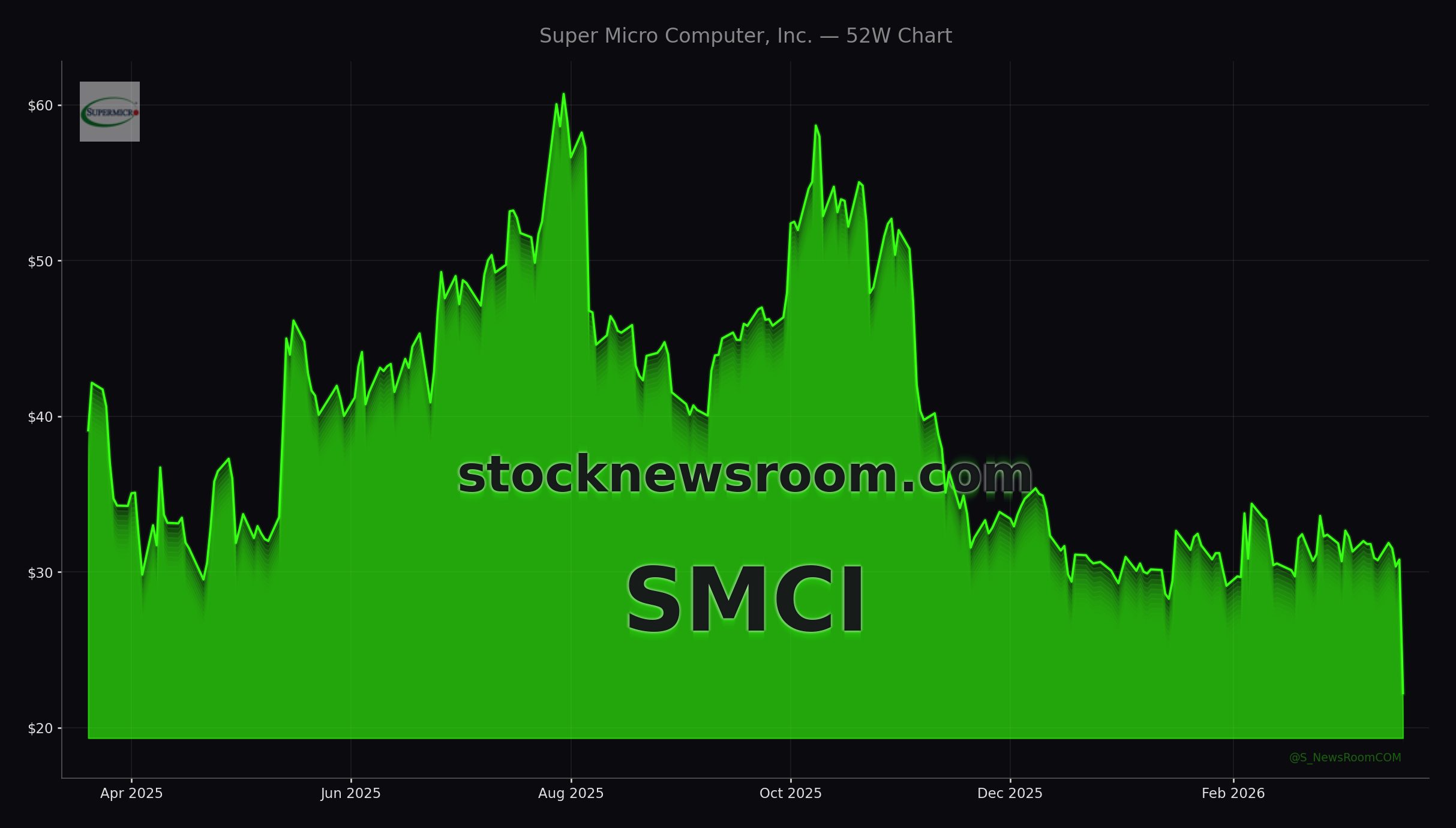
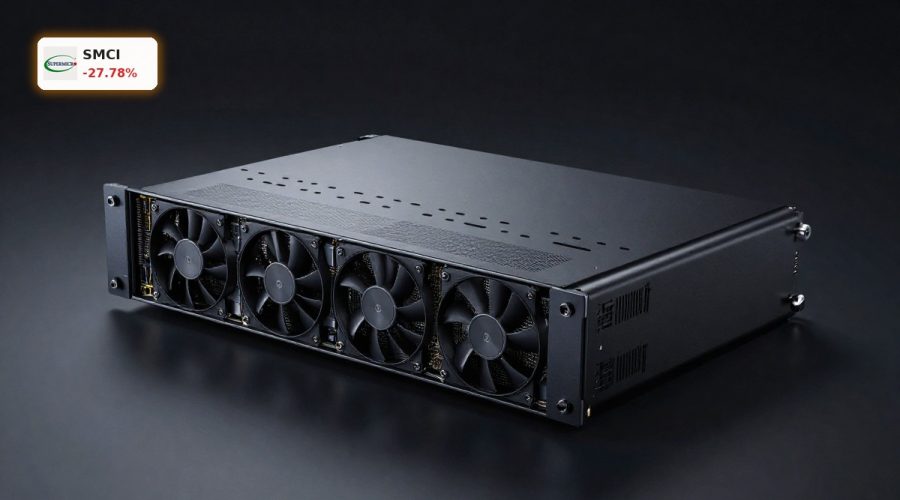
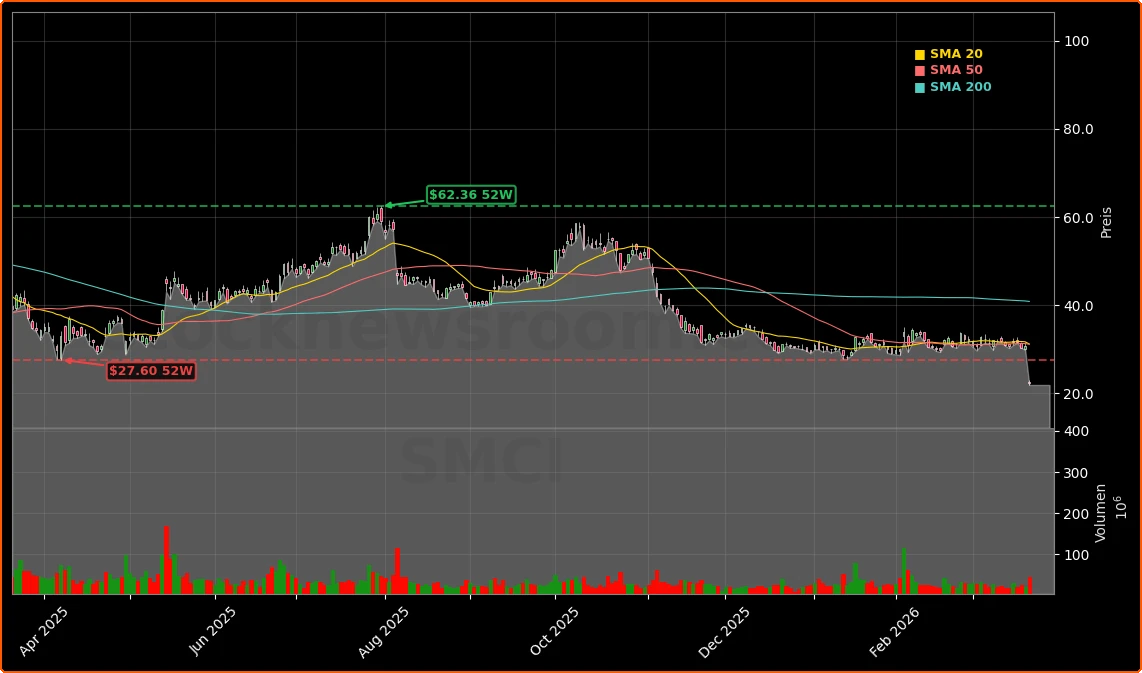
Super Micro Computer (SMCI) shares are in free fall after the indictment was unsealed. Around midday Friday, the stock traded near $22.24, down roughly 27.78% from the prior close of $27.17, making it one of the steepest decliners on the NASDAQ and a major drag on AI‑hardware sentiment. Pre‑market losses had at times exceeded 25%, and intraday volatility remained elevated as traders digested the details of the case.
The selloff comes against a backdrop of already heightened scrutiny on AI‑related names. Futures on the S&P 500 and NASDAQ Composite were modestly lower in early New York trading, but the move in SMCI was outsized, wiping billions off its market capitalization and narrowing its gap to rivals such as Dell and Hewlett Packard Enterprise. Some investors rotated into perceived beneficiaries, with Dell shares edging higher on hopes it could capture incremental AI server demand as customers reassess vendor risk.
For many U.S. portfolios that had treated Super Micro Computer as a high‑beta AI infrastructure play alongside NVIDIA and other chip beneficiaries, the Super Micro Computer Export scandal is forcing an abrupt re‑rating of governance and regulatory exposure, not just near‑term earnings power.
What are prosecutors alleging against Super Micro insiders?
Federal prosecutors in New York charged Wally Liaw, sales executive Ruei‑Tsang “Steven” Chang, and contractor Ting‑Wei “Willy” Sun with conspiring to violate U.S. export‑control laws. The indictment alleges the trio helped sell roughly $2.5 billion worth of servers containing sensitive, controlled GPUs to buyers in China in 2024 and 2025, including about $510 million of shipments in just April and May 2025.
The complaint describes a complex routing network in which U.S.-assembled servers were first shipped to facilities in Taiwan and several Southeast Asian countries. There, the machines were allegedly stripped of markings, repackaged in neutral boxes and then forwarded to Chinese customers, bypassing tightened U.S. restrictions on advanced AI chips introduced from 2022 onward.
To defeat internal and external compliance checks, the defendants allegedly created fake paperwork, used a pass‑through company to mask end customers, and staged elaborate decoy inspections. Investigators say non‑functional “dummy” servers were lined up for audits while the real hardware was already on its way to China. Surveillance footage cited by authorities reportedly shows workers using hair dryers to remove labels and serial numbers from genuine systems and affix them to the dummy units.
Liaw and Sun have been arrested and are expected to appear before a judge in the Northern District of California. Chang, a Taiwanese citizen based outside the United States, is described as a fugitive.
Where does this leave Super Micro Computer?
Super Micro Computer emphasized that it has not been named as a defendant in the case. The company said the alleged conduct stands “in contravention” of its policies and export‑compliance controls, and that it is fully cooperating with federal investigators. It has placed the co‑founder and at least one employee on leave and ended its relationship with an implicated contractor.
Even without corporate charges, the Super Micro Computer Export scandal is reigniting long‑standing governance concerns. In 2020, the company paid $17.5 million to settle SEC allegations of accounting fraud without admitting or denying wrongdoing, and its CEO was forced to return stock profits under Sarbanes‑Oxley clawback rules. In 2024, short‑seller research again spotlighted aggressive accounting and related‑party issues, prompting an internal review. Management later said an independent committee found no evidence of fraud by the current leadership team, but skepticism never fully disappeared on Wall Street.
The new indictment zeroes in on AI server exports, a core growth driver for Super Micro and a space dominated by partnerships with chip makers such as NVIDIA, Intel and AMD, as well as cloud hyperscalers like Apple and Google on the customer side. While neither the company nor its suppliers have been accused of wrongdoing in the complaint, the scandal underscores how fragile compliance chains can be when high‑value GPUs are involved.
What does the Super Micro Computer Export scandal mean for investors?
For U.S. investors, the Super Micro Computer Export scandal lands at a critical juncture. The AI server market is maturing, margins are under pressure, and competition from Dell and Hewlett Packard Enterprise is intensifying just as export‑control scrutiny ramps up. Super Micro has also faced questions about its balance sheet quality and limited ability to provide vendor financing compared with larger rivals, a key factor when customers are buying multimillion‑dollar AI clusters.
Some analysts have already shifted to a more cautious stance, flagging Super Micro as effectively “uninvestable” in the near term given recurring controversies, execution risk and now potential for extended regulatory overhang. Others argue that the lack of direct corporate charges and the company’s cooperation leave room for a gradual reputational rebuild, especially if internal controls are demonstrably tightened and major partners like Tesla and NVIDIA continue to rely on its systems.
Ultimately, the scandal highlights a broader portfolio risk: exposure to U.S.‑China tech friction and export‑control enforcement. Investors who rode the SMCI rally as part of a leveraged bet on AI infrastructure must now decide whether the prospective upside justifies the added headline, legal and compliance volatility.
These defendants allegedly fabricated documents, staged bogus equipment to pass audit inventories, and used a pass-through company to conceal their misconduct and true clientele list.— James Barnacle Jr., FBI assistant director in charge of the New York Field Office
In that sense, the Super Micro Computer Export scandal is more than a one‑off legal drama; it is a test case for how far Washington will go to police AI supply chains, and a reminder that governance and compliance can matter as much as growth rates for long‑term returns.