Can Super Micro recover investor trust after a 33% stock plunge and a sweeping U.S. export-indictment shock?

How did Super Micro’s stock react?
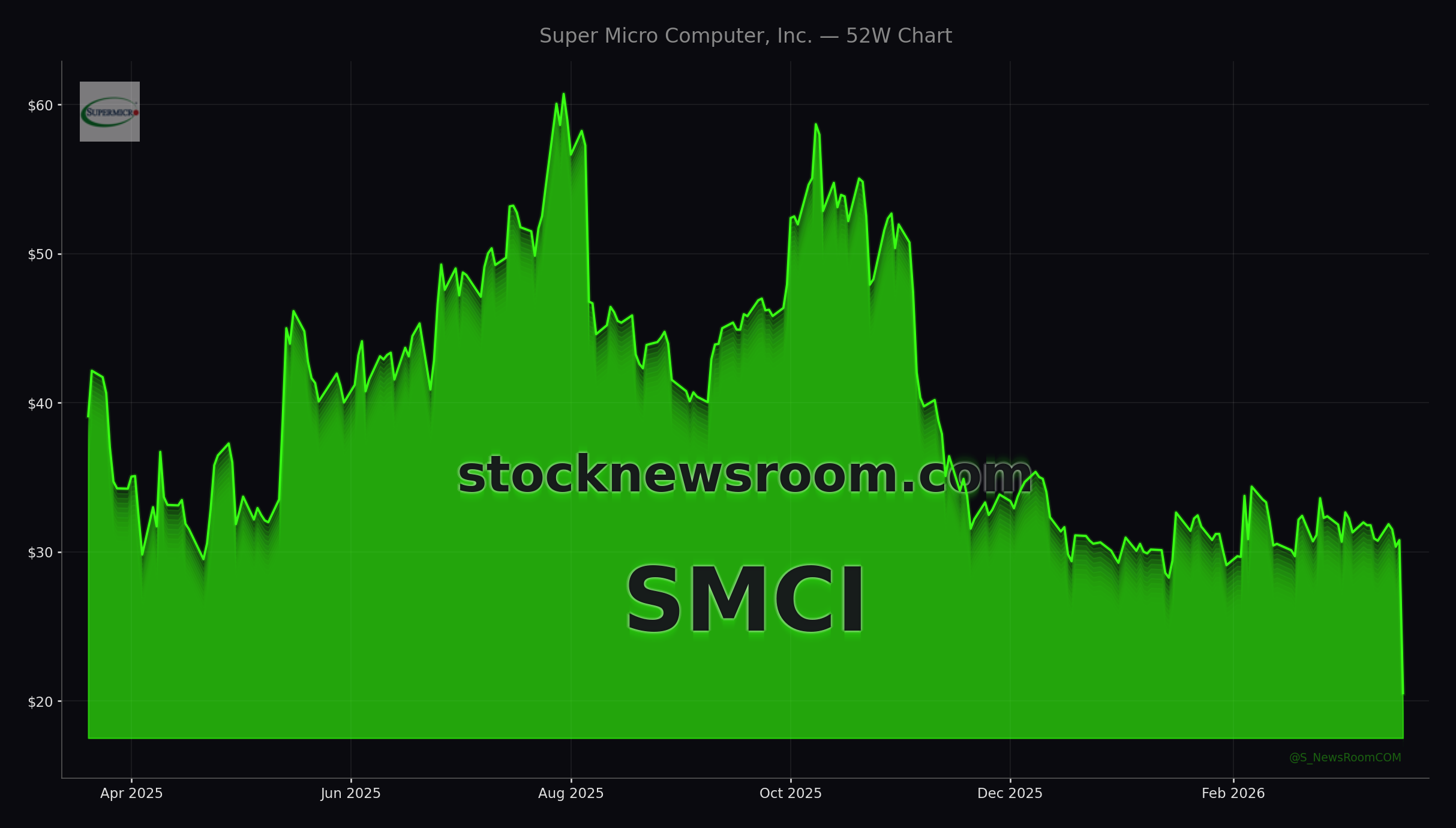
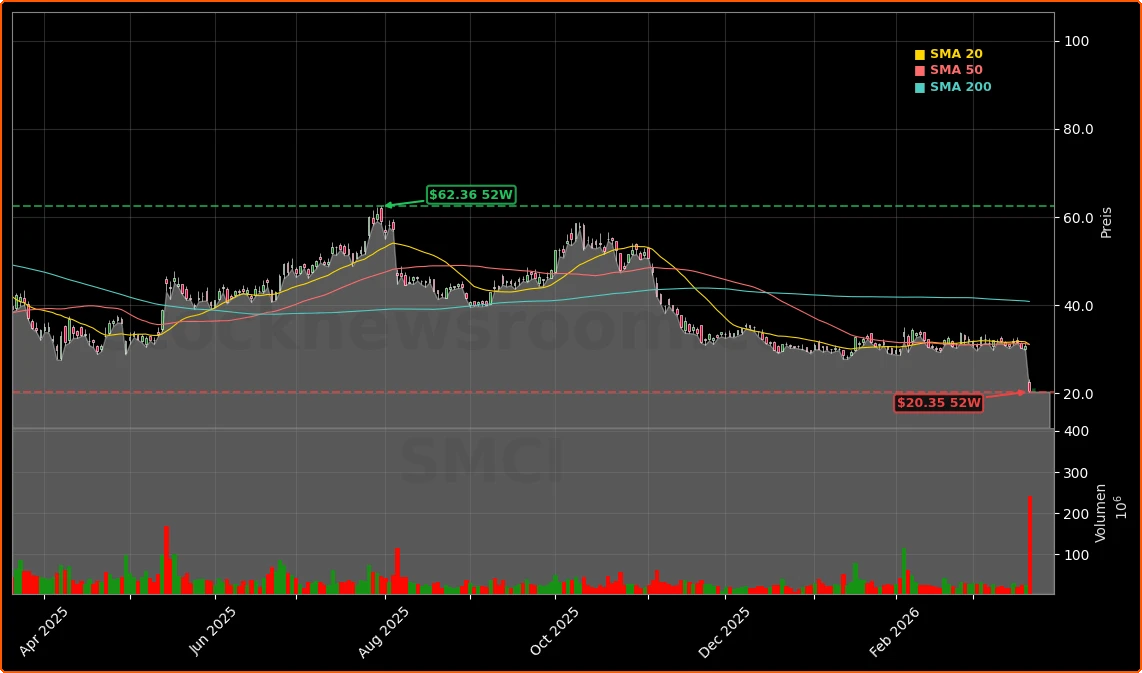
Super Micro Computer shares suffered their steepest one-day drop in months, plunging 33.3% in regular trading to close at $20.53, down sharply from the prior close of $27.17. The stock is now more than 80% below its 52-week high, erasing most of the gains from the 2024 AI server boom and leaving the company as one of the worst performers in the S&P 500 so far this year. In after-hours trading, SMCI recovered slightly to $20.99, up 2.24%, as bargain hunters tested the waters.
The selloff came as the NYSE Arca Computer Hardware Index dropped about 6%, reversing from a recent record close. Super Micro led the sector lower, dragging sentiment across the broader AI hardware space and hitting shares of suppliers and partners such as NVIDIA and AMD, which also traded under pressure amid fears of tighter enforcement of export rules.
For U.S. investors who had viewed SMCI as a high-beta way to play the AI data center buildout, the Super Micro Computer Export Scandal abruptly shifted the narrative from growth to survival: questions now focus less on earnings multiples and more on legal liabilities, customer trust and regulatory access to cutting-edge chips.
What are prosecutors alleging?
The Department of Justice unsealed charges against three individuals tied to Super Micro: co-founder and board member Yih-Shyan “Wally” Liaw, Taiwan-based sales manager Ruei-Tsang “Steven” Chang and contractor Ting-Wei “Willy” Sun. Prosecutors allege the trio conspired to move roughly $2.5 billion worth of U.S-made servers containing restricted Nvidia AI chips into China between 2024 and 2025, circumventing export controls that bar the sale of the most advanced GPUs to Chinese customers.
According to the indictment, the group routed shipments through a Southeast Asian intermediary, used forged documents and staged thousands of so-called “dummy” servers — non-functional replicas — for inspection, while real AI systems were allegedly forwarded illegally to China. Some accounts describe servers being repacked in unmarked boxes and even label-swapping with hair dryers to avoid detection.
Super Micro has emphasized that the company itself has not been named as a defendant and said it is fully cooperating with U.S. authorities. Liaw and Chang have been placed on administrative leave, and the relationship with Sun has been terminated. Nonetheless, the Super Micro Computer Export Scandal raises the possibility of broader probes into the firm’s compliance culture and internal controls, including how such a large volume of restricted technology could allegedly be diverted without earlier intervention.
How is Super Micro reshaping its governance?
In a late-Friday update, Super Micro announced that Wally Liaw has resigned from the board, effective immediately. Liaw, who co-founded the company in 1993 and served as senior vice president of business development, had previously left in 2018 amid an accounting scandal that led to restatements of prior financials and a $17.5 million SEC settlement before later rejoining in 2023.
The board now consists of eight directors, with committee structures unchanged. To address compliance concerns, Super Micro appointed DeAnna Luna, a former Intel executive and vice president of global trade and sanctions compliance, as acting chief compliance officer. Her elevation signals an effort to tighten export-control oversight at a moment when regulators are intensely focused on AI hardware flows to China.
Despite these steps, governance critics argue that rehiring Liaw after earlier accounting issues and then seeing his name at the center of the current case highlights deep-seated risk. Legal firms including Robbins Geller Rudman & Dowd and The Law Offices of Frank R. Cruz have already announced investigations into whether management misled investors about export compliance and internal controls, adding a new layer of potential securities-fraud exposure.
What does this mean for AI partners and rivals?
Super Micro is a key assembler of AI servers built around Nvidia GPUs, estimated to account for roughly 9% of Nvidia’s revenue. The indictment fuels speculation about whether Nvidia could reduce its direct exposure to Super Micro or tighten contractual safeguards, even though Nvidia itself is not implicated in the alleged scheme. Any disruption here would have significant consequences for SMCI’s ability to win future AI data center deals versus giants such as Apple’s cloud partners, Dell and traditional OEMs.
At the same time, the scandal is echoing across the AI supply chain. Hardware peers and AI-platform names — from Nvidia and AMD to high-performance customers such as Tesla — face renewed investor scrutiny around export-control compliance and concentration risk in specific integrators. For U.S. portfolios, the Super Micro Computer Export Scandal is a reminder that cutting-edge AI infrastructure is now deeply entangled with geopolitics and sanctions policy, not just chip roadmaps and demand curves.
Super Micro was already under a cloud following 2024 short-seller allegations about export violations and accounting irregularities, delayed SEC filings, an auditor resignation and a near-miss with Nasdaq delisting. While an independent review later found no substantial issues, the new indictment revives old fears and has even led some commentators and analysts to label the stock “uninvestable” until legal uncertainties clear.
For now, valuation metrics such as a seemingly low price-to-earnings ratio around the mid-teens may be misleading if investors face years of potential fines, customer churn and tighter oversight. The next catalysts will likely be further DOJ disclosures, any civil actions tied to shareholder lawsuits and signals from Nvidia and other key suppliers on whether they are willing to maintain deep commercial ties.
In that context, the Super Micro Computer Export Scandal has quickly evolved from a company-specific headline into a test case for how aggressively Washington will police AI hardware exports — and how much governance risk investors are willing to tolerate in pursuit of AI-driven growth.