Can Super Micro Computer’s AI server boom survive the export scandal shock and a brutal stock crash that shattered investor confidence?

How hard did Wall Street hit Super Micro Computer?
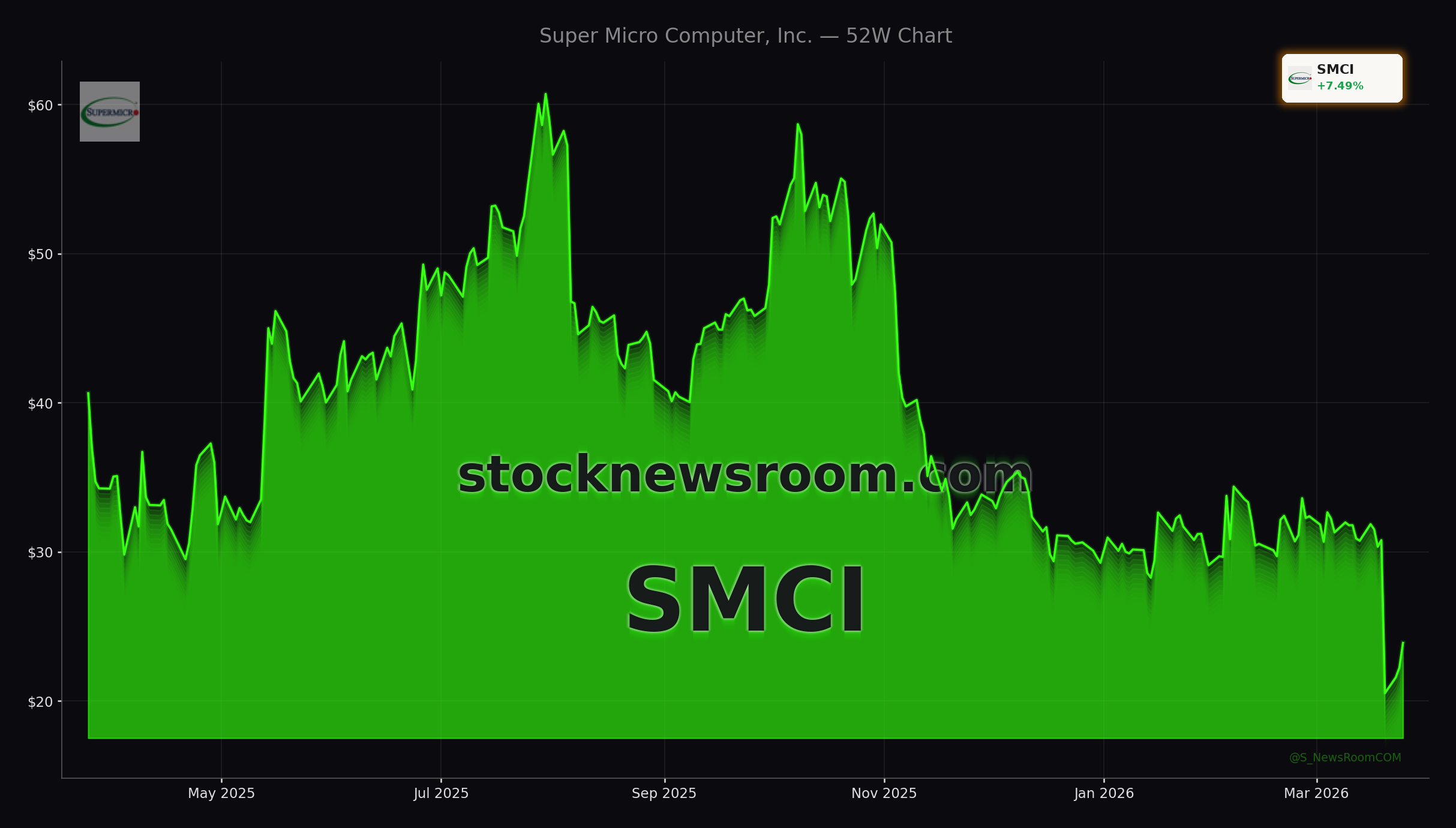
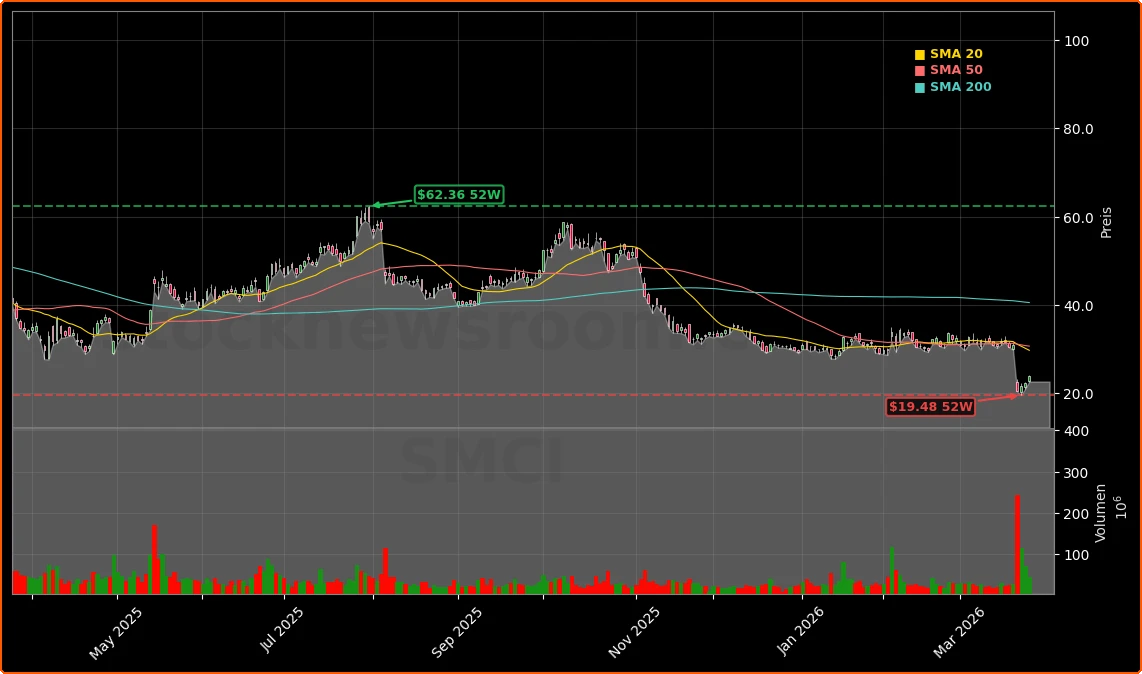
Super Micro Computer (SMCI) has swung from AI market darling to headline risk case study in a matter of days. After news of the Super Micro Computer Export Scandal broke on March 19, the stock crashed close to 30% in a week, falling to its lowest levels in over a year and briefly trading not far above its 52‑week low of $19.48. The panic selling was driven less by short‑term earnings worries and more by the fear that export‑control violations could destabilize the company’s entire AI server franchise.
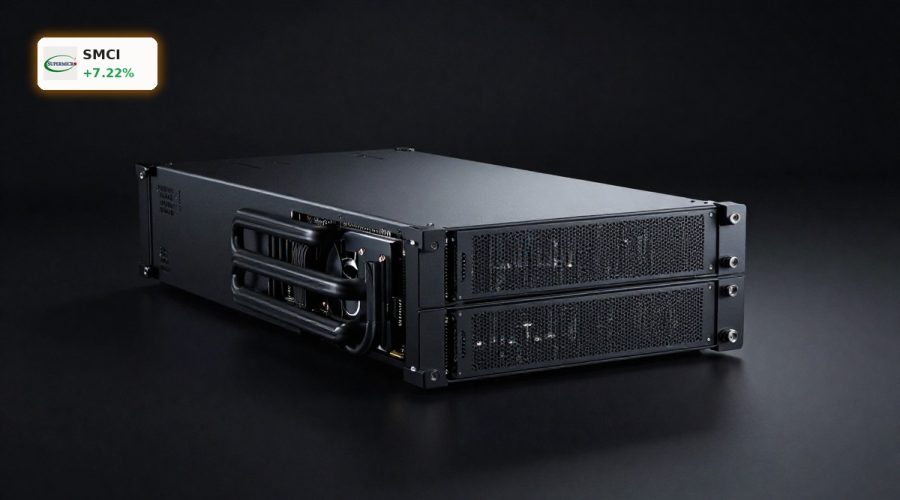
On Wednesday afternoon, however, traders stepped back in. SMCI recently changed hands around $23.84, up 7.22% on the day and modestly above Tuesday’s close of $22.47, as bargain hunters tested the waters following the collapse. Volatility remains intense: average volume near 35 million shares dwarfs the roughly 2.2 million shares that traded on Tuesday, underscoring how quickly sentiment can flip in a name so tightly tied to the AI narrative on the NASDAQ.
The rebound does little to erase the damage; from its 52‑week high of $62.36, SMCI is still down more than 60%. For investors who chased the AI rally, the central question now is whether this is the start of a durable base or just a reflexive bounce in the middle of a confidence crisis.
What exactly is the Super Micro Computer Export Scandal?
The Department of Justice unsealed an indictment charging Wally Liaw, a Super Micro Computer co‑founder and former board member, along with a general manager and contractor, with conspiring to evade U.S. export controls. Prosecutors allege the group used a Southeast Asian shell customer as a middleman to funnel advanced AI servers – equipped with NVIDIA GPUs restricted for export to China – into Chinese end markets.
According to the indictment, the scheme allegedly generated roughly $2.5 billion in sales since 2024. The accused parties are said to have used falsified paperwork that named the Southeast Asian entity as the end user, hired a separate logistics firm to repackage hardware for shipment into China, and even deployed “dummy” servers at the middleman’s site to deceive both Super Micro Computer’s own compliance team and a U.S. export‑control officer.
Crucially for shareholders, Super Micro Computer itself has not been criminally charged so far. Liaw resigned from the board after his arrest. Still, the Super Micro Computer Export Scandal has reignited doubts about the company’s internal controls, ethics culture and board oversight, especially given its past run‑ins with U.S. regulators over sanctions, alleged spy‑chip concerns, and a temporary NASDAQ delisting tied to accounting issues.
How exposed is Super Micro Computer’s AI server business?
Super Micro Computer is one of the key builders of high‑performance racks and liquid‑cooled AI servers that hyperscalers and enterprises buy to power large language models and other compute‑intensive workloads. Alongside Dell Technologies, Hewlett Packard Enterprise and contract manufacturers like Foxconn, the company has been a prime beneficiary of the AI hardware arms race. However, that boom has also contributed to sharply higher CPU and GPU prices, pushing server quotes up by 10% to 15% almost overnight for traditional on‑premises customers.
The Super Micro Computer Export Scandal intersects directly with this growth story. NVIDIA provides most of the high‑end GPUs inside Super Micro Computer’s AI platforms. If NVIDIA were to pause or reduce shipments to distance itself from legal risk, rival OEMs such as Hewlett Packard Enterprise and Dell could quickly grab share. SMCI already runs with thin gross margins – around 8% recently – and while revenue has more than doubled in some recent quarters, earnings grew at a far slower pace, highlighting limited cushion if volumes or pricing come under pressure.
On top of that, multiple securities law firms, including Kirby McInerney and Robbins Geller Rudman & Dowd, have launched investigations into potential misstatements and securities fraud tied to export controls and past accounting issues. That raises the specter of shareholder lawsuits and possible settlements, eating into cash that might otherwise be plowed back into AI server capacity and R&D.
How are analysts and peers reacting?
Wall Street’s stance is turning more cautious. Citigroup cut its price target for Super Micro Computer to $25, only marginally above where the stock trades today, signaling that upside looks capped until legal risk clears. Bank of America Securities has reiterated a “Sell” rating, contributing to an overall “Hold” consensus across research houses and reinforcing the view that investors should demand a steep risk discount.
Relative to other AI infrastructure plays, that discount is visible. A recent comparison highlighted that while Super Micro Computer offers direct leverage to AI server demand, more diversified manufacturers like TTM Technologies (TTMI) may offer a better risk‑reward balance because they are less exposed to a single export‑sensitive product category. At the same time, SMCI’s roughly one‑times‑sales valuation reflects growing skepticism that it can sustain its growth without repeated governance setbacks.
Meanwhile, leveraged trading around the name has exploded. A Defiance 2x short SMCI ETF recently topped weekly performance tables with gains above 60%, illustrating how aggressively some traders are betting against a quick recovery. For long‑only tech investors used to smoother stories in megacap names such as Apple or Tesla, SMCI’s profile is now closer to a speculative special situation than a core AI holding.
Related Coverage
For a deeper dive into the initial market reaction and technical backdrop, readers can review Super Micro Computer Scandal: +5.1% Rally After a 33% Crash, which analyzes whether the first rebound after the sell‑off signaled capitulation or simply a pause in selling pressure. That piece also explores how the earlier accounting concerns and auditor resignation set the stage for today’s fragile investor confidence.
The Super Micro Computer Export Scandal has transformed SMCI from an AI winner into a high‑beta test of how much legal, governance and supply‑chain risk investors are willing to tolerate for server growth. For now, analyst downgrades, class‑action investigations and thin margins suggest caution, even after the recent bounce. The next developments from the DOJ and key partners like NVIDIA will determine whether this is remembered as a temporary storm in the AI build‑out or a lasting blow to one of the sector’s most aggressive hardware suppliers.