Can the planned Tesla Compact SUV really rescue Tesla’s slowing EV growth while it still chases an AI and robotaxi future?

Is Tesla shifting back from robots to cars?
For the past two years, CEO Elon Musk has tried to recast Tesla as an AI and robotics champion, emphasizing the Cybercab robotaxi and Optimus humanoid robot over traditional models. That narrative helped support a premium valuation even as vehicle deliveries stagnated, but investors have grown less patient after back‑to‑back annual declines in passenger EV sales and a disappointing first quarter of 2026. The company delivered about 1.63 million cars in 2025, down 9% year over year, and Q1 2026 deliveries of 358,023 vehicles missed Wall Street’s 370,000 consensus despite growing 6% from a year ago.
Against that backdrop, plans for a new Tesla Compact SUV look like a pragmatic reset. Instead of an ultra‑futuristic two‑seat Cybercab with no steering wheel, the new SUV is reportedly being designed to operate both as a conventional vehicle and, where allowed, as an autonomous car. That dual‑use architecture would let Tesla pursue its robotaxi vision while still selling a product regulators and consumers are ready to accept today.
What exactly is the Tesla Compact SUV?
People familiar with the project describe the Tesla Compact SUV as a completely new nameplate rather than a stripped‑down Model Y variant. At roughly 4.28 meters in length, it would be about half a meter shorter and roughly 500 kilograms lighter than the Model Y, targeting a curb weight near 1.5 tons. The size moves Tesla into the true compact crossover segment — the same territory that mass‑market rivals from China and legacy automakers dominate.
Cost is the critical lever. To hit a sub‑$30,000 price point in key markets, the vehicle is expected to use a smaller battery pack and a single electric motor, sacrificing some range and performance for affordability. In China, the current base Model 3 starts around $34,000 equivalent, and in the U.S. closer to $37,000, leaving clear room for a cheaper product. The first production run is being scoped for Tesla’s highly efficient Shanghai plant, with potential expansion later to U.S. and European factories if demand justifies it. Any volume ramp, however, is unlikely before 2027, meaning investors will be trading on expectations rather than near‑term earnings.
How does this play into competition from China?
The core motivation for the Tesla Compact SUV is competitive pressure. Chinese manufacturers such as BYD have already overtaken Tesla in global EV unit sales, thanks to aggressively priced compact models. In Europe, BYD’s February EV sales growth of over 160% year on year contrasted with Tesla’s low‑double‑digit growth, underscoring how quickly market share can shift when value offerings scale.
A smaller, cheaper SUV could help Tesla defend its position in China and reclaim momentum in Europe, where political backlash against Musk and the end of some subsidies have hurt demand. Yet this move is a double‑edged sword for margins. The Detroit News highlighted that a lower‑cost EV strategy is likely to support volumes but further pressure profitability that is already under strain from past price cuts on the Model 3 and Y. With inventories creeping higher after Q1’s production‑delivery gap, Tesla may have little choice but to prioritize market share over near‑term margins.
What is Wall Street’s verdict on Tesla’s new direction?
Analysts are sharply divided. On the bearish end, GLJ Research reiterated a “Sell” rating this week with an extremely low $25.28 price target, arguing that Tesla’s share price had long been inflated by retail call‑option speculation that has now faded. JPMorgan, for its part, maintains an “Underweight” rating and a $145 target, implying about 60% downside from current levels as it warns about a “record surge in unsold vehicles” and cuts earnings forecasts after the Q1 delivery miss.
Others remain constructive. Cathie Wood’s ARK Invest again bought into weakness, adding Tesla shares across several ETFs, framing the stock as a long‑term play on AI, autonomous driving, and energy storage. Goldman Sachs has also argued more broadly that tech’s recent underperformance — including mega‑caps like NVIDIA, Apple, and Tesla — has reset valuations to multi‑decade lows relative to earnings growth, creating selective buying opportunities for investors willing to stomach volatility. The missing piece, for both bulls and bears, is clarity on how the Tesla Compact SUV will impact the company’s growth and margin profile once it actually hits showrooms.
How does this affect U.S. investors and the Magnificent Seven?
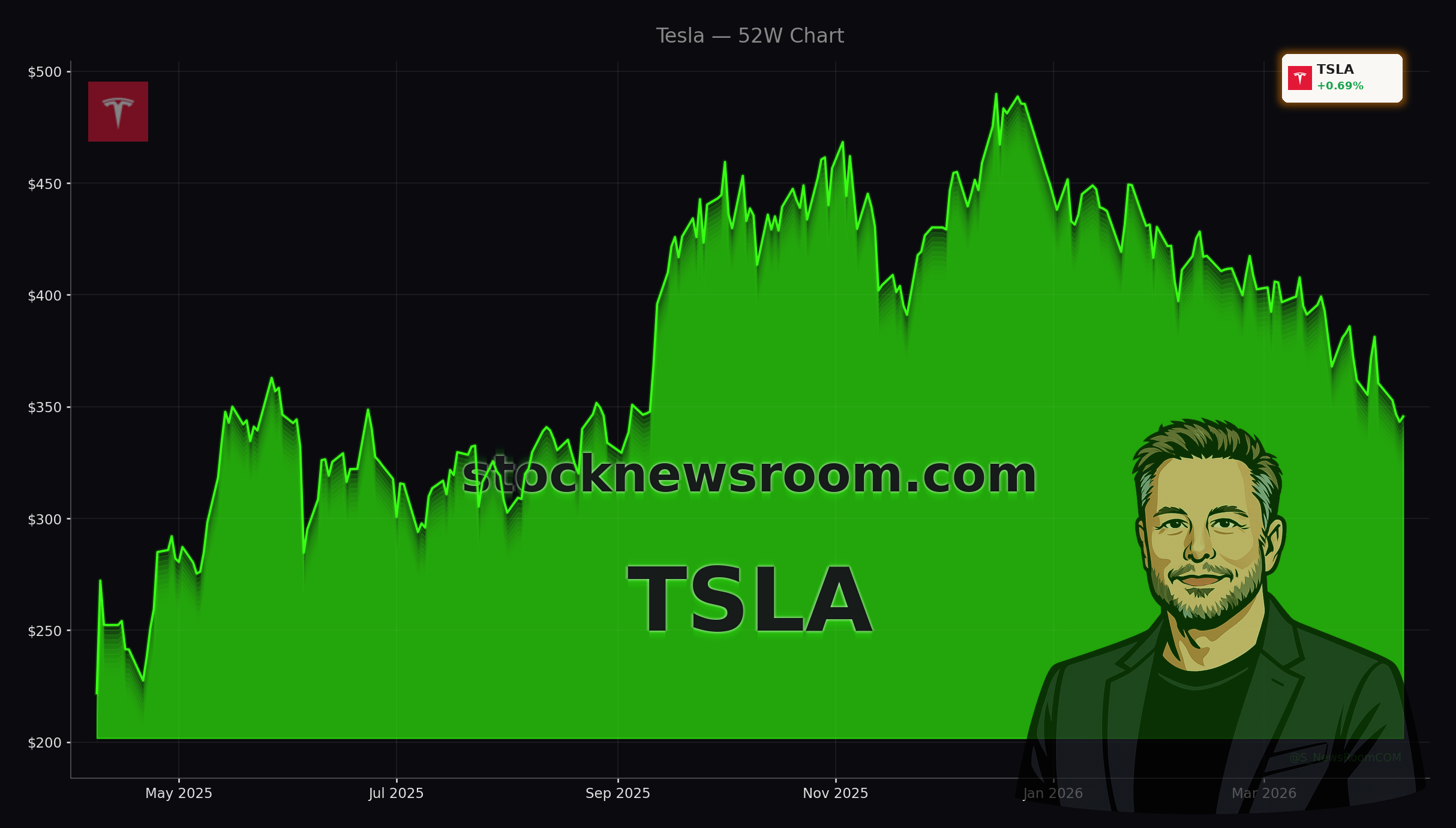
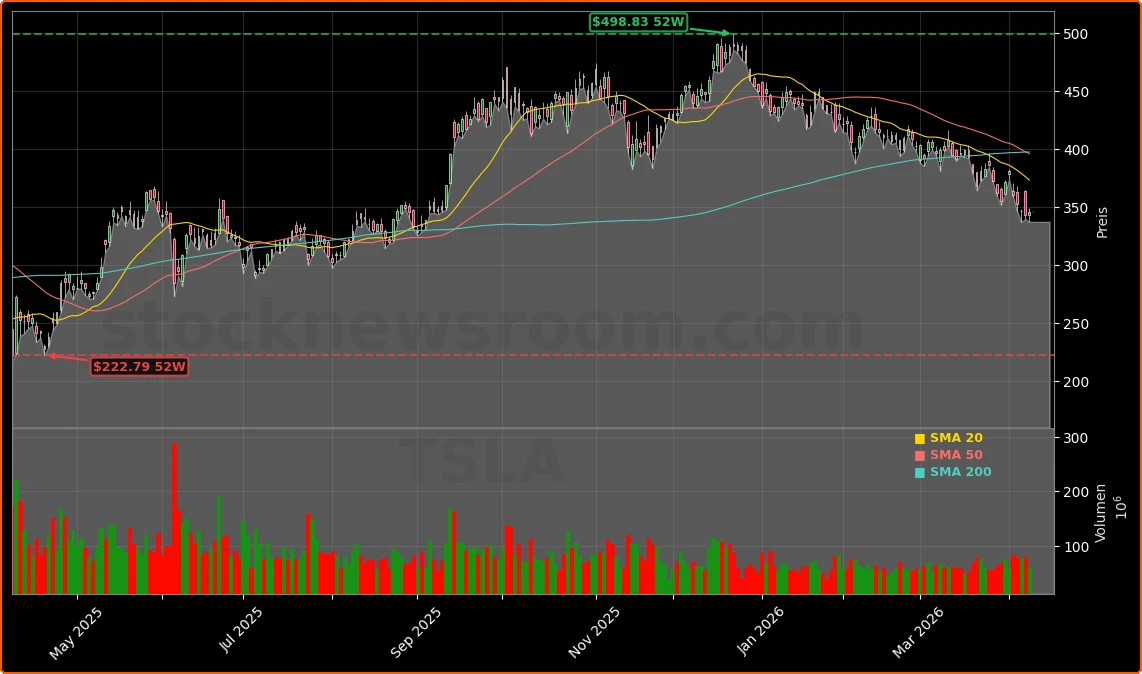
At $345.62, Tesla’s stock rose 0.69% on Thursday, modestly outperforming a positive day for the S&P 500 and Nasdaq but still lagging peers in the so‑called Magnificent Seven over the past month. In a recent mega‑cap heat map, Tesla was the only name that failed to participate in the latest rebound, with shares down more than 20% year to date.
For U.S. portfolios tilted toward high‑growth tech, the Tesla Compact SUV is more than a product rumor; it is a test of whether Tesla can re‑ignite its core auto business while pursuing ambitious bets like the Terafab AI‑chip project in Texas, which aims to challenge the dominance of companies like NVIDIA. If Tesla can pair a high‑volume compact SUV with progress in robotaxis, Optimus, and energy storage, it could justify staying in the same conversation as the most profitable mega‑caps. If not, the stock’s premium multiple — with a trailing P/E in the hundreds — will be harder to defend.
Related Coverage
For a deeper dive into how Musk’s semiconductor gambit fits into the broader story, readers can explore “Tesla Terafab -1.9% Shock: Can AI Chips Rescue TSLA?”, which examines whether the massive Terafab project and an Intel partnership can offset slowing EV demand. Investors interested in how legacy U.S. automakers are recalibrating can also read “Ford Strategy +5.9% Rally: Can Trucks Fund an EV Reset and Energy Pivot?”, analyzing whether Ford’s truck profits and energy ambitions offer a template very different from Tesla’s high‑beta, tech‑heavy approach.
The emerging Tesla Compact SUV underscores that Tesla still sees mass‑market EVs as essential alongside robotaxis and robots. For investors, the key question is whether this new model can restore sustainable volume growth without crushing margins. The next major updates on product timing and factory investments will show how quickly this pivot can translate into earnings power for shareholders.