Are Tesla Earnings still about selling cars, or has the real story quietly shifted to robotaxis, AI and humanoid robots?

How bad was Tesla’s latest quarter?
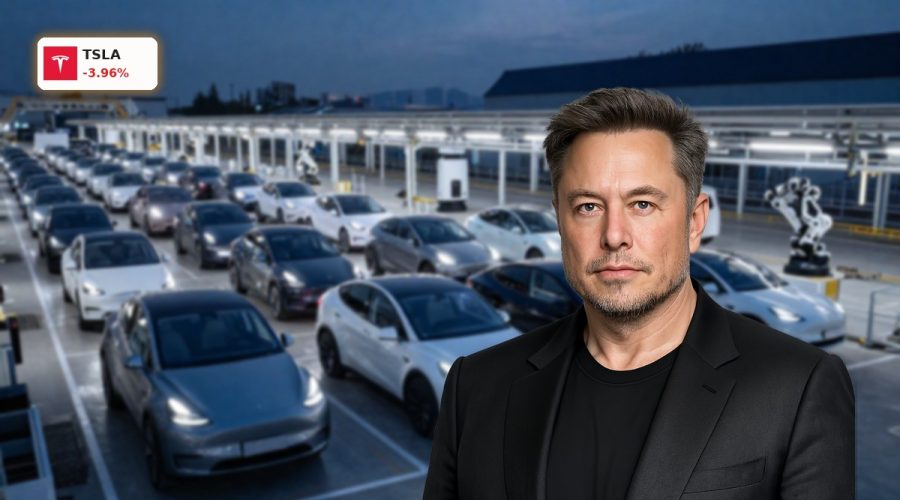
Tesla, Inc. reported global deliveries of about 358,000 vehicles in Q1 2026, missing Wall Street estimates that clustered roughly between 366,000 and 372,000 units. That shortfall marks the second straight quarter in which deliveries have undershot consensus, one of the weakest stretches for the company in years. On a sequential basis, volumes were down sharply from the prior quarter, though they rose about 6% year over year off an unusually soft comparison when Model Y production was disrupted and public backlash around Elon Musk weighed on demand.
Production tells an even more uncomfortable story: Tesla built roughly 408,000 vehicles in the quarter, leaving an inventory gap of more than 50,000 units between what it produced and what it delivered. For a business that once prided itself on just‑in‑time delivery and wait‑lists, the buildup underscores how much the global EV market has cooled and how intense competition has become, particularly from Chinese maker BYD and legacy European automakers.
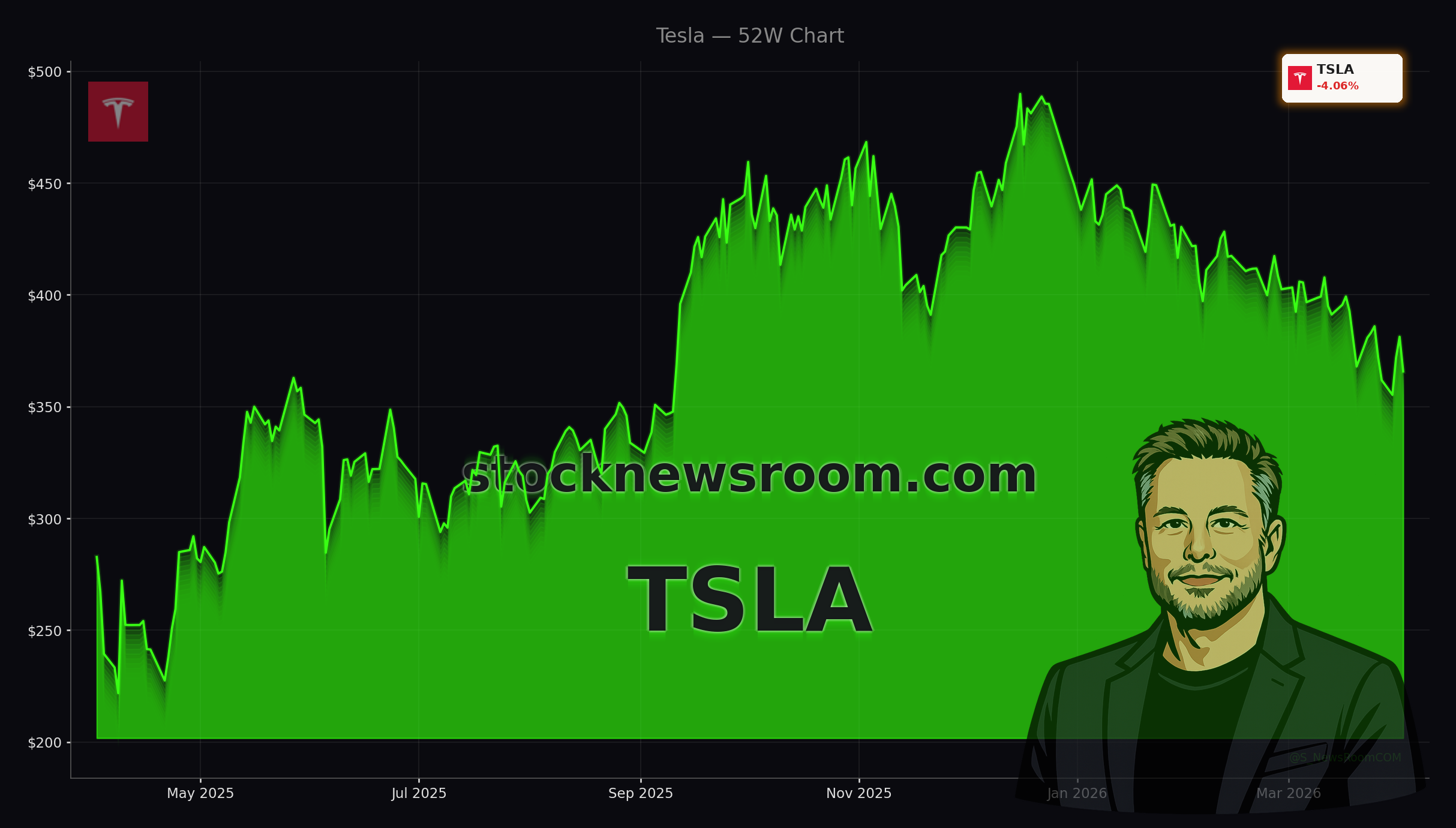
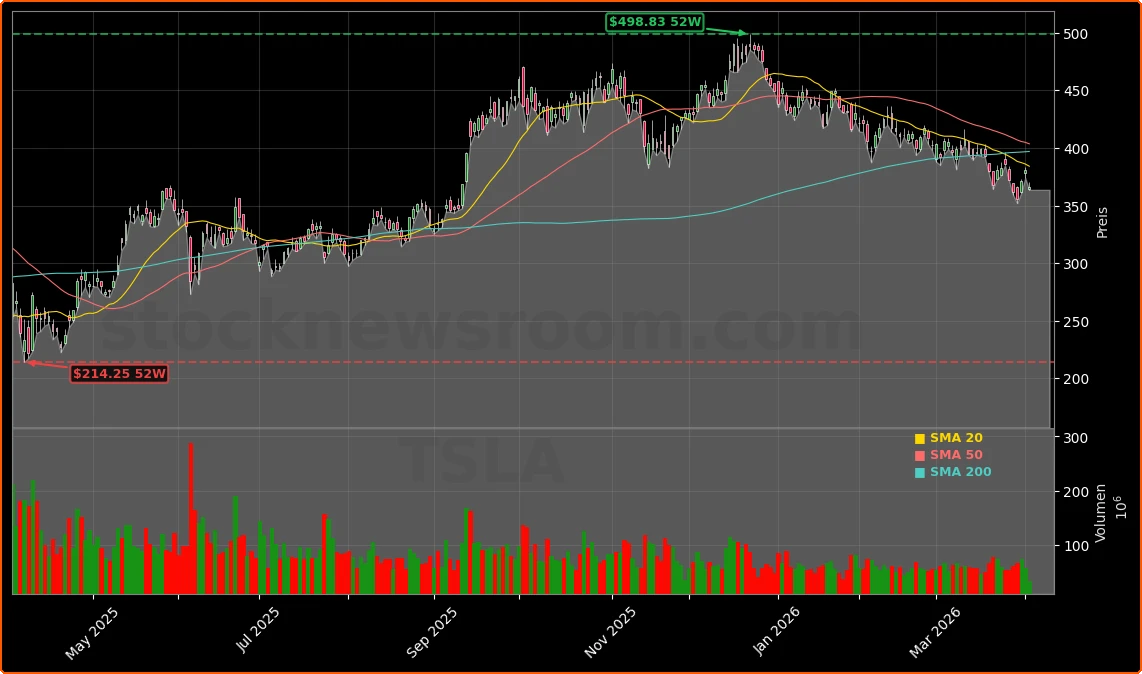
On the market side, Tesla (TSLA) recently traded around $366.25, down about 4% on the day and well below its latest rally peak. The stock remains highly volatile and popular among day traders, with average daily volume north of 90 million shares, but the Q1 delivery miss has clearly taken some momentum out of the name.
What do these Tesla Earnings imply for the EV business?
Even though the full Tesla Earnings release for Q1 2026 is not yet out, the delivery numbers alone point to mounting pressure on automotive margins and growth. In 2025, automotive sales still accounted for roughly 86% of revenue, but growth had already stalled: total deliveries fell in back‑to‑back years for the first time in the company’s history, with 2025 volumes around 1.64 million vehicles, down roughly 9% from 2024.
Fourth‑quarter 2025 results illustrated that strain: net income dropped about 61% year over year, while automotive revenue slid double digits, making 2025 Tesla’s most challenging year in some time. Q1 2026 energy‑storage deployments, at roughly 8.8 GWh, also fell back from a record 14.2 GWh in Q4 2025 and from 10.4 GWh a year earlier, highlighting that even the bright spots are not immune to volatility.
Regionally, the picture is mixed. China‑built vehicle sales have returned to growth, rising in the low‑to‑mid 20% range versus a year ago for the second consecutive quarter. Europe, which had been a drag in 2025, is stabilizing, with Tesla gaining share in markets like France and an early‑2026 rebound in EU registrations. But in the U.S., the expiration of the $7,500 federal EV tax credit has removed a key demand lever just as Musk’s political controversies pressured the brand.
Is Tesla really pivoting from cars to robotaxis?
The latest delivery miss has accelerated a long‑running narrative shift in how investors interpret Tesla Earnings. A growing part of the shareholder base argues that quarterly car volumes are increasingly irrelevant to valuation, which instead hinges on autonomous driving, AI software and humanoid robots. That perspective is reflected in Tesla’s roughly $1.4 trillion market capitalization, a level difficult to justify on auto metrics alone.
Operationally, the company is narrowing its EV lineup. Production of the long‑running Model S and Model X is being wound down, leaving the mass‑market Model 3 and Model Y as the workhorses of the fleet, alongside the niche Cybertruck. At the same time, Tesla is ramping a purpose‑built autonomous two‑seater dubbed the Cybercab and has launched a limited robotaxi service in Austin and a ride‑hailing program in San Francisco. Musk has signaled plans to remove human safety monitors and scale robotaxis more aggressively in 2026.
Investors are also watching the development of Optimus, Tesla’s humanoid robot, which is targeting mass production in the second half of 2026. While still in early stages, Optimus is central to the argument that Tesla is less an automaker and more a vertically integrated AI and robotics platform, with optionality far beyond vehicles.
How should Wall Street view Tesla Earnings now?
For portfolio managers benchmarked against the NASDAQ and S&P 500, the latest numbers complicate the investment case. On one hand, Tesla’s valuation embeds enormous expectations for long‑dated cash flows from software, robotaxis and robotics. On the other, the only fully scaled business today — car manufacturing — is slowing, and inventory is growing. That tension is why Tesla Earnings no longer move the stock in a straightforward way: a delivery miss can be waved off if investors believe autonomy is on track, while even strong auto metrics may not matter if AI progress disappoints.
Major Wall Street firms remain split. Some growth‑oriented analysts at banks like Morgan Stanley and Goldman Sachs have in the past highlighted Tesla as a key play on AI infrastructure and mobility, while more valuation‑sensitive houses such as RBC Capital Markets and Citigroup have warned that the multiple leaves little room for execution missteps. The current pullback toward the mid‑$300s, and chatter about potential support in the $350–$360 area, will likely intensify this debate heading into the April 22 Q1 earnings call.
For U.S. investors comparing mega‑cap tech, Tesla now trades alongside names like NVIDIA and Apple as a high‑beta driver of index performance. Yet unlike those peers, it pays no dividend and still derives most of its cash flow from a cyclical, capital‑intensive manufacturing business, making risk management critical for both long‑only and short‑term traders.
Related Coverage
For a deeper dive into the company’s strategic pivot away from premium EVs toward autonomous services and robotics, readers can review this analysis of Tesla’s product shift toward robotaxis and Optimus AI. The article examines whether the move is a visionary reinvention of Tesla or a high‑risk gamble that leaves shareholders overly exposed to unproven technologies.