Is the latest Tesla Forecast signaling a temporary setback or the start of a deeper reset in Elon Musk’s high-growth narrative?

Is Tesla’s selloff just the start?
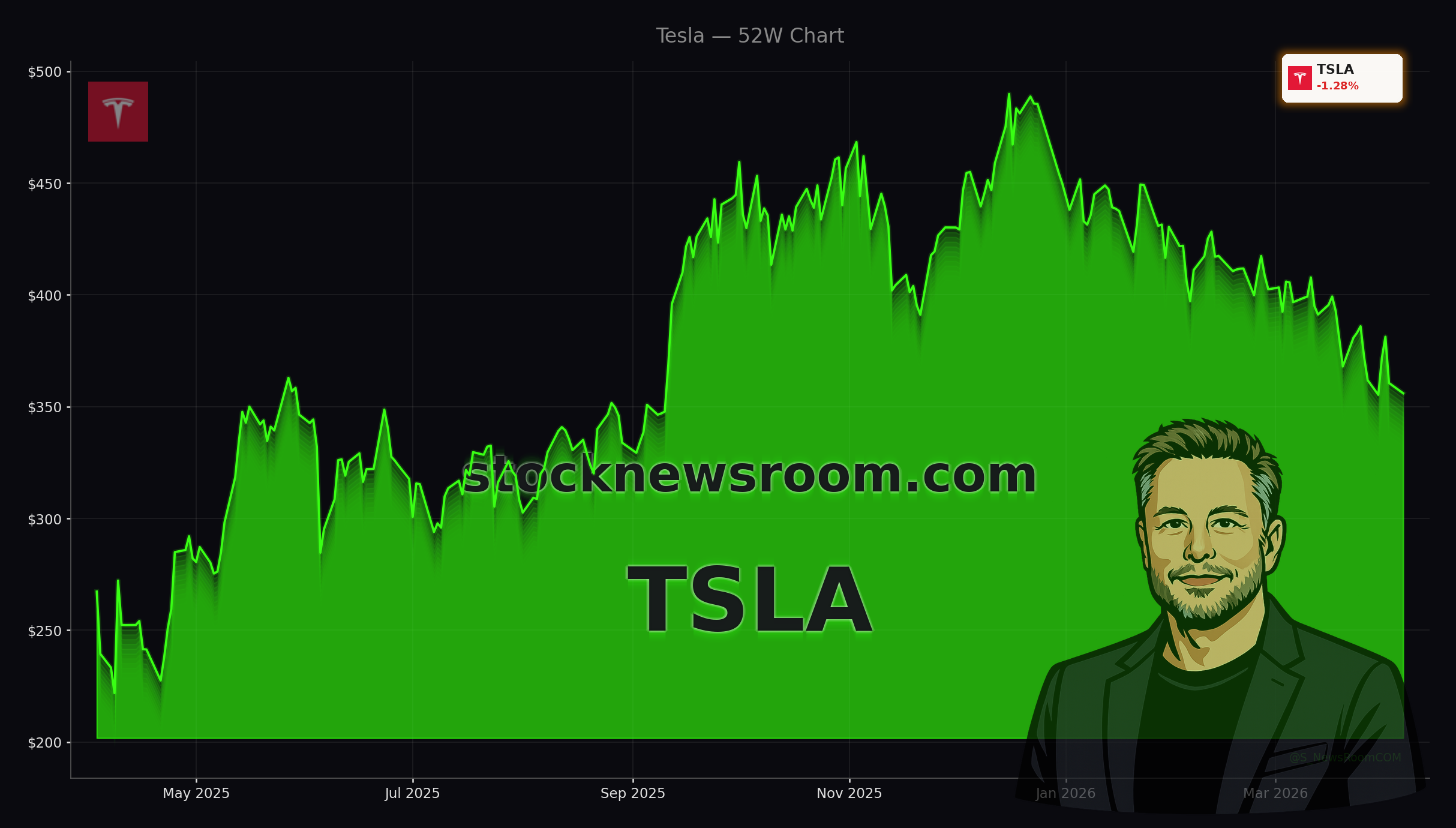
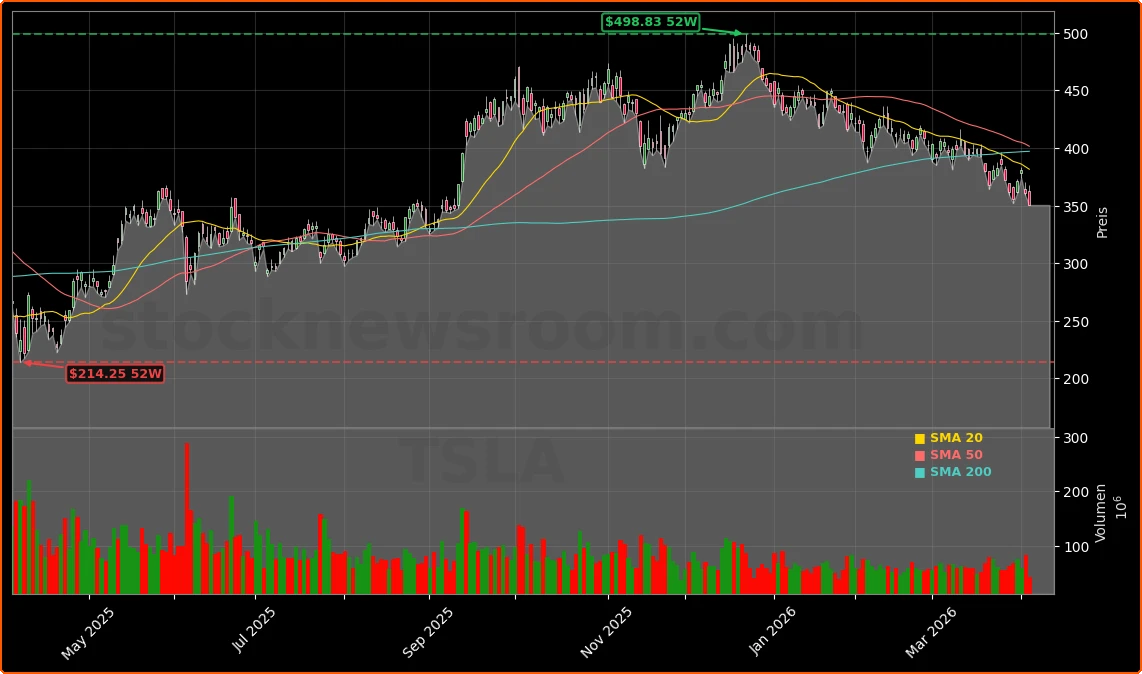
Tesla, Inc. shares closed Monday at $350.58, extending last week’s slide after Q1 2026 deliveries underwhelmed and options traders piled into puts. The stock is off roughly 20% year‑to‑date and sits well below its December 2025 peak, even after a powerful rebound earlier this year that pushed it to a nine‑month high. At the same time, TSLA remains one of Wall Street’s most heavily traded names, with average daily volume above 90 million shares, making it a favorite for day traders seeking volatility.
The immediate pressure came from Q1 global vehicle deliveries of about 358,023 units, roughly 4% below Wall Street expectations near 372,000 and far from the company’s nearly 500,000‑unit peak quarters. The miss underscores a cooler global EV demand backdrop, fading U.S. tax credits and a shrinking lineup as the Model S and X are phased out. For a stock still valued like a high‑growth technology platform rather than a cyclical automaker, that gap between narrative and numbers is increasingly hard to ignore.
What does the new Tesla Forecast say?
The most aggressive reset to the Tesla Forecast came from JPMorgan. Analyst Ryan Brinkman reiterated an Underweight/Sell rating and a $145 December 2026 price target, implying roughly 60% downside from current levels. Brinkman highlights three pain points: repeated delivery shortfalls, a record surge in unsold vehicles, and a stretched timeline and credibility gap around robotaxis and autonomous driving. He notes that Tesla produced more than 50,000 vehicles above deliveries in Q1, driving inventory to new highs at precisely the moment management is planning over $20 billion in 2026 capital expenditures.
According to Brinkman, consensus expectations for 2026 free cash flow have flipped from an anticipated $35.7 billion inflow in mid‑2022 to a projected $4.9 billion outflow today. That reversal is central to his bearish Tesla Forecast and helps explain why he advises investors to approach TSLA “with a high degree of caution.” By contrast, the broader analyst community remains more optimistic, with an average price target around $415, according to recent surveys, and some firms framing Tesla as a high‑risk, high‑reward bet on autonomy rather than a conventional car stock.
How fragile is Tesla’s AI and robotics pivot?
Even as deliveries slow, Tesla is doubling down on AI, full self‑driving (FSD) and humanoid robotics. Management has repeatedly said the company’s true value lies in robotaxis, the so‑called Cybercab, and the Optimus robot line, rather than in the current generation of Model 3 and Y vehicles. The car business is increasingly viewed as the cash engine to fund those long‑dated projects. That framing has attracted tech‑oriented investors who compare Tesla more to NVIDIA or Apple than to traditional automakers.
But execution risk is high. Many of Elon Musk’s older promises — such as Level 5 autonomy being “one year away” for the past decade and an earlier target of one million robotaxis on the road by 2020 — have not materialized. For bears, those delays are a core reason to discount the AI story in any realistic Tesla Forecast. For bulls, the recent closure of a U.S. safety probe into Tesla’s “Actually Smart Summon” remote driving feature, after software fixes reduced low‑speed incidents, shows that the company can iterate its way through regulatory scrutiny and improve its autonomous systems over time.
Where does Tesla stand versus Big Tech and EV rivals?
On Wall Street, Tesla now sits in a tricky middle ground. It no longer commands the same mega‑cap stature as Apple or other U.S. giants with multi‑trillion‑dollar valuations, yet it still trades at a premium multiple to legacy automakers despite slowing growth. Recent commentary has underlined how far Tesla’s growth profile has lagged behind that of Big Tech leaders, reinforcing worries that investors may have overpaid for the AI narrative.
At the same time, pure‑play EV rivals are sending mixed signals. Some Chinese manufacturers, such as NIO, have reported sharp delivery rebounds, while other Western EV names remain under pressure. For U.S. portfolios, that means Tesla is no longer the only liquid way to play the EV theme, even if it remains the most visible. High‑frequency traders still favor TSLA for its wide intraday ranges, but longer‑term investors are increasingly splitting exposure between carmakers, chip leaders like NVIDIA and AI‑heavy platform companies.
Related Coverage
For a deeper dive into how missed delivery targets are reshaping the earnings narrative, readers can review “Tesla Earnings -4% Shock as Deliveries Miss Targets”, which explores whether the true story has already shifted from cars to robotaxis and humanoid robots. Investors comparing Tesla’s slowdown with faster‑growing Chinese rivals may also want to read “NIO Earnings +98% Delivery Boom: Rally or Value Trap?”, analyzing whether NIO’s recent surge marks a durable turnaround or just another volatile swing in the EV space.
We continue to see large -60% downside to our $145 December 2026 price target and advise investors approach TSLA shares with a high degree of caution.— Ryan Brinkman, JPMorgan analyst
In the end, the updated Tesla Forecast is defined by tension between weak deliveries, record inventory and a capital‑intensive AI and robotics strategy on one side, and enormous long‑term optionality on the other. For U.S. investors, TSLA looks increasingly like a barbell position: either the robotaxi and Optimus bets eventually justify today’s valuation, or JPMorgan’s deeply bearish scenario prevails. The next few quarters of cash‑flow trends, spending discipline and autonomy milestones will show which version of the Tesla Forecast proves right — and will determine whether the stock remains a core holding or just a trading vehicle in tech‑heavy portfolios.