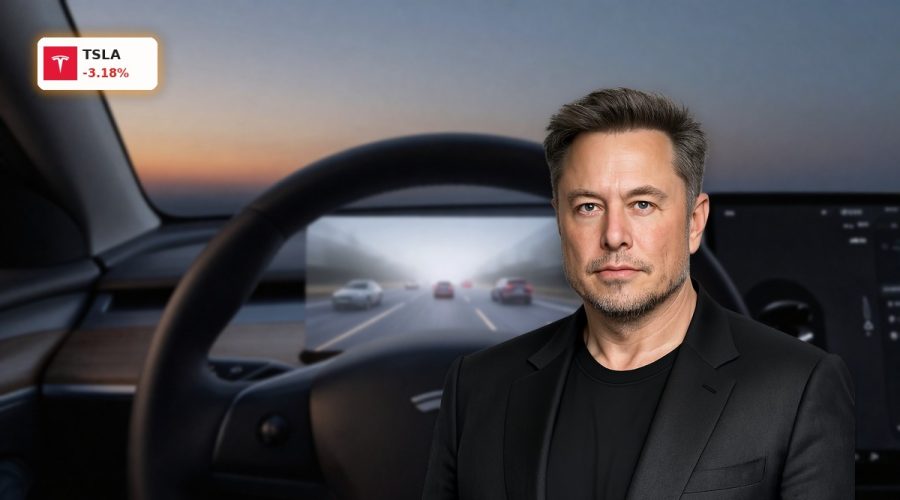
Will the latest Tesla FSD Probe simply trigger a software tweak or force Elon Musk to rethink his full robotaxi vision?

How is the Tesla FSD Probe hitting TSLA today?
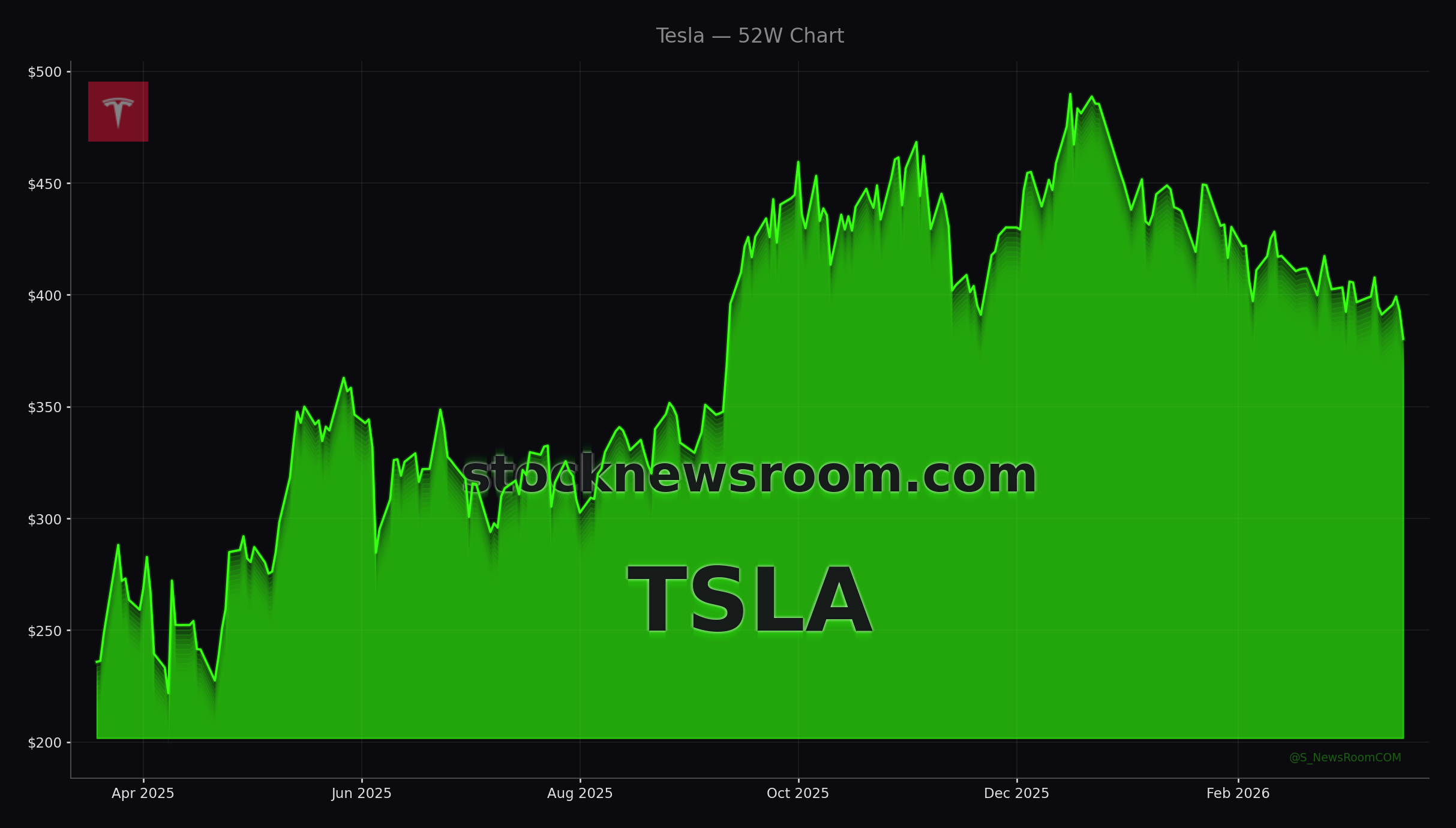
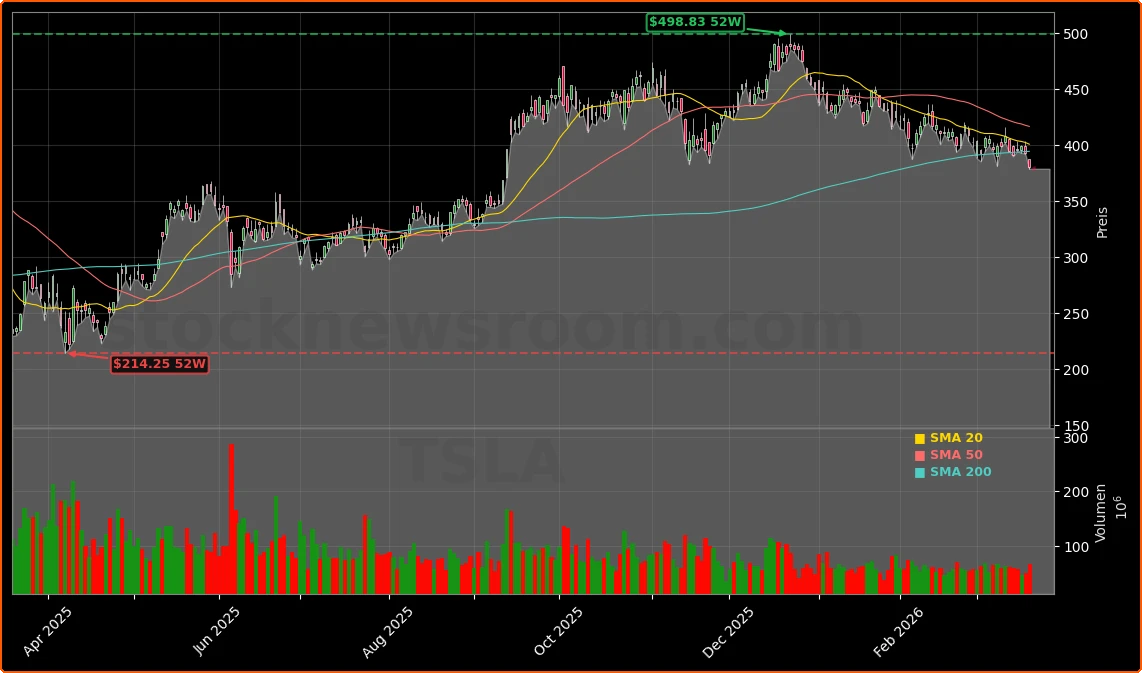
Tesla, Inc. (TSLA) traded lower on Thursday, closing at $380.30, down about 3.2% on the day, with pre‑market quotes early Friday pointing to a further dip toward $377.92. The weakness came as large‑cap tech, including NVIDIA, Meta Platforms and Apple, weighed on the Nasdaq, but the renewed regulatory spotlight from the Tesla FSD Probe added a stock‑specific overhang. At roughly 190 times projected 2026 earnings, the valuation still embeds a large AI and robotaxi premium, leaving little room for negative safety headlines or delayed autonomy timelines.
The National Highway Traffic Safety Administration (NHTSA) has escalated its investigation of Tesla’s Full Self‑Driving (Supervised) software to an engineering analysis, the last step before a potential recall. Investigators are focused on crashes in sun glare, fog and dust where FSD allegedly failed to recognize degraded visibility in time, did not warn the driver early enough and, in some cases, lost track of vehicles ahead. The Tesla FSD Probe covers Model 3, Y, S, X and the Cybertruck built since 2016 and could lead to mandatory software updates or broader enforcement actions.
What exactly worries NHTSA about Tesla FSD?
Unlike rival systems from Waymo, Cruise or other robotaxi developers that combine cameras with lidar and radar, Tesla relies on a pure “vision” approach using cameras and neural networks. Tesla removed radar in 2021 and rolled out what it calls a degradation‑detection system, designed to recognize when cameras are blinded or impaired and then hand control back to the human driver. Regulators now say several investigated crashes suggest that system did not identify common visibility issues and, in some cases, only issued alerts moments before impact.
NHTSA’s engineering analysis will examine whether that design poses a systemic safety defect. The Tesla FSD Probe lands just weeks before the planned launch of the Cybercab, a steering‑wheel‑less robotaxi that is supposed to operate autonomously on public roads using the same FSD technology. If regulators conclude Tesla has not adequately mitigated low‑visibility risk, they could demand substantial software changes or tighten conditions for driverless deployments, complicating Musk’s ambition to turn FSD and robotaxis into a multitrillion‑dollar mobility platform.
Tesla, Waymo and others: who’s ahead in autonomy?
The heightened scrutiny comes as competition in self‑driving intensifies. Alphabet‑owned Waymo continues to expand paid robotaxi operations with a multi‑sensor stack, while Chinese EV makers such as Xiaomi are rolling out sedans like the SU7 with upgraded driver‑assist systems aimed at eroding Model 3 share. Citi analyst Kyna Wong argues Xiaomi’s SU7 is roughly on par with peers in its price band and could marginally siphon demand from the Tesla Model 3 and other local rivals, underscoring that Tesla can’t afford major autonomy setbacks in China or the U.S.
U.S. regulators, meanwhile, closed a separate defect petition involving more than 2 million Tesla vehicles over alleged unintended acceleration, finding no electronic defect and attributing incidents largely to pedal misapplication. That decision removes one legal overhang but doesn’t offset the much larger strategic risk from the Tesla FSD Probe, which goes straight to the core of the brand’s safety narrative and its promised shift from carmaker to AI and robotics company.
How do Semi and solar fit into Tesla’s capex surge?
While the Tesla FSD Probe dominates headlines, the company is quietly moving ahead with other multi‑billion‑dollar bets. After years of delays, Tesla plans to start mass production of its battery‑electric Semi truck in Nevada this summer, targeting 5,000 to 15,000 units in 2026 and a ramp toward 50,000 annually thereafter. Early pilot programs with fleet operators in California report strong driver acceptance, citing the centered seating position, better visibility and 500‑mile range that can match regional diesel routes at significantly lower operating complexity.
At the same time, Tesla is negotiating roughly $2.9 billion in purchases of solar‑manufacturing equipment from Chinese suppliers including Suzhou Maxwell Technologies. The goal is to build about 100 gigawatts of U.S. solar capacity by 2028, positioning Tesla as a vertically integrated energy player at a moment when U.S. energy policy is tilting back toward fossil fuels and data‑center power demand is surging. Trade tensions and export‑license requirements in China remain wild cards, but the move exploits a carve‑out that leaves production tools exempt from many U.S. tariffs on finished solar products.
What is Terafab and why does it matter for AI?
Layered on top of these initiatives is the looming Terafab announcement, which Musk has teased as a domestic chip fabrication effort to secure high‑performance AI chips for FSD, robotaxis and the Optimus humanoid robot. Morgan Stanley analyst Andrew Percoco estimates that if Tesla reaches a long‑term target of 100‑plus million Optimus units per year, it could require more than 200 million chips annually – over 50 times current demand. Building even a single advanced fab could cost tens of billions of dollars, far exceeding Tesla’s roughly $6 billion in 2025 free cash flow and explaining why 2026 is expected to be free‑cash‑flow negative amid a planned $20 billion capex budget.
Wedbush’s Dan Ives expects Terafab to be largely Tesla‑funded, potentially with chip partners but without a full project co‑sponsor, framing it as a “smart move” to underpin the company’s AI‑driven valuation. Zacks strategist Andrew Rocco emphasizes that sold‑out GPU supply from third parties like NVIDIA makes internal chip capacity almost a prerequisite if Tesla wants to scale physical AI – robotaxis plus humanoid robots – to mass‑market levels. The challenge for investors is that the Tesla FSD Probe and any FSD‑related software recalls could slow revenue from autonomy just as capex requirements for Terafab, Semi and solar all spike.
Related Coverage
For a deeper dive into how safety scrutiny intersects with Tesla’s robotaxi narrative, readers can review detailed analysis of the Tesla Robotaxi sell‑off and the deepening FSD safety probe. That piece explores scenarios for regulatory outcomes and what they could mean for valuation. The same article, available at this dedicated Tesla robotaxi and FSD safety overview, also places Tesla’s strategy in the broader context of the emerging robotaxi sector.
To remove the probable constraint in three or four years, we’re going to have to build a Tesla Terafab, a very big fab that includes logic, memory and packaging domestically.— Elon Musk, CEO of Tesla
In sum, the Tesla FSD Probe now sits at the center of a high‑stakes balancing act between regulatory trust and Musk’s capital‑intensive AI, Semi and solar ambitions. For investors, TSLA’s pullback reflects the reality that execution risk on autonomy is rising just as cash demands accelerate across chips and energy. The next few quarters – including any NHTSA actions and the official Terafab reveal – will show whether Tesla can turn today’s scrutiny into safer software and justify its premium multiple with tangible progress on robotaxis and physical AI.