Is the Tesla Product Shift away from premium EVs toward robotaxis and humanoid robots a visionary pivot or a high-risk gamble?

How does the Tesla Product Shift change the growth story?
Ending production of the premium Model S and Model X caps a 14-year run for the vehicles that turned Tesla into a mainstream brand. Remaining units are being cleared from inventory, often at discounted prices because many are demo cars, but new custom builds are over. Musk has confirmed that Fremont’s freed capacity will be redeployed toward building the Optimus humanoid robot and preparing for robotaxi-scale production rather than new luxury EVs.
This Tesla Product Shift comes as global deliveries are expected to grow only modestly in 2026 and Q1 deliveries are projected to dip sequentially, with analyst estimates clustered around 366,000–369,000 units. EV margins remain positive, but crowding from BYD, legacy automakers and price wars has eroded the pure-EV hypergrowth narrative that once justified Tesla’s extreme multiples. Investors are now increasingly valuing the company as a vertically integrated AI and robotics platform layered on top of an auto and energy base.
Financially, Tesla still trades at a rich premium to automakers, with a P/E above 300x and a price-to-sales ratio near 14x versus low single digits for peers. That valuation only makes sense if the company successfully executes on the robotaxi and Optimus roadmap and transitions from cyclical auto margins to high-margin software, services and robotics revenue streams.
What does the shift mean for robotaxis and Optimus?
Musk has signaled that Fremont will prioritize ramping production of Optimus, with an internal target of eventually reaching one million humanoid robots produced. At the same time, Tesla is pushing forward with the “Cybercab” — a dedicated robotaxi reportedly priced around $30,000 and designed without a steering wheel or pedals. The Cybercab would be built from the ground up for autonomous ride-hailing and could sit alongside millions of existing Teslas equipped with Full Self-Driving (FSD) that can join a future robotaxi network.
The company is already piloting autonomous ride-hailing services in Austin, Texas, and Musk has outlined an “Airbnb for cars” model where owners can add or remove their vehicles from a Tesla-operated robotaxi fleet. That platform-style approach could challenge Uber Technologies and traditional rideshare models, particularly if Tesla’s vision-only FSD stack proves safe and scalable at low hardware cost. However, regulators remain cautious, and recent scrutiny of driver-assistance systems at competitors such as Ford raises the bar for safety, data logging and driver monitoring across the entire industry.
Underpinning these ambitions is the Terafab AI chip program, which aims to deliver new AI5 chips customized for Tesla vehicles and robots. In a market dominated by NVIDIA for general AI workloads, Tesla’s in-house silicon could support lower-cost inference for autonomy and robotics, reinforcing its vertical integration and potentially expanding AI-based margins over time.
How is Tesla positioned versus BYD, Alphabet and Uber?
While Tesla still dominates EV mindshare in the U.S. and carries a heavier weight in the Nasdaq‑100 than many automakers, Chinese rival BYD has already surpassed it in global EV unit volumes. BYD’s vertical integration, especially in batteries, allows aggressive pricing and has helped it outperform in China and Europe, where Tesla has faced margin pressure. BYD’s expansion into Canada could eventually bring its EVs closer to the U.S. market, adding another threat to Tesla’s core auto business.
In robotaxis, Alphabet’s Waymo remains the technical front-runner with fully driverless services operating in multiple U.S. metros, while Uber is rebuilding its autonomy exposure by partnering and betting on its scale in ride-hailing. A Trefis analysis recently highlighted robotaxis from Tesla and Waymo as a key long-term risk to Uber’s business model. For Tesla, that competition underscores that the Tesla Product Shift is not happening in a vacuum: any delay or safety setback could allow Waymo, Uber or Amazon’s Zoox to consolidate share before Tesla’s network reaches critical mass.
Yet Tesla’s differentiated asset remains its installed base of millions of FSD-capable vehicles and its integrated energy and charging infrastructure. Registration data from Europe indicates that demand is recovering where cheaper Model 3 and Model Y variants have been introduced, with registrations in France tripling year over year in March and strong gains in Spain as well. That base of vehicles is both a near-term earnings engine and a potential on‑ramp into autonomy services.
Is Wall Street buying into the Tesla Product Shift?
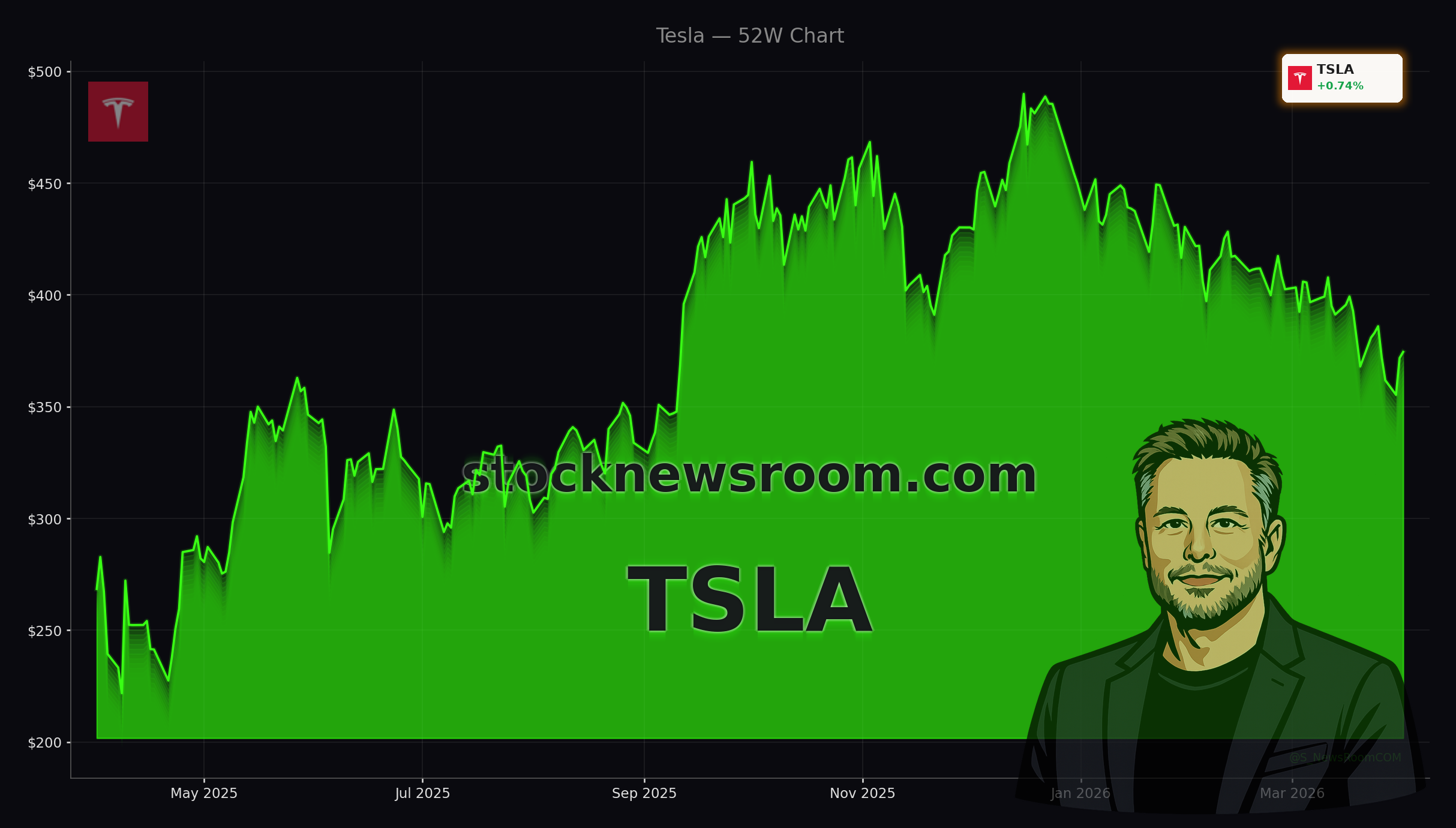
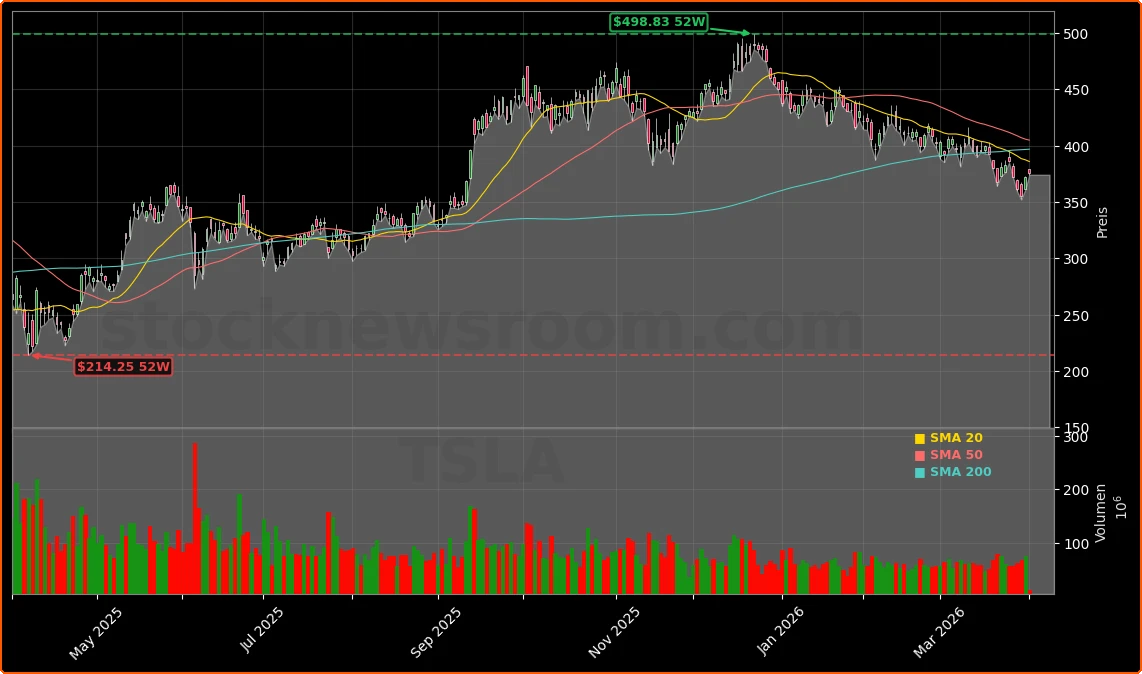
Tesla shares are up more than 100% over the past two years despite slowing EV volumes, a sign that many institutional investors increasingly see the company as an AI and robotics play rather than a pure automaker. Tesla is also a core component of major tech-heavy ETFs like Invesco QQQ, sitting alongside Apple, NVIDIA and Alphabet, which amplifies flows from passive and thematic funds into the stock.
At the same time, hedge fund positioning has turned more mixed: some managers like Ken Griffin’s Citadel have rotated capital into other AI leaders such as NVIDIA and Amazon while trimming Tesla exposure, reflecting concerns about execution risk and valuation. Sell-side houses are split, with bullish firms emphasizing long-term AI and robotaxi optionality and more cautious analysts flagging overvaluation, negative recent revenue growth and intensifying global EV competition.
Retail investors continue to play an outsized role in Tesla’s daily trading volume compared with typical S&P 500 stocks, which can magnify volatility around catalysts such as Q1 deliveries, FSD software updates or any major robotaxi announcement. With Q1 2026 delivery numbers due and an autonomy-focused investor day expected later this year, the market will soon get fresh data points on whether the Tesla Product Shift is translating into tangible progress.
Related Coverage
For a deeper dive into how robotaxis and the Cybercab rollout could offset slowing EV growth and shape the next leg of the stock’s move, see “Tesla Robotaxi Shock: Is the Q1 2026 Delivery Bar Too High?”. The analysis explores whether autonomy-driven revenue can justify Tesla’s current premium valuation as delivery expectations rise.
Autonomy and safety risks are firmly in the spotlight across the industry. Investors tracking regulatory pressure on driver-assistance systems should read “Ford BlueCruise Investigation +2.9%: Safety Shock for EV Plans”, which examines how investigations into Ford’s BlueCruise system could set stricter standards that also impact Tesla’s FSD and future robotaxi ambitions.
Those in the industry would have if they could have.— Elon Musk
In summary, the Tesla Product Shift away from legacy premium EVs and toward robotaxis, Optimus and in‑house AI hardware marks a decisive bet that software and autonomy will define the company’s next decade. For investors, Tesla now looks less like a cyclical automaker and more like a high‑risk, high‑reward AI platform tethered to a global EV and energy franchise. The next milestones on robotaxi deployment, Optimus scaling and regulatory approval will determine whether this strategic turn cements Tesla’s tech premium or exposes the stock’s valuation to a sharp reset.