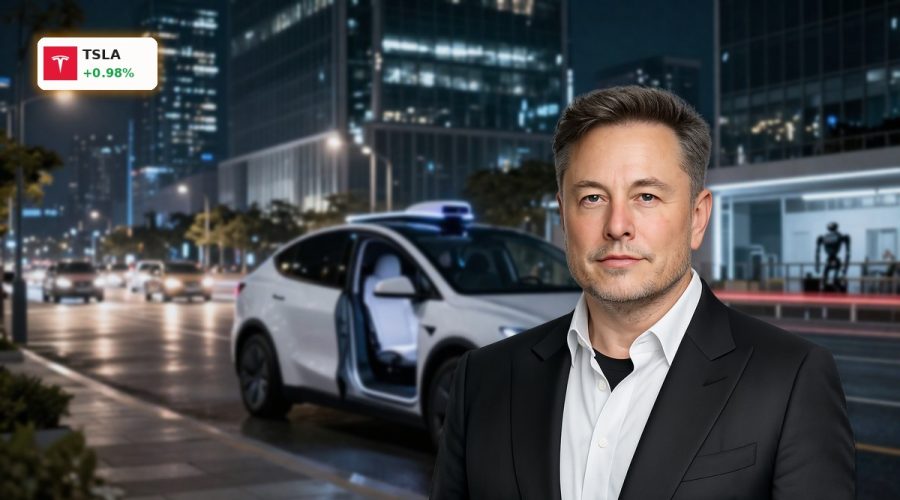
Will the Tesla Robotaxi and Optimus robot vision justify today’s rich valuation as core EV growth and safety concerns mount?

Is Tesla’s AI story still driving the stock?
Tesla, Inc. heads into its Q1 report with expectations deliberately low on the auto side. Deliveries grew only about 6% year over year in the first quarter, missing expectations for a second time as global EV demand cooled, competition intensified and U.S. federal tax credits expired for some models. Management has consciously decided to build fewer cars, prioritizing margin and capital for AI and robotics over sheer volume growth.
Despite that slowdown, the stock still carries a premium valuation near 320 times trailing earnings, propelled largely by hopes around the Tesla Robotaxi platform and the Optimus humanoid robot. Bullish investors argue that if CEO Elon Musk can scale a global autonomous ride‑hailing fleet and ultimately sell up to 1 million humanoid robots per year, today’s valuation will look cheap in hindsight. More cautious shareholders see a widening gap between the futuristic narrative and a present marked by falling automotive revenue, missed timelines and rising safety and regulatory scrutiny.
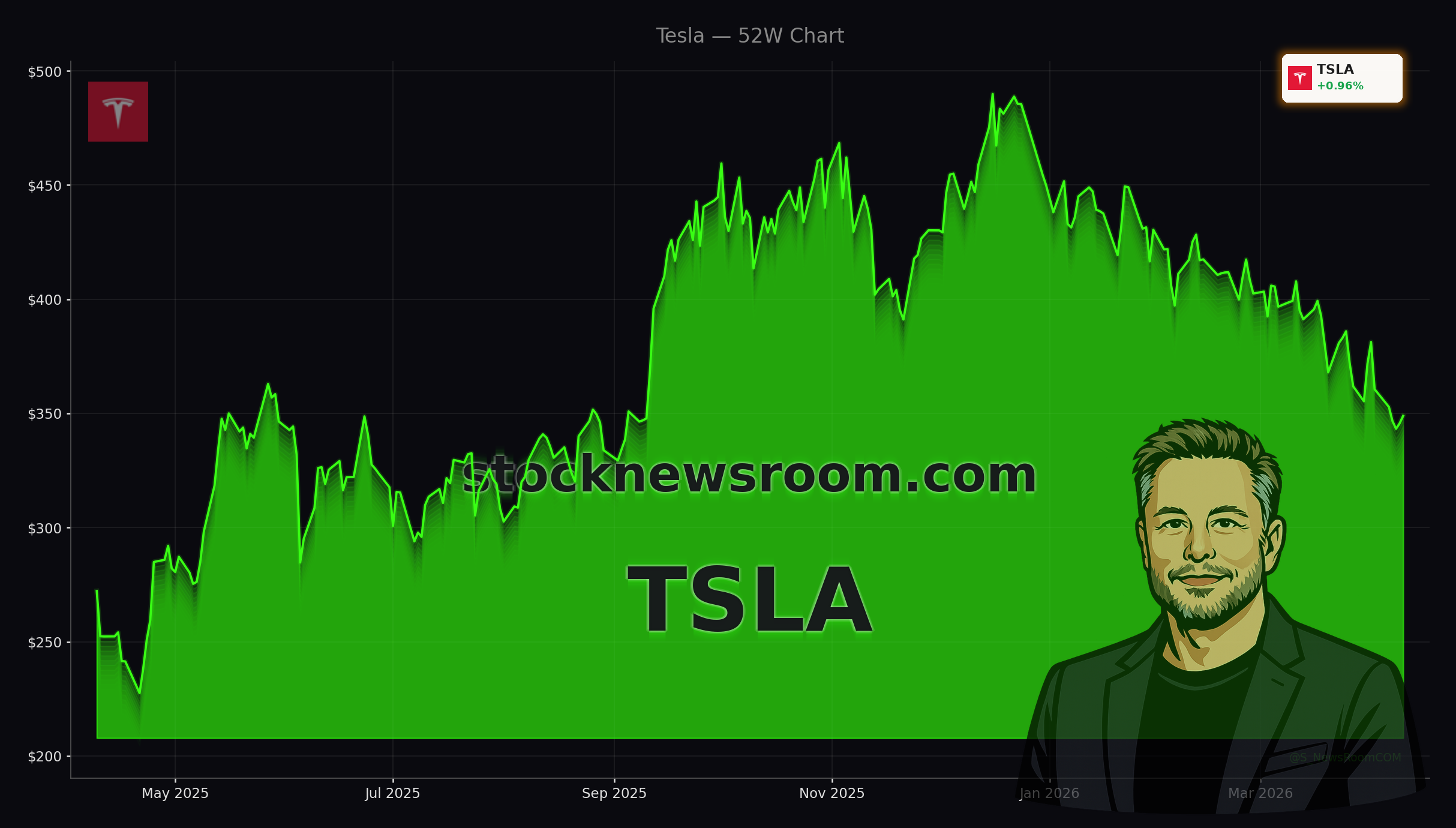
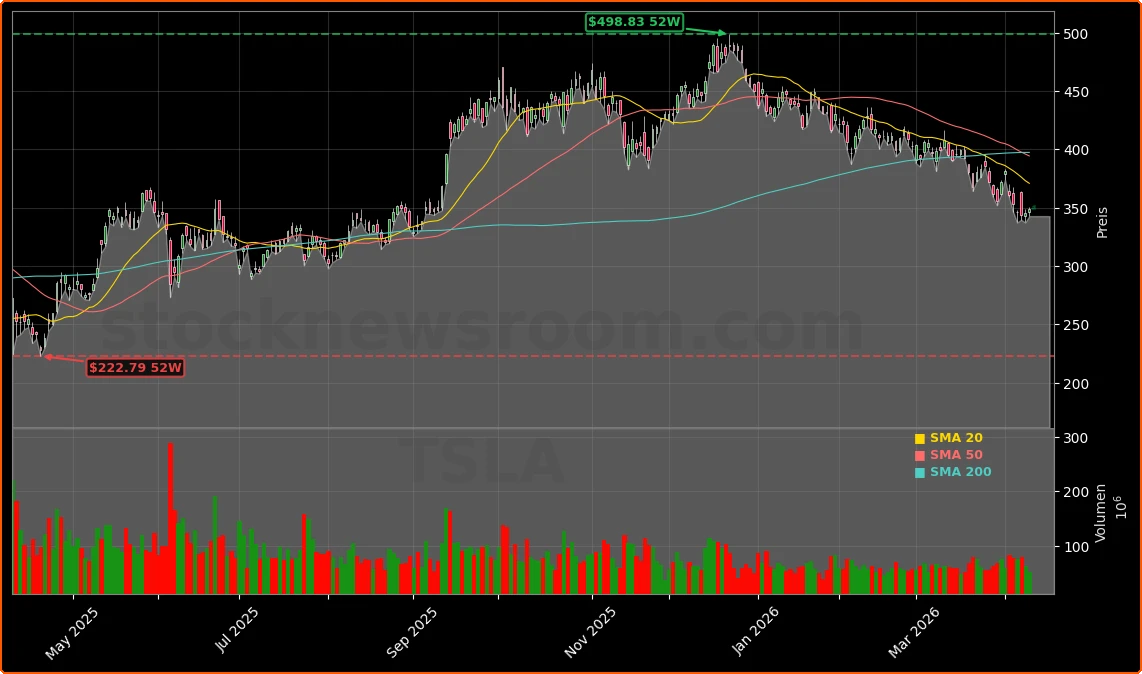
That tension has shown up in performance. While megacaps like NVIDIA and Amazon have powered the NASDAQ 100 higher in 2026, Tesla is the only mega‑cap in the index that remains underwater year to date after a roughly 24–25% sell‑off.
What shape is the Tesla Robotaxi rollout in?
On the ground, the Tesla Robotaxi business is still small and tightly constrained. The company currently operates supervised robotaxi services in just two U.S. cities, Austin and San Francisco, far behind Alphabet’s Waymo, which runs commercial driverless fleets in more than 10 U.S. metros. Safety monitors remain in place and the geographic footprint has not meaningfully expanded in recent months, even as Musk has repeatedly promised a rapid march toward unsupervised autonomy.
Yet some on Wall Street remain optimistic. Bank of America analyst Alexander Perry recently reinstated coverage on Tesla with a $460 price target, implying meaningful upside from current levels. His thesis rests on Tesla’s “vision‑only” technical approach—using cameras instead of costly lidar and radar—which he believes will make the Tesla Robotaxi network cheaper to build and easier to scale globally than rivals. Morgan Stanley analyst Andrew Percoco shares that view, estimating Tesla’s cost per autonomous mile could be roughly half that of traditional ride‑share services and significantly below lidar‑heavy competitors like Waymo as volumes ramp.
Regulators are beginning to engage more seriously. Reuters reported that Dutch authorities have approved Tesla’s advanced driver‑assistance software for use under human supervision on European roads, potentially paving a path for broader EU acceptance. At the same time, vocal critics such as investor Ross Gerber are demanding that Tesla refund customers if the latest Full Self‑Driving (FSD) versions do not deliver truly unsupervised capability, while U.S. safety investigations continue. How these competing forces resolve will be critical for the cash‑flow profile investors are building into their Tesla Robotaxi models.
How far can robotics and Optimus carry Tesla?
Beyond robotaxis, Musk is aggressively repositioning Tesla as a robotics company. He has said publicly that humanoid robots could become Tesla’s “most important product,” ultimately surpassing cars and energy in revenue and profit. Internally, Optimus Version 3 is expected to be unveiled this month, with the Fremont facility that once produced the Model S and Model X now being converted to build robots after those high‑end EVs were effectively sunset.
Some shareholders model an eventual selling price around $50,000 per robot with an estimated $20,000 in net profit. At a hypothetical production run of 1 million units per year, that would imply $20 billion in annual profit—well above Tesla’s peak EV profit of roughly $13 billion in 2022. A Cantor analyst tracking the humanoid space projects the global market could grow from $2.9 billion in 2025 to $15.3 billion by 2030, a roughly 39% CAGR, underscoring why Musk is willing to pivot production capacity.
Still, robotics experts question whether the timelines are realistic. Dexterous manipulation, reliable vision in unstructured environments and robust, low‑cost actuation remain unsolved at mass‑market scale. Investors will watch the coming Optimus V3 reveal closely for evidence that Tesla can move beyond tightly scripted factory demos toward real‑world commercial deployments that justify the current valuation premiums.
What do weak EVs and safety issues mean for Q1?
In the near term, Q1 earnings will be driven mostly by old‑fashioned auto fundamentals. Deliveries in China dropped sharply, inventory levels have been elevated and Tesla has lost ground in global EV unit sales to rivals like BYD. In the U.S., the loss of EV tax credits blunted demand just as gasoline prices spiked on escalating tensions in the Middle East, limiting any potential tailwind. Tesla’s deliberate move to build fewer cars means even those higher fuel prices are not being fully monetized.
There are also reputational and legal risks. Recent fatalities involving a Cybertruck that reportedly exploded after hitting a tree have renewed questions about vehicle safety and crash dynamics. Combined with the ongoing federal scrutiny of FSD, these incidents risk eroding the brand equity Musk needs to successfully launch mass‑market Tesla Robotaxi services and to persuade households to welcome Optimus into their homes.
On the financial side, Tesla remains profitable with billions in annual revenue, but heavy stock‑based compensation and thin cash buffers distort traditional metrics. In the NASDAQ 100, Tesla’s accounting profile alone adds roughly two points to the index’s aggregate P/E ratio. Internally, Musk has historically kept cash balances lean—around a quarter’s worth of operating runway—to prevent bureaucracy and maintain a start‑up mentality, but that approach also amplifies downside risk if the EV downturn deepens before software and robotics scale.
How are analysts and funds positioning now?
Opinions on Wall Street are sharply polarized. Alongside Bank of America’s $460 target, Morgan Stanley’s mostly positive note on FSD Version 15 highlights the potential for a powerful data flywheel: more Tesla Robotaxi miles generate more unsupervised driving data, which improves AI models, which in turn makes consumer FSD more attractive and supports higher vehicle demand. On the other end of the spectrum, JPMorgan has reiterated an “Underweight” rating and a $145 price target, flagging more than 60% downside based on cooling EV demand, record unsold inventory and skepticism around AI projects.
Active managers are highly exposed. The Baron Partners Fund has about 20% of assets in Tesla and an even larger stake in SpaceX; its 10‑year 741% return has been powered largely by those two Musk‑led bets. For U.S. retail investors, Tesla also remains one of the most discussed stocks on Wall Street, frequently appearing in weekly buzz lists alongside mega‑caps like Apple and Meta Platforms.
With Q1 earnings approaching and an eighth consecutive week of share‑price declines recently in the rearview, the next catalysts will be concrete: updated guidance on production cuts, a clearer roadmap for unsupervised FSD, regulatory milestones in Europe, and a credible commercialization plan for Optimus and the broader robotics pipeline.
Related Coverage
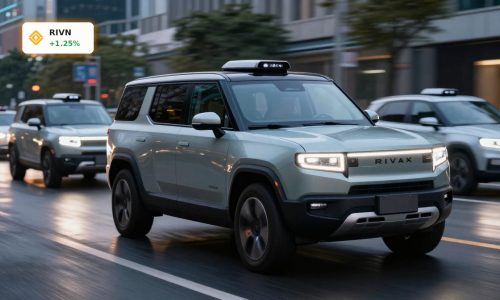
For a deeper dive into how an EV supply glut and rising inventories could pressure cash flow even if the Tesla Robotaxi vision succeeds, see this analysis of Tesla Robotaxi risks and EV cash burn. Investors comparing strategies across the electric and autonomous landscape may also want to read how another U.S. EV maker is positioning for AI and autonomy in our look at Rivian’s AI strategy around the R2 SUV and potential robotaxis.
Ultimately, Tesla now trades less on near‑term EV deliveries and more on whether the Tesla Robotaxi network and Optimus robots can evolve from bold promises into scalable, profitable platforms. For U.S. investors, the Q1 report and upcoming autonomy milestones will be crucial in determining whether today’s premium multiple can hold. The coming quarters should reveal whether this is the start of a new AI‑driven chapter or a moment when expectations finally have to reset.